A certificate of insurance is a document that summarizes key details of an insurance policy, including the types of coverage, policy numbers, coverage limits, and effective dates. Businesses, contractors, landlords, and clients often request a certificate of insurance to verify that an individual or company has insurance coverage relevant to a particular project or business relationship.
Whether you are a business owner, independent contractor, property manager, or vendor, understanding a certificate of insurance can help you manage risk and meet contractual requirements. It provides a convenient way to review important insurance information without requiring the recipient to examine every page of the full policy.
In this guide, you will learn what a certificate of insurance includes, why it matters, how to read its main sections, and how to request one. You will also find a printable certificate of insurance template and practical tips for verifying coverage information before starting a project or signing an agreement.
What Is a Certificate of Insurance?
A certificate of insurance, often abbreviated as COI, is a document issued by an insurance company, agent, or broker that summarizes selected information about an insurance policy. It typically identifies the insured party, the insurer, the policy types, the coverage limits, and the dates the policies begin and expire.
For example, a general contractor may ask a subcontractor to provide a certificate of insurance before allowing work to begin on a construction project. The certificate helps the contractor review the subcontractor’s reported insurance coverage and compare it with the project’s insurance requirements.
Similarly, a commercial landlord may request a certificate from a tenant, or a client may ask a service provider to demonstrate that certain insurance policies are in place.
A certificate of insurance is generally a summary of insurance information, not the insurance policy itself. It does not independently create coverage, change policy terms, or guarantee that a claim will be covered. The actual policy, its endorsements, exclusions, conditions, and current status determine the coverage available.
Why Is a Certificate of Insurance Important?
A certificate of insurance helps businesses and other parties review insurance information before entering into a working relationship. It can support risk management, contract administration, and vendor compliance.
- Verifies reported coverage: The certificate summarizes the insurance policies and limits identified by the issuing party.
- Supports contract requirements: Businesses can compare the listed coverage with insurance requirements in a contract.
- Helps manage risk: Reviewing insurance information can identify potential gaps that need clarification before work begins.
- Improves vendor management: Companies can collect and organize certificates from contractors, subcontractors, and service providers.
- Documents policy dates: Effective and expiration dates help recipients identify when the listed policies are scheduled to apply.
- Simplifies communication: A standardized document presents key insurance information in a familiar format.
However, receiving a certificate does not eliminate risk or guarantee that the insured party meets every contractual requirement. The recipient should check the details and request clarification or supporting documentation when necessary.
What Information Does a Certificate of Insurance Include?
A certificate of insurance contains several sections that help identify the insured party and summarize the reported insurance coverage. The exact layout may vary, but the following information is commonly included.
1. Producer or Insurance Agency Information
This section identifies the insurance agency, broker, or producer responsible for issuing the certificate. It may include a business address, phone number, email address, and contact person.
These details are useful if the certificate holder needs to confirm policy information, request corrections, or ask questions about the document.
2. Insured Information
The insured section identifies the individual or business whose insurance coverage is being summarized. It commonly includes the legal business name and mailing address.
Check that the name matches the company or individual named in the relevant contract. A difference in legal names or business entities may require clarification from the insurance representative.
3. Insurance Company Information
This section identifies the insurance companies providing the listed policies. Some certificates include multiple insurers because different policies may be issued by different companies.
When insurance requirements are important to a contract, confirm that the relevant insurer and policy details meet the requesting party’s requirements.
4. Types of Insurance Coverage
The coverage section identifies the types of insurance reported on the certificate. Depending on the business and project, these may include:
- Commercial general liability: Coverage that may apply to certain third-party bodily injury, property damage, and other covered liability claims.
- Commercial auto liability: Coverage for certain liabilities arising from the use of covered vehicles.
- Workers’ compensation: Coverage for eligible work-related injuries or illnesses, subject to applicable law and policy terms.
- Employers’ liability: Coverage for certain employer liability claims associated with workplace injuries or illnesses.
- Professional liability: Coverage that may apply to certain claims arising from professional services or errors and omissions.
- Umbrella or excess liability: Additional liability coverage that may apply above specified underlying policies, subject to its terms.
- Other specialized coverage: Depending on the business, this may include cyber liability, property insurance, or other policy types.
Not every certificate lists every type of coverage. The relevant policies depend on the insured business, its activities, and the requirements of the requesting party.
5. Policy Numbers and Coverage Limits
Each listed policy typically has a policy number and one or more coverage limits. Limits indicate the maximum amounts payable for specified covered claims or categories of loss, subject to the policy’s terms.
For liability insurance, a certificate may show an each-occurrence limit, general aggregate limit, or products and completed operations aggregate limit. These limits are not interchangeable, so compare the specific figures with the requirements in the contract.
6. Effective and Expiration Dates
The effective date indicates when the listed policy period begins, while the expiration date indicates its scheduled end. These dates help recipients determine whether the reported policy period aligns with the dates of a project or contract.
A certificate may become outdated when a policy expires, renews, or changes. Request an updated certificate when necessary and confirm current coverage directly with the insurer or authorized insurance representative if the information is critical.
7. Certificate Holder Information
The certificate holder is the person or organization to whom the certificate is issued. This could be a client, property owner, landlord, general contractor, or business partner requesting evidence of insurance.
Being named as a certificate holder does not automatically make that party an insured under the policy. Additional insured status generally requires the appropriate policy endorsement or other valid coverage provision, as applicable.
8. Description of Operations and Remarks
This section may describe a project, location, contract, or other relevant information. It can also contain notes related to the insurance requirements or the purpose for which the certificate was requested.
Read this section carefully, but do not assume that a statement in the remarks changes the policy. If a contractual requirement depends on a particular coverage provision, verify the applicable policy language and endorsements.
Printable Certificate of Insurance Template
A certificate of insurance template provides a convenient visual reference for understanding how insurance information is organized. It can help businesses prepare a checklist of the details they need to review when collecting certificates from contractors, vendors, or other business partners.
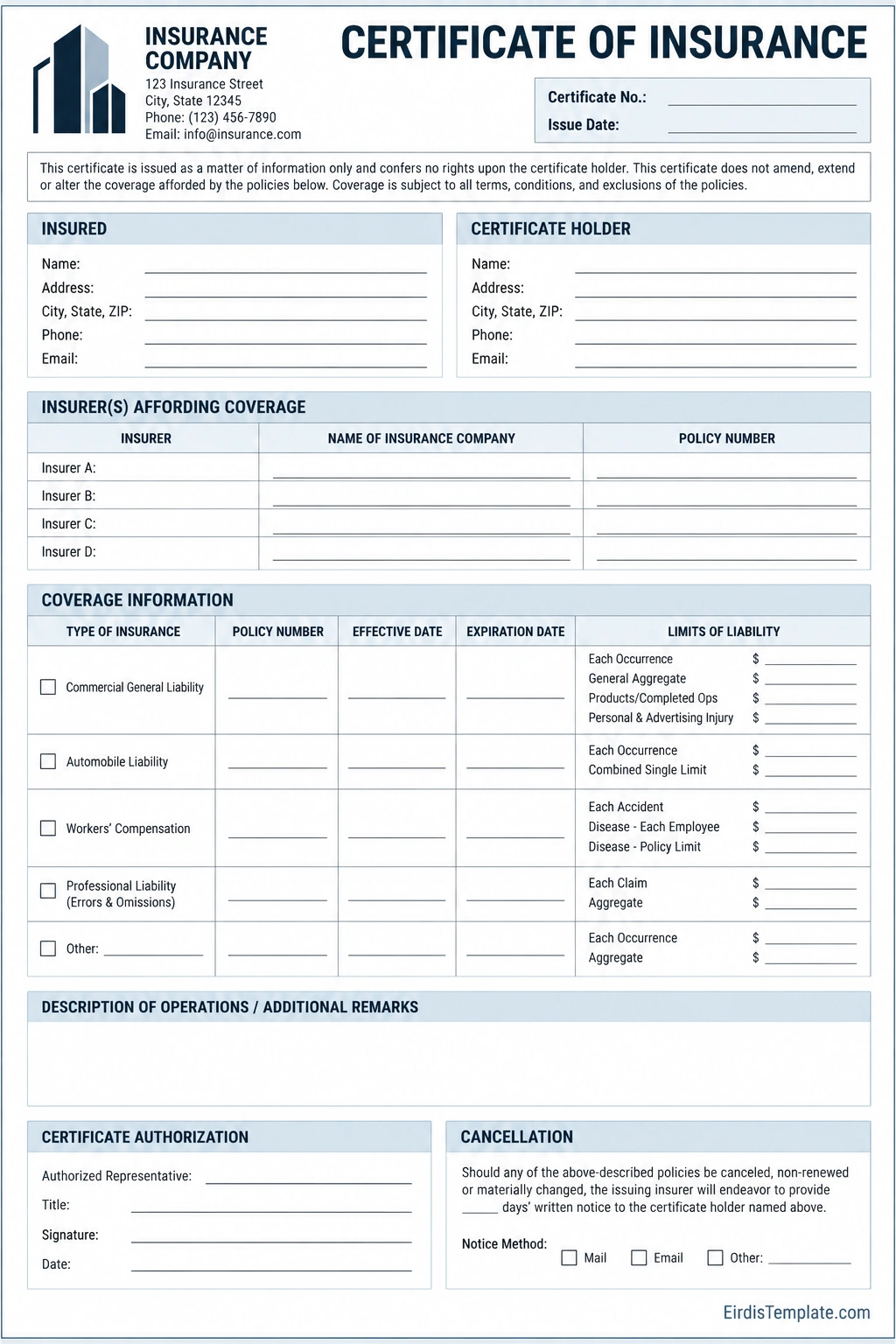
When reviewing or organizing certificate information, check the following details:
- Insured name: Confirm that the correct individual or legal business entity is listed.
- Certificate holder: Verify that the requesting organization is identified correctly.
- Insurance companies: Check the insurers listed for the relevant policies.
- Policy numbers: Record the identifiers needed to verify the coverage.
- Coverage types: Confirm that the listed policies correspond to the contractual requirements.
- Limits of liability: Compare the stated limits with the required minimums.
- Policy dates: Check that the relevant policy periods align with the project timeline.
- Special requirements: Identify any additional insured, waiver of subrogation, or other requirements that may need supporting endorsements.
A blank template or sample certificate is for reference only. It is not evidence that a real person or business has insurance coverage. Official certificates should be obtained from the insurer, agent, or broker authorized to issue them.
How to Request a Certificate of Insurance
Requesting a certificate of insurance is usually straightforward. The process may vary by insurer, but the following steps can help you obtain the information you need.
Step 1: Identify the Insurance Requirements
Review your contract, vendor agreement, lease, or project requirements. Determine which insurance types, minimum limits, and policy dates are required before requesting the certificate.
Step 2: Contact the Insured Party
Ask the contractor, vendor, tenant, or service provider to request a certificate from their insurance company or authorized agent. Explain the certificate holder’s legal name and any relevant project information.
Step 3: Provide Certificate Holder Details
Give the insured party the correct name and address of the organization that needs to receive the certificate. If the contract requires additional insured status or another endorsement, state that requirement separately.
Step 4: Review the Certificate
Once the certificate arrives, compare the listed policies and limits with the contractual requirements. Check the names, dates, and coverage types for obvious errors or omissions.
Step 5: Request Clarification or Corrections
If the document is incomplete or does not appear to meet the requirements, contact the insured party or insurance representative. Request an updated certificate or the relevant endorsement when appropriate.
How to Verify a Certificate of Insurance
A certificate should be reviewed carefully when it is being used to satisfy a contract or manage significant business risks. Follow a consistent verification process instead of relying only on the document’s appearance.
- Confirm the insured’s identity: Check that the named entity matches the business or contractor you hired.
- Compare coverage limits: Verify the figures against your written insurance requirements.
- Review policy dates: Make sure the listed dates are appropriate for the work or agreement.
- Check required endorsements: If additional insured status or a waiver of subrogation is required, obtain and review the applicable endorsement.
- Contact the issuing representative: When necessary, verify the certificate’s authenticity and current policy information through the insurer or authorized agent.
- Track renewal dates: Request updated documentation when policies renew or when current evidence is required.
- Keep records organized: Store certificates with the relevant contracts and record when updated documents are received.
A certificate summarizes information reported by the issuing party, but it does not independently guarantee that a policy remains active or that a particular claim is covered. When a decision depends on coverage, verify the relevant policy terms and status with the appropriate insurance representative.
Common Certificate of Insurance Mistakes to Avoid
Small oversights can create problems when a certificate is used to verify contractual insurance requirements. Watch for these common mistakes.
- Assuming a certificate changes coverage: A certificate generally cannot amend the policy or override its exclusions.
- Confusing certificate holder with additional insured: These terms have different meanings and implications.
- Ignoring coverage limits: A policy may be listed even when its limits do not meet the contract requirements.
- Overlooking expiration dates: An outdated certificate may not demonstrate the current policy period.
- Accepting incomplete information: Missing policy details may require clarification before approval.
- Failing to request endorsements: A certificate alone may not establish a required additional insured status or other special policy provision.
- Keeping outdated records: Update documentation when coverage renews or contract requirements change.
Frequently Asked Questions About Certificates of Insurance
What is the main purpose of a certificate of insurance?
Its main purpose is to summarize insurance information for a third party, including the insured party, listed policies, coverage limits, and policy dates. It helps the recipient review reported coverage in connection with a contract or business relationship.
Who can issue a certificate of insurance?
A certificate is generally issued by an insurance company, agent, or broker authorized to provide the relevant information. The insured party can usually request it from their insurance representative.
Is a certificate of insurance the same as an insurance policy?
No. A certificate summarizes selected policy information, while the insurance policy contains the actual terms, conditions, exclusions, and coverage provisions. The policy governs the coverage available.
Does a certificate of insurance make someone an additional insured?
No, not by itself. Additional insured status generally depends on the applicable policy language or endorsement. If a contract requires this status, request the appropriate endorsement and verify that it meets the requirement.
How long is a certificate of insurance valid?
A certificate reports policy dates, but it does not have a separate universal validity period that guarantees coverage. The listed policy may expire, be canceled, or change. Request updated information when necessary and verify current coverage for important decisions.
Is a certificate of insurance required for contractors?
It depends on the contract, project, industry, and applicable rules. Clients and property owners commonly request certificates from contractors to review their reported insurance coverage before work begins.
Can I create my own certificate of insurance?
You can create an internal checklist or reference template to organize insurance information, but you should not present a self-created document as an official certificate issued by an insurer. Request official evidence from the authorized insurance representative.
What should I do if a certificate does not meet my insurance requirements?
Identify the specific missing or insufficient information and contact the insured party or insurance representative. Request clarification, an updated certificate, or the relevant policy endorsement. Do not assume the requirement has been satisfied until the necessary documentation has been reviewed.
Conclusion
A certificate of insurance provides a convenient summary of an individual’s or business’s reported insurance coverage. By reviewing the insured’s details, policy types, liability limits, effective dates, and certificate holder information, businesses can make more informed decisions about contractors, vendors, tenants, and other partners.
Use a certificate of insurance template as a reference when organizing information, but obtain official documentation from an authorized insurance representative. Check the actual requirements in your contract, request relevant endorsements when needed, and verify policy information when coverage is important to your decision.
A careful certificate review process helps improve recordkeeping, supports risk management, and reduces confusion about insurance requirements before work or business activities begin.
Download: Certificate of Insurance Template

- Free Printable Chore Chart Template - October 27, 2026
- Childcare Enrollment Form Template - October 27, 2026
- Child Custody Agreement Template - October 27, 2026
