A certificate of employment is an official document issued by an employer to verify an individual’s employment with a company or organization. It typically confirms the employee’s name, job title, employment dates, and other relevant details. Whether you need proof of employment for a loan application, visa process, rental application, or new job, a certificate of employment template can help you prepare a clear and professional document.
Employers also benefit from using a consistent employment verification letter format because it helps maintain accurate records and respond efficiently to employee requests. In this guide, you’ll learn what a certificate of employment includes, when it is needed, how to request or write one, and how it differs from other employment documents.
What Is a Certificate of Employment?
A certificate of employment is a formal letter or document confirming that a person works or previously worked for a particular employer. It is usually issued by a human resources department, employer, or authorized company representative.
The document generally verifies factual employment information rather than guaranteeing an employee’s future performance or suitability for another position. Depending on the employer’s policy and the recipient’s requirements, it may also include salary information, employment status, department, or job responsibilities.
A certificate of employment is commonly used for:
- Loan, mortgage, or other financial applications.
- Visa, immigration, or travel-related applications when employment evidence is requested.
- Rental applications and other situations requiring proof of income or employment.
- New job applications and background verification.
- Government, administrative, or professional documentation.
- Personal records and verification of previous employment.
Free Printable Certificate of Employment Template
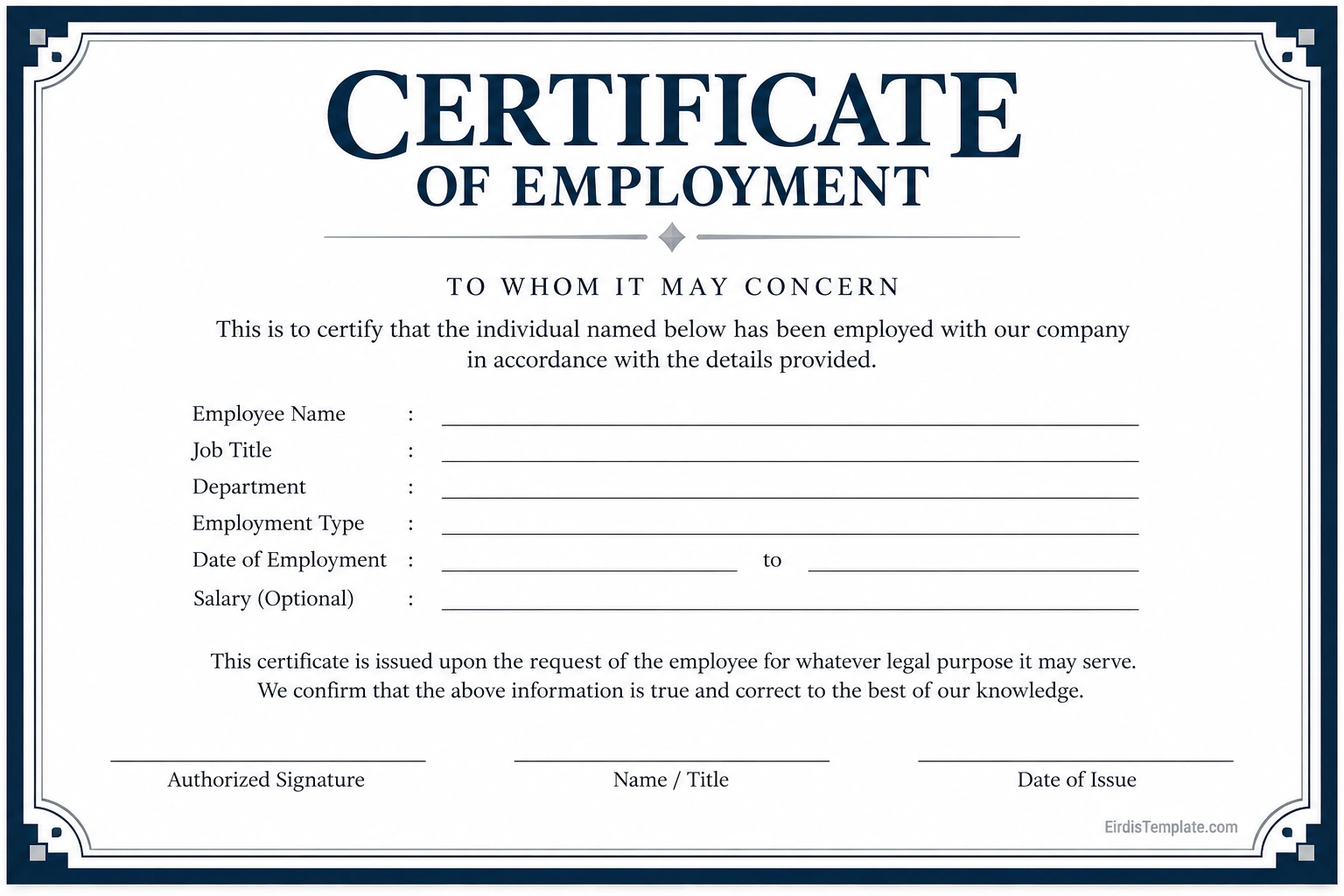
A free printable certificate of employment template provides a convenient starting point for preparing an employment verification document. You can customize it with the employer’s details, employee information, job title, employment dates, and an authorized signature.
Choose a professional layout that is easy to read and appropriate for the purpose. A simple design with clear headings and sufficient space for the employee’s information is usually effective. If the document will be submitted to a bank, government agency, or other organization, check whether that recipient requires a specific format or additional details.
What Should a Certificate of Employment Include?
A useful certificate of employment should contain enough information to verify the employee’s work history without disclosing unnecessary personal or confidential details. The exact contents depend on the purpose of the request and the employer’s policies.
1. Employer Information
Include the company’s legal name and relevant contact information. Depending on the organization’s standard format, this may include its business address, telephone number, email address, or letterhead. These details help the recipient identify the employer and verify the document if necessary.
2. Employee’s Full Name
Write the employee’s full name accurately. Check the spelling against the employer’s official records to avoid discrepancies that could delay a loan, visa, rental, or background verification process.
3. Job Title and Department
State the employee’s official job title and department, where relevant. Use the title recorded in the company’s employment records rather than an informal description. If the employee has held multiple positions, clarify whether the certificate confirms the current position or previous roles.
4. Employment Dates
Specify the start date and, when applicable, the end date of employment. For a current employee, the letter can state that the person is currently employed as of the issue date. Use accurate dates and avoid implying that a former employee still works for the organization.
5. Employment Status or Type
If relevant to the request, identify whether the employee is full-time, part-time, temporary, fixed-term, or employed under another arrangement. Only include this information when it is accurate and appropriate to disclose.
6. Salary Information
Some recipients require income verification in addition to confirmation of employment. If salary details are requested and disclosure is authorized, state the amount and pay period clearly, such as monthly or annual salary. Salary information is not necessary for every certificate of employment.
7. Authorized Signature and Issue Date
The document should identify the person authorized to issue it, such as an HR representative, manager, or company officer. Include the signer’s name and title, signature, and date of issue. Official letterhead or an approved digital signature may be appropriate depending on the employer’s procedures and the recipient’s requirements.
How to Write a Certificate of Employment
Writing a certificate of employment is straightforward when the relevant information is verified in advance. Follow these steps to create a professional employment verification letter.
Step 1: Confirm the Purpose
Determine why the employee needs the document. A general employment confirmation may require only the job title and employment dates, while a financial application may also require salary details. Ask whether the receiving organization has a prescribed format.
Step 2: Verify the Employment Records
Check the employee’s name, job title, department, employment status, and relevant dates against official company records. If salary or other sensitive information is requested, confirm that it is accurate and appropriate to include.
Step 3: Prepare the Letter
Use the company’s standard letterhead or a clean document layout. Start with a clear title, such as “Certificate of Employment” or “Employment Verification Letter.” State the employee’s details in a concise paragraph or an organized list.
Step 4: Review the Wording
Keep the language factual and professional. Avoid including personal opinions, unsupported performance claims, or details unrelated to the stated purpose. If the letter is intended only to verify employment, it should not imply that it is a recommendation letter.
Step 5: Sign and Issue the Document
Have an authorized representative review and sign the certificate. Add the issue date and any approved verification contact details. Provide the employee with the completed document in the required format, such as a printed copy or PDF.
When Do You Need a Certificate of Employment?
A certificate of employment can be useful whenever a third party needs confirmation of a person’s current or previous work history. Requirements vary, so it is best to confirm what information the receiving organization needs before requesting the document.
Loan and Mortgage Applications
Banks and lenders may request employment verification as part of an application. Some may also require salary information, payslips, tax records, or other evidence of income. A certificate of employment may support the application but does not guarantee approval.
Visa and Immigration Applications
Some visa or immigration processes require evidence of employment, job position, or approved leave. The required information varies by destination, visa category, and application circumstances. Follow the relevant authority’s instructions and use the required format if one is provided.
New Job Applications
A prospective employer may request employment verification during a hiring or background-check process. A certificate can confirm previous employment dates and job titles, although the receiving employer may contact the previous company or request additional documents.
Rental and Administrative Applications
Landlords, agencies, or other organizations may request proof of employment when reviewing an application. If income verification is needed, ask whether a separate salary certificate, payslip, or other supporting document is also required.
Certificate of Employment vs. Employment Verification Letter
A certificate of employment and an employment verification letter often serve the same basic purpose: confirming that a person works or worked for an organization. The terminology varies between countries, employers, and institutions.
A certificate of employment may use a formal certificate-style layout, while an employment verification letter often follows a traditional business letter format. Both can include the employee’s name, job title, employment dates, and employer details. The most important consideration is whether the document contains the information requested by the recipient.
Certificate of Employment vs. Experience Letter
A certificate of employment usually confirms factual employment details, such as the employee’s role and dates of service. An experience letter may provide additional information about responsibilities, skills, experience gained, or the nature of the employee’s work.
These documents can overlap, and naming conventions differ by region. If an organization specifically requests an experience letter, confirm whether a basic employment certificate will satisfy its requirements before submitting one.
Tips for Creating a Professional Certificate of Employment
A professional employment certificate should be accurate, easy to verify, and limited to information that is relevant to the request.
- Use official information: Confirm all names, dates, and job titles against company records.
- Keep the wording concise: Focus on the employment facts the recipient needs.
- Use company letterhead when appropriate: This can help identify the employer and make the document look official.
- Include salary only when necessary: Treat compensation details as sensitive information and follow company policy.
- Check the recipient’s requirements: Some organizations have specific fields, formats, or document validity rules.
- Identify the authorized signer: Include the signer’s name and position so the recipient can understand who issued the certificate.
- Proofread before issuing: Errors in dates or names can delay an application or verification process.
- Protect personal information: Share only the information needed for the stated purpose.
Common Mistakes to Avoid
Small errors can make an employment certificate less useful or cause unnecessary delays. Avoid these common problems:
- Using incorrect employment dates or an outdated job title.
- Failing to distinguish current employment from previous employment.
- Including salary information without checking authorization and privacy requirements.
- Adding unsupported statements about performance or professional qualifications.
- Leaving out the issue date or authorized signer’s details when required.
- Using a generic template without checking the recipient’s specific instructions.
- Assuming that a certificate of employment automatically proves income or guarantees application approval.
Frequently Asked Questions
What is a certificate of employment used for?
A certificate of employment verifies a person’s current or previous employment with an organization. It may be requested for loan applications, visa processes, rental applications, job applications, background checks, or personal records.
Who can issue a certificate of employment?
A certificate is generally issued by an employer or an authorized representative, such as an HR officer, manager, or company administrator. The appropriate issuer depends on the employer’s policies and any requirements set by the receiving organization.
Can I request a certificate of employment from a former employer?
You can contact your former employer or HR department to ask for an employment verification document. The employer’s procedures, applicable laws, and recordkeeping policies may affect how the request is handled and what information can be provided.
Does a certificate of employment need to include salary?
No. Salary details are optional unless the receiving organization specifically requests them. If compensation information is included, it should be accurate, relevant, and disclosed in accordance with applicable privacy requirements and employer policy.
Is a certificate of employment the same as a payslip?
No. A certificate of employment confirms an employment relationship and may include salary information. A payslip documents earnings and deductions for a particular pay period. A lender or other recipient may request one or both documents.
Can a certificate of employment be used for a visa application?
It may be accepted as employment evidence when the relevant authority requests it, but requirements vary by visa type and destination. Check the official application instructions to determine the required details, format, and supporting documents.
Can I use a certificate of employment template?
Yes. A template can help you organize the employee’s details, employment dates, job title, and authorized signature. Customize the document to match the employer’s procedures and the receiving organization’s requirements.
How long is a certificate of employment valid?
There is no universal validity period for every certificate. Some recipients require a recently issued document, while others may accept an older certificate. Confirm the date requirements with the organization requesting the document.
Conclusion
A certificate of employment is a practical document for verifying a person’s work history, job title, and employment dates. It can support loan applications, visa processes, rental requests, new job applications, and other situations where proof of employment is needed.
A printable certificate of employment template can make the process easier for both employees and employers. Verify the information, include only relevant details, and ensure the document is signed by an authorized representative. By following the receiving organization’s instructions, you can prepare an employment certificate that is clear, professional, and suitable for its intended purpose.
Download: Certificate of Employment Template

- Certificate of Employment Template - October 21, 2026
- Certificate of Destruction Template - October 21, 2026
- Certificate of Completion Template - October 21, 2026
