A check is a traditional payment instrument that allows an account holder to instruct a financial institution to pay a specified amount to a recipient. Although digital payments are increasingly common, checks are still used by some individuals and organizations for business transactions, rent payments, reimbursements, donations, and other financial obligations.
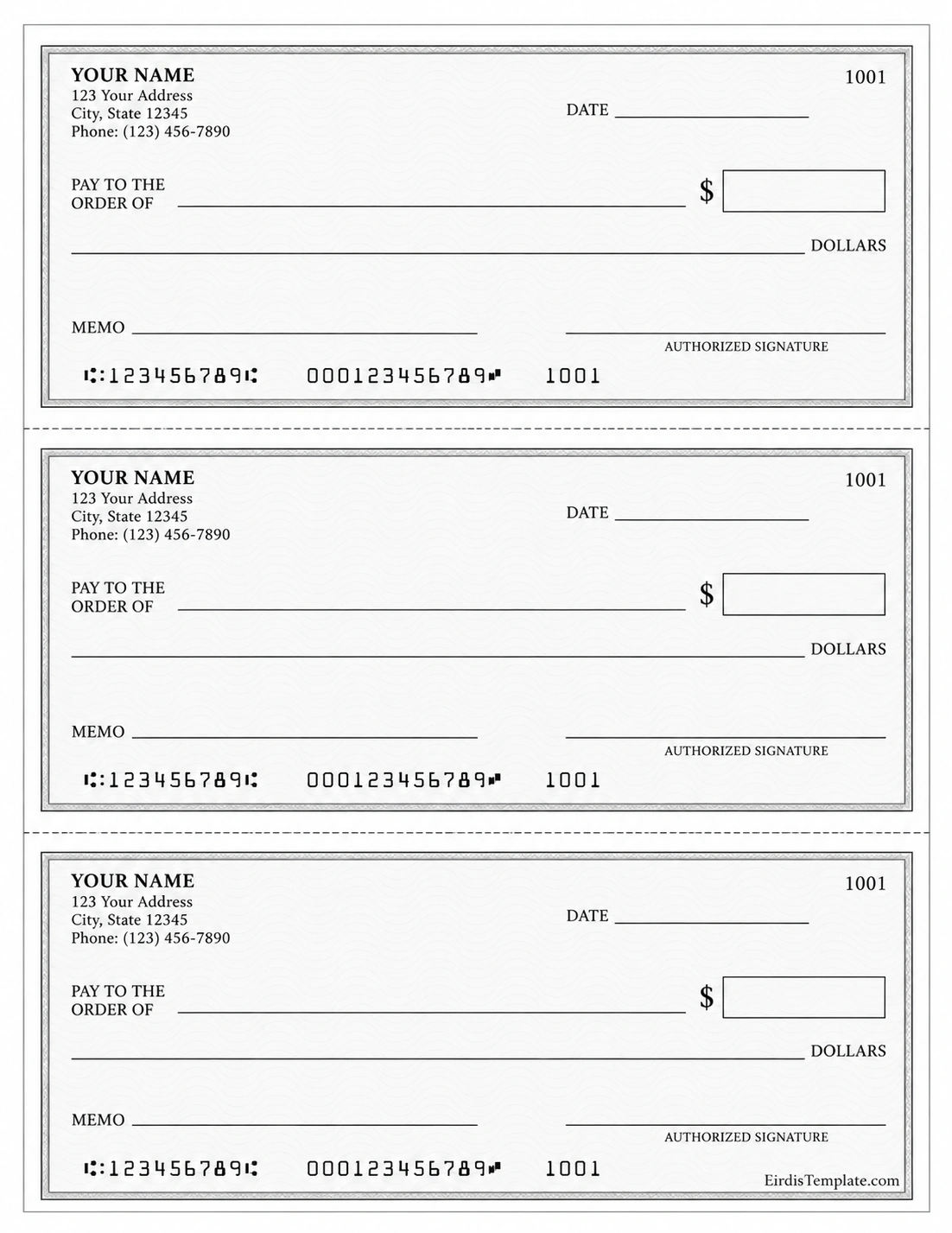
A blank check template is a predesigned layout that resembles the general structure of a physical check. It can help users understand where common check details belong, including the date, payee name, payment amount, memo, and signature. Templates can also be useful for educational demonstrations, document design practice, and non-negotiable examples.
However, a printable check template is not the same as a valid bank-issued check. A design downloaded from a website cannot authorize payment or replace checks issued by a financial institution. In this guide, you will learn about check templates, the information commonly found on a check, legitimate uses, and important precautions for handling payment documents.
What Is a Check?
A check is a written payment instruction that directs a bank or other financial institution to pay a specified amount from the account of the person or organization issuing it, subject to applicable banking rules and available funds.
In a typical transaction, the person writing the check is the drawer, the financial institution is the drawee, and the person or organization receiving payment is the payee. The check identifies the payment amount and includes the information required to process the transaction.
Checks may be used by individuals, businesses, nonprofits, and other organizations. Their availability, acceptance, processing methods, and legal requirements vary by country and financial institution.
What Is a Blank Check Template?
A blank check template is a reusable visual layout showing the typical fields found on a check. Depending on its purpose, the layout may include a date field, payee line, amount box, written amount line, memo field, signature area, and sample numbering.
Templates can be helpful when learning about check anatomy, creating a classroom demonstration, designing a fictional document for a presentation, or preparing a clearly marked sample for training materials.
A blank check template should not be represented as an authentic bank-issued payment instrument. For actual payments, use checks supplied or authorized by your financial institution and follow its requirements. A homemade template may not be accepted for payment and could create legal or financial risks if misrepresented.
What Information Appears on a Check?
The exact layout of a check varies by issuer and country, but many checks contain several common elements. Understanding these fields can help you read a check and recognize the information involved in a payment.
Date
The date indicates when the check is written or issued. The date may affect when a check can be presented for payment, depending on applicable rules and the financial institution’s procedures.
Payee Name
The payee is the person or organization designated to receive the payment. On an ordinary check, the payee’s name appears next to wording such as “Pay to the Order of.”
For legitimate payments, make sure the recipient’s name is accurate and matches the instructions provided by the recipient.
Payment Amount
A check commonly shows the payment amount in a numerical field and on a written amount line. These fields communicate the amount the issuer intends to pay.
When writing an actual check, follow your financial institution’s instructions for entering the amount clearly and consistently. Any discrepancy between amount fields may require additional review.
Memo
The memo field provides space for a short note describing the purpose of the payment. For example, it might identify an invoice number, rent period, donation, or reimbursement.
The memo is generally a reference for the parties involved and does not replace a contract, invoice, or other supporting documentation.
Signature
An authorized signature may be required for a paper check to be valid under the issuer’s banking arrangements. The appropriate signing authority depends on the account and financial institution.
Never copy or reproduce another person’s signature without authorization. A template’s signature line is only a layout element and does not itself authorize a transaction.
Check Number and Banking Information
Real checks often include a check number and bank-related information used to identify the instrument and support processing. Some checks also display machine-readable account and routing information along the bottom edge.
These details are sensitive. For a sample or educational design, use fictional placeholders and clearly label the document as a sample. Do not reproduce real account information on a public template.
Legitimate Uses for a Blank Check Template
A check template can serve several useful purposes when it is clearly identified as a sample and is not presented as a real payment instrument.
Educational Demonstrations
Teachers and trainers can use a non-negotiable sample to explain the parts of a check, discuss payment terminology, or demonstrate how paper-based transactions work.
Document Design Practice
Designers can study alignment, typography, field placement, spacing, and readability when creating fictional financial documents for a mockup or design exercise.
Business Training Materials
Organizations may include a clearly marked sample check in internal training materials to help staff recognize common fields or understand basic payment documentation.
Fictional Scenarios and Presentations
A sample check can illustrate a hypothetical transaction in a presentation, classroom exercise, or fictional scenario. Use invented names and nonfunctional placeholder information, and make the sample status prominent.
How to Choose a Check Template for Educational Use
If you need a printable sample, choose a layout that communicates its purpose clearly and avoids confusion with an authentic check.
Look for a Clear Sample Label
Choose a design marked “SAMPLE,” “VOID,” or “NOT VALID FOR PAYMENT” in a prominent position. The wording should remain visible when the document is printed or shared digitally.
Use Fictional Placeholder Details
Use fictional names and clearly nonfunctional example information. Avoid real bank logos, actual account details, scannable payment codes, or other features that could make the document appear to be an authentic financial instrument.
Prioritize Readability
Make field labels and example text easy to read. Leave sufficient space between fields so the educational purpose is clear without suggesting that the template can be used to issue a real payment.
Check the Intended Purpose
Before downloading or printing a template, confirm that it suits your intended use. If you need to pay someone, request a legitimate check or use a payment method authorized by your financial institution.
Check Template vs. Bank-Issued Check
A printable template and a bank-issued check may look similar in broad layout, but they have fundamentally different purposes.
- Blank check template: A sample layout used for reference, education, or design practice.
- Bank-issued check: A payment instrument supplied or authorized through a financial institution and subject to its processing requirements.
- Voided check: A genuine check marked void so it cannot be used as an ordinary payment, although it may sometimes be requested to verify account details through an approved process.
- Electronic payment: A digital transfer or payment authorized through a bank or payment service.
If a business requests a voided check for account verification, ask whether it accepts a secure alternative, such as an official bank document or an approved verification method. Share account information only through a trusted channel.
Important Safety Tips for Check-Related Documents
Checks and check-like documents can involve sensitive financial information. Follow these precautions when viewing, printing, storing, or sharing samples.
- Keep sample labels visible: Clearly identify educational documents as non-negotiable samples.
- Protect account information: Do not publish real account or routing numbers in a template or example.
- Use authorized payment instruments: Obtain real checks through your bank or other authorized provider.
- Verify requests: Confirm unusual payment or account-verification requests with the organization through a trusted contact method.
- Store documents securely: Keep genuine checks and financial records away from unauthorized access.
- Dispose of sensitive paperwork carefully: Shred obsolete checks and documents containing account information when appropriate.
Common Check Template Mistakes to Avoid
When creating or using a check sample, avoid design choices that could cause confusion or expose sensitive information.
- Leaving out the sample disclaimer: Without a visible label, readers may mistake a mockup for an authentic payment instrument.
- Using real account details: Personal or business banking information should not appear in a publicly shared sample.
- Copying a real person’s signature: Use a blank signature line or clearly fictional example instead.
- Imitating a bank’s official design: Avoid copying logos, security features, or identifying details that could misrepresent the document’s origin.
- Using unclear placeholder text: Label example fields clearly so readers understand the document is for reference only.
- Assuming a template can make a payment: A printable layout does not create a bank account, authorize funds, or replace a legitimate check.
Frequently Asked Questions About Check Templates
What is a blank check template?
A blank check template is a predesigned sample showing the general layout and fields of a check. It can be used for educational demonstrations, fictional examples, and design practice, but it is not a substitute for a bank-issued payment instrument.
Can I use a printable check template to pay someone?
You should not rely on a generic printable template to issue a payment. Use checks supplied or authorized by your financial institution or choose another legitimate payment method accepted by the recipient.
What information is usually shown on a check?
A typical check may include a date, payee name, numerical and written payment amounts, memo field, signature area, check number, and banking information. The precise format depends on the issuer and jurisdiction.
What is the memo line on a check used for?
The memo line is used to add a brief reference describing the purpose of the payment, such as an invoice number or billing period. It does not replace a formal invoice or agreement.
Is a blank check template the same as a voided check?
No. A blank template is a sample layout, while a voided check is an actual check marked to indicate that it should not be used as a normal payment instrument. A voided check may still contain sensitive banking information and should be shared securely when needed.
How can I make a check sample clearly non-negotiable?
Use fictional details and add a prominent label such as “SAMPLE — NOT VALID FOR PAYMENT” or “VOID.” Avoid real account information, real signatures, and branding that could mislead readers about the document’s authenticity.
Conclusion
A check is a payment instrument that contains information identifying the recipient, amount, date, and other transaction details. A blank check template can help people understand this structure or illustrate a hypothetical transaction in educational and design settings.
However, a printable sample is not a bank-issued check and should never be represented as a valid payment instrument. Choose a clearly labeled non-negotiable design, use fictional details, and protect sensitive financial information.
When you need to make an actual payment or verify bank account details, follow the instructions provided by your financial institution or use an authorized payment method. This approach keeps check-related documents useful while reducing the risk of confusion and financial misuse.
Download: Blank Check Template

- Free Printable Blank Check Template - October 9, 2026
- Birth Certificate Template - October 9, 2026
- Free Customizable Biography Template - October 9, 2026
