A certificate of recognition is a formal document that acknowledges an individual’s or group’s achievements, dedication, contributions, or exceptional performance. Businesses, schools, nonprofit organizations, and community groups use recognition certificates to show appreciation and celebrate meaningful accomplishments.
Recognizing someone’s effort can help build confidence, encourage positive behavior, and strengthen a sense of belonging. Whether you want to honor an outstanding employee, celebrate a student’s progress, or thank a team for completing an important project, a well-designed certificate provides a lasting reminder of the achievement.
This guide explains what a certificate of recognition is, when to use one, what information to include, and how to create a professional certificate using a printable template.
What Is a Certificate of Recognition?
A certificate of recognition is a written acknowledgment presented to a person or group for a specific accomplishment, contribution, milestone, or positive action. It communicates that the recipient’s efforts have been noticed and appreciated.
Unlike a document that simply records attendance, a recognition certificate focuses on the value of someone’s contribution. It may celebrate excellent customer service, leadership, teamwork, academic improvement, volunteer service, safety awareness, or years of dedication.
A certificate of recognition does not always require a competition or formal assessment. Organizations can present one for consistent effort, helpful behavior, reliability, creativity, or a meaningful contribution to a shared goal.
Why Is a Certificate of Recognition Important?
Recognition is a practical way to communicate appreciation. A thoughtful certificate can reinforce the behaviors and contributions an organization wants to encourage.
1. Boosts Morale and Confidence
Receiving recognition can help people feel valued. A certificate provides visible evidence that their work or effort has made a difference, which can support confidence and motivation.
2. Encourages Positive Behaviors
When an organization recognizes collaboration, reliability, initiative, or excellent service, it highlights behaviors worth repeating. Clear recognition can help reinforce a positive culture at work, in school, or within a community group.
3. Celebrates Milestones and Achievements
A recognition certificate offers a simple way to mark important moments. These may include completing a challenging project, reaching a performance milestone, demonstrating leadership, or making a meaningful contribution over time.
4. Strengthens Team Relationships
Recognizing individual and group achievements can help people feel connected to a larger purpose. Team certificates can also celebrate shared effort instead of focusing only on individual results.
Certificate of Recognition Template
A certificate of recognition template makes it easier to create a consistent and professional award without designing the layout from scratch. You can customize the recipient’s name, achievement, date, organization, and authorized signature to match the occasion.
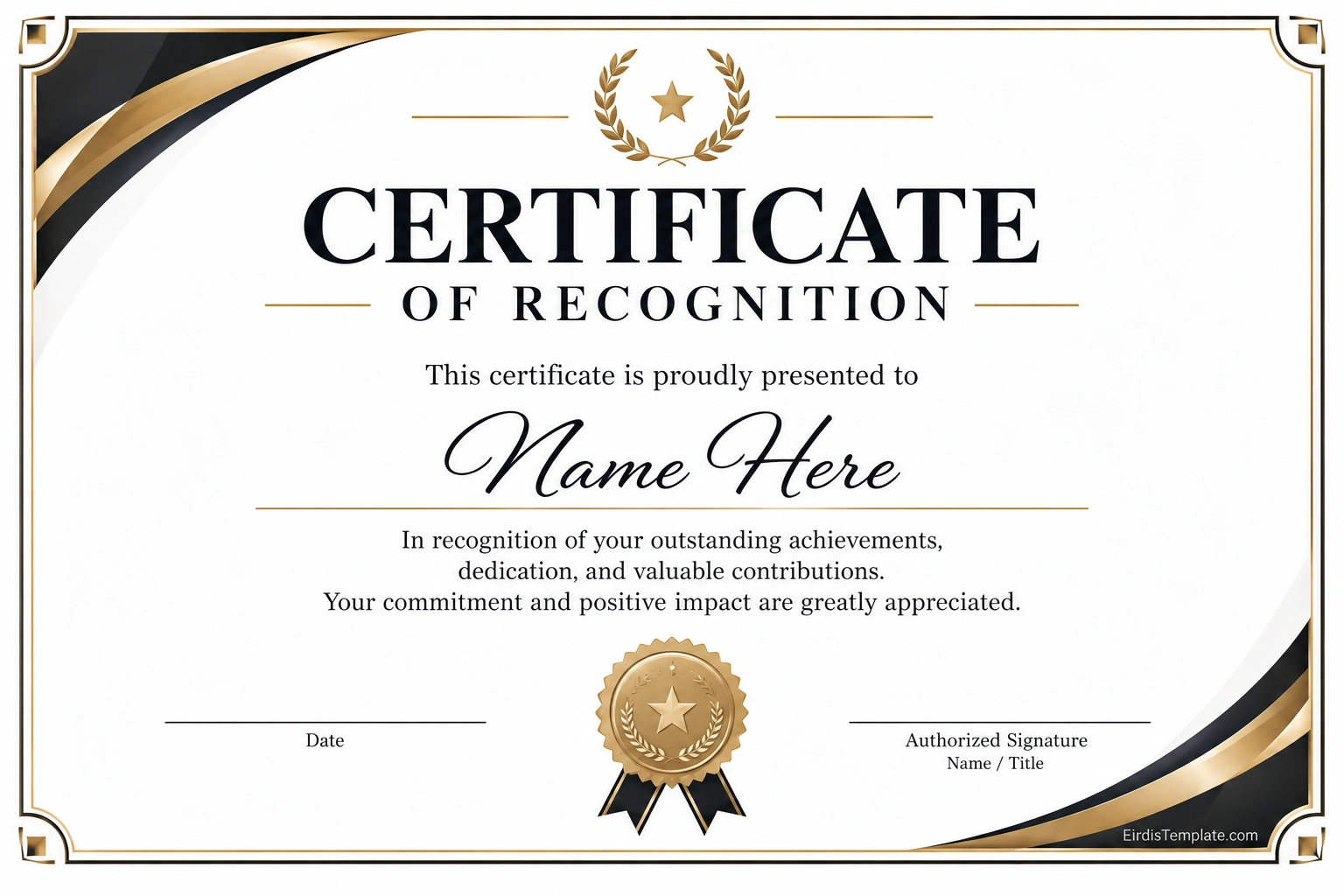
Before presenting the certificate, replace the sample wording with details that accurately describe the recipient’s contribution. For a workplace award, you can also include the company name or logo to create a more personalized design.
What Should a Certificate of Recognition Include?
A good recognition certificate should be easy to read and clearly explain why the recipient is being honored. Include the following details when appropriate.
- Certificate title: Use a clear heading such as “Certificate of Recognition” or “Recognition Award.”
- Recipient’s full name: Check the spelling and preferred name before printing.
- Reason for recognition: State the achievement, contribution, behavior, or milestone being celebrated.
- Presentation statement: Add a short sentence expressing appreciation or explaining the award.
- Issuing organization: Include the name of the company, school, team, association, or community group.
- Date: Record when the certificate is presented or when the achievement occurred.
- Authorized signature: Include the name and title of the manager, teacher, organizer, or other authorized representative.
- Branding or logo: Add approved visual elements when they help identify the organization.
Some certificates may also include an award category, project name, department, or certificate number. Keep the design uncluttered so the recipient’s name and reason for recognition remain the main focus.
Common Types of Recognition Certificates
A certificate of recognition can be adapted for many settings. The wording should reflect the recipient’s actual contribution and the purpose of the award.
Employee Recognition Certificate
Businesses use employee recognition certificates to acknowledge excellent performance, dependable service, leadership, teamwork, innovation, or a significant contribution to a project. A specific statement is more meaningful than a generic message because it explains what the employee did well.
Student Recognition Certificate
Schools and educational programs can recognize academic improvement, classroom participation, helpfulness, creativity, leadership, or positive behavior. Recognition can celebrate progress as well as outstanding results.
Volunteer Recognition Certificate
Nonprofit organizations, charities, and community groups may use certificates to thank volunteers for their service, commitment, and contributions. When relevant, the certificate can identify the event, campaign, or community project supported by the recipient.
Team Recognition Certificate
A team certificate recognizes a group’s collective contribution, such as completing a major project, improving a process, supporting customers, or achieving an organizational goal. Include the team name and a clear description of the shared accomplishment.
Leadership or Service Recognition Certificate
This type of award recognizes people who demonstrate initiative, support others, or provide exceptional service. The description should identify the actions or contributions that made the recipient’s efforts noteworthy.
How to Write a Meaningful Recognition Statement
The wording is one of the most important parts of a recognition certificate. A strong statement is specific, sincere, and easy to understand.
Focus on a Real Contribution
Instead of writing only “In recognition of excellent work,” explain the achievement. For example, you could recognize an employee for improving a team process, a student for showing consistent progress, or a volunteer for supporting a community event.
Keep the Message Positive and Professional
Use respectful language that suits the recipient and the occasion. Avoid exaggerated claims, vague compliments, or wording that could suggest a formal qualification the recipient has not earned.
Use These Sample Statements
- Employee: “In recognition of your dedication, teamwork, and valuable contribution to our organization’s success.”
- Student: “In recognition of your positive attitude, consistent effort, and commitment to learning.”
- Volunteer: “In appreciation of your generous service and meaningful contribution to our community.”
- Team: “In recognition of your collaboration, determination, and successful completion of an important project.”
- Leadership: “In appreciation of your initiative, guidance, and positive impact on those around you.”
Adapt these examples to the actual achievement rather than using the same statement for every recipient.
How to Create a Certificate of Recognition
You can create a professional recognition certificate with a printable template or a document design tool. Follow these steps to prepare a certificate that is ready to present.
Step 1: Define the Purpose of the Award
Decide what you want to recognize. It might be an individual achievement, a team contribution, excellent service, a personal milestone, or consistent positive behavior. A clear purpose helps you choose appropriate wording.
Step 2: Choose a Suitable Template
Select a design that fits the occasion. A formal black-and-gold certificate may suit a corporate award, while a simpler design may be more appropriate for a classroom or community activity.
Step 3: Add the Recipient’s Details
Enter the recipient’s name, award statement, organization, and presentation date. Double-check every detail, particularly when preparing certificates for a large group.
Step 4: Personalize the Design
Add an organization logo, an approved color scheme, or a subtle decorative element. Maintain enough white space and use readable fonts to ensure that the certificate looks professional when printed.
Step 5: Review, Print, or Share Digitally
Proofread the certificate and preview it at the intended print size. Use quality paper for physical presentation, or export the finished certificate as a PDF for digital delivery. Keep a copy if your organization needs to maintain recognition records.
Best Practices for Employee and Student Recognition
A certificate has more impact when the recognition process is fair, timely, and meaningful. Consider these practices when planning an award program.
- Recognize specific actions: Explain what the person or team did and why it mattered.
- Present recognition promptly: Whenever practical, acknowledge the contribution close to the time it occurs.
- Apply clear criteria: Use consistent standards when several people are eligible for recognition.
- Celebrate different strengths: Recognize teamwork, improvement, service, creativity, and reliability, not only top performance.
- Personalize the message: Mention the recipient’s actual contribution instead of relying entirely on generic wording.
- Check names and dates: Correct details show care and help prevent reprinting.
- Respect privacy and preferences: Consider whether the recipient is comfortable being recognized publicly.
A certificate should support genuine appreciation rather than replace fair treatment, constructive feedback, or meaningful support. Recognition is most effective when it reflects real contributions and aligns with the organization’s values.
Frequently Asked Questions About Certificates of Recognition
What is the purpose of a certificate of recognition?
Its purpose is to acknowledge an individual’s or group’s achievement, effort, contribution, or positive behavior. It can help communicate appreciation, boost morale, and encourage actions that support a team’s or organization’s goals.
Is a certificate of recognition the same as a certificate of achievement?
They can overlap, but their emphasis may differ. A certificate of recognition often acknowledges contributions, dedication, or positive behavior, while a certificate of achievement usually highlights a specific result or accomplishment. The exact meaning depends on the issuing organization.
Can I use a certificate of recognition for employees?
Yes. Employers can use recognition certificates to acknowledge excellent service, teamwork, leadership, innovation, reliability, or contributions to a project. Include a specific statement explaining why the employee is being recognized.
Can students receive a certificate of recognition?
Yes. Schools and educational organizations can recognize students for improvement, participation, leadership, helpfulness, creativity, or other positive contributions. The award criteria should be appropriate to the student’s age and program.
What should I write on a certificate of recognition?
Include the recipient’s name, the reason for recognition, the issuing organization, the date, and an authorized signature when appropriate. A short, specific appreciation statement makes the certificate more meaningful.
Can I edit and print a certificate of recognition template?
Yes. You can customize a printable template with the recipient’s details, achievement statement, date, and organization branding. Check the template’s usage terms and proofread the finished document before printing or sharing it.
Does a certificate of recognition have legal value?
It generally serves as an acknowledgment or award rather than a formal license, academic qualification, or legally regulated credential. Its significance depends on the issuing organization and the context in which it is used.
Conclusion
A certificate of recognition is a simple but meaningful way to celebrate achievements, acknowledge dedication, and show appreciation for valuable contributions. It can be used in workplaces, schools, volunteer programs, and community organizations to highlight the actions and efforts that make a difference.
Choose a suitable certificate of recognition template, describe the recipient’s contribution clearly, and verify all details before presenting it. When recognition is specific, sincere, and timely, a well-designed certificate becomes more than a document: it becomes a lasting reminder that someone’s efforts were valued.
Download: Certificate of Recognition Template

- Change Management Planning Template - October 26, 2026
- Certificate of Recognition Template - October 26, 2026
- Certificate of Participation Template - October 26, 2026
