A certificate of accomplishment is a formal document that recognizes a person’s achievement, effort, or successful completion of a program, project, or specific goal. It provides a tangible record of progress and can be used in educational settings, workplaces, professional development programs, and personal activities.
Whether someone has completed a training course, reached an important workplace milestone, or demonstrated exceptional dedication, an accomplishment certificate offers a meaningful way to acknowledge that effort. It can also help recipients document their experiences when applying for jobs, pursuing further education, or building a professional portfolio.
Creating an effective certificate does not require a complicated design. The most useful certificates clearly identify the recipient, explain the achievement, and include the name of the issuing organization and the date of recognition. With suitable wording and a professional layout, a simple certificate can become a lasting reminder of success.
What Is a Certificate of Accomplishment?
A certificate of accomplishment is a document presented to an individual in recognition of a completed task, demonstrated skill, personal milestone, or notable contribution. It communicates that the recipient has achieved something worth acknowledging.
Organizations may issue these certificates after employees complete internal training, students finish a learning project, volunteers contribute to a community initiative, or participants meet the requirements of a development program. Individuals may also create certificates to recognize achievements in clubs, workshops, and personal challenges.
Unlike a formal academic degree or professional license, a certificate of accomplishment does not automatically establish a regulated qualification. Its value depends on the achievement being recognized, the credibility of the issuing organization, and the context in which it is presented.
What Is the Purpose of an Accomplishment Certificate?
An accomplishment certificate serves several purposes beyond simply celebrating success. It helps organizations recognize effort while giving recipients a record of what they have achieved.
Recognizing Effort and Achievement
A certificate provides visible recognition for completing a goal, overcoming a challenge, or contributing to a project. This acknowledgment can help recipients feel appreciated and encourage them to continue developing their skills.
Supporting Professional Development
Employees and training participants can keep certificates as part of their professional records. When relevant, the document may help demonstrate participation in a development program or completion of an internal learning activity.
Encouraging Learning and Personal Growth
Schools, clubs, and community organizations can use certificates to celebrate progress, participation, creativity, leadership, and other positive achievements. Recognition can make milestones more memorable and encourage continued involvement.
Creating a Lasting Keepsake
A well-designed certificate can serve as a reminder of an important experience. Recipients may display it at home or work, include it in a portfolio, or save a digital copy for future reference.
When Should You Give a Certificate of Accomplishment?
Certificates of accomplishment can be used in many situations. The wording should reflect the actual achievement rather than relying on a generic statement that could apply to anyone.
- Employee recognition: Acknowledge an employee’s contribution, completed initiative, or achievement of a meaningful workplace goal.
- Training and workshops: Recognize participants who successfully complete a development program or meet its stated requirements.
- Education: Celebrate a student’s completed project, academic effort, research activity, or learning milestone.
- Volunteer work: Recognize community service, participation, leadership, or contributions to a charitable initiative.
- Professional development: Document completion of an internal skills program or non-regulated professional learning activity.
- Personal achievements: Celebrate the completion of a challenge, creative project, or individual goal.
- Team accomplishments: Recognize a group that has completed a project or contributed to an important organizational result.
Before issuing a certificate, determine what the recipient actually accomplished and whether any completion criteria must be met. This makes the recognition more meaningful and credible.
What to Include in a Certificate of Accomplishment
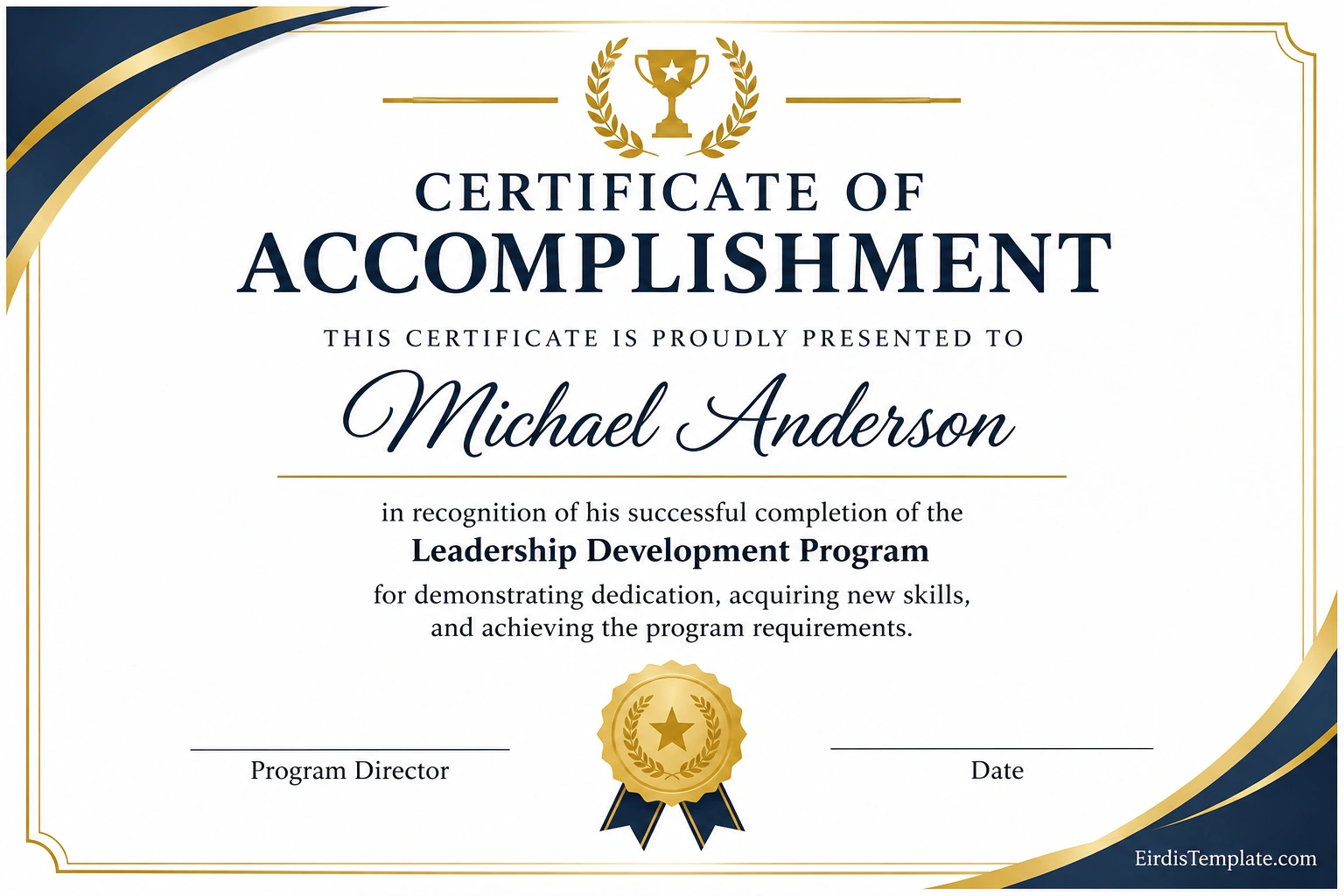
A professional certificate should present its information clearly and make the achievement easy to understand. Although the design can vary, the following elements are useful for most certificates.
1. Certificate Title
Use a prominent heading such as “Certificate of Accomplishment” or “Certificate of Achievement.” Choose the title that best describes the purpose of the award.
2. Recipient’s Full Name
Display the recipient’s name prominently. Check the spelling before printing or issuing the final document, especially when certificates will be used in professional or educational records.
3. Description of the Achievement
Explain why the certificate is being presented. Include the name of the completed program, project, training session, or achievement. Specific wording is more useful than a vague statement of appreciation.
4. Issuing Organization
Include the name of the school, company, training provider, association, or individual issuing the certificate. A logo may be added when the organization has permission to use it.
5. Date of Recognition
Add the date the achievement was completed or the certificate was awarded. Use a consistent date format that suits the intended audience.
6. Authorized Signature
A signature from a program director, manager, instructor, or other authorized representative can make the document more formal. Include the signer’s name and title where appropriate.
7. Optional Details
Depending on the purpose, you may also include:
- A brief statement of appreciation.
- The number of training hours completed, if verified and relevant.
- A certificate identification number for recordkeeping.
- A seal, border, or other restrained decorative element.
- A verification link or contact detail, if the issuer provides one.
How to Write a Certificate of Accomplishment
The wording should be professional, positive, and specific. A short statement that accurately describes the achievement is usually more effective than a long paragraph filled with general praise.
Step 1: Identify the Achievement
Decide what the certificate recognizes. Is it for completing a program, demonstrating a particular skill, finishing a project, or making a valuable contribution? Defining the purpose first helps you choose the right language.
Step 2: Choose Clear and Appropriate Wording
Use direct language such as “in recognition of successful completion” or “for demonstrating dedication and commitment.” If the recipient met defined requirements, describe those requirements accurately.
Step 3: Personalize the Certificate
Include the recipient’s name and the specific achievement. When possible, identify the program, project, or event so the document remains understandable when reviewed later.
Step 4: Add the Issuer and Date
Identify the organization or person presenting the certificate and include the relevant date. Add an authorized signature if the certificate’s purpose calls for one.
Step 5: Review the Final Document
Proofread all names, titles, dates, and achievement details. Check the layout, print quality, and spelling before issuing the certificate. For digital certificates, ensure the file displays correctly on common devices and can be printed if needed.
Certificate of Accomplishment Wording Examples
Use the following examples as starting points and adjust them to match the achievement and audience.
For Training Completion
“This certificate is presented to [Recipient Name] in recognition of successfully completing [Program Name] and demonstrating commitment to professional learning and skill development.”
For Employee Recognition
“Presented to [Recipient Name] in recognition of valuable contributions, consistent dedication, and successful completion of [Project or Initiative Name].”
For Students
“This certificate recognizes [Recipient Name] for completing [Project or Learning Activity] and demonstrating curiosity, perseverance, and commitment to learning.”
For Volunteers
“Presented to [Recipient Name] in appreciation of dedicated service and meaningful contributions to [Organization or Community Initiative].”
For Personal Achievement
“Awarded to [Recipient Name] in recognition of reaching [Goal or Milestone] through persistence, dedication, and continued effort.”
Use completion language only when the recipient has actually completed the stated requirements. If the certificate recognizes attendance or participation, say so rather than implying that a qualification has been earned.
How to Design a Professional Certificate
A good certificate balances visual appeal with readability. The design should make the recipient’s name and achievement the main focus while keeping supporting information easy to find.
Choose a Suitable Page Orientation
Landscape orientation is a popular choice because it provides room for a large title, recipient name, achievement statement, and signature lines. Portrait orientation can also work well for a traditional or compact design.
Use a Consistent Color Palette
Navy blue, black, white, and gold are common choices for formal certificates. For a more understated appearance, use a white background, dark text, and a thin border. Limit decorative colors so the document remains professional and easy to print.
Select Readable Fonts
A serif font can give the certificate a formal appearance, while a simple sans-serif font offers a modern look. Script fonts can highlight the recipient’s name, but avoid using them for long descriptions or small text.
Leave Enough White Space
Avoid filling every part of the page with text or decorative graphics. Generous spacing helps the certificate look organized and allows the recipient’s name and achievement to stand out.
Printing and Sharing Your Certificate
Once the design is complete, choose a format and delivery method that suit the recipient and the purpose of the award.
- Printable format: Use a print-ready PDF when you want the layout to remain consistent across devices and printers.
- Paper choice: Select quality paper that suits the formality of the occasion and works with the available printer.
- Print preview: Check margins, text alignment, border placement, and signature areas before printing multiple copies.
- Digital delivery: Send the certificate as a PDF or through a suitable certificate platform when recipients need an electronic copy.
- Recordkeeping: Keep a copy of issued certificates when the organization needs to verify completion or maintain recognition records.
If the certificate will be used for employment, education, or professional development, make sure its claims are accurate and that the issuer can confirm the achievement if necessary.
Common Mistakes to Avoid
A few simple checks can make your certificate more useful and credible.
- Using vague wording: State the achievement or program instead of relying only on generic praise.
- Spelling the recipient’s name incorrectly: Verify the name before issuing the final version.
- Confusing accomplishment with certification: Do not imply that the document grants a license, accredited qualification, or professional credential unless that is accurate.
- Adding unverified claims: Include only achievements, hours, or results that can be supported.
- Using hard-to-read fonts: Make sure the title and supporting information remain legible when printed.
- Forgetting issuer details: Include the organization or authorized person responsible for presenting the certificate.
Frequently Asked Questions About Certificates of Accomplishment
What is the difference between a certificate of accomplishment and a certificate of achievement?
The terms are often used similarly to recognize completed goals, demonstrated effort, or notable contributions. The precise meaning depends on the issuing organization. Neither title automatically indicates an accredited qualification.
Is a certificate of accomplishment an official qualification?
Not necessarily. It generally records an achievement recognized by the issuer. Whether it counts as formal evidence of training or competence depends on the program, the issuing organization, and the requirements of the institution or employer reviewing it.
Can I create my own certificate of accomplishment?
Yes. You can create a certificate using a document editor or a customizable certificate template. Include accurate details about the achievement, recipient, issuing organization, and date. Make sure the certificate does not falsely imply accreditation or authorization.
Can a certificate of accomplishment be used on a resume?
It may be relevant when it documents a completed training program, project, or professional development activity. Include it when it supports the role you are applying for, and describe the achievement accurately. A certificate does not replace a required license or recognized qualification.
What size should a certificate of accomplishment be?
US Letter landscape, measuring 11 by 8.5 inches, is a common choice in the United States. A4 landscape is also widely used in other regions. Choose the size that matches your printer, audience, and intended use.
Should a certificate of accomplishment have a signature?
A signature is not always required, but it can add formality and identify the person responsible for issuing the certificate. For workplace or training recognition, a manager, instructor, or program director may sign it when appropriate.
Can I issue a digital certificate of accomplishment?
Yes. A digital certificate can be shared as a PDF or through a certificate platform. Include the same essential details as a printed version and consider adding a verification method if the issuer needs to confirm its authenticity.
Conclusion
A certificate of accomplishment is a practical way to recognize progress, effort, completed programs, and meaningful contributions. It can support employee recognition, education, professional development, volunteer activities, and personal milestones.
For the best result, use specific wording, verify the recipient’s details, identify the issuing organization, and choose a clean, readable design. A carefully prepared certificate provides a lasting record of achievement while making the recognition feel personal, professional, and meaningful.
Download: Certificate of Accomplishment Template

- Certificate of Accomplishment Template - October 19, 2026
- Cease and Desist Letter Template - October 19, 2026
- Catholic Wedding Program Template - October 19, 2026
