When it comes to running a business, vendor agreements play a crucial role in ensuring smooth operations. Whether you are a small startup or a large corporation, having clear and concise vendor agreements in place is essential for a successful business relationship. In this comprehensive guide, we will dive deep into the world of vendor agreements, exploring what they are, why they are important, key elements to include, how to create them, and some valuable tips for effective vendor agreement management.
What is a Vendor Agreement?
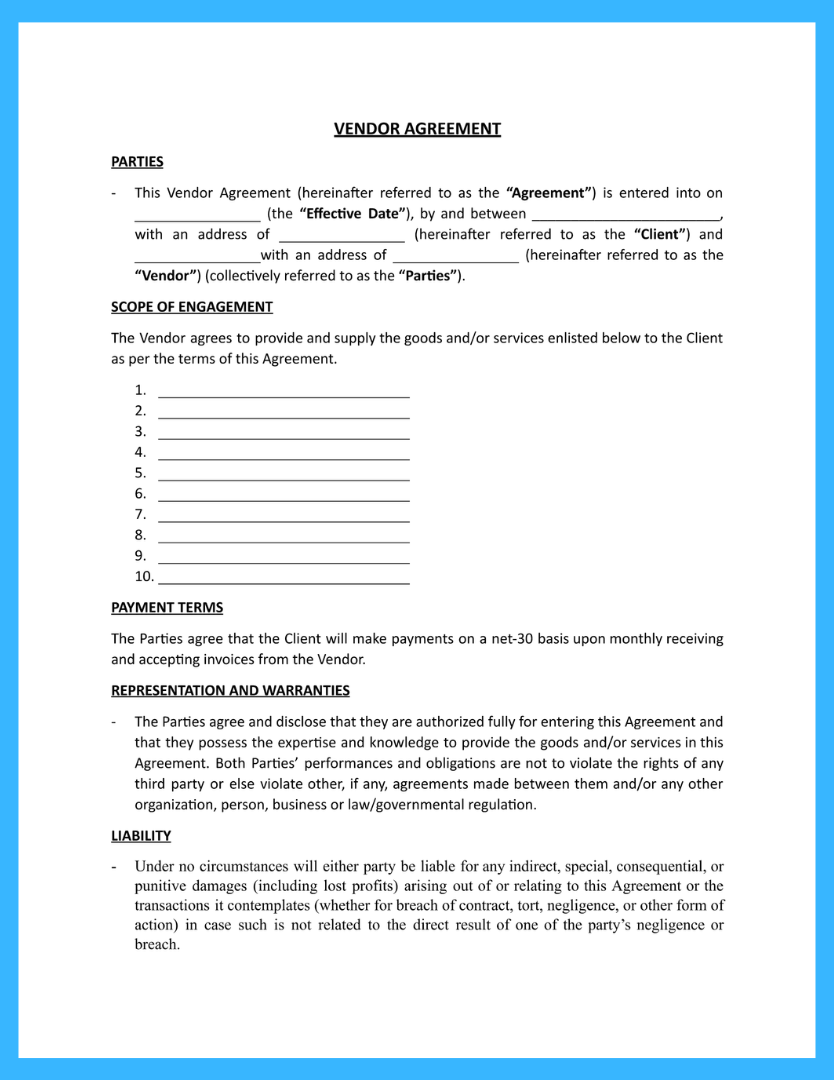
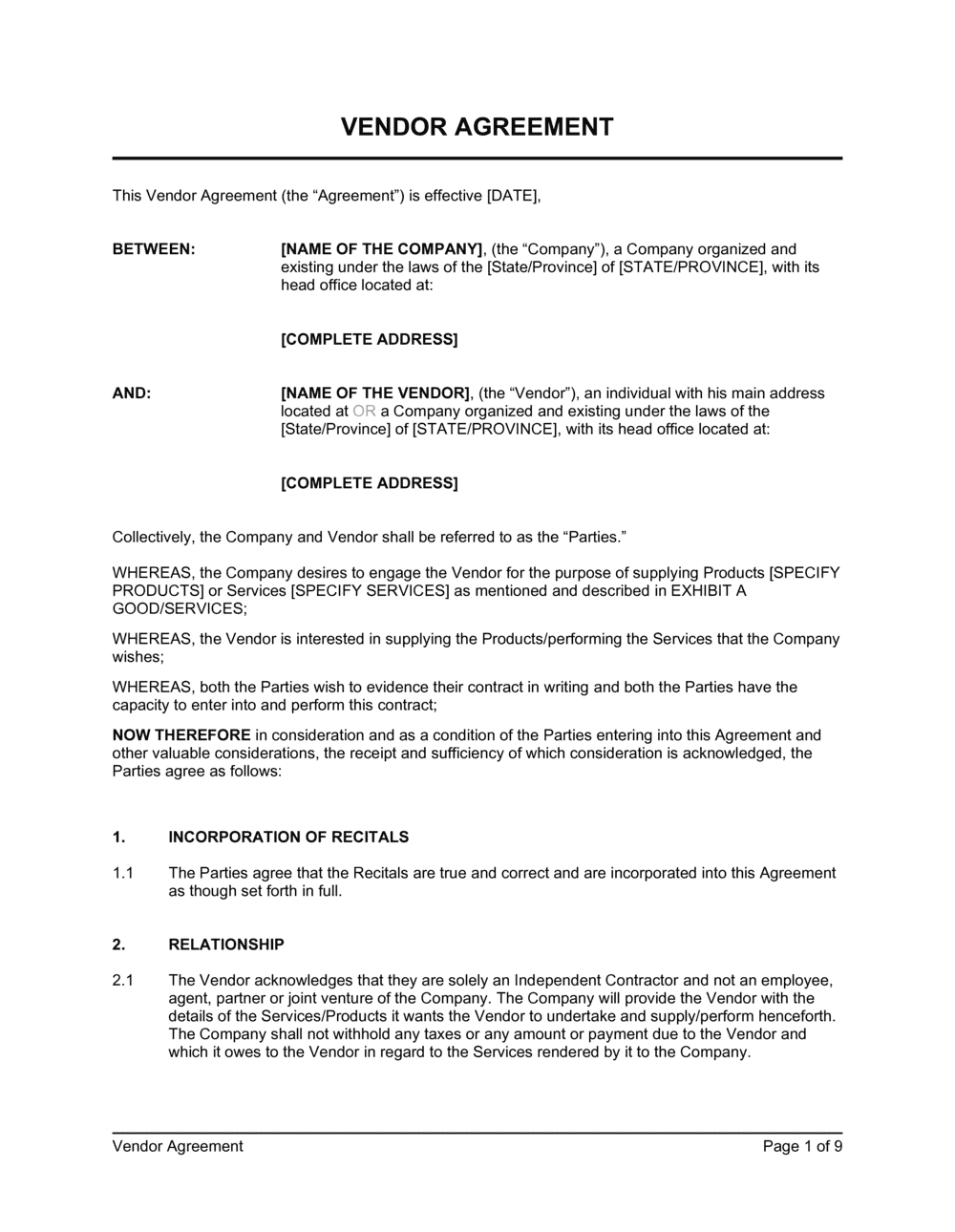
A vendor agreement is a legally binding contract between a company and a vendor that outlines the terms and conditions of their business relationship. This agreement typically covers important details such as the products or services to be provided, pricing, payment terms, delivery schedules, warranties, dispute resolution mechanisms, confidentiality clauses, and other relevant terms. Vendor agreements are crucial for establishing clear expectations and responsibilities for both parties involved.
Why are Vendor Agreements Important?
Vendor agreements are important for several reasons. Firstly, they help ensure that both parties have a clear understanding of their roles and responsibilities, reducing the likelihood of misunderstandings or disputes. Additionally, vendor agreements provide legal protection for both parties in case issues arise in the future. By clearly outlining the terms of the agreement, vendor agreements help establish trust and transparency in the business relationship.
Key Elements of a Vendor Agreement
When drafting a vendor agreement, there are several key elements that should be included to ensure clarity and protection for both parties. Some of the essential elements to consider are:
- Identification of Parties. Clearly identify the parties involved in the agreement, including their legal names and contact information.
- Scope of Work. Define the products or services to be provided by the vendor, including specifications, quantities, and quality standards.
- Pricing and Payment Terms. Outline the pricing structure, payment terms, and any penalties for late payments.
- Delivery and Performance. Specify delivery schedules, performance metrics, and quality control measures.
- Intellectual Property Rights. Address ownership of intellectual property rights, including copyrights, trademarks, and patents.
- Confidentiality. Include confidentiality clauses to protect sensitive information shared during the business relationship.
- Term and Termination. Define the duration of the agreement and the conditions under which either party can terminate the contract.
- Dispute Resolution. Include mechanisms for resolving disputes, such as mediation or arbitration, to avoid costly litigation.
How to Create a Vendor Agreement
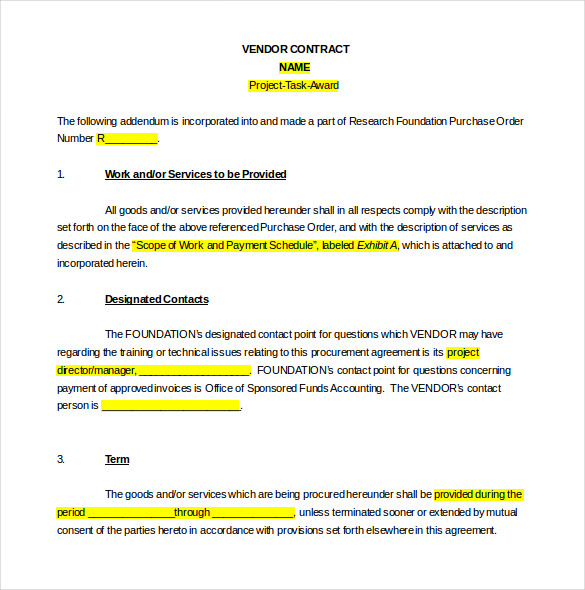
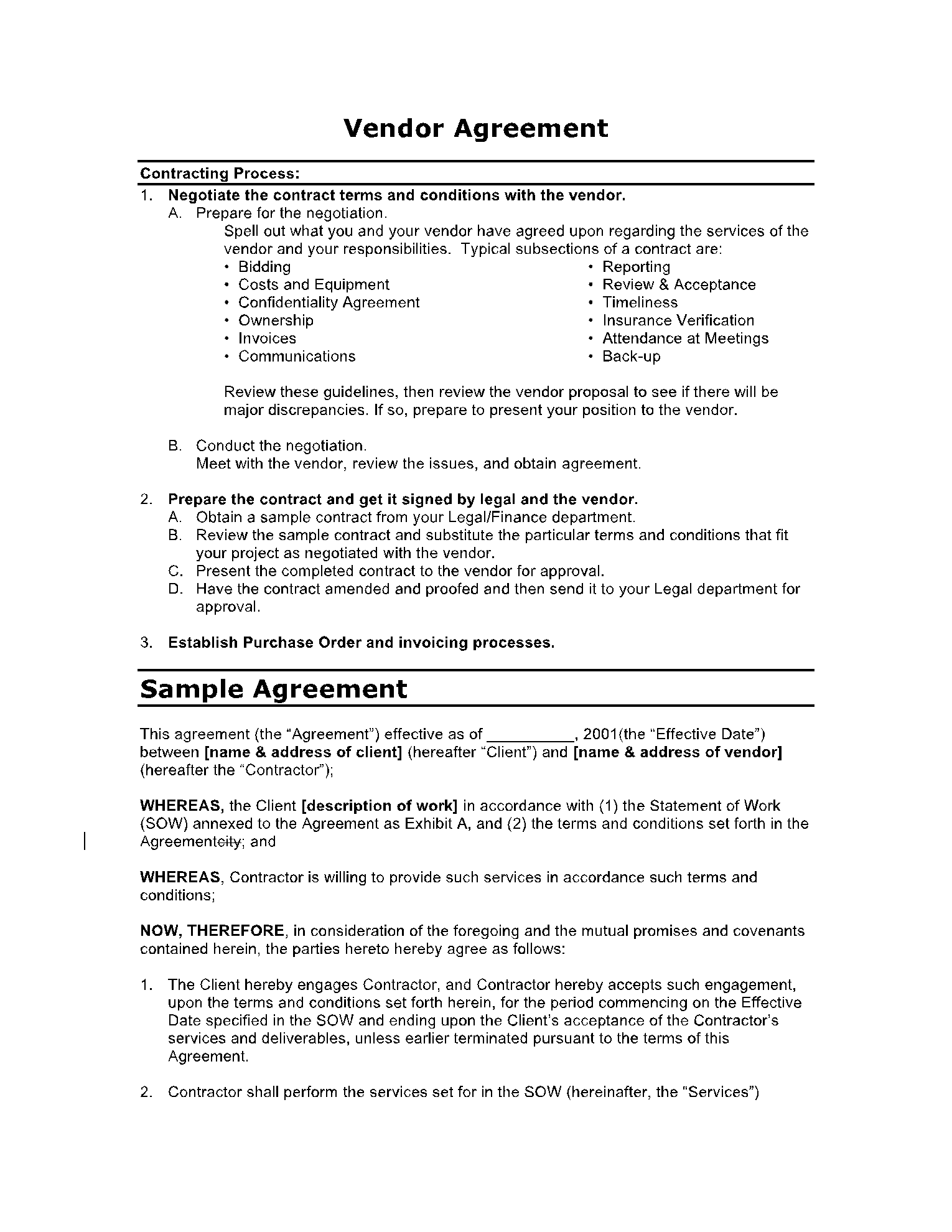
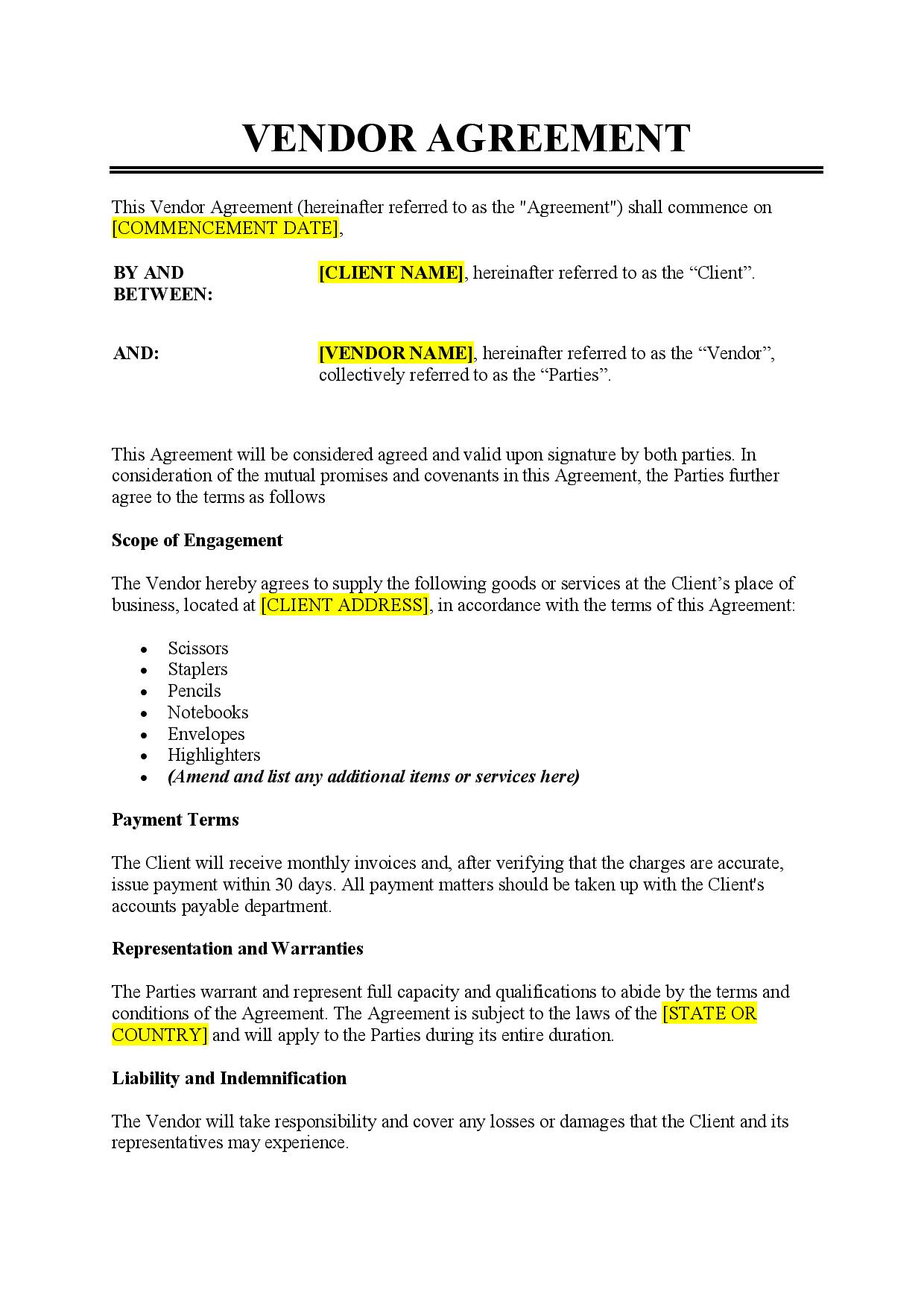
Creating a vendor agreement can be a complex process, but with careful planning and attention to detail, you can draft a comprehensive and effective contract that meets the needs of your business. Here are some steps to help you create a vendor agreement:
1. Define the Scope of Work
Start by clearly defining the scope of work to be performed by the vendor, including deliverables, timelines, and quality standards.
2. Negotiate Terms and Conditions
Work with the vendor to negotiate the terms and conditions of the agreement, ensuring that both parties are in agreement on all aspects of the contract.
3. Consult Legal Counsel
It is advisable to seek legal advice when drafting a vendor agreement to ensure that all legal requirements are met and that your interests are protected.
4. Review and Revise
Thoroughly review the agreement with all parties involved and make any necessary revisions before finalizing the contract.
5. Sign and Execute
Once both parties are satisfied with the terms of the agreement, sign the contract and ensure that all necessary parties execute the document.
Tips for Effective Vendor Agreement Management
Managing vendor agreements effectively is crucial for maintaining strong business relationships and ensuring smooth operations. Here are some tips to help you manage your vendor agreements more efficiently:
- Communicate Clearly. Maintain open communication with your vendors to address any issues promptly and prevent misunderstandings.
- Monitor Performance. Regularly monitor vendor performance to ensure that they are meeting the agreed-upon terms and standards.
- Review and Renew. Periodically review your vendor agreements to ensure they are up to date and renew contracts as needed.
- Stay Compliant. Ensure that your vendor agreements comply with all relevant laws and regulations to avoid legal issues.
- Keep Records. Keep detailed records of all vendor agreements, correspondence, and transactions for future reference.
Conclusion
In conclusion, vendor agreements are an essential part of conducting business and establishing successful partnerships with vendors. By understanding the key elements of a vendor agreement, knowing how to create an effective contract, and following best practices for vendor agreement management, you can ensure that your business relationships thrive and your operations run smoothly. Remember to communicate openly, monitor performance, and stay compliant with legal requirements to build strong and lasting relationships with your vendors.

- Free Student Resume Template (Word) - September 21, 2026
- Free Printable Travel Itinerary Template - September 21, 2026
- Free Printable Trip Schedule Template - September 21, 2026
