A certificate of completion is a formal document that confirms an individual has finished a course, training program, project, workshop, or other designated activity. It provides a written record of completion and can be used by schools, businesses, training providers, contractors, and community organizations. With a certificate of completion template, you can create a professional document that recognizes participation and records an important milestone.
Whether you need a training completion certificate for employees, a course completion certificate for students, or a project completion certificate for a contractor, a printable template can save time and simplify the process. This guide explains what a certificate of completion is, what information to include, how to customize one, and how it differs from a professional certification.
What Is a Certificate of Completion?
A certificate of completion is a document issued to confirm that someone has completed a specified course, program, project, training session, or activity. It typically identifies the recipient, describes what was completed, and includes the name of the issuing organization and the completion date.
Depending on the context, a completion certificate may serve as a record of participation, fulfillment of a requirement, or completion of an assigned milestone. However, it does not automatically prove that the recipient passed an examination, demonstrated a particular level of skill, or earned a professional license.
A certificate of completion is commonly used to:
- Confirm completion of an educational course or workshop.
- Document employee training and workplace development.
- Recognize participation in seminars, webinars, and learning programs.
- Record the completion of a project or contracted assignment.
- Provide evidence that a designated activity or milestone has been fulfilled.
- Acknowledge completion of a community, volunteer, or personal development program.
Free Printable Certificate of Completion Template
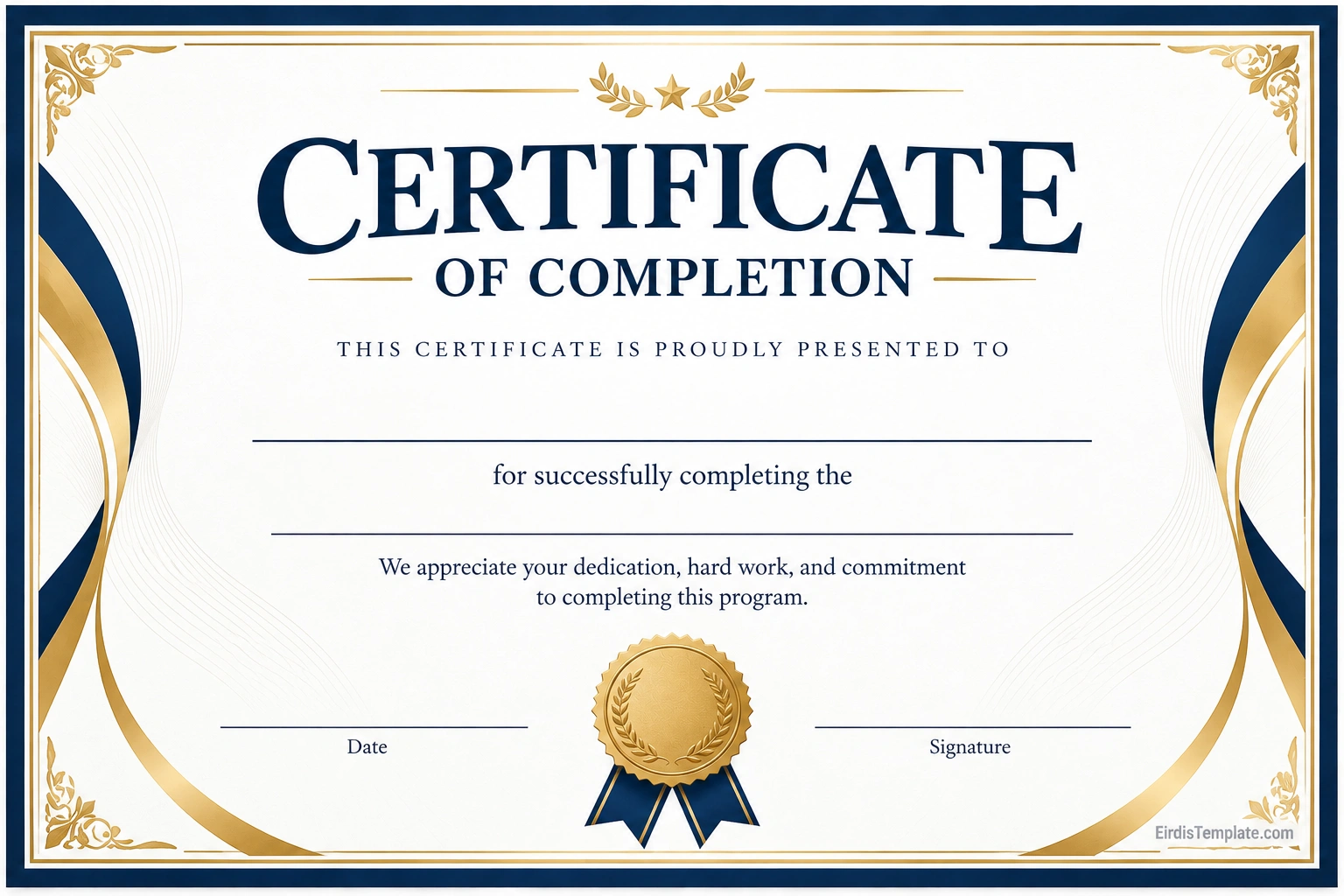
A free printable certificate of completion template gives you a convenient starting point for creating a professional document. You can add the recipient’s name, course or project title, completion date, issuing organization, and authorized signature.
Choose a design that matches the purpose of the certificate. A formal navy-and-gold layout may suit corporate training or professional development, while a simple black-and-white certificate can be practical for classrooms, workshops, and bulk printing. The most effective design keeps the recipient’s name and completion details easy to read.
What Should a Certificate of Completion Include?
A well-prepared completion certificate should clearly identify the recipient and the activity that has been completed. Including the right information helps make the document useful as a record and reduces confusion about what it represents.
1. Certificate Title
Use a clear title such as “Certificate of Completion” or “Course Completion Certificate.” The title should communicate the purpose of the document immediately.
2. Recipient’s Full Name
Include the full name of the person receiving the certificate. Check the spelling carefully, especially when the document will be used for school records, employee files, or professional development documentation.
3. Course, Program, or Project Name
State exactly what the recipient completed. Examples include a workplace safety course, a software training program, a professional workshop, or a construction project. Specific wording makes the certificate more informative than a generic completion statement.
4. Completion Statement
Add a short sentence confirming that the named individual has completed the specified activity. For example: “This certificate is awarded in recognition of successful completion of the Workplace Safety Training Program.” Make sure the wording accurately reflects the completion requirements.
5. Issuing Organization
Include the name of the school, business, training provider, contractor, or organization issuing the document. A logo or department name may be added when appropriate and authorized.
6. Completion Date
Record the date the course, training, or project was completed. For programs with a defined duration, you may also include the start date or total number of training hours if that information is relevant and verified.
7. Signature and Verification Details
A signature from an instructor, manager, project supervisor, or authorized representative can help identify who issued the certificate. Depending on the purpose, you may also include a certificate number, verification link, or contact information. These details are optional unless required by the issuing organization or applicable rules.
How to Create a Certificate of Completion
You can prepare a completion certificate in a few straightforward steps. Before filling in the template, confirm what has been completed and what the certificate is intended to verify.
Step 1: Identify the Purpose
Determine whether the certificate will document a course, employee training, workshop, project, or another activity. The purpose influences the wording, design, and information that should appear on the document.
Step 2: Choose a Suitable Template
Select a certificate of completion template that fits the setting. A formal design may be suitable for professional development, while a minimal layout may work better for internal records or classroom activities. Make sure the template has enough space for longer names and program titles.
Step 3: Enter the Recipient and Activity Details
Add the recipient’s name and the exact name of the course, training program, or project. Confirm that the activity was completed according to the relevant requirements before issuing the certificate.
Step 4: Add the Date and Issuer Information
Include the completion date and the name of the issuing organization. Add the authorized signer’s name and title if required. For certificates used in formal training records, ensure the details match the organization’s documentation.
Step 5: Review and Print
Proofread every field before distributing the certificate. US Letter paper, measuring 8.5 by 11 inches, is a common choice for printable certificates in the United States. Landscape orientation often provides enough space for a large title, recipient name, and signature lines.
Check the printer settings, page margins, and scaling before printing multiple copies. For a more formal presentation, consider using heavier paper or cardstock if your printer supports it.
Types of Certificates of Completion
Completion certificates can be adapted for different learning environments, workplaces, and projects. The wording should reflect what was completed and avoid implying qualifications that the recipient has not earned.
Course Completion Certificate
Educational institutions, online learning platforms, and training providers can issue course completion certificates to document that a learner has finished a course. The certificate may include the course title, provider, completion date, and learning hours when appropriate.
Training Completion Certificate
Businesses may use training completion certificates to record employee participation in safety training, onboarding, compliance programs, technical instruction, or professional development. The document can support internal records, although additional records may be needed to demonstrate compliance with specific requirements.
Workshop or Seminar Completion Certificate
Event organizers can provide certificates to participants who complete a workshop, seminar, webinar, or structured learning event. If attendance alone is the criterion, the wording should accurately reflect participation rather than imply that a formal assessment was passed.
Project Completion Certificate
A project completion certificate can document that a defined project or assignment has been completed. In contractor or construction settings, the document may identify the project, relevant parties, completion date, and accepted scope of work. The exact legal and contractual effect depends on the agreement and applicable requirements.
Volunteer Program Completion Certificate
Community organizations and nonprofit groups may issue completion certificates to volunteers who finish a program, service period, or organized initiative. The certificate can recognize the activity and record the dates or hours completed when those details are accurately documented.
Certificate of Completion vs. Certificate of Achievement
A certificate of completion confirms that a person has finished a course, program, or activity. A certificate of achievement recognizes a particular accomplishment, result, or level of performance. Although both documents can be used for recognition, they communicate different things.
For example, a learner who finishes an online course may receive a certificate of completion. A learner who earns a top score or demonstrates exceptional performance may receive a certificate of achievement. An organization can issue both if the person completes the course and meets separate achievement criteria.
Choose the certificate title that accurately describes the reason for issuing the document. Clear wording helps recipients, employers, and other readers understand what the certificate confirms.
Certificate of Completion vs. Professional Certification
A certificate of completion should not automatically be treated as a professional certification. A completion certificate generally records that a course, program, or activity has been finished. A professional certification often involves a formal assessment or other requirements established by a certifying organization.
Requirements vary by industry and program. Some courses include examinations or practical assessments, while others only require attendance or completion of learning materials. Before describing a certificate as proof of competency, verify that the program actually assesses the relevant skills and that the issuing organization is authorized to make that claim.
Tips for Designing a Professional Completion Certificate
A good certificate design should look polished while keeping the important information easy to find. Use these practical tips to improve readability and consistency.
- Keep the title clear: Use a prominent heading that identifies the document as a certificate of completion.
- Highlight the recipient’s name: Make the name one of the most visible elements on the page.
- Use precise wording: Identify the exact course, training program, or project that was completed.
- Choose readable fonts: Decorative fonts may suit the title, but supporting text should be easy to read.
- Use consistent colors: Select a simple palette that reflects the issuing organization or occasion.
- Include relevant verification details: Add a signature, certificate number, or contact information when useful.
- Check printing settings: Confirm the page size, orientation, margins, and scaling before printing.
- Maintain accurate records: Keep a record of issued certificates when they are used for training, compliance, or project documentation.
Common Mistakes to Avoid
Before issuing a certificate of completion, review the document to make sure it is accurate and appropriate for its intended purpose.
- Misspelling the recipient’s name or the program title.
- Leaving the completion date blank when it is required.
- Using vague wording that does not identify the completed activity.
- Claiming that a recipient is certified or qualified when the program only confirms completion.
- Including unverified training hours or project details.
- Using a design that makes important information difficult to read.
- Failing to retain records when the certificate supports workplace or compliance documentation.
A short review before issuing the certificate can prevent errors and help ensure that the document accurately reflects the recipient’s participation or completed work.
Frequently Asked Questions
What is a certificate of completion used for?
A certificate of completion documents that an individual has finished a course, training program, workshop, project, or other activity. It may serve as a record of participation or fulfillment of specified requirements, depending on the context.
Can I create my own certificate of completion?
Yes. You can use a printable certificate of completion template and customize it with the recipient’s name, program title, completion date, issuing organization, and signature. Ensure the certificate accurately represents what the recipient completed.
Does a certificate of completion prove professional competency?
Not necessarily. A certificate of completion usually confirms that an activity or program has been finished. It does not automatically prove that the recipient passed a competency assessment or earned a professional qualification.
What information should a completion certificate include?
Most completion certificates include the recipient’s name, the course or project title, a completion statement, the issuing organization, the completion date, and an authorized signature when appropriate. Additional details may be required for specific programs.
Can a certificate of completion be used for employee training?
Yes. Employers can use completion certificates to document employee training, onboarding, workshops, and professional development. For regulated or mandatory training, check whether additional records or specific certificate details are required.
What size should a printable certificate of completion be?
US Letter paper, measuring 8.5 by 11 inches, is a common option for printable certificates in the United States. Landscape orientation is often suitable, but portrait designs can also work depending on the layout.
Can a contractor receive a project completion certificate?
Yes. A project completion certificate can document that a contractor has finished a specified scope of work. The document should identify the project and relevant completion details. Whether it confirms acceptance, triggers payment, or affects contractual obligations depends on the contract and applicable law.
Can I send a certificate of completion digitally?
Yes. You can save the completed certificate as a PDF and send it by email or through a learning or workplace platform. Check that the text remains readable and consider using a certificate number or verification method if authenticity needs to be confirmed.
Conclusion
A certificate of completion is a useful way to document the successful completion of a course, training program, workshop, project, or other defined activity. By including accurate recipient details, the activity name, completion date, and issuing organization, you can create a clear and professional record.
A printable certificate of completion template makes the process easier while providing a consistent design. Customize the wording to match the purpose, verify every detail, and avoid suggesting that completion automatically represents professional certification or tested skill mastery. With careful preparation, the certificate can serve as a useful record of a completed milestone.
Download: Certificate of Completion Template

- Certificate of Employment Template - October 21, 2026
- Certificate of Destruction Template - October 21, 2026
- Certificate of Completion Template - October 21, 2026
