A chore chart is a simple and effective way to organize household tasks, assign responsibilities, and help children develop good habits. By displaying chores in one easy-to-read place, families can make daily routines more predictable and encourage everyone to contribute to keeping the home clean and organized.
Whether you need a daily chore chart for young children, a weekly household chore schedule, or a reward-based system for the entire family, a printable chore chart can make responsibilities easier to understand and manage. It provides a visual reminder of what needs to be done, who is responsible, and which tasks have already been completed.
In this guide, you will learn what a chore chart is, what to include in one, how to create an age-appropriate task list, and how to use a chore chart consistently without turning household responsibilities into a daily argument.
What Is a Chore Chart?
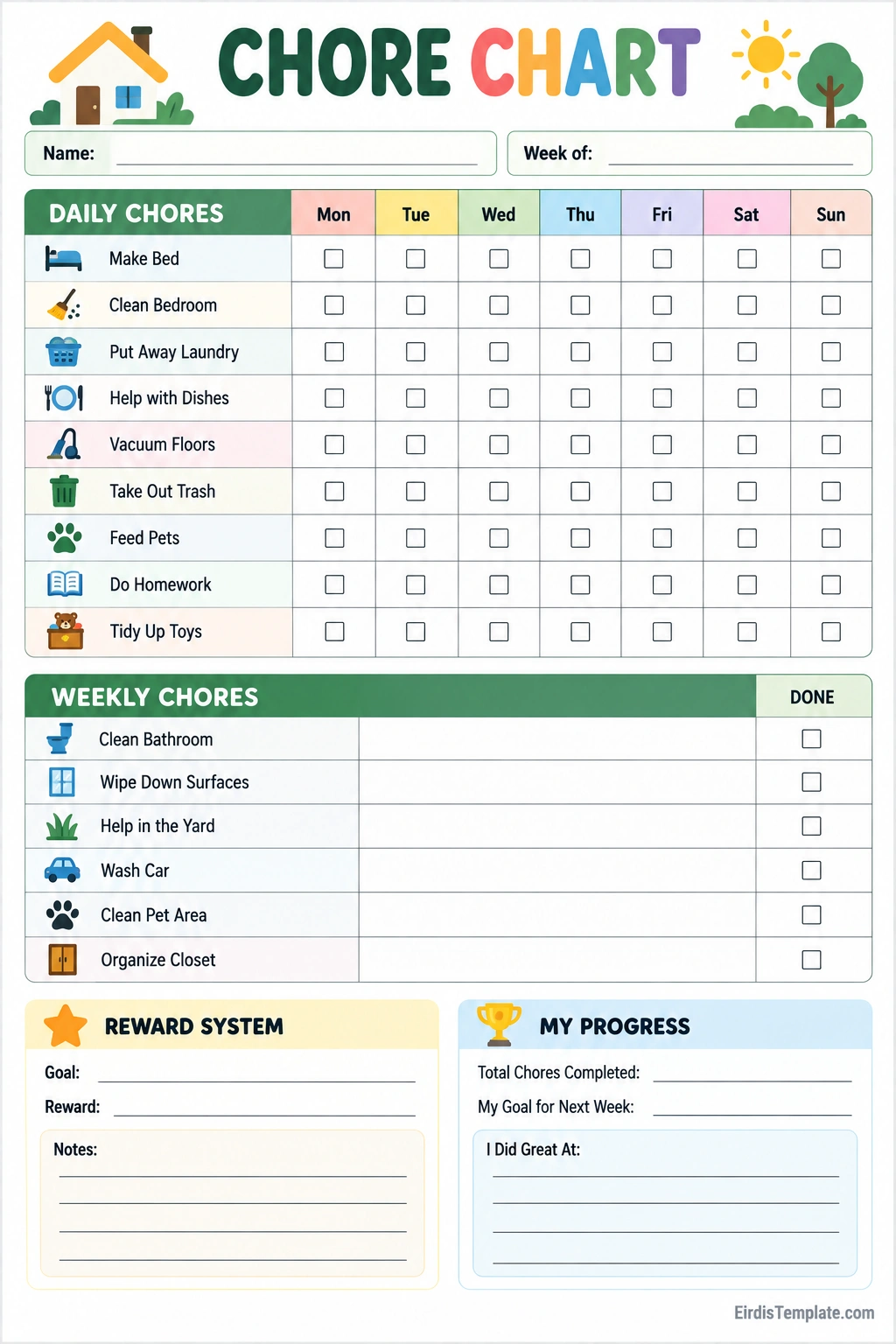
A chore chart is a visual schedule that lists household tasks and identifies when they should be completed or who is responsible for them. It may include checkboxes, assigned names, daily or weekly schedules, and optional rewards for completed tasks.
Families commonly use chore charts to help children learn responsibility, establish routines, and understand that maintaining a home is a shared effort. Adults can also use a household chore chart to divide cleaning, laundry, meal preparation, and other recurring responsibilities more fairly.
Unlike verbal reminders, a printed chore chart gives everyone a consistent reference. Family members can check the list, complete their assigned tasks, and mark each activity as finished.
Benefits of Using a Chore Chart
A well-designed chore chart does more than keep track of cleaning. It can support practical life skills and help families establish a more organized routine.
1. Encourages Responsibility
When children have specific tasks to complete, they begin to understand that their actions contribute to the household. Simple responsibilities, such as making a bed or putting toys away, can help build independence over time.
2. Builds Consistent Habits
Repeating the same age-appropriate chores helps children understand what is expected each day. A daily chore chart can make morning routines, after-school activities, and bedtime cleanup more predictable.
3. Reduces Repeated Reminders
A visible checklist allows family members to see their responsibilities without relying on constant verbal instructions. Parents can direct children to the chart instead of repeating the entire task list.
4. Teaches Organization and Time Management
Children can learn to prioritize tasks, follow simple instructions, and complete responsibilities before moving to other activities. Older children can also practice planning their weekly chores around homework, hobbies, and family commitments.
5. Promotes Teamwork
A family chore chart shows that household maintenance is a shared responsibility. Assigning suitable tasks to different family members can encourage cooperation and help prevent one person from carrying most of the workload.
What Should a Chore Chart Include?
The best chore chart is easy to understand and simple enough to use every day. You do not need a complicated layout or a long list of responsibilities. Start with the essential details and add sections only when they are useful for your family.
- Chore list: Write each task clearly, using short descriptions such as make the bed, feed the pet, or put away laundry.
- Assigned person: Include a name or initials to show who is responsible for each chore.
- Daily or weekly schedule: Identify when each task should be completed.
- Completion checkboxes: Provide a space to mark tasks as finished.
- Reward or goal section: Add an optional area for family goals, privileges, or other positive incentives.
- Notes section: Leave space for special instructions, reminders, or changes to the schedule.
For younger children, use fewer chores and simple words. Older children may benefit from a more detailed weekly chore chart that includes deadlines, rotating responsibilities, and independent tasks.
Chore Chart Ideas by Age
Children develop different abilities as they grow, so chores should match their age, maturity, and individual needs. The following ideas provide a starting point. Parents should supervise tasks that involve cleaning products, sharp objects, heat, or heavy equipment.
Chore Chart for Toddlers
Young children can begin with simple activities that encourage participation rather than perfection. Keep instructions short and make each task part of an existing routine.
- Put toys into a storage bin.
- Place books on a low shelf.
- Put dirty clothes in a laundry basket.
- Help put away safe, lightweight items.
- Wipe a small surface with a damp cloth under adult supervision.
Chore Chart for Preschoolers
Preschoolers can handle a few more structured responsibilities with reminders and guidance. Pictures or simple icons may help children who cannot yet read independently.
- Make the bed with help.
- Put shoes in their designated place.
- Feed a pet with adult supervision.
- Help set the table using safe, unbreakable items.
- Put away toys and art supplies.
Chore Chart for Elementary School Children
School-age children can usually manage several recurring tasks with decreasing assistance as their skills improve.
- Make the bed and keep the bedroom tidy.
- Sort and put away clean laundry.
- Clear the table after meals.
- Take out lightweight household trash when appropriate.
- Water plants.
- Help prepare simple meals with adult supervision.
Chore Chart for Tweens and Teens
Older children can take responsibility for more complex tasks and learn skills that prepare them for independent living.
- Vacuum or mop suitable floors.
- Wash dishes or load the dishwasher.
- Clean the bathroom using age-appropriate methods.
- Prepare simple meals and clean up afterward.
- Wash, dry, fold, and put away laundry.
- Help plan meals or organize shared spaces.
These examples are flexible rather than strict age rules. Consider each child’s abilities, safety, schedule, and comfort level when assigning chores.
How to Create a Chore Chart for Your Family
You can create a useful chore chart in a few straightforward steps. The goal is to establish a realistic system that family members can follow consistently.
Step 1: List the Household Tasks
Write down the chores that need to be done regularly. Separate daily tasks, such as making beds and clearing the table, from weekly tasks, such as vacuuming and changing bed linens.
Step 2: Assign Responsibilities Fairly
Match each task to the family member who can reasonably complete it. Consider age, schoolwork, work schedules, physical ability, and other responsibilities. Rotate less popular chores when appropriate so the same person does not always receive the most difficult tasks.
Step 3: Choose a Schedule
Decide whether your family needs a daily chore chart, weekly chore chart, or combination of both. A daily schedule works well for recurring routines, while a weekly chart is useful for tasks that only need to be completed once or twice a week.
Step 4: Make Expectations Clear
Describe what completing each task means. For example, “clean your room” may be too vague for a young child. A clearer instruction could be “put toys in the bin, place dirty clothes in the basket, and put books on the shelf.”
Step 5: Display the Chart in a Visible Location
Place the printed chore chart somewhere the family naturally gathers, such as the kitchen, a family command center, or a shared noticeboard. Keep markers or pencils nearby so tasks can be checked off without searching for supplies.
Step 6: Review and Adjust the Chart
Check the chart together at the end of the week. Discuss which tasks worked well, which ones were difficult, and whether responsibilities need to change. Update the schedule when school terms, work hours, or family needs change.
Should You Use a Reward System With a Chore Chart?
A reward system can help motivate children, especially when they are learning a new routine. However, rewards are optional. A chore chart can also work by making expectations clear and allowing children to see their progress.
If you decide to use incentives, choose rewards that are realistic, appropriate, and easy to maintain. Possible ideas include:
- Choosing a family movie for the weekend.
- Selecting a favorite family activity.
- Enjoying extra time for a preferred hobby.
- Working toward a shared family goal.
- Receiving verbal recognition for effort and consistency.
Explain the reward rules before the week begins. Focus on effort, learning, and reliable participation rather than expecting every task to be completed perfectly. Avoid making basic care, affection, or essential needs conditional on completing chores.
Tips for Making a Chore Chart Work
Even a well-designed printable chore chart needs a realistic routine. These practical tips can help your family use it successfully.
- Start small: Begin with two or three manageable chores per child, then add responsibilities gradually.
- Be specific: Use clear task descriptions and demonstrate unfamiliar chores.
- Keep it visible: Place the chart where family members can check it easily.
- Use consistent check-ins: Review the chart at a regular time, such as after dinner or before bedtime.
- Recognize progress: Praise effort, improvement, and follow-through.
- Stay flexible: Adjust the plan when a family member is sick, busy, or dealing with an unusual schedule.
- Model the behavior: Children learn from seeing adults contribute to household tasks, too.
Most importantly, treat the chore chart as a practical family tool rather than a measure of a child’s worth. Occasional missed chores are opportunities to discuss expectations and improve the routine.
Common Chore Chart Mistakes to Avoid
Some chore charts become difficult to maintain because they contain too many tasks or have rules that are unclear. Avoid these common problems:
- Listing too many chores: An overwhelming chart can discourage participation. Prioritize essential tasks first.
- Assigning unsuitable responsibilities: Match chores to a child’s abilities and provide supervision where necessary.
- Changing rules unexpectedly: Explain schedules and reward criteria in advance.
- Using the chart only for criticism: Recognize completed tasks and progress, not just missed responsibilities.
- Failing to review the system: A chart that no longer fits the family’s routine may need to be simplified or updated.
Frequently Asked Questions About Chore Charts
What is the purpose of a chore chart?
The purpose of a chore chart is to organize household tasks, clarify responsibilities, and track completed activities. It can also help children develop responsibility, independence, organization, and practical life skills.
At what age should children start using a chore chart?
Children can begin participating in simple, supervised household tasks during the toddler years. A picture-based chart may work well for young children, while older children can use written task lists and weekly schedules. Choose chores according to ability rather than age alone.
What chores should be included on a chore chart?
Common chores include making the bed, putting away toys, cleaning bedrooms, sorting laundry, clearing the table, washing dishes, watering plants, and taking out suitable household trash. Choose tasks based on your family’s needs and each person’s abilities.
Is a daily or weekly chore chart better?
A daily chore chart is useful for routines that happen every day, such as making beds or putting away toys. A weekly chore chart works well for less frequent tasks, such as vacuuming, changing linens, or cleaning shared spaces. Many families combine both schedules.
Should children get paid for completing chores?
That depends on your family’s approach. Some families connect certain chores to allowance, while others treat routine household tasks as a shared family responsibility. You can also use non-monetary incentives, praise, or shared activities to encourage participation.
How can I make a chore chart fun for kids?
Use simple labels, colorful markers, stickers, or age-appropriate icons. Let children help choose suitable chores and personal goals. Celebrate consistent effort and allow them to mark completed tasks themselves when possible.
Can I use the same chore chart for the whole family?
Yes. A family chore chart can list everyone’s responsibilities in one place. Include a column for assigned names and a schedule for completion. For larger households, separate sections for adults and children may make the chart easier to read.
Conclusion
A chore chart is a practical way to organize household responsibilities, establish routines, and encourage family members to contribute to a cleaner, more orderly home. By choosing age-appropriate tasks, setting clear expectations, and reviewing progress regularly, you can create a system that supports responsibility without adding unnecessary stress.
Start with a simple printable chore chart, customize it to fit your family’s needs, and adjust it as routines change. With consistency and teamwork, everyday chores can become manageable habits that help children build useful life skills and give the whole family a clearer plan for keeping the home organized.
Download: Chore Chart Template

- Free Printable Chore Chart Template - October 27, 2026
- Childcare Enrollment Form Template - October 27, 2026
- Child Custody Agreement Template - October 27, 2026
