A childcare enrollment form is an essential document used to register a child for daycare, preschool, or another childcare program. It collects important information about the child, parents or guardians, emergency contacts, health needs, and authorized pickup persons. By gathering these details before care begins, childcare providers can prepare for each child’s needs and establish clear communication with families.
Whether you operate a daycare center, manage a preschool, or are a parent preparing for a child’s first day, understanding the enrollment process helps make the transition easier. A complete form supports daily administration, emergency preparedness, recordkeeping, and communication between families and childcare staff.
In this guide, you’ll learn what a childcare enrollment form should include, how to complete it, which documents may be required, and how providers can organize enrollment records. You’ll also find practical tips, common mistakes to avoid, and answers to frequently asked questions.
What Is a Childcare Enrollment Form?
A childcare enrollment form is a registration document that records the information a childcare provider needs before accepting a child into its program. It creates a central record of the child’s identity, family contacts, attendance arrangements, and relevant care requirements.
Depending on the provider and local regulations, the form may be used by daycare centers, home-based childcare providers, preschools, nursery programs, after-school care services, and early learning centers.
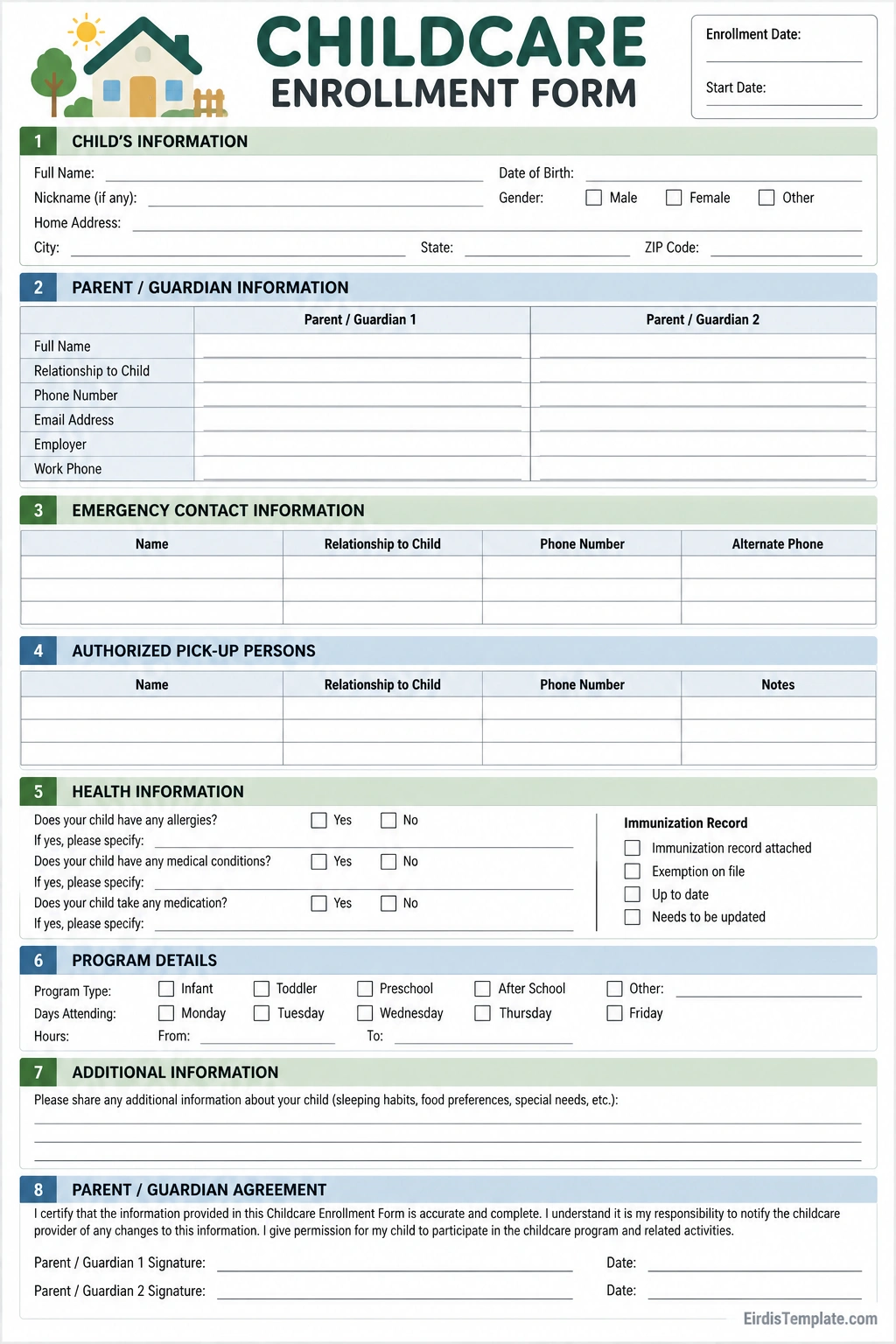
A childcare enrollment form commonly gathers:
- Child’s full name, date of birth, and home address
- Parent or legal guardian contact information
- Emergency contacts and their relationship to the child
- Authorized pickup persons
- Allergies, medical conditions, and medication information
- Immunization or health documentation, where required
- Program selection, attendance days, and schedule
- Relevant dietary, developmental, or accessibility needs
- Parent or guardian acknowledgments and signatures
The exact information required varies by program and jurisdiction. A general enrollment template is a useful starting point, but it should be adapted to applicable licensing rules, privacy requirements, and the provider’s policies.
Why Is a Childcare Enrollment Form Important?
A well-organized enrollment form helps childcare providers prepare for a child’s arrival while giving parents a clear way to communicate essential information. It also supports consistent administrative procedures.
1. Supports Child Safety
Accurate emergency contacts, authorized pickup details, and relevant health information help staff respond appropriately when a child needs assistance. Providers should establish a clear process for verifying the identity and authorization of anyone collecting a child.
2. Improves Communication With Families
Current parent or guardian contact details make it easier to share updates about attendance, illness, schedule changes, and emergencies. A structured form also helps providers identify the correct person to contact for different situations.
3. Records Health and Care Needs
Information about allergies, medical conditions, dietary restrictions, and prescribed medications can help staff understand a child’s needs. Health information should be reviewed carefully and handled confidentially.
4. Simplifies Enrollment Administration
A standardized childcare registration form makes it easier to collect consistent information from every family. It can reduce missing details, simplify recordkeeping, and help staff identify outstanding documents before the child’s start date.
5. Establishes Clear Expectations
Enrollment materials can document the selected program, attendance schedule, parent acknowledgments, and relevant policies. Providers should explain important policies separately when necessary rather than relying on a signature alone to communicate every requirement.
What Should a Childcare Enrollment Form Include?
A complete enrollment form should be easy to understand and organized into logical sections. The following components cover common information that families and childcare providers may need.
1. Child’s Personal Information
Start with the child’s basic identifying details. These fields help the provider create an accurate record and distinguish the child from others with similar names.
- Full legal name
- Preferred name or nickname, if applicable
- Date of birth
- Home address
- Parent-reported language or communication needs, if relevant
Collect only information that is necessary for enrollment, care, safety, or legal compliance. Avoid requesting unnecessary sensitive details.
2. Parent or Guardian Information
Include the full names and current contact details of the child’s parents or legal guardians. Depending on the program, useful fields may include phone numbers, email addresses, home addresses, and preferred contact methods.
If different adults have different legal authority or communication permissions, the provider should record and verify the relevant documentation according to its policies and applicable law.
3. Emergency Contact Information
Ask for one or more emergency contacts who may be reached if the parents or guardians cannot be contacted. Record each person’s name, relationship to the child, and reliable phone number.
Explain when emergency contacts may be contacted and whether they are also permitted to collect the child. Being listed as an emergency contact does not automatically establish pickup authorization.
4. Authorized Pickup Persons
List the individuals permitted to pick up the child. Depending on the provider’s procedures, this section may include names, relationships, phone numbers, and identification or verification notes.
Providers should establish a secure process for confirming pickup authorization and handling changes. Any custody restrictions or court orders relevant to collection arrangements should be reviewed and managed carefully.
5. Health and Medical Information
The health section should collect relevant information needed to care for the child safely. Depending on the program and local rules, it may include:
- Known allergies and potential reactions
- Medical conditions that affect daily care
- Medication information and required authorization
- Dietary restrictions or medically necessary food precautions
- Relevant immunization or health records
- Healthcare provider or emergency medical contact details, where appropriate
Do not treat the enrollment form as a substitute for required medication authorization, medical action plans, or other specialized documents. Providers should use the appropriate supplementary forms when necessary.
6. Program and Attendance Details
Record which childcare program the family has selected and when the child is expected to attend. Depending on the service, this may include infant care, toddler care, preschool, or after-school care.
Useful fields may include the planned start date, attendance days, usual drop-off and pickup times, and any agreed schedule variations. Clear scheduling information helps providers plan staffing and communicate attendance expectations.
7. Additional Care Information
Give parents an opportunity to share relevant information about the child’s routines, comfort needs, communication preferences, developmental support, or other factors that may affect the childcare experience.
Ask families to provide only information that is relevant to care and explain how it will be used and protected. Staff should have access to sensitive details only when needed for their responsibilities.
8. Parent or Guardian Acknowledgment
The final section may confirm that the information supplied is accurate and that the parent or guardian has received or reviewed specified policies. Include signature and date fields where required.
Important policies, such as illness procedures, attendance rules, payment arrangements, emergency response, and medication administration, may require separate acknowledgments or agreements.
How to Complete a Childcare Enrollment Form
Parents can help avoid enrollment delays by preparing the required information before filling out the form. Childcare providers can also use a consistent review process to confirm that each registration is complete.
Step 1: Read the Instructions
Review the form and the provider’s enrollment requirements before entering information. Confirm the submission deadline, start date, and whether additional documents are needed.
Step 2: Enter Accurate Child and Family Details
Use the child’s correct legal name and date of birth. Check phone numbers, email addresses, and home addresses carefully, because inaccurate contact details can create problems during routine communication or an emergency.
Step 3: Complete Emergency and Pickup Sections
Provide reliable emergency contacts and list only people authorized to collect the child. Make sure the provider understands any relevant restrictions or special arrangements.
Step 4: Disclose Relevant Health Needs
Describe known allergies, medical conditions, and other care requirements clearly. Attach any required health records, medication instructions, or medical action plans using the provider’s approved process.
Step 5: Confirm the Attendance Schedule
Check the child’s start date, selected program, attendance days, and expected arrival and departure times. Ask the provider to clarify any scheduling or policy questions before signing.
Step 6: Review and Sign
Read the completed form to ensure that no required fields have been missed. Sign and date the document where requested, then submit it using the provider’s approved method.
Step 7: Confirm Enrollment Status
Ask whether any documents or approvals remain outstanding. Keep a copy of the submitted form and note any instructions about the child’s first day, required supplies, or orientation.
Documents That May Be Required for Childcare Enrollment
The documents needed to register a child vary by provider, program type, and local regulations. Families should request the provider’s current checklist rather than assume every program has the same requirements.
Depending on the circumstances, the provider may request:
- Proof of the child’s identity or date of birth
- Parent or legal guardian contact information
- Immunization records or health documentation where required
- Medication authorization or an individual medical action plan, if applicable
- Emergency medical consent or other required permissions
- Custody documentation or relevant court orders when necessary
- Signed program policies, service agreements, or payment documents
Submit sensitive documents through a secure channel and ask how the provider stores and protects them. Only provide documents that are required or reasonably necessary for enrollment and safe care.
Tips for Childcare Providers Managing Enrollment Forms
Childcare providers can improve their enrollment process by making forms easy to complete, reviewing records consistently, and protecting family information.
Use Clear, Simple Language
Write questions in plain English and group related fields together. Explain unfamiliar terms and identify which fields are required. If families speak different languages, consider providing approved translations where feasible.
Make Forms Accessible
Use readable text, adequate writing space, clear section headings, and logical field order. Offer a digital or paper option when possible, and provide assistance to families who need help completing the form.
Protect Confidential Information
Enrollment forms may contain sensitive contact and health information. Limit access to authorized staff, store paper documents securely, and use appropriate safeguards for digital records.
Review Records Regularly
Ask families to update phone numbers, emergency contacts, medical information, and pickup permissions when circumstances change. A periodic review can help keep records accurate throughout the child’s enrollment.
Separate Enrollment From Other Agreements
A registration form should not be expected to replace every policy or authorization. Use separate documents when required for medication, photography, field trips, transportation, payment terms, or other program-specific permissions.
Common Childcare Enrollment Form Mistakes to Avoid
- Leaving required fields blank: Review the form before submission and clarify any field that does not apply.
- Providing outdated contact details: Confirm that phone numbers and email addresses are current.
- Omitting relevant health information: Share care-related details and provide required supporting documentation.
- Confusing emergency contacts with pickup authorization: Record these permissions separately.
- Ignoring local requirements: Confirm the provider’s licensing and documentation rules.
- Overcollecting personal information: Request only information that is relevant and necessary.
- Failing to update records: Notify the provider when health, contact, custody, or pickup arrangements change.
- Using an unclear form: Organize questions into sections and provide enough space for accurate answers.
Frequently Asked Questions About Childcare Enrollment Forms
What is the purpose of a childcare enrollment form?
A childcare enrollment form registers a child for a program and collects information needed for administration, communication, health planning, and safety. It helps providers understand the child’s needs and maintain an organized record.
Is a childcare enrollment form a legal document?
It can serve as an official administrative record and may contain acknowledgments or permissions. However, it does not automatically replace a childcare service contract, medical authorization, or other documents required by law. Its legal effect depends on its contents and the applicable rules.
What information do parents need to provide?
Parents commonly provide the child’s identifying information, parent or guardian contacts, emergency contacts, authorized pickup persons, relevant health details, and the expected attendance schedule. Additional information depends on the program and local requirements.
Can I use a printable childcare enrollment form?
Yes. A printable template can help families and providers organize registration information. Before using one, adapt it to the program’s policies, applicable regulations, privacy requirements, and any required supplementary documents.
How often should a childcare enrollment form be updated?
Update the form whenever important information changes, such as phone numbers, emergency contacts, allergies, medical needs, or authorized pickup arrangements. Providers may also schedule periodic reviews according to their policies and regulatory obligations.
Should emergency contacts also be authorized to pick up a child?
Not automatically. Emergency contact status and pickup authorization are different permissions. Parents should identify who may collect the child, and providers should verify authorization according to their safety procedures.
Can childcare enrollment forms be completed online?
Many providers accept digital enrollment forms. Online systems should use appropriate privacy and security safeguards, especially when collecting children’s health details and family contact information. Follow the provider’s instructions for submitting records securely.
Does every childcare program require the same enrollment documents?
No. Requirements can differ by location, licensing category, age group, and program policy. Contact the provider or relevant licensing authority to confirm the documents needed for your particular situation.
Conclusion
A childcare enrollment form helps families and providers organize the information needed to begin a child’s care safely and efficiently. By recording child and parent details, emergency contacts, authorized pickup persons, health needs, and attendance arrangements, the form supports communication and consistent administration.
Parents should complete every required section accurately, review the provider’s instructions, and submit any necessary supporting documents. Childcare providers should use clear forms, protect confidential information, and keep records current as family circumstances change.
A well-designed enrollment process gives families a clearer start and helps childcare staff prepare to meet each child’s needs.
Download: Childcare Enrollment Form

- Free Printable Chore Chart Template - October 27, 2026
- Childcare Enrollment Form Template - October 27, 2026
- Child Custody Agreement Template - October 27, 2026
