Relationships can be a source of joy, companionship, and love, but they can also be complicated and challenging at times. One tool that some couples use to navigate their relationship more smoothly is a relationship agreement. This document, often created at the beginning of a relationship or during a period of transition, outlines the expectations, boundaries, and commitments that both parties have agreed upon.
In this comprehensive guide, we will explore what relationship agreements are, why they can be beneficial, what to include in them, how to create one, and tips for maintaining a healthy agreement.
What is a Relationship Agreement?
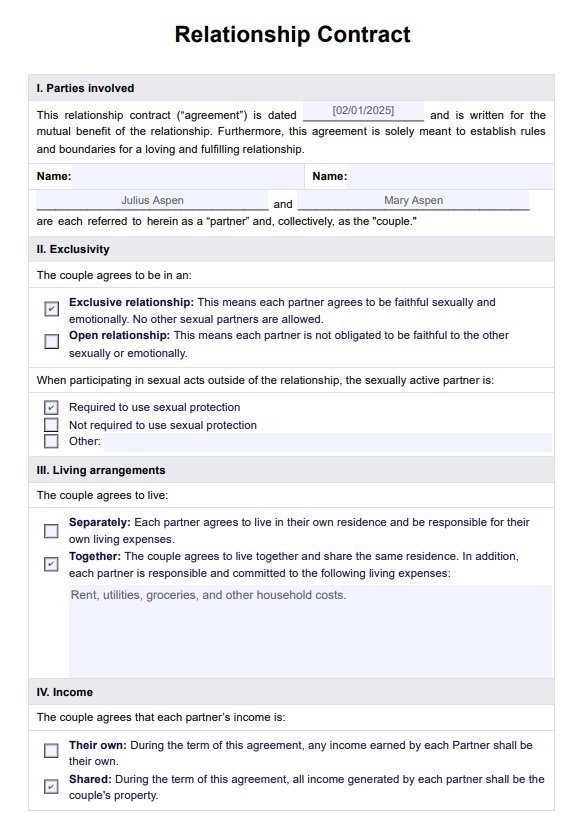
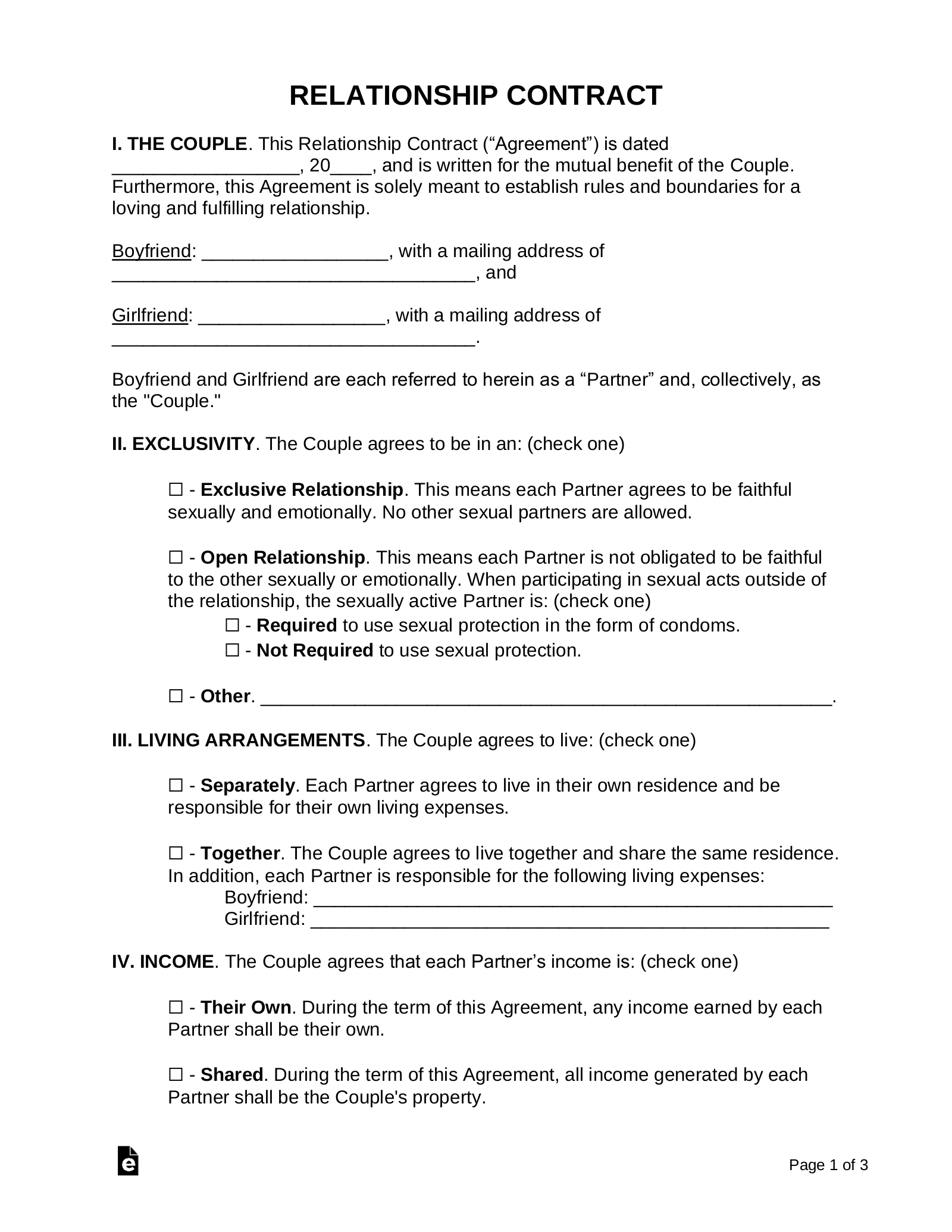
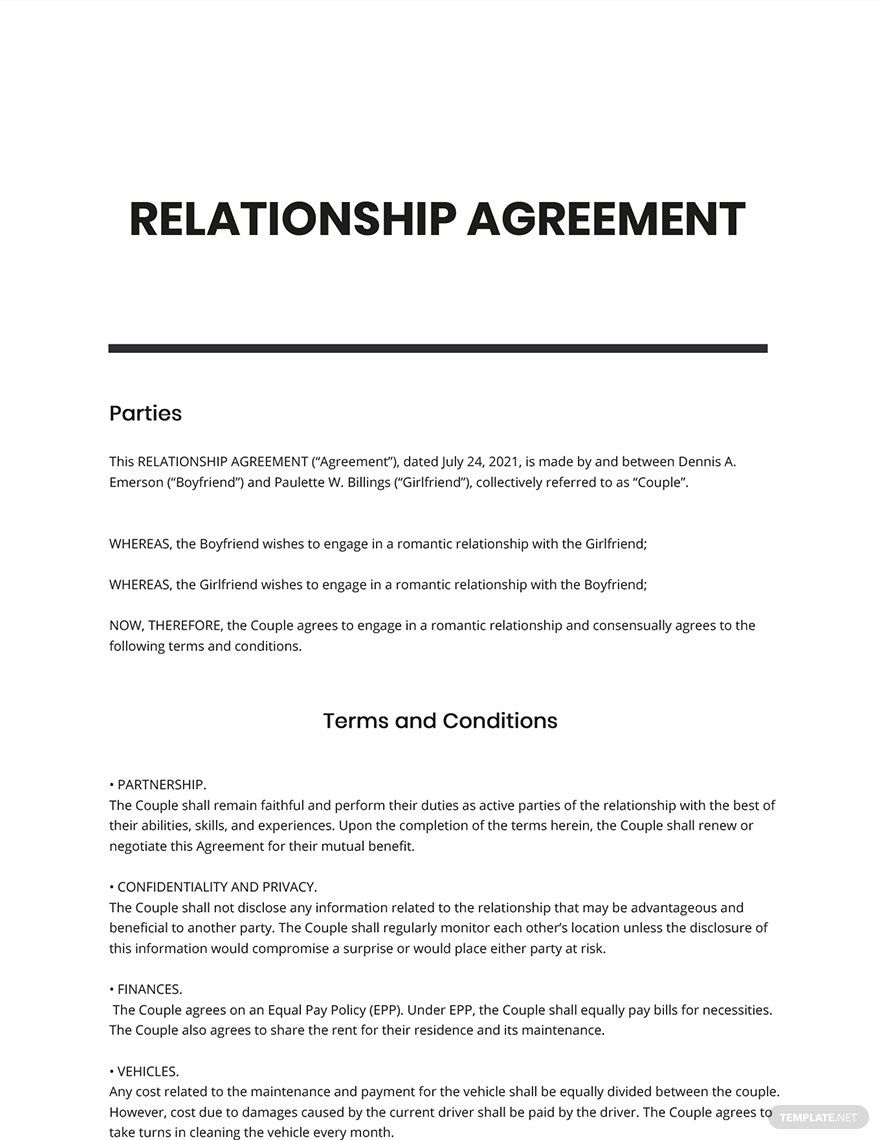
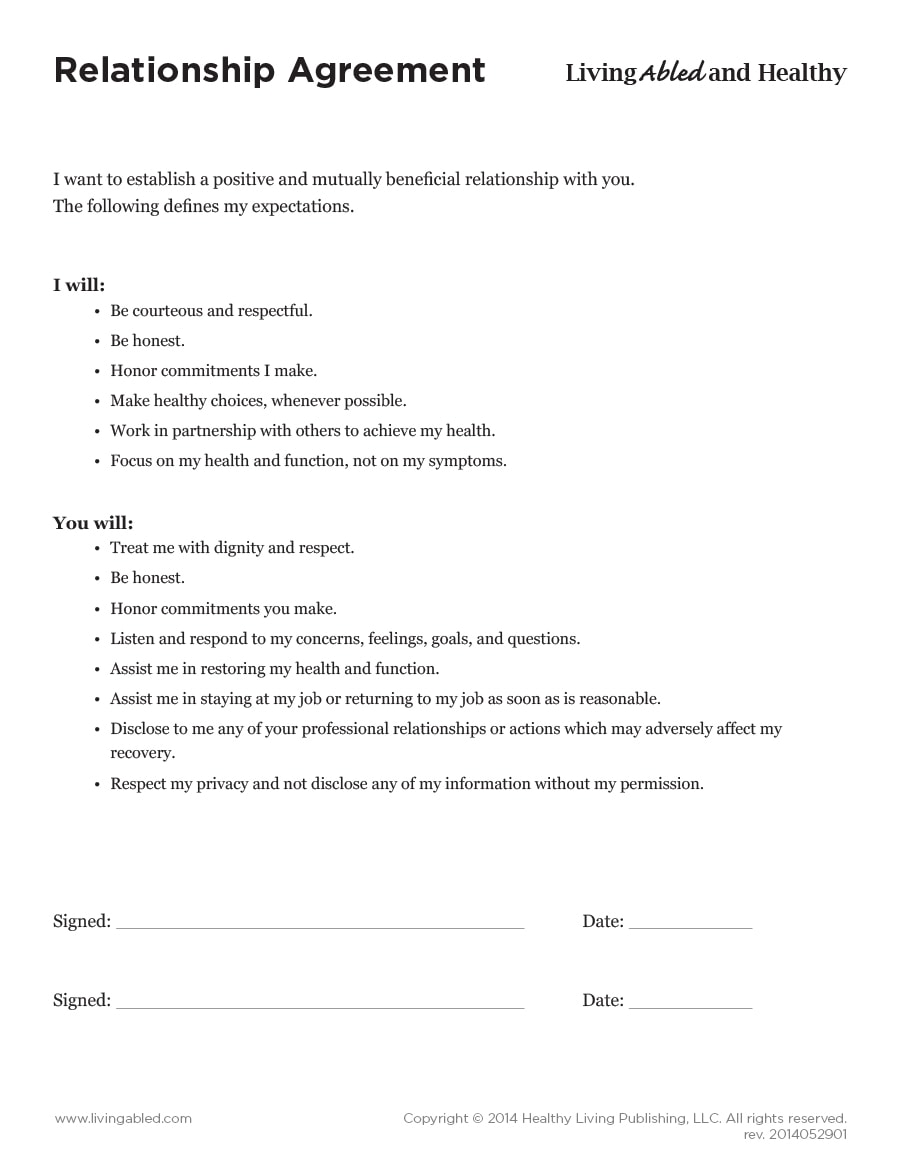
A relationship agreement is a written document that outlines the terms and conditions of a relationship between two individuals. It serves as a roadmap for the couple, detailing their expectations, boundaries, and responsibilities to each other. This agreement can cover various aspects of the relationship, such as communication, financial arrangements, household responsibilities, and even sexual preferences. By clearly stating the expectations and boundaries of both parties, a relationship agreement can help to prevent misunderstandings and conflicts in the future.
Why Create a Relationship Agreement?
There are several reasons why creating a relationship agreement can be beneficial for couples. First and foremost, it provides clarity and transparency in the relationship. By openly discussing and documenting expectations, both parties can ensure that they are on the same page and avoid miscommunications.
Additionally, a relationship agreement can help to build trust and strengthen the bond between partners. When both individuals feel heard and respected in the agreement process, they are more likely to feel secure and valued in the relationship.
What to Include in a Relationship Agreement
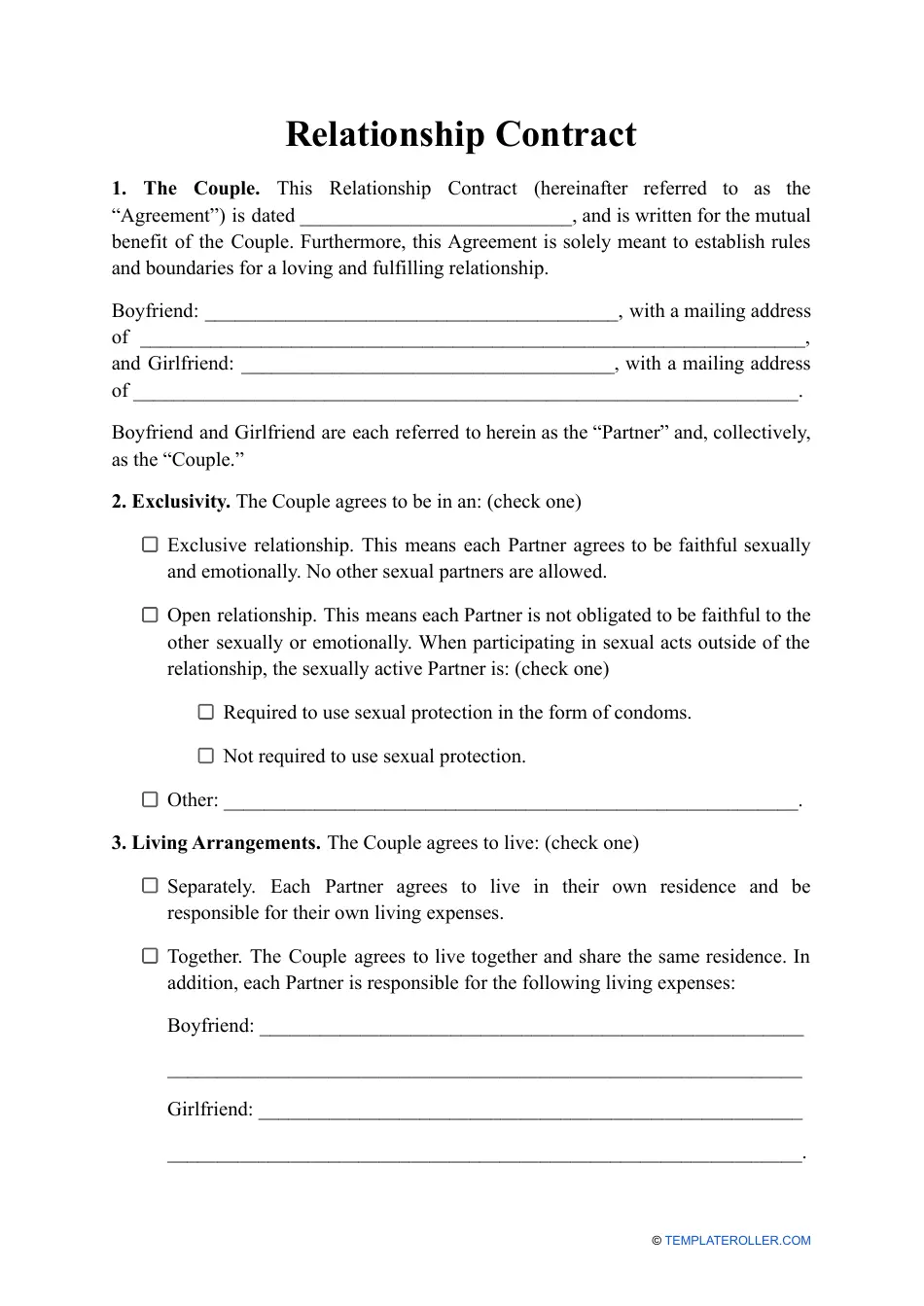
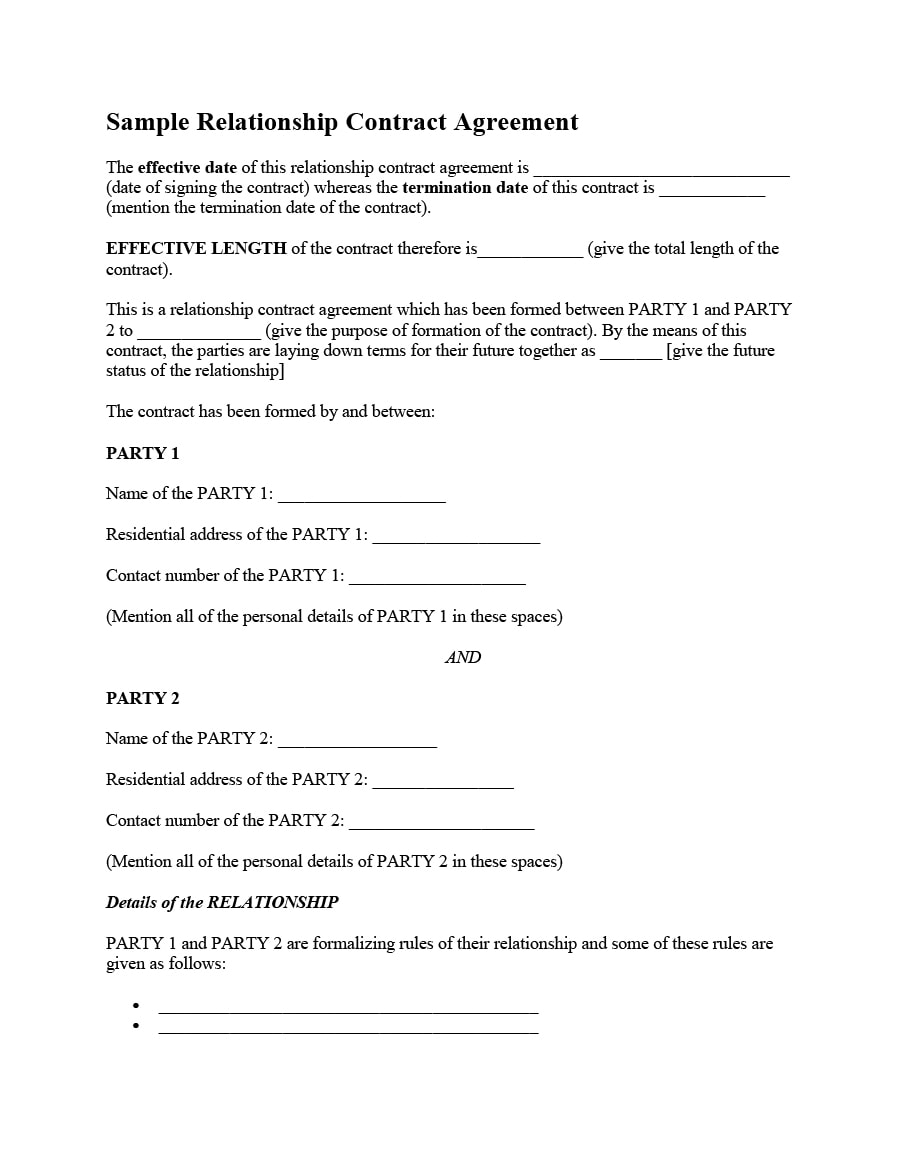
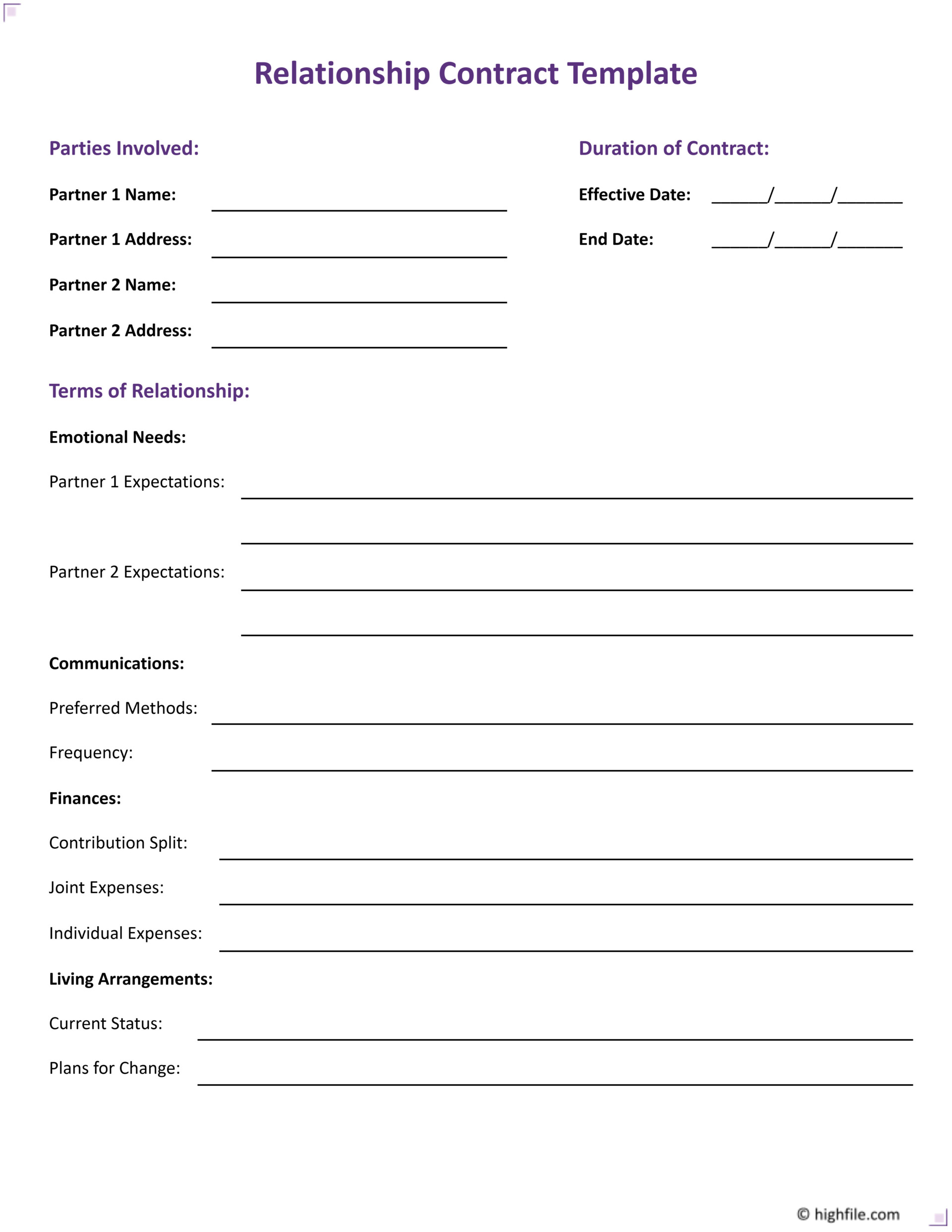
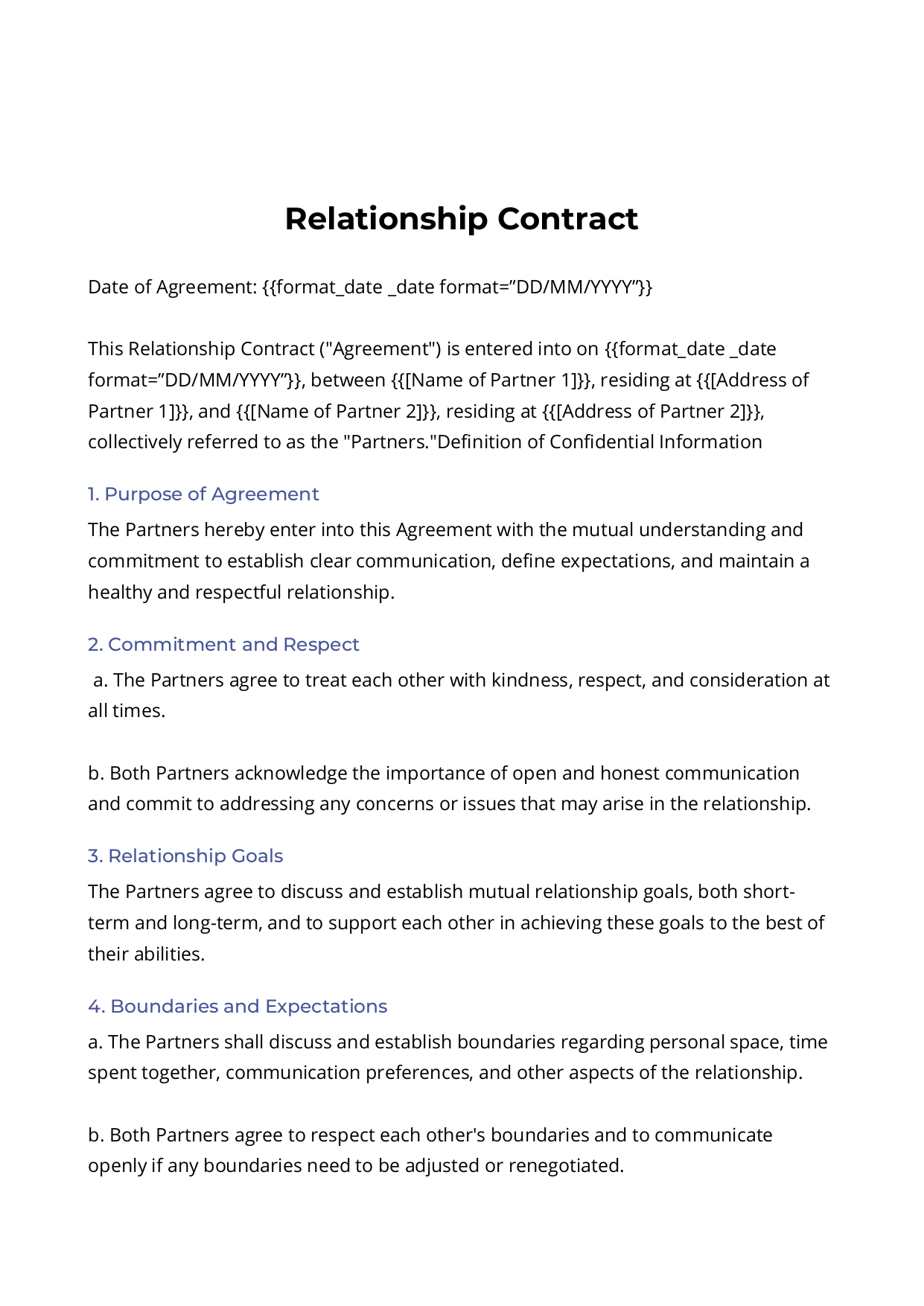
When creating a relationship agreement, it is important to include specific details that are relevant to your relationship. While each agreement will be unique to the couple, some common elements are often included:
1. Communication: Establish guidelines for how you will communicate with each other, including how often you will check in and how you will handle conflicts.
2. Financial arrangements: Outline how you will manage shared expenses, savings, and investments.
3. Household responsibilities: Define who will be responsible for tasks such as cooking, cleaning, and grocery shopping.
4. Individual goals and aspirations: Discuss your personal goals and how they align with your partner’s goals.
5. Sexual preferences and boundaries: Clearly state your boundaries and preferences when it comes to intimacy and physical affection.
6. Relationship expectations: Define what you expect from each other in terms of emotional support, quality time, and commitment.
7. Conflict resolution: Establish a plan for how you will address disagreements and conflicts healthily and respectfully.
Examples
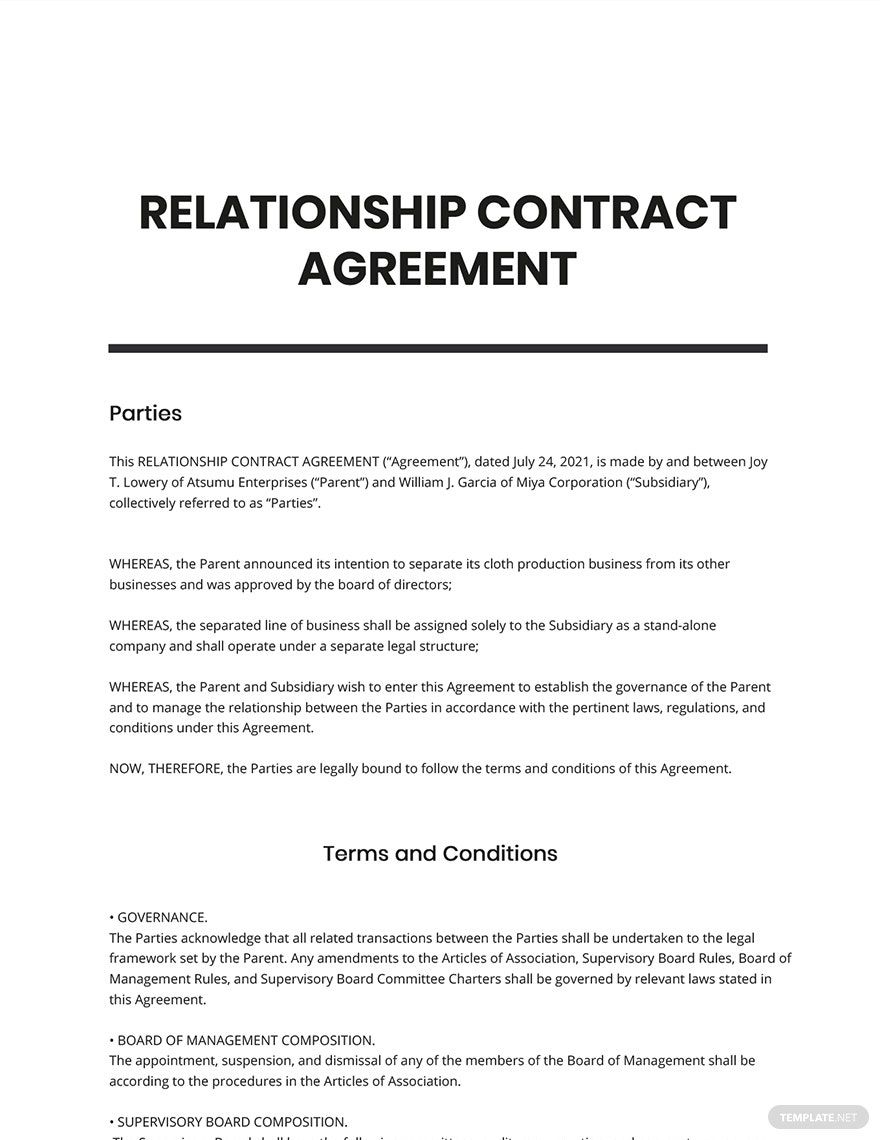
How to Create a Relationship Agreement
Creating a relationship agreement can be a collaborative process that requires open communication and mutual respect. Here are some steps to help you create a successful agreement:
1. Start the conversation: Initiate a discussion with your partner about the idea of creating a relationship agreement.
2. Identify key areas: Together, identify the key areas that you want to address in the agreement.
3. Draft the agreement: Write down your expectations, boundaries, and commitments in a clear and concise manner.
4. Review and revise: Review the agreement together and make any necessary revisions to ensure that both parties are satisfied.
5. Sign the agreement: Once you are both happy with the terms, sign the agreement as a symbol of your commitment to each other.
Tips for Maintaining a Healthy Agreement
While creating a relationship agreement can be a beneficial tool for couples, it is important to remember that relationships are dynamic and ever-evolving. Here are some tips for maintaining a healthy agreement:
- Regularly review and update: Set aside time to review and update your agreement as needed to reflect changes in your relationship.
- Communicate openly: Keep the lines of communication open with your partner and discuss any concerns or issues that arise.
- Respect each other’s boundaries: Honor the boundaries and commitments that you have both agreed upon in the agreement.
- Seek support if needed: If you encounter challenges in your relationship, don’t hesitate to seek help from a therapist or counselor.
- Celebrate your successes: Acknowledge and celebrate the positive aspects of your relationship and the progress you have made together.
- Be flexible: Remember that relationships require flexibility and compromise, so be willing to adjust your agreement as needed.
In conclusion, a relationship agreement can be a valuable tool for couples who want to strengthen their bond, improve communication, and build a foundation of trust in their relationship. By outlining expectations, boundaries, and commitments in a clear and concise manner, couples can navigate their relationship more smoothly and avoid misunderstandings. Remember that every relationship is unique, so feel free to tailor your agreement to suit your individual needs and preferences. With open communication, mutual respect, and a willingness to grow together, a relationship agreement can help you and your partner create a strong and lasting connection.
Relationship Agreement Template – Download

- Cash Flow Statement Template - October 15, 2026
- Cash Flow Forecast Template - October 15, 2026
- Free Printable Caregiver Schedule Template - October 15, 2026
