An affidavit form is a structured document used to prepare a written statement of facts that a person declares to be true under oath or affirmation. It can be used in legal, court, administrative, business, estate, property, and other situations where a written statement is required.
The person making the statement is generally called the affiant. By signing an affidavit, the affiant confirms that the information provided is truthful to the best of their knowledge and may be required to swear or affirm the statement before an authorized person, such as a notary public.
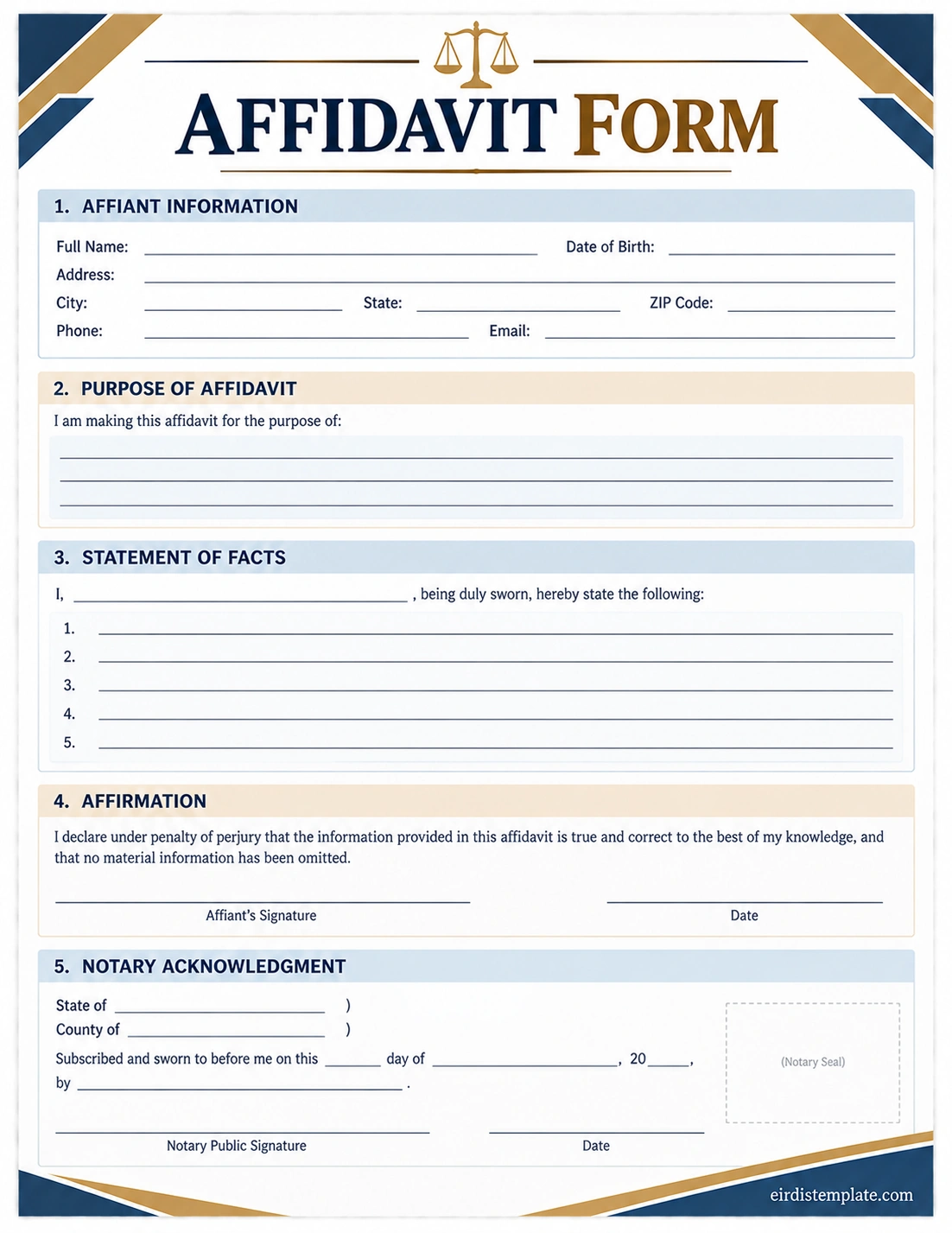
Using an affidavit form can make the process easier because it provides organized sections for the affiant’s information, purpose of the affidavit, statement of facts, declaration, signature, and notarization. However, affidavit requirements can vary depending on the jurisdiction and the purpose of the document.
What Is an Affidavit Form?
An affidavit form is a template used to organize a sworn written statement. It provides a framework for explaining facts or circumstances in writing and formally declaring that the information is truthful.
Unlike an ordinary letter or personal statement, an affidavit is generally intended to have a formal legal or administrative purpose. The person making the affidavit may be required to sign it under oath or affirmation before an authorized witness.
The exact wording and signing requirements depend on the jurisdiction and the organization requesting the affidavit. Some situations may also require a specific government, court, or institutional form rather than a general affidavit template.
What Is the Purpose of an Affidavit?
An affidavit can allow a person’s statement to be presented in written form instead of requiring the person to explain every fact orally. This can help organize information for a court, government agency, business, or other organization reviewing the matter.
Depending on the situation, an affidavit may be used to:
- Provide a written statement of facts
- Confirm information or circumstances
- Support a legal or administrative application
- Document events or transactions
- Provide evidence or supporting information in a proceeding
- Confirm identity or personal circumstances when appropriate
- Support property, estate, family, or business matters
- Respond to a request from a court or government agency
An affidavit does not automatically establish that every statement contained in it is true or guarantee that a court will accept it as sufficient evidence. Its usefulness depends on the circumstances, applicable rules, and the authority reviewing it.
Who Is an Affiant?
The affiant is the person who makes and signs the affidavit. The affiant provides the facts contained in the document and generally confirms that the statements are true to the best of their knowledge.
Because an affidavit is a sworn statement, the affiant should carefully review the document before signing it. The information should be accurate, complete, and based on facts the person can properly state.
What Should an Affiant Consider?
Before signing an affidavit, the affiant should:
- Read the entire document carefully
- Verify names, dates, addresses, and other important details
- State facts clearly and accurately
- Avoid knowingly including false information
- Distinguish personal knowledge from information received from another person
- Ask about any unclear wording before signing
- Follow the applicable signing and witnessing requirements
What Information Does an Affidavit Form Include?
A well-organized affidavit form typically contains several sections. The exact format can vary according to the purpose of the affidavit.
1. Affiant Information
The form may begin with identifying information about the person making the statement. This can include the affiant’s full name, address, contact information, or other details required for the particular matter.
2. Purpose of the Affidavit
This section explains why the affidavit is being prepared. A short description can help the reader understand the context of the statement and the matter to which it relates.
3. Statement of Facts
The statement of facts is the central part of an affidavit. It should present the relevant information in a logical and understandable order.
When appropriate, facts can be organized into numbered paragraphs. This makes individual statements easier to identify and reference.
4. Declaration or Affirmation
The affidavit normally contains language stating that the affiant declares or affirms that the information provided is true. The wording should be appropriate for the applicable jurisdiction and purpose.
5. Affiant’s Signature
The person making the affidavit signs the document after reviewing its contents. In some circumstances, the signature must be made in the presence of an authorized witness.
6. Notary or Authorized Witness Section
Many affidavits contain an acknowledgment or jurat section for a notary public or another authorized official. This section may provide space for the official’s signature, date, commission information, and seal when applicable.
How to Fill Out an Affidavit Form
Completing an affidavit form is easier when the information is prepared before the document is signed.
Step 1: Identify the Purpose
Start by determining why the affidavit is needed. The requesting court, agency, business, or organization may have specific instructions about what information must be included.
Step 2: Enter the Affiant’s Information
Complete the identifying information requested by the form. Use the person’s legal name and provide accurate contact or address information when required.
Step 3: Write the Relevant Facts
Describe the facts that relate directly to the purpose of the affidavit. Use clear language and organize the information chronologically or by topic when that makes the statement easier to understand.
Step 4: Review the Statement
Carefully review the affidavit before signing. Check names, dates, locations, amounts, references, and other important details for accuracy.
Step 5: Sign as Required
Do not assume that an affidavit can always be signed privately. If the document requires an oath, affirmation, notarization, or another form of witnessing, follow the applicable instructions.
Step 6: Complete the Notary Section
If notarization is required, take the document to an appropriate notary or authorized official and follow the required procedure. Do not complete the official’s portion yourself unless specifically instructed to do so.
How to Write a Statement of Facts
The statement of facts is often the most important part of an affidavit. It should focus on relevant information rather than unnecessary background.
Use Clear and Direct Language
Write each statement so that the reader can understand what happened without having to interpret vague wording. Short, specific statements are often easier to follow than long paragraphs containing multiple unrelated facts.
Use First-Person Statements
Because an affidavit represents the affiant’s statement, first-person language is commonly used. For example, the statement may explain what the affiant personally saw, did, received, or experienced.
Organize Facts Logically
When describing events, chronological order can make the affidavit easier to understand. If the matter involves several subjects, numbered paragraphs or separate sections can help organize the information.
Focus on Relevant Facts
An affidavit should generally focus on facts relevant to its purpose. Unnecessary opinions, speculation, or unrelated information can make the document harder to review.
Affidavit Form vs. Sworn Statement
An affidavit and a sworn statement can be closely related, but terminology and legal requirements vary by jurisdiction.
An affidavit is generally a written statement made under oath or affirmation. A sworn statement may be used more broadly to describe written information that a person formally declares to be truthful.
The important distinction is not simply the title of the document. The applicable rules may determine whether an oath, affirmation, notarization, witness, certification, or particular form is required.
Common Types of Affidavit Forms
Affidavits can be prepared for many different purposes. The appropriate form depends on the situation and the authority requesting the document.
Affidavit of Identity
An affidavit of identity may be used to formally state information about a person’s identity when documentation or confirmation is required.
Affidavit of Residence
An affidavit of residence may be used to provide a formal statement concerning where a person lives or has lived.
Affidavit of Support
An affidavit of support is used in certain situations where one person formally provides financial or other support-related information for another person. Specific requirements depend on the purpose and applicable authority.
Affidavit of Heirship
An affidavit of heirship may be used in certain estate or property matters to provide information about a deceased person’s heirs. Requirements vary by jurisdiction.
Affidavit of Name Change
An affidavit relating to a name change may provide a formal statement concerning a person’s former and current names when permitted or requested by the relevant authority.
General Affidavit
A general affidavit form provides a flexible structure for a sworn statement when a specific specialized form is not required. It should still be adapted to the purpose and requirements of the matter.
Tips for Creating a Good Affidavit Form
A good affidavit form should make it easy to identify the person making the statement, understand the purpose, read the facts, and complete the required certification.
- Keep the layout organized: Use clear headings and logical sections.
- Provide enough writing space: Statements of fact may require several paragraphs.
- Use readable typography: The document should remain easy to read when printed.
- Number important statements: Numbered paragraphs can make individual facts easier to reference.
- Include signature areas: Provide appropriate space for the affiant and authorized witness.
- Leave room for notarization: If notarization is required, the form should accommodate the appropriate certification or seal.
- Keep the language precise: Avoid unnecessary wording that could make the statement confusing.
- Check local requirements: A generic form may need to be modified for a particular jurisdiction or proceeding.
Common Affidavit Form Mistakes to Avoid
Errors in a sworn statement can create unnecessary problems. Review the completed document carefully before signing.
- Using incorrect names or dates
- Leaving out important facts requested by the receiving authority
- Including statements the affiant cannot personally support
- Using vague or confusing language
- Signing before determining whether notarization is required
- Completing a notary section without the authorized official
- Using a generic form when a specific official form is required
- Failing to check jurisdiction-specific requirements
- Submitting an unsigned or improperly witnessed document
Is an Affidavit Form Legally Binding?
An affidavit is a formal sworn statement, but its legal effect depends on the applicable law, the purpose of the document, and the circumstances in which it is submitted.
Making a false statement in a sworn document can have serious legal consequences. For that reason, an affiant should provide truthful and accurate information and should not sign an affidavit without understanding what they are declaring.
Whether an affidavit is sufficient for a particular legal matter is a separate question. A court, agency, or other authority may have specific rules concerning admissibility, supporting evidence, notarization, filing, and required language.
Frequently Asked Questions About Affidavit Forms
What is an affidavit form used for?
An affidavit form is used to organize a written statement of facts that a person formally declares to be true. It can be used in legal, administrative, business, property, estate, and other situations where a sworn statement is required.
Does an affidavit need to be notarized?
Not every written statement has the same requirements. Many affidavits require an oath or affirmation before a notary public or another authorized official, but the exact requirements depend on the jurisdiction and purpose of the document.
Who signs an affidavit?
The person making the statement, known as the affiant, signs the affidavit. When an oath, affirmation, or notarization is required, an authorized official may also complete the appropriate certification section.
Can I use a blank affidavit form?
A blank affidavit form can provide a useful starting structure, but it should be adapted to the specific purpose and requirements of the matter. Some courts, agencies, or organizations may require their own official forms.
Can I write my own affidavit?
In many situations, a person can prepare their own written statement, but the required format, oath, witnessing, notarization, and filing procedures depend on the circumstances. If the affidavit concerns an important legal matter, professional legal guidance may be appropriate.
What happens if information in an affidavit is false?
Because an affidavit is generally a sworn or affirmed statement, knowingly providing false information can have serious legal consequences. Anyone preparing an affidavit should make sure that the information is truthful and accurate before signing.
Can an affidavit be used as evidence?
An affidavit may be submitted as evidence or supporting documentation in some proceedings, but whether it is accepted and what weight it receives depends on the applicable rules and circumstances. A sworn statement does not automatically guarantee that a court or agency will accept every statement in it.
Conclusion
An affidavit form provides a structured way to prepare a written statement of facts that an individual formally declares to be truthful. It can help organize information for legal, administrative, business, property, estate, and other purposes.
A typical form includes the affiant’s information, the purpose of the affidavit, a detailed statement of facts, an affirmation or declaration, a signature section, and, when required, a notary or authorized witness section.
When preparing an affidavit, accuracy is essential. Review all information carefully, follow the instructions of the court or organization requesting the document, and confirm whether notarization or another form of authentication is required. A printable affidavit form can provide a convenient starting point, but it should not be assumed to meet every jurisdiction’s requirements without review.
Download: Affidavit Form

- Free Printable Affidavit Form Template - October 2, 2026
- Printable Adoption Certificate Template - October 2, 2026
- Free Printable Address Label Template - October 2, 2026
