Living with roommates can make housing more affordable and provide a comfortable social environment, but shared living also comes with responsibilities. Differences in schedules, cleanliness, spending habits, guests, noise levels, and personal boundaries can quickly lead to misunderstandings if expectations are not discussed in advance.
A roommate agreement is a practical way to put those expectations in writing. It gives everyone a shared reference for rent, utilities, household chores, guests, quiet hours, shared spaces, personal belongings, and other everyday responsibilities. Instead of relying on assumptions, roommates can discuss important issues early and agree on reasonable rules that work for everyone.
Whether you are moving into a shared apartment, renting a house with friends, or joining an existing household, a roommate agreement can help create clearer expectations and provide a framework for handling disagreements respectfully.
What Is a Roommate Agreement?
A roommate agreement is a written document that outlines the responsibilities, expectations, and household rules agreed upon by people who share a home. It can cover both practical matters, such as rent and cleaning, and personal preferences, such as guests, quiet hours, shared food, and privacy.
Unlike simply having a verbal conversation, a written roommate agreement gives everyone something to refer back to when questions or disagreements arise. The document can be as simple or detailed as the household needs.
A roommate agreement is generally intended to establish household expectations between roommates. It should not automatically be treated as a replacement for a lease, rental contract, or other legally required housing document. Local landlord-tenant laws and the terms of the lease may still apply.
Why Is a Roommate Agreement Important?
Many roommate problems begin because people have different assumptions about what is considered normal. One roommate may expect dishes to be washed immediately, while another may think leaving them overnight is acceptable. One person may enjoy having friends over frequently, while another may need a quiet home.
A roommate agreement helps bring those expectations into the open before they become major problems.
- Clarifies responsibilities: Everyone knows who is responsible for particular household tasks.
- Organizes shared expenses: Rent, utilities, internet, and other costs can be documented clearly.
- Sets household rules: Roommates can agree on expectations for guests, noise, cleaning, and shared spaces.
- Protects personal boundaries: Rules about privacy and personal belongings can be discussed in advance.
- Reduces misunderstandings: Written expectations make it easier to resolve questions before they become disputes.
- Creates a conflict-resolution framework: Roommates can agree on how to address problems respectfully.
What Should Be Included in a Roommate Agreement?
There is no single format that works for every household. The best roommate agreement addresses the issues that are most relevant to the people sharing the home.
1. Roommate and Residence Information
Start with basic information about the household. Include the names of the roommates, the property address, relevant contact information, and the dates covered by the agreement.
If appropriate, roommates can also record the lease start and end dates and the name or contact information of the landlord or property manager. This information makes the agreement easier to identify and reference later.
2. Rent and Utilities
Money is one of the most important subjects to discuss before sharing a home. Clearly document how shared housing expenses will be divided and when payments are due.
- Monthly rent and each roommate’s share
- Electricity and water
- Gas or heating expenses
- Internet and other shared services
- Trash or recycling fees
- Shared household supplies
- Payment due dates
- How unexpected expenses will be handled
If roommates split bills differently, explain the arrangement clearly. For example, expenses might be divided equally, based on room size, or according to another mutually agreed method.
3. Household Chores
Cleaning responsibilities should be specific rather than vague. Instead of simply stating that everyone should “help clean,” list the tasks that need to be completed and decide how they will be divided.
Common household chores include kitchen cleaning, bathroom cleaning, vacuuming, mopping, taking out the trash, cleaning shared appliances, and maintaining common areas.
Roommates can assign chores permanently or create a rotating schedule. The important part is making the expectations clear enough that everyone understands what they are responsible for.
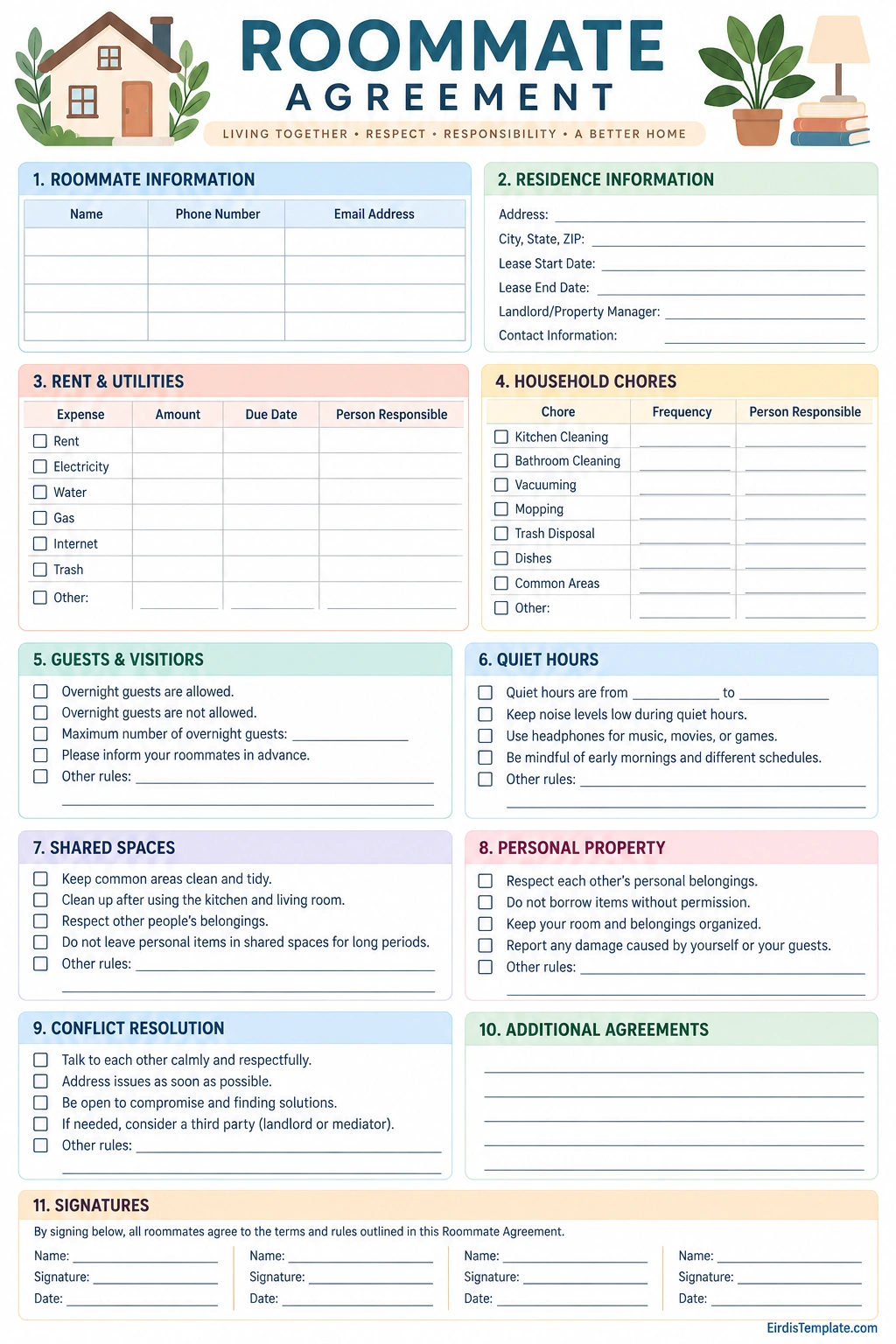
4. Guests and Visitors
Guest policies can prevent uncomfortable situations, especially when roommates have different social habits. Discuss whether guests are allowed, whether advance notice is expected, and whether overnight visitors have any limitations.
A roommate agreement might address the maximum number of overnight guests, how often guests can stay, whether roommates should be notified in advance, and whether certain areas of the home should remain private.
5. Quiet Hours
Different work schedules, school schedules, and sleeping habits can make noise a sensitive issue. Establishing quiet hours can help everyone enjoy the home without unnecessarily disrupting one another.
Quiet-hour rules might cover loud music, television, video games, conversations, parties, and other activities. Roommates should also consider early morning schedules and people who work unusual hours.
6. Shared Spaces
Common areas such as the kitchen, living room, dining area, laundry room, and bathroom often require shared rules. Decide how these spaces should be used and how quickly they should be cleaned after use.
- Clean up after cooking or eating.
- Keep shared surfaces reasonably tidy.
- Do not leave personal belongings in common areas indefinitely.
- Respect shared furniture and appliances.
- Return shared items after use.
- Discuss how refrigerator and pantry space will be divided.
7. Personal Property and Privacy
Sharing a home does not mean that everything in the home is automatically shared. A roommate agreement can establish basic expectations for personal belongings and privacy.
For example, roommates can agree not to borrow clothing, electronics, food, or other personal items without permission. They can also discuss expectations regarding entering another roommate’s bedroom or private space.
How to Create a Roommate Agreement
Start With an Honest Conversation
Before completing the document, talk about the practical aspects of living together. Each roommate should have an opportunity to explain their expectations and concerns.
Topics that seem minor before moving in can become important later. Discuss cleaning habits, sleep schedules, food, guests, noise, shared purchases, temperature preferences, parking, pets, and personal boundaries if they are relevant to the household.
Write Down Specific Rules
Once the main topics have been discussed, turn the decisions into clear statements. Avoid vague wording whenever possible.
For example, “Keep the apartment clean” leaves room for different interpretations. A more useful rule might explain that dishes should be cleaned after use and common areas should be tidied regularly.
Make the Arrangement Fair
A roommate agreement works best when everyone has a reasonable opportunity to contribute to the rules. Avoid creating a document that reflects only one person’s preferences.
Consider each roommate’s schedule, financial responsibilities, work or school commitments, and reasonable need for privacy. The goal is to establish expectations that everyone understands and can realistically follow.
Review the Agreement Together
Read through the entire agreement before signing it. Make sure everyone understands the wording and agrees with the responsibilities listed.
If something changes later, roommates can discuss the issue and update the agreement. Keeping the document flexible can be helpful because household circumstances may change over time.
Roommate Agreement Rules to Consider
Every household is different, but the following topics can provide a useful starting point when creating shared living rules.
- Rent payment responsibilities and due dates
- Utility and internet bill contributions
- Cleaning schedules and household chores
- Kitchen and refrigerator organization
- Shared food and household supplies
- Guest and overnight visitor policies
- Quiet hours and acceptable noise levels
- Smoking or other property-specific restrictions
- Pets and animal responsibilities
- Parking and vehicle arrangements
- Use of shared furniture and appliances
- Personal belongings and borrowing items
- Privacy and bedroom boundaries
- Shared purchases and replacement costs
- How disagreements will be discussed
How to Handle Roommate Conflicts
Even with a detailed roommate agreement, disagreements can still happen. A written agreement does not eliminate conflict, but it can provide a starting point for resolving it.
Address Problems Early
Small problems are often easier to solve than long-standing frustrations. If a roommate repeatedly ignores an agreed rule, discuss the issue calmly rather than allowing resentment to build.
Focus on the Specific Issue
When discussing a disagreement, focus on the behavior or situation rather than attacking the person. Explain what happened, why it is a problem, and what change you would like to see.
Look for a Practical Compromise
Not every disagreement requires one person to completely change their habits. Roommates may be able to find a compromise that respects everyone’s needs.
Use the Agreement as a Reference
If the issue is already covered by the roommate agreement, review the relevant section together. This can make the conversation more objective and reduce arguments based on different memories of what was previously discussed.
Consider a Neutral Third Party When Necessary
If roommates cannot resolve a significant disagreement themselves, they may consider an appropriate neutral third party, such as a landlord, property manager, or mediator, depending on the circumstances. Serious housing or legal disputes may require professional advice.
Tips for Making a Roommate Agreement Work
Creating the document is only the first step. The agreement is most useful when roommates actually use it as a shared household guide.
- Keep the language simple: Everyone should understand each rule without unnecessary complexity.
- Be specific: Clearly identify responsibilities, deadlines, and expectations.
- Be realistic: Do not create rules that nobody can reasonably follow.
- Respect differences: Roommates may have different lifestyles and routines.
- Review changes together: Discuss major changes before adding them to the agreement.
- Keep a copy: Each roommate should have access to the final version.
- Follow the lease: Household rules should not conflict with applicable lease terms or housing requirements.
Roommate Agreement vs. Lease Agreement
A roommate agreement and a lease agreement serve different purposes. A lease is generally a formal housing contract involving the landlord and tenant or tenants and establishes terms for the rental property.
A roommate agreement typically focuses on how roommates will manage their shared household. It can explain how roommates divide expenses, chores, guests, shared spaces, and other day-to-day responsibilities.
Because housing laws and contractual rights vary by location, roommates should not assume that a roommate agreement can replace a lease or override legal requirements. When an issue involves tenancy rights, deposits, eviction, liability, or other legal matters, professional local advice may be appropriate.
Roommate Agreement Checklist
Before signing your agreement, review the following checklist to make sure the major household topics have been discussed.
- Roommate names and contact information
- Property address
- Lease dates and relevant housing information
- Rent amounts and payment dates
- Utility and internet arrangements
- Household chores
- Cleaning expectations
- Guest and overnight visitor rules
- Quiet hours
- Shared-space expectations
- Food and household supply arrangements
- Personal property and privacy rules
- Pet or parking arrangements when applicable
- Conflict-resolution process
- Additional household rules
- Signatures and dates
Final Thoughts
A well-prepared roommate agreement can make shared living more predictable and comfortable by turning assumptions into clear expectations. It provides a practical way to discuss rent, utilities, chores, guests, noise, personal belongings, shared spaces, and conflict resolution before these subjects become sources of frustration.
The most effective agreement does not need to be complicated. It simply needs to reflect the household’s actual needs, use clear language, and be accepted by everyone involved. By discussing expectations openly and documenting the decisions, roommates can create a shared living arrangement built around communication, responsibility, and mutual respect.
Download: Roommate Agreement Template

- Free Roommate Agreement Template (Word) - September 28, 2026
- Free Printable Wedding Card Template - September 28, 2026
- Free Printable Wedding Schedule Template - September 28, 2026
