A car rental agreement is an important document that explains the terms and conditions for renting a vehicle. It identifies the rental company and renter, describes the vehicle, specifies the rental period, and outlines fees, insurance arrangements, and responsibilities. By documenting these details before the vehicle is handed over, both parties can better understand their obligations and reduce the risk of disputes.
Whether you operate a car rental business or need to rent a vehicle for personal or business use, reviewing a clear rental agreement helps set expectations from the beginning. It can explain when the vehicle must be returned, who is responsible for damage or traffic violations, what mileage limits apply, and which additional charges may arise.
A car rental agreement template makes it easier to organize these terms in one document. This guide explains what a car rental agreement is, which sections it should include, how to prepare one, and what renters and rental companies should review before signing.
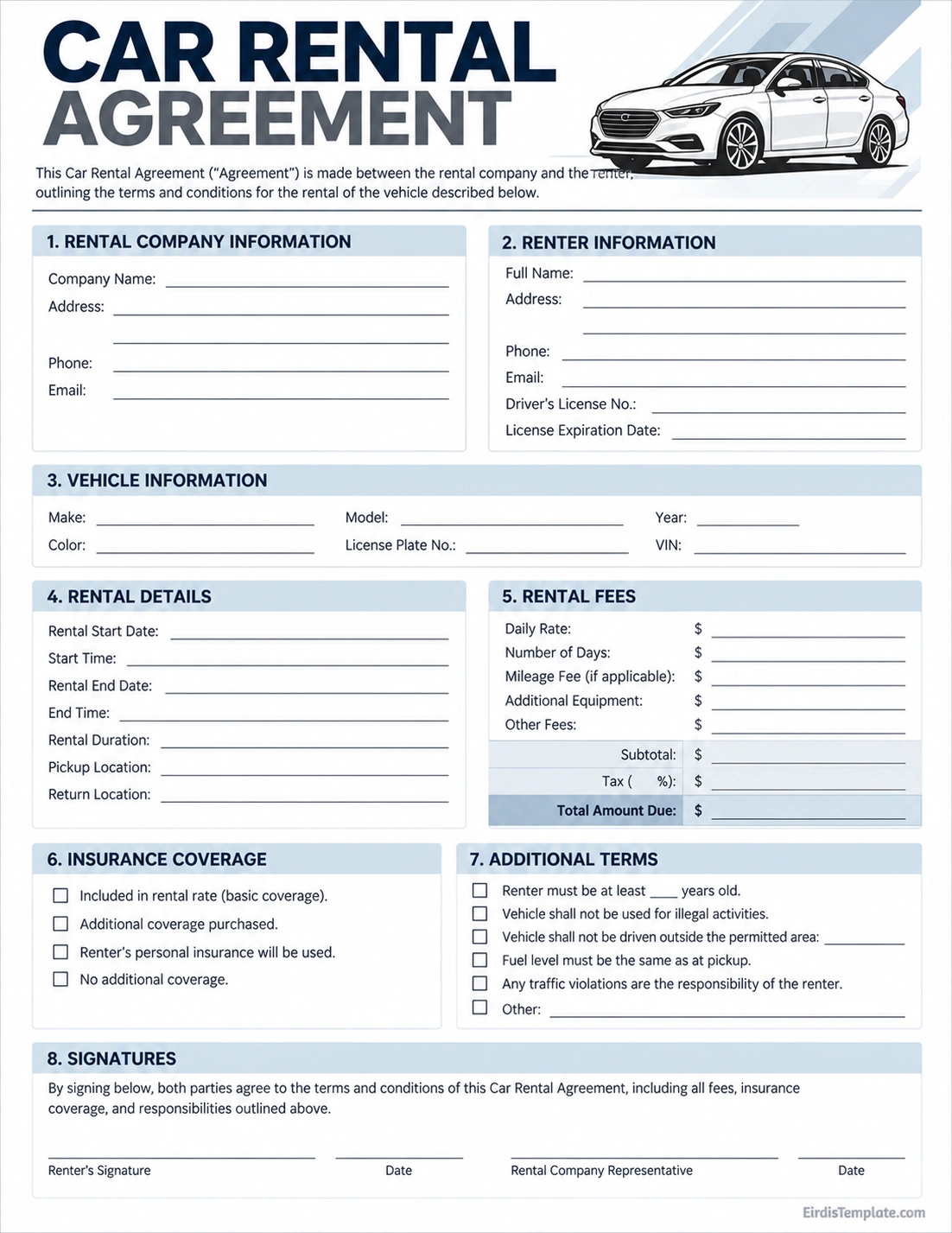
What Is a Car Rental Agreement?
A car rental agreement is a written contract between a vehicle rental provider and a renter. It establishes the conditions under which the renter may use the vehicle for an agreed period and explains the obligations of both parties.
The agreement usually identifies the vehicle, rental dates, payment terms, authorized drivers, insurance arrangements, and procedures for pickup and return. It may also address fuel requirements, mileage restrictions, geographic limits, maintenance responsibilities, and charges for late returns or damage.
Car rental agreements are commonly used by:
- Car rental companies: To document rental terms and manage customer expectations.
- Independent vehicle owners: To record the terms of an authorized private vehicle rental.
- Businesses: To document vehicle rentals for employees, clients, or temporary operational needs.
- Travelers and individuals: To understand their responsibilities before accepting a rental vehicle.
The exact terms depend on the rental arrangement and applicable law. A template provides a starting point, but it should be adapted to the vehicle, rental period, insurance requirements, and local regulations.
Why Is a Car Rental Agreement Important?
A clear car rental contract helps both parties understand the arrangement before the renter takes possession of the vehicle. It also provides a written reference if questions arise during or after the rental period.
Clarifies Rental Terms
The agreement records the pickup date, return date, rental duration, agreed price, and any mileage or geographic restrictions. Clear terms reduce the chance of misunderstandings about how the vehicle may be used and when it must be returned.
Documents Fees and Payment Responsibilities
A rental agreement can identify the daily or weekly rate, taxes, deposits, additional driver charges, optional equipment, and other applicable fees. Listing these charges clearly helps renters understand the expected cost and the circumstances in which additional charges may apply.
Explains Insurance and Damage Responsibilities
The document should explain which insurance coverage is included, offered, or required, along with any relevant deductibles, exclusions, and procedures for reporting an accident. It should not imply that the renter is automatically covered for every incident or that every type of damage is the renter’s responsibility regardless of the circumstances.
Provides a Reference for Disputes
Written terms can help resolve disagreements about late returns, fuel levels, vehicle condition, mileage, or other rental requirements. Accurate records of the vehicle’s condition at pickup and return can provide useful supporting evidence.
What to Include in a Car Rental Agreement Template
A useful car rental agreement template should identify the parties, describe the vehicle, explain the financial terms, and state the main rules for using and returning the vehicle.
Rental Company and Renter Information
Include the rental provider’s legal or business name and contact details. Record the renter’s full name and the information reasonably needed to verify eligibility under the rental policy. If additional drivers are permitted, identify them according to the applicable procedure.
Collect personal information carefully and only to the extent necessary for the rental transaction. Store identity and driver’s license details securely and follow applicable privacy requirements.
Vehicle Information
Describe the rented vehicle so there is no confusion about which car is covered by the agreement. Relevant details may include:
- Vehicle make and model.
- Model year and color.
- License plate number.
- Vehicle identification number (VIN), when appropriate.
- Recorded mileage at pickup.
- Fuel level and existing damage.
Consider attaching a vehicle condition report or dated photographs documenting existing scratches, dents, broken equipment, or other visible issues. Both parties should have a reasonable opportunity to review the condition record.
Rental Period and Locations
Specify the date and time when the rental begins and ends. Include the pickup and return locations, along with instructions for after-hours returns if relevant. State the procedure for requesting an extension and explain whether an extension requires written approval.
Rental Fees and Payment Terms
List the rental rate and the charges that may apply. Depending on the arrangement, these may include taxes, deposits, mileage fees, additional driver fees, optional equipment, delivery charges, and late-return fees.
Clarify the amount due at booking, the security deposit if applicable, accepted payment methods, and the conditions for any refund or additional charge. Explain how charges are calculated rather than relying on vague statements that extra fees may apply.
Insurance and Accident Procedures
Explain the insurance arrangements relevant to the rental. Identify any coverage included in the rate, optional protection products, deductibles, exclusions, and any requirements for the renter’s own insurance where applicable.
Provide instructions for reporting accidents, theft, mechanical problems, or vehicle damage. Renters should know whom to contact, what information to collect, and whether they must contact local authorities or the relevant insurer in particular circumstances.
Insurance rules and consumer protections vary by location. The agreement should accurately reflect the coverage available and should not substitute for reviewing the applicable policy documents.
Permitted Use and Restrictions
Describe how the vehicle may be used and identify any restrictions. Common provisions address authorized drivers, prohibited uses, smoking, towing, off-road driving, transporting certain materials, and travel outside an approved area.
State the minimum driver age and license requirements if applicable. Restrictions should be clear, reasonable, and consistent with applicable law and the rental provider’s policies.
Fuel, Mileage, and Vehicle Return
Specify the fuel policy and any mileage allowance. Explain the expected return condition and the process for reporting a late return or requesting an extension. If cleaning, refueling, or excess-mileage charges may apply, describe the relevant conditions and calculation method.
Signatures and Supporting Documents
Provide signature and date fields for the renter and an authorized rental company representative. Include any required attachments, such as a vehicle inspection report, fee schedule, insurance information, or additional driver details.
Before signing, both parties should have an opportunity to read the complete agreement, ask questions, and retain a copy of the signed document.
How to Prepare a Car Rental Agreement Step by Step
Preparing a car rental agreement is easier when you gather the relevant information before the vehicle is released. Follow these steps to create a document that is clear and practical.
Confirm the Rental Details
Record the vehicle, renter, authorized drivers, rental period, pickup location, and return location. Verify that the renter meets the applicable driver eligibility requirements and that the vehicle is available for the requested dates.
Calculate and Explain the Charges
List the agreed rental rate and any additional charges. Explain the security deposit, applicable taxes, mileage limits, fuel policy, and optional services. Review the calculations to ensure the amount due is consistent with the quoted terms.
Inspect the Vehicle
Document the vehicle’s condition before handing it over. Record the mileage and fuel level, and note any visible damage. Allow the renter to review the information and retain a copy of the inspection record. Repeat the inspection when the vehicle is returned.
Review Insurance and Restrictions
Explain the applicable insurance arrangements and the procedure for reporting accidents or damage. Make sure the renter understands restrictions on drivers, vehicle use, geographic travel, and other important conditions.
Obtain Signatures and Provide Copies
Give both parties time to review the complete agreement. Collect the required signatures and provide each party with a copy, including any relevant attachments. Store the signed agreement securely for future reference.
Common Mistakes to Avoid
A well-prepared agreement can still create confusion if important details are missing or unclear. Review the document carefully before using it.
- Leaving rental dates unclear: Record the exact pickup and return dates and times.
- Using vague fee descriptions: Explain when extra charges apply and how they are calculated.
- Overlooking existing damage: Document the vehicle’s condition before and after the rental.
- Misrepresenting insurance: Describe actual coverage and limitations accurately.
- Ignoring additional drivers: Identify authorized drivers and explain applicable requirements.
- Failing to explain late returns: State the extension process and any applicable late-return terms.
- Using outdated legal language: Review the agreement periodically and adapt it to current requirements.
- Failing to provide a copy: Ensure the renter can access the signed agreement and attachments.
Tips for Using a Car Rental Agreement Template
A car rental agreement template can save time and help maintain consistent documentation. Use these practices to make the template more effective:
- Customize it for your business: Add the correct company information, rental policies, and contact details.
- Use plain language: Write terms that renters can understand without guessing their meaning.
- Separate optional charges: Distinguish included services from optional products and additional fees.
- Keep records organized: Use a consistent agreement number or booking reference for each rental.
- Protect personal information: Limit access to renter identification and other sensitive records.
- Review local requirements: Confirm that the terms comply with applicable rental, insurance, consumer protection, and privacy rules.
- Maintain an editable master copy: Update the template when policies or requirements change, while preserving signed versions of completed agreements.
A printable car rental agreement works well for straightforward transactions. Businesses managing frequent rentals may prefer digital rental software that supports electronic signatures, vehicle inspections, payment tracking, and document storage.
Frequently Asked Questions About Car Rental Agreements
What is the purpose of a car rental agreement?
A car rental agreement defines the terms under which a renter may use a vehicle. It documents the rental period, fees, insurance arrangements, permitted use, return requirements, and responsibilities of both parties.
Is a car rental agreement legally binding?
A car rental agreement may be legally binding when it meets the applicable requirements for a valid contract. Enforceability depends on factors such as the agreement’s terms, the parties’ consent, applicable law, and any required formalities. A generic template does not guarantee legal enforceability.
Can I use a car rental agreement template for a private vehicle rental?
A template can be adapted for a private vehicle rental, but the parties should verify that the arrangement complies with applicable laws and insurance conditions. Personal auto insurance policies may restrict commercial rental or other uses, so coverage should be confirmed before the vehicle is rented.
What happens if a renter returns the car late?
The consequences depend on the agreement and applicable law. The contract may specify an extension procedure, additional rental charges, or other permitted remedies. Renters should contact the rental provider as soon as possible if they expect to return the vehicle late.
Should a car rental agreement include insurance information?
Yes. It should clearly describe the relevant insurance arrangements, including applicable coverage, exclusions, deductibles, and accident-reporting procedures. The actual insurance policy and applicable law determine the coverage available.
Does a car rental agreement need signatures?
Signatures are commonly used to document that both parties accepted the rental terms. Whether a particular signature method or additional formality is required depends on the jurisdiction and transaction. Electronic signatures may be acceptable where applicable law permits them.
What should I check before signing a car rental agreement?
Review the rental dates, vehicle details, total cost, deposit conditions, insurance coverage, mileage limits, authorized drivers, fuel policy, damage procedures, and return requirements. Ask for clarification about any term you do not understand before signing.
Conclusion
A car rental agreement helps rental companies and renters establish clear expectations before a vehicle is handed over. By documenting the rental period, vehicle details, fees, insurance arrangements, usage restrictions, and return requirements, the agreement can reduce misunderstandings and support better recordkeeping.
Using a car rental agreement template makes it easier to organize these details consistently. Customize the document to fit the rental arrangement, explain fees and restrictions clearly, and review applicable legal and insurance requirements. Before the rental begins, ensure that both parties understand the terms and retain a copy of the completed agreement.
Download: Car Rental Agreement Template

- Car-Buying Agreement Template - October 13, 2026
- Car Sale Agreement Template - October 13, 2026
- Car Repair Invoice Template - October 13, 2026
