A catering contract is an essential document for planning a successful event. It outlines the services a caterer will provide, the client’s responsibilities, the agreed menu, payment terms, and the conditions that apply if plans change. By putting these details in writing, both parties can understand their obligations before the event takes place.
Whether you are organizing a wedding, corporate gathering, birthday party, or private dinner, a clear catering services agreement can help prevent misunderstandings. It establishes expectations for food preparation, delivery, staffing, setup, cleanup, and other services included in the arrangement.
Using a catering contract template can make the process easier. It provides a structured starting point for recording important details and allows both parties to review the terms before signing. This guide explains what a catering contract should include, how to prepare one, and which common mistakes to avoid.
What Is a Catering Contract?
A catering contract is a written agreement between a client and a catering business that defines the terms of food and beverage services for an event. Depending on its wording and applicable law, it may create legally binding obligations for both parties.
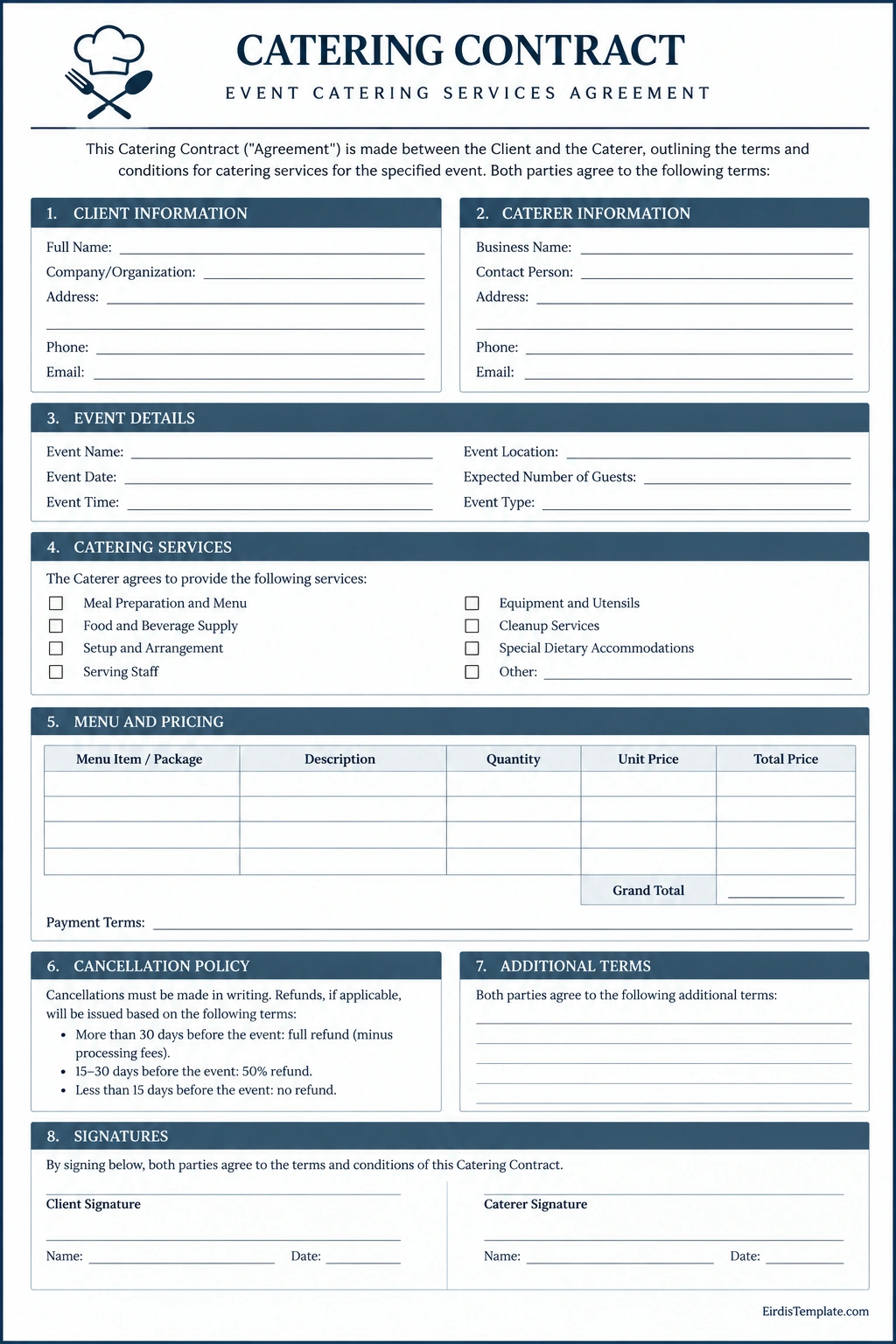
The agreement typically identifies the client and caterer, describes the event, lists the services and menu, establishes the total price, and explains deposits, cancellations, and other conditions. It may also address guest numbers, dietary requirements, equipment, staffing, food safety, and responsibility for unexpected changes.
A well-organized catering services contract gives both parties a shared reference throughout the planning process. Instead of relying on verbal discussions or scattered messages, they can refer to one document when confirming details or resolving questions.
Why Is a Catering Contract Important?
Event catering involves multiple details that can affect the final cost and quality of service. A written agreement helps the client and caterer confirm what has been arranged before committing resources or making payments.
1. Clarifies Services and Expectations
A catering contract describes exactly what the caterer is expected to provide. This may include meal preparation, food delivery, buffet setup, serving staff, beverages, tableware, and cleanup.
Clear descriptions reduce the risk of disagreements about whether a particular service is included in the agreed price.
2. Establishes Payment Terms
The contract records the total price, deposit, payment deadlines, accepted payment methods, and any additional charges. Both parties can review the financial terms before the client confirms the booking.
It should also explain how the final cost may change if the guest count, menu, event duration, or service requirements change.
3. Provides a Framework for Handling Changes
Event plans can change because of guest cancellations, venue restrictions, scheduling issues, or unexpected circumstances. A catering agreement can explain how changes must be requested, approved, and priced.
Written procedures make it easier to confirm revised arrangements and reduce confusion close to the event date.
4. Helps Manage Risk
Provisions covering food allergies, food safety, cancellations, delays, equipment, and responsibility for damage can help the parties identify potential risks in advance.
The agreement should allocate responsibilities clearly and fairly. Any liability limitation or cancellation provision should be reviewed for compliance with applicable law.
What Should a Catering Contract Include?
The exact contents depend on the event and the services involved. However, most catering contracts benefit from the following sections.
1. Client and Caterer Information
Begin by identifying both parties. Include their legal names or business names, mailing addresses, telephone numbers, and email addresses. If a representative signs on behalf of a company, identify their role where appropriate.
Accurate contact information helps both parties communicate about planning, payment, and last-minute changes.
2. Event Details
Record the information needed to plan and deliver the catering service, including:
- Event name and type
- Event date and service hours
- Venue name and full address
- Expected number of guests
- Meal or service schedule
- Setup and access times
Confirm whether the caterer needs access to the venue before guests arrive and whether the venue has restrictions on deliveries, cooking equipment, or cleanup.
3. Menu and Food Requirements
Describe the agreed menu in sufficient detail. Include appetizers, main courses, side dishes, desserts, beverages, and any agreed substitutions or alternatives.
Record relevant dietary requirements and food allergies in a clear, practical way. The client should communicate known requirements promptly, while the caterer should explain what accommodations can reasonably be provided and how cross-contact risks will be managed.
If the menu may change because of ingredient availability, explain when substitutions are permitted and whether client approval is required.
4. Scope of Catering Services
List the services included in the agreement. For example, the caterer may provide food preparation, transportation, buffet arrangement, serving staff, tableware, equipment, and post-event cleanup.
Specify which services are excluded. If the client must provide tables, chairs, refrigeration, access to electricity, or venue permissions, document those responsibilities as well.
5. Guest Count and Final Headcount
The number of guests can affect ingredient quantities, staffing, equipment, and overall cost. The contract should establish the initial guest estimate and the deadline for confirming the final headcount.
Explain how increases or decreases in attendance affect the price. Also clarify whether the caterer can accommodate changes received after the deadline.
6. Pricing, Deposits, and Payment Schedule
Clearly state the agreed price and explain how it is calculated. Pricing may be based on a per-person rate, a fixed service package, individual menu items, or a combination of charges.
The payment section should identify:
- The total estimated or fixed contract price
- The deposit amount and due date
- Any interim payments
- The final payment deadline
- Applicable taxes and service charges
- Extra fees for overtime, delivery, equipment, or additional guests
Distinguish fixed charges from estimates. If the final cost depends on the guest count or additional services, explain how the amount will be calculated.
7. Cancellation and Refund Policy
Cancellations can create costs for both parties, particularly when ingredients have been purchased or staff have been scheduled. The contract should explain how a cancellation must be communicated and what financial consequences may apply.
Specify any deadlines, cancellation fees, deposit treatment, and refund conditions. Avoid vague wording such as “deposits are nonrefundable under all circumstances” without considering applicable law and the circumstances of the agreement.
Both parties should understand the policy before signing. Any cancellation charges should be clearly disclosed and consistent with applicable legal requirements.
8. Changes, Delays, and Unforeseen Events
Describe how either party can request changes to the menu, guest count, venue, or schedule. State whether changes must be approved in writing and whether they may affect the price.
The contract may also address events outside the parties’ reasonable control, such as severe weather, venue closure, transportation disruption, or government restrictions. Explain the notification process and available options if the event cannot proceed as planned.
9. Food Safety, Allergies, and Liability
Food-related responsibilities deserve particular attention. The contract should explain how the caterer will handle food preparation, storage, transportation, service, and relevant food safety requirements.
Where necessary, identify the client’s responsibility to disclose known allergies and the caterer’s responsibility to communicate limitations or available precautions. Do not promise an allergy-free environment unless the caterer can reliably provide it.
Liability, insurance, indemnity, and damage provisions should be tailored to the event and reviewed for legal compliance rather than copied blindly from a generic template.
10. Signatures and Agreement Date
Include signature lines for the client and an authorized caterer representative, along with printed names and dates. Signatures help document that the parties have reviewed and accepted the agreement.
Electronic signatures may be acceptable depending on the circumstances and applicable law. Each party should retain a complete copy of the signed contract and any written amendments.
How to Create a Catering Contract Step by Step
Preparing a catering agreement is easier when you gather the necessary details before drafting the document.
Step 1: Confirm the Event Requirements
Collect the event date, venue, estimated guest count, menu preferences, service hours, and any special requirements. Clarify what the client expects the caterer to provide.
Step 2: Define the Scope of Services
List every included service and identify any exclusions. Make sure both parties understand who is responsible for delivery, setup, serving, equipment, and cleanup.
Step 3: Calculate the Price
Document the pricing method, deposit, payment schedule, taxes, and potential additional charges. Explain how changes to the guest count or service requirements affect the final bill.
Step 4: Add Policies and Responsibilities
Include provisions for cancellations, menu changes, dietary requirements, delays, damage, and unexpected circumstances. Use specific wording that reflects the actual arrangement.
Step 5: Review the Agreement Together
Give both parties time to read the complete document. Resolve unclear terms before signing, particularly those involving payment, cancellation, liability, and additional fees.
Step 6: Sign and Keep Copies
Once the terms are agreed upon, have the appropriate representatives sign and date the contract. Distribute complete copies and store related amendments or confirmations with the original document.
Common Catering Contract Mistakes to Avoid
A contract can only prevent misunderstandings when its terms are clear and accurate. Review the following points before finalizing an agreement.
- Leaving services undefined: Specify exactly what the caterer will provide and what the client must arrange.
- Ignoring additional charges: Disclose delivery, overtime, staffing, equipment, taxes, and other relevant fees.
- Omitting the final headcount deadline: Establish when the guest number becomes binding and how later changes are handled.
- Using vague cancellation terms: Explain deadlines, fees, refunds, and deposit conditions in clear language.
- Failing to document menu changes: Record approved substitutions and revised prices in writing.
- Overlooking food allergies: Establish a clear process for communicating dietary requirements and discussing practical limitations.
- Relying only on verbal promises: Include important commitments in the written agreement.
- Signing without reviewing the terms: Make sure both parties understand the financial and operational obligations.
Catering Contract Template: How to Use One
A catering contract template provides a convenient starting point for documenting an event arrangement. It can help organize client information, caterer details, event specifications, menu selections, prices, payment terms, cancellation rules, and signatures.
Start by replacing the example information with accurate details for the event. Remove provisions that do not apply and add any special requirements that are necessary for the arrangement.
Before signing, confirm that the contract reflects the actual services, agreed prices, deadlines, and responsibilities. A template should not be treated as a complete legal solution for every event or jurisdiction.
For high-value events, complex liability arrangements, or unusual cancellation terms, consider having a qualified legal professional review the agreement. This can help both parties understand their rights and obligations before making a commitment.
Frequently Asked Questions About Catering Contracts
What is the purpose of a catering contract?
A catering contract documents the services, menu, event details, payment terms, cancellation policy, and responsibilities agreed upon by the client and caterer. It helps both parties understand what is expected and provides a written reference if questions arise.
Is a catering contract legally binding?
A catering contract may be legally binding when the applicable requirements for a valid agreement are satisfied. Enforceability depends on the wording, circumstances, and relevant law. A signed document does not automatically make every provision enforceable.
Should a catering contract include a deposit?
If a deposit is required, the contract should state the amount, due date, purpose, and conditions for applying or refunding it. The parties should also document the remaining payment schedule and any applicable fees.
Can a catering contract be changed after signing?
Changes may be possible when both parties agree to them. The contract should explain how amendments are approved and recorded. Written confirmation helps prevent disagreements about revised menus, prices, guest numbers, or schedules.
What happens if the client cancels an event?
The outcome depends on the cancellation terms and applicable law. The agreement should explain notice requirements, potential fees, deposit treatment, and refund conditions before either party commits.
Does a catering contract need to include the menu?
Including the agreed menu or attaching it as a separate schedule is generally useful. It helps identify the food and beverages included in the price and provides a reference for approved substitutions and dietary accommodations.
Can I use a free catering contract template?
Yes. A free template can help organize common terms and speed up preparation. Review and customize it carefully, because a generic document may not address your event’s requirements or comply with every applicable law.
Conclusion
A catering contract helps clients and caterers establish clear expectations before an event. By documenting the menu, services, guest count, pricing, payment schedule, cancellation terms, and responsibilities, both parties can plan with greater confidence.
Start with a suitable catering contract template, customize it to reflect the actual arrangement, and review every provision before signing. Pay particular attention to additional charges, guest count deadlines, food safety, cancellations, and procedures for approving changes.
A clear, carefully reviewed catering services agreement can support smoother event planning, reduce avoidable misunderstandings, and provide a useful written record of the commitments made by both parties.
Download: Catering Contract Template

- Certificate of Accomplishment Template - October 19, 2026
- Cease and Desist Letter Template - October 19, 2026
- Catholic Wedding Program Template - October 19, 2026
