A baptism certificate is a formal document that records a person’s baptism and recognizes their participation in an important Christian religious ceremony. It can serve as a meaningful reminder of a person’s spiritual heritage, connection to a church community, and participation in the sacrament or ordinance of baptism.
Depending on the Christian denomination and local church practices, a baptism certificate may include the person’s name, date and place of baptism, officiating minister, parents or sponsors, and the name of the church. Some certificates also include a Bible verse, statement of faith, church seal, or signature from a pastor or other authorized church representative.
Whether it is presented to a child, teenager, or adult, a baptism certificate can provide a lasting record of an important milestone in a person’s Christian journey. This guide explains what a baptism certificate is, why it matters, what information it usually contains, and how to create a meaningful certificate.
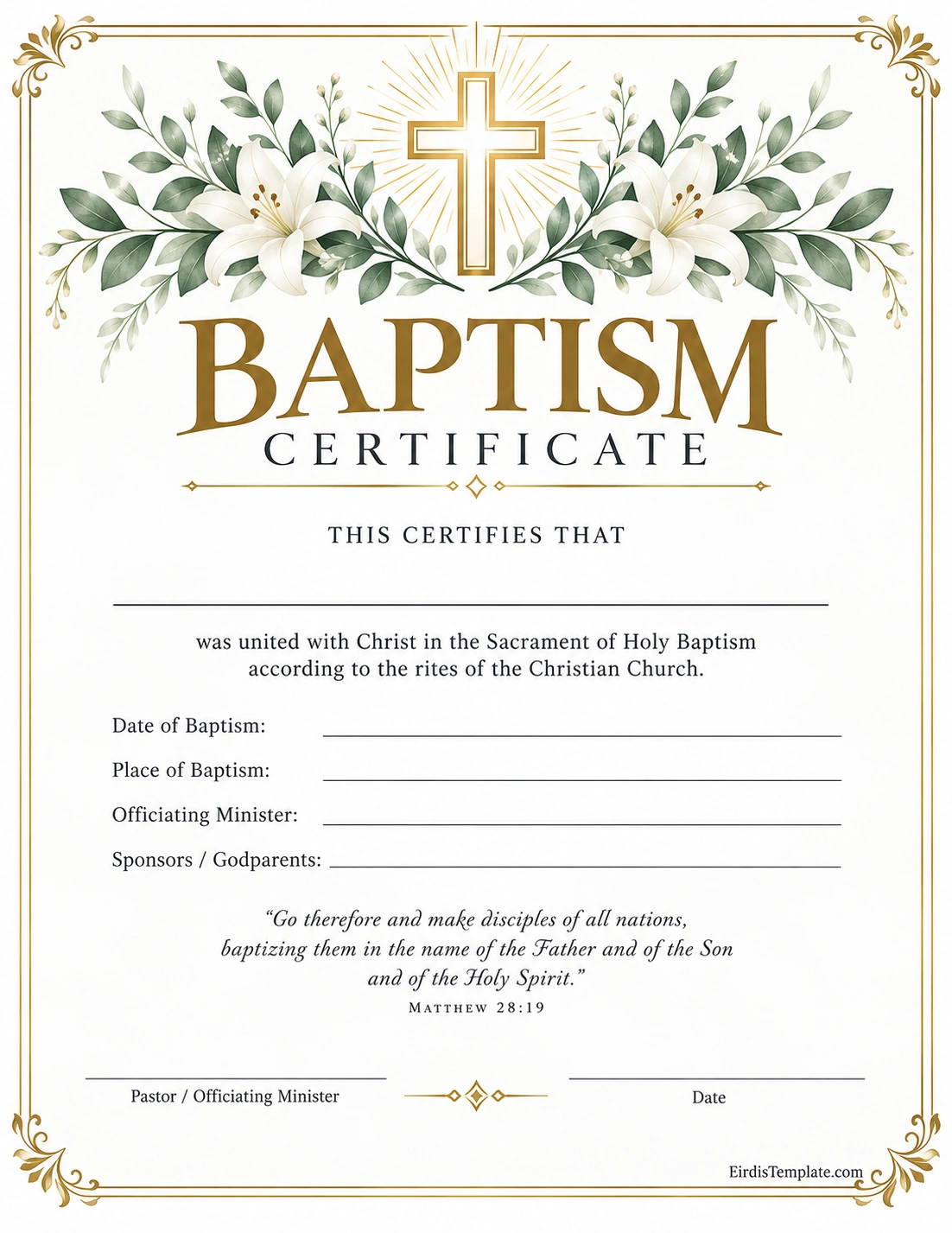
What Is a Baptism Certificate?
A baptism certificate is a document that records and commemorates a person’s baptism within a Christian church. It generally confirms that the individual participated in a baptism ceremony on a particular date and at a particular location.
The document may be issued by a church, parish, congregation, or other Christian religious organization. Its exact format and purpose vary according to the denomination and the policies of the church.
For many families, the certificate is more than a simple record. It can become a keepsake that represents an important spiritual milestone and preserves details about the person’s connection with their church community.
Why Is a Baptism Certificate Important?
A baptism certificate can have both religious and personal significance. It provides a written record of an event that may be remembered for many years.
It Records an Important Religious Event
Baptism is an important ceremony in many Christian traditions. A certificate provides a formal record of when and where the ceremony took place and who participated in it.
It Recognizes Church Membership or Participation
Depending on the denomination, baptism may be connected with initiation into a Christian community or recognition of an individual’s participation in the faith. A certificate can document that connection according to the church’s practices.
It Preserves Family and Spiritual History
A baptism certificate can become part of a family’s collection of important documents and keepsakes. Years later, it may help families remember the date, church, minister, sponsors, or other details associated with the ceremony.
It May Support Church Records
Churches typically maintain their own official records of baptisms. A certificate given to the individual or family can serve as a personal record that corresponds to information maintained by the church.
What Information Does a Baptism Certificate Include?
The information on a baptism certificate varies by denomination and church. However, many certificates contain several common elements.
- Full name: The name of the person who was baptized.
- Date of baptism: The date on which the baptism ceremony took place.
- Place of baptism: The church, parish, congregation, or location where the ceremony occurred.
- Church name: The name of the Christian congregation or religious organization.
- Officiating minister: The name or signature of the pastor, priest, minister, or other authorized person.
- Parents’ names: Often included when the baptism involves a child.
- Sponsors or godparents: Included when relevant to the church tradition.
- Bible verse: A Scripture passage may be included as a meaningful religious element.
- Church seal: Some churches use an official stamp or seal to authenticate the document.
- Signature: A pastor or other church representative may sign the certificate.
Baptism Certificate for a Child
Many Christian families receive a baptism certificate when a child is baptized. In traditions that practice infant or child baptism, the certificate may include the child’s full name, parents’ names, baptism date, church, officiating minister, and sponsors or godparents.
A child’s baptism certificate can also become a family keepsake. Parents may preserve it with photographs, religious documents, and other records from the child’s early years.
Information Commonly Included for Children
A child baptism certificate may include:
- Child’s full name
- Date of birth
- Date of baptism
- Names of parents
- Names of godparents or sponsors
- Name of church
- Name of officiating minister
- Location of the baptism
- Church seal or official signature
Baptism Certificate for Adults
Adult baptism certificates can document the baptism of someone who makes a personal decision to participate in the Christian faith according to the practices of their church.
The certificate may contain many of the same details as a child baptism certificate. However, the document may focus more directly on the individual’s name, baptism date, church, minister, and statement of faith or participation.
Because Christian denominations have different beliefs and practices concerning baptism, the wording and design of an adult baptism certificate should reflect the terminology used by the individual’s church.
Baptism Certificate vs. Baptism Record
A baptism certificate and a baptism record are related but may serve different purposes.
A baptism record is generally part of the church’s official records. It may be maintained in a church register or electronic record and may contain detailed information about the ceremony.
A baptism certificate is typically a document provided to the baptized person or family as a formal or commemorative record of the baptism.
The distinction is important because a certificate kept by a family may not replace the church’s official record. If formal verification of a baptism is required, the relevant church may need to provide an official record or confirmation.
What Should a Baptism Certificate Say?
The wording should be respectful, clear, and consistent with the beliefs and terminology of the church issuing the certificate. A simple certificate can state that the individual was baptized according to the practices of the Christian church.
It can then provide the essential details, such as the person’s name, date of baptism, location, minister, and church.
Some churches also include a Scripture passage or short religious statement. A commonly selected verse may relate to baptism, faith, discipleship, or the Christian life.
Keep the Wording Accurate
When preparing a certificate, use terminology approved by the church. Different Christian denominations may describe baptism as a sacrament, ordinance, initiation, or another form of religious participation.
Using the church’s preferred wording helps ensure that the certificate accurately reflects the ceremony and tradition.
How to Create a Baptism Certificate
Creating a baptism certificate involves more than choosing an attractive design. The document should present accurate information in a professional and respectful format.
1. Gather the Required Information
Collect the person’s full name, baptism date, church name, location, officiating minister, and any additional information required by the church.
2. Choose an Appropriate Design
Select a design that reflects the religious significance of the occasion. Common design elements include crosses, doves, flowers, leaves, borders, Scripture references, and subtle religious symbols.
3. Add the Certificate Wording
Write a clear statement recognizing the baptism. Keep the wording formal and appropriate for the Christian tradition represented by the church.
4. Add Signatures and Authentication
Include the appropriate signature lines for the pastor, priest, minister, or church representative. If the church uses an official seal or stamp, leave an appropriate space for it.
5. Proofread Before Printing
Check every name, date, location, title, and Scripture reference carefully. A spelling error on a religious certificate can reduce its usefulness and sentimental value.
Design Ideas for a Baptism Certificate
A baptism certificate can be simple and elegant or decorative and traditional. The best design depends on the church, occasion, and intended use.
- Classic design: Use a clean border, serif typography, and a simple cross.
- Floral design: Add subtle flowers or botanical elements around the border.
- Minimalist design: Use generous white space and a small religious symbol.
- Traditional design: Include decorative borders, formal typography, and a church seal.
- Modern design: Use a simple layout with restrained colors and contemporary typography.
- Child-friendly design: Use gentle decorative elements while maintaining a respectful religious appearance.
Choosing Colors for a Baptism Certificate
Color can influence the overall tone of a baptism certificate. Traditional certificates often use white, cream, gold, green, blue, or soft neutral tones.
White can create a clean and ceremonial appearance, while gold can add an elegant and formal accent. Green botanical elements can create a natural look, and soft blue tones may provide a calm and traditional appearance.
When designing a printable certificate, keep sufficient contrast between the text and background so that names, dates, and other important information remain easy to read.
Tips for Printing a Baptism Certificate
Because a baptism certificate is often kept as a long-term keepsake, print quality matters. A few simple choices can improve the final result.
- Use high-quality paper suitable for certificates.
- Choose a paper weight that feels substantial but works with your printer.
- Print at the document’s intended size without unnecessary scaling.
- Check the margins before printing.
- Use high-quality printer settings for decorative designs.
- Proofread all personalized information before making the final print.
- Consider using archival-quality paper when the certificate is intended as a long-term keepsake.
How to Personalize a Baptism Certificate
Personalization can make a baptism certificate more meaningful. Beyond the required information, consider adding details that reflect the ceremony and the individual’s connection to the church.
Possible additions include a meaningful Bible verse, the names of godparents or sponsors, the church’s name and logo, a ceremonial date, or a short statement of blessing.
However, personalization should not interfere with the essential information. The person’s name, baptism date, church information, and required signatures should remain easy to find and read.
Using a Baptism Certificate Template
A baptism certificate template provides a starting point for creating a polished certificate without designing the entire document from scratch. A template can provide the basic layout, typography, decorative elements, information fields, and signature areas.
Templates are especially useful when a church needs to prepare multiple certificates with a consistent design. They can also help families visualize the appearance of a commemorative baptism document.
Before using a template for an official church record, verify that its wording and required fields meet the church’s policies. A template should support the church’s documentation process rather than replace its official records.
Frequently Asked Questions About Baptism Certificates
What is a baptism certificate?
A baptism certificate is a document that records and commemorates a person’s baptism in a Christian church. It commonly includes the person’s name, baptism date, church, location, officiating minister, and other relevant details.
What is the purpose of a baptism certificate?
The purpose of a baptism certificate is to provide a formal or commemorative record of baptism. It can recognize participation in an important Christian ceremony and preserve details about the person’s connection with a church community.
Is a baptism certificate an official document?
The status of a baptism certificate depends on the church and denomination that issues it. It may serve as a personal or church-issued record, while the church’s official baptism register may be the authoritative source for verification.
What information should be on a baptism certificate?
A baptism certificate commonly includes the baptized person’s name, baptism date, church name, location, officiating minister, and signatures. Depending on the tradition, it may also include parents, sponsors, godparents, a Bible verse, or a church seal.
Can I create my own baptism certificate?
You can create a commemorative baptism certificate using a template or custom design. However, if the certificate is intended to serve as an official church record, the church should approve the wording, information, signatures, and authentication requirements.
Can a baptism certificate be used as proof of baptism?
A baptism certificate may provide evidence that a baptism took place, but requirements vary. When formal verification is needed, the organization requesting proof may require an official baptism record or confirmation directly from the church.
What Bible verse can be included on a baptism certificate?
A baptism certificate may include a Bible verse selected by the church or family, provided that the wording is appropriate for the denomination and ceremony. Matthew 28:19 is one example of a passage commonly associated with baptism.
Should a baptism certificate include a church seal?
If the issuing church normally uses an official seal or stamp, including it can help identify the document as a church-issued record. The church should determine whether a seal is required.
Conclusion
A baptism certificate provides a meaningful written record of an important Christian ceremony. It can document the person’s name, baptism date, church, minister, sponsors, and other details while preserving a connection to their spiritual and family history.
A well-designed certificate should be accurate, respectful, easy to read, and appropriate for the church’s tradition. Whether it is created as an official church document or a personal keepsake, a baptism certificate can remain a meaningful reminder of a significant moment in a person’s Christian journey.
Download: Baptism Certificate Template

- Printable Bill of Lading Form Template - October 8, 2026
- Free Behavior Contract Template (Word) - October 8, 2026
- Free Printable Baseball Schedule Template - October 8, 2026
