A cease and desist letter is a formal written notice demanding that an individual or business stop an allegedly unlawful, harmful, or unwanted activity. It may address issues such as copyright infringement, trademark misuse, harassment, defamation, or breach of certain rights. The letter also typically warns the recipient against repeating the conduct in the future.
Receiving or sending this type of letter can feel intimidating, but understanding its purpose makes the process easier to manage. A well-prepared letter identifies the disputed behavior, explains why it is a concern, describes the action requested, and provides a reasonable way to respond.
A cease and desist letter is often used to seek a resolution before filing a lawsuit. However, it is important to understand that the letter is not a court order, and sending one does not automatically establish that the recipient has broken the law. Its legal effect depends on the circumstances, the claims involved, and applicable law.
In this guide, you will learn what a cease and desist letter should contain, when to use one, how to write it, and what steps to consider after sending or receiving it.
What Is a Cease and Desist Letter?
A cease and desist letter is a formal demand asking someone to stop a specific activity and refrain from continuing it. The sender may be an individual, a business, an attorney, or another party seeking to protect their legal rights or address harmful conduct.
The letter usually describes the disputed behavior, identifies the rights or interests involved, and explains what the recipient is expected to do. It may also set a response deadline and state that the sender is considering further legal action if the matter remains unresolved.
Although a cease and desist letter can be an important step in a dispute, it is generally a private communication rather than a binding court order. The recipient may comply, negotiate, dispute the allegations, or seek legal advice.
When Should You Use a Cease and Desist Letter?
A cease and desist letter may be appropriate when you have a reasonable basis to believe that another person or organization is violating your rights or engaging in conduct that needs to stop. The correct approach depends on the facts and the law governing the situation.
1. Copyright or Intellectual Property Infringement
You may consider sending a copyright infringement cease and desist letter if someone uses your protected work without authorization. Examples include copying website content, distributing photographs, reproducing artwork, or using protected material in commercial promotions.
A trademark dispute may involve the unauthorized use of a business name, logo, or mark that creates confusion about the source of goods or services. Before making a demand, identify the material at issue and gather evidence of the alleged use.
2. Harassment or Unwanted Contact
A cease and desist letter may be used to demand that someone stop certain unwanted communications or conduct. The letter should describe specific incidents, dates, and the behavior that needs to end.
If you are experiencing threats, stalking, or an immediate safety risk, do not rely on a letter alone. Consider contacting the appropriate authorities or a qualified legal professional about available protective measures.
3. Defamation or False Statements
A defamation-related cease and desist letter may request that someone stop publishing allegedly false statements that harm a person’s or company’s reputation. Depending on the circumstances, the sender may also request a correction or retraction.
Not every negative statement is defamatory. Opinions, truthful statements, and other forms of protected expression may receive legal protection. Because defamation laws vary, obtain legal advice before demanding that someone remove or retract a statement.
4. Contractual or Business Disputes
A cease and desist demand may address conduct that allegedly violates a contract, confidentiality obligation, or other legal duty. For example, a business might ask a former service provider to stop using confidential information when a valid legal obligation applies.
Review the relevant agreement and applicable law before making a demand. A letter should not claim that a restriction is enforceable unless there is a reasonable basis for that position.
What to Include in a Cease and Desist Letter
A clear, organized letter makes it easier for the recipient to understand the allegations and respond. While the exact requirements vary by situation and jurisdiction, most letters benefit from the following elements.
- Sender information: Include the sender’s full name, business name if applicable, mailing address, and appropriate contact details.
- Recipient information: Identify the individual or organization receiving the notice and use accurate contact information.
- Date: State the date the letter is prepared or sent.
- Subject line: Use a clear heading, such as “Cease and Desist Notice Regarding Unauthorized Use of Copyrighted Material.”
- Description of the conduct: Explain what happened, when it occurred, and where the relevant activity can be found.
- Basis for the demand: Identify the rights or interests involved and explain why the conduct is disputed without overstating the law.
- Requested corrective action: Specify what the recipient should stop, remove, correct, or confirm.
- Response deadline: If appropriate, provide a reasonable date for a response or completion of the requested action.
- Consequences of noncompliance: Explain that further legal options may be considered if the issue is not resolved.
- Signature and contact details: Provide the sender’s name and a practical way to communicate about the matter.
Keep the wording factual and professional. Avoid insults, unsupported accusations, or threats that you are not legally entitled to make.
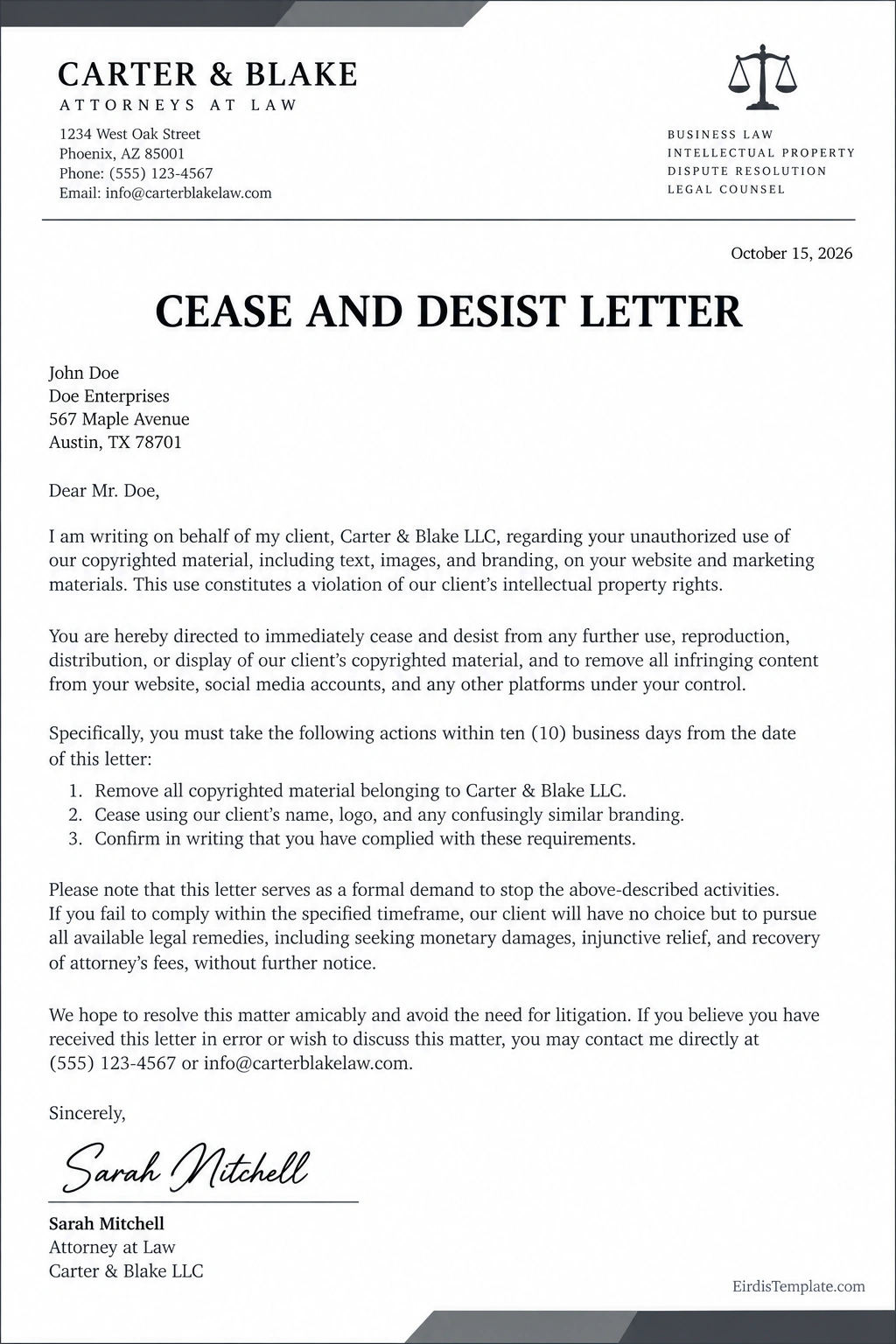
How to Write a Cease and Desist Letter Step by Step
Writing an effective letter starts with accurate information and a specific objective. Follow these steps to prepare a clear demand.
Step 1: Gather Evidence
Collect documents that support your concern before contacting the recipient. Depending on the dispute, useful evidence may include dated screenshots, copies of messages, website links, photographs, contracts, invoices, or records of previous communication.
Keep original files where possible and record when and how the evidence was obtained. Avoid altering records or accessing accounts or systems without authorization.
Step 2: Describe the Conduct Precisely
Explain the behavior you want to stop in specific terms. Instead of making a broad accusation, identify the relevant publication, communication, product, or incident. Include dates and locations when they help clarify the issue.
Step 3: State What You Want the Recipient to Do
Make your request clear and practical. Depending on the situation, you might ask the recipient to stop using particular material, remove identified content, discontinue certain communications, or confirm that a specified activity has ended.
Requests should be proportionate to the issue and consistent with your legal rights. Do not demand action that you have no reasonable basis to require.
Step 4: Set a Reasonable Deadline
A deadline helps the recipient understand when you expect a response. The appropriate period depends on the urgency, complexity, and nature of the dispute. There is no single deadline that applies to every cease and desist letter.
Check whether a contract, statute, court rule, or other legal requirement affects the timing. If the matter is urgent or involves potential litigation, consult an attorney before setting a deadline.
Step 5: Review and Send the Letter
Proofread the letter carefully and verify every factual statement. Keep a copy of the final version and the supporting evidence. Choose a delivery method appropriate for the situation, and retain available proof of delivery.
If the dispute involves substantial financial exposure, complex intellectual property rights, or a possible lawsuit, consider having a lawyer review the letter before sending it.
What Happens After You Send a Cease and Desist Letter?
There is no guaranteed outcome after a letter is sent. The recipient’s response may depend on the evidence, the nature of the dispute, the legal position of each party, and the willingness to negotiate.
- The recipient complies: They may stop the disputed activity or complete the requested corrective steps.
- The recipient responds or negotiates: They may request clarification, propose a compromise, or ask for additional time.
- The recipient disputes the allegations: They may deny wrongdoing or explain why they believe their conduct is lawful.
- The recipient does not respond: You may need to consider further options, depending on the circumstances and applicable law.
Keep communications professional and preserve all relevant records. If the matter remains unresolved, a lawyer can help evaluate potential next steps, which may include negotiation, mediation, an administrative complaint, or litigation where appropriate.
What Should You Do If You Receive a Cease and Desist Letter?
Receiving a cease and desist letter does not automatically mean you have violated the law. However, you should take it seriously, review the allegations, and avoid making a rushed decision.
- Read the entire letter: Identify the specific conduct being challenged, the requested actions, and any stated deadline.
- Preserve relevant evidence: Keep related emails, contracts, files, posts, and other records. Do not destroy or alter potentially relevant evidence.
- Assess the allegations: Check whether the facts are accurate and whether you have permission, a contractual right, or another relevant legal basis for your conduct.
- Avoid impulsive replies: A hostile or careless response can make a dispute harder to resolve.
- Seek legal advice when needed: An attorney can assess the claims, explain potential risks, and help prepare a response.
- Track deadlines: Note any requested response date and determine whether a legal or contractual deadline applies.
Do not assume that every demand is valid, but do not ignore the letter simply because it is not a court order. The consequences of inaction depend on the underlying facts and applicable law.
Common Mistakes to Avoid
A cease and desist letter is most useful when it communicates a legitimate concern clearly. Avoid these common mistakes when preparing one.
- Making unsupported allegations: Verify facts and distinguish evidence from assumptions.
- Using aggressive or threatening language: Professional wording is generally more effective than intimidation.
- Being vague: Identify the specific activity and the corrective action requested.
- Demanding too much: Keep requests proportionate and grounded in a reasonable legal position.
- Ignoring jurisdiction: Laws and procedures differ by country, state, and type of claim.
- Assuming the letter guarantees legal protection: Sending a notice does not automatically stop the conduct or establish liability.
- Forgetting to keep records: Retain the letter, delivery confirmation, evidence, and subsequent correspondence.
Frequently Asked Questions About Cease and Desist Letters
Is a cease and desist letter legally binding?
Generally, a cease and desist letter is not a court order and does not automatically compel the recipient to comply. However, it may formally notify the recipient of a dispute, and the underlying conduct may have legal consequences independent of the letter. The effect depends on the circumstances and applicable law.
Can I write my own cease and desist letter?
Yes. You can prepare your own letter if you understand the issue and can accurately describe the conduct and requested action. For complex disputes, serious allegations, or matters that may lead to litigation, legal review can help reduce avoidable risks.
How much does a cease and desist letter cost?
The cost depends on whether you write it yourself, use a document template, or hire an attorney. A self-prepared letter may involve little more than printing and delivery expenses, while attorney fees vary according to location, complexity, and the work required.
How long should someone have to respond?
There is no universal response period. A reasonable deadline depends on the conduct, the urgency of the situation, and any applicable legal or contractual requirements. Avoid assuming that a deadline in a private letter is automatically binding under law.
Can a cease and desist letter be sent by email?
In some situations, email may be a practical way to deliver a notice, but it may not be sufficient for every purpose. Check any relevant contract, legal requirement, or procedural rule and consider a delivery method that provides reliable records of transmission or receipt.
What happens if someone ignores a cease and desist letter?
The sender may consider further legal options if the disputed conduct continues. Depending on the situation, those options might include further negotiation, mediation, an administrative process, or a lawsuit. Ignoring the letter does not automatically prove wrongdoing, and litigation is not guaranteed.
Can I send a cease and desist letter for harassment or defamation?
A letter may be appropriate in some harassment or defamation disputes, but the best response depends on the conduct, the evidence, and local law. If there are threats or immediate safety concerns, contact the appropriate authorities rather than relying only on a written demand.
Is a cease and desist letter the same as a demand letter?
Not exactly. A cease and desist letter primarily asks someone to stop specified conduct and avoid repeating it. A demand letter may instead request payment, compensation, performance of an obligation, or another remedy. The documents can overlap depending on the dispute.
Conclusion
A cease and desist letter can be a useful way to communicate a formal demand, document a dispute, and seek a resolution before pursuing further legal action. A strong letter identifies the disputed conduct, explains the concern, specifies the corrective action requested, and provides clear contact information and an appropriate response period.
Before sending or responding to a cease and desist notice, verify the facts, preserve relevant evidence, and consider the laws that apply to your situation. A carefully prepared letter can help clarify the issue and open the door to a practical resolution, but it cannot guarantee compliance or replace legal advice when the stakes are high.
Download: Cease and Desist Letter Template

- Certificate of Accomplishment Template - October 19, 2026
- Cease and Desist Letter Template - October 19, 2026
- Catholic Wedding Program Template - October 19, 2026
