A bill of lading is one of the most important documents used in shipping and logistics. It provides essential information about a shipment and establishes a formal record between the shipper, carrier, and consignee. Depending on the type of shipment and applicable law, it can also serve as a receipt for goods, evidence of a contract of carriage, and a document of title.
Whether you are shipping products across the country or moving goods internationally, understanding how a bill of lading works can help reduce delivery errors, clarify responsibilities, and keep transportation records organized. This guide explains what a bill of lading is, what information it contains, the different types, and how to prepare one correctly.
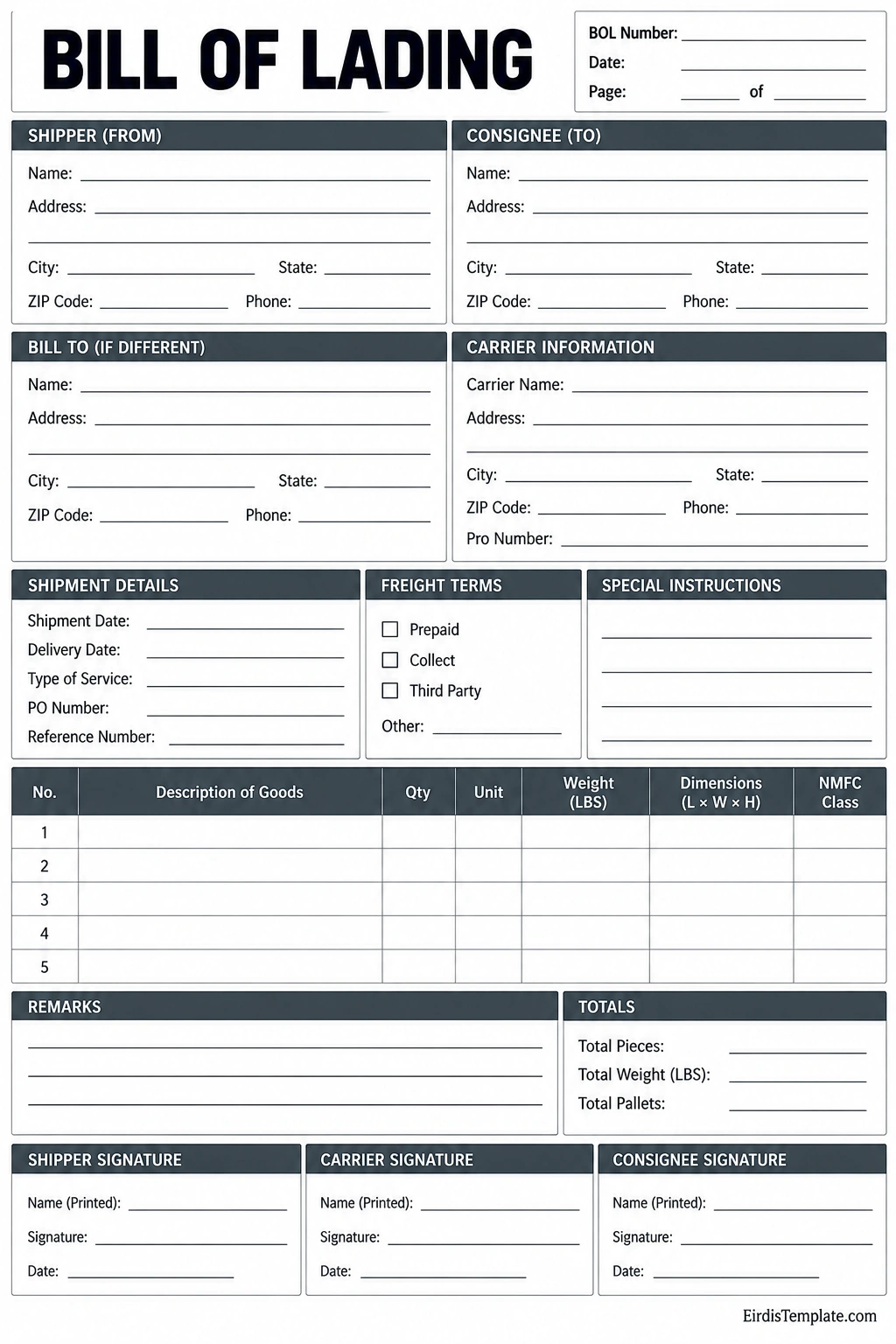
A well-prepared bill of lading should clearly identify the parties involved, describe the goods being transported, record shipment details, and provide any important instructions or terms needed for delivery.
What Is a Bill of Lading?
A bill of lading, often abbreviated as BOL or BL, is a shipping document issued by a carrier or transportation provider to document goods accepted for transportation. It accompanies the shipment and provides information needed to identify, handle, transport, and deliver the goods.
The document typically identifies the shipper, consignee, carrier, origin, destination, description of goods, quantity, weight, and applicable freight terms. Depending on the transaction, it may also contain references to purchase orders, special handling instructions, and delivery requirements.
In simple terms, a bill of lading helps answer three important questions: What is being shipped?, Who is shipping and receiving it?, and Under what transportation terms is it being moved?
Why Is a Bill of Lading Important?
A bill of lading provides a common written record for the parties involved in a shipment. Accurate information can make transportation easier to manage and can help prevent misunderstandings about the goods or delivery instructions.
A BOL is commonly used for several important purposes:
- Shipment receipt: It records the goods accepted for transportation.
- Transportation agreement: It documents important terms and conditions associated with moving the goods.
- Shipment identification: It provides information needed to identify the shipment.
- Delivery record: It can document receipt of the goods by the consignee.
- Inventory and logistics control: Businesses can use BOL information to track shipments and maintain records.
- Claims support: The document can provide useful evidence when investigating shortages, damage, or delivery discrepancies.
The exact legal effect of a bill of lading depends on the type of BOL, the governing law, and the terms of the shipment. It should therefore be completed carefully and consistently with the underlying transaction.
What Information Does a Bill of Lading Include?
Although the exact layout varies by carrier, industry, and shipment type, most bill of lading forms contain several standard categories of information.
Shipper Information
The shipper is the party sending the goods. The BOL may include the shipper’s business name, address, telephone number, and other identifying information.
Consignee Information
The consignee is the party designated to receive the shipment. The document normally includes the consignee’s name and delivery address so the carrier knows where the goods should be delivered.
Carrier Information
Carrier details identify the transportation company responsible for moving the shipment. Depending on the form, this section may include the carrier name, address, contact information, and a carrier or pro number.
Description of Goods
The goods section should describe the items being transported clearly enough for the shipment to be identified and handled appropriately. Quantity, packaging type, weight, dimensions, and freight classification may also be recorded when applicable.
Shipment Details
A BOL may include the shipment date, origin, destination, purchase order number, reference number, delivery information, and service type. These details help connect the physical shipment with the company’s internal records.
Freight Terms
Freight terms indicate how transportation charges are handled. Common entries may include prepaid, collect, or third-party billing arrangements. The appropriate terms should match the actual shipping agreement.
Special Instructions
Special handling, delivery, or routing instructions can be included when necessary. Clear instructions can help the carrier understand requirements that are important for the shipment.
Signatures and Dates
Depending on the transaction, signatures may be used to document acceptance, pickup, delivery, or acknowledgment by the relevant parties. The exact signature requirements can vary based on the carrier and shipment type.
How Does a Bill of Lading Work?
The bill of lading generally follows the shipment from the point where the goods are tendered to the carrier through transportation and delivery. The process may differ depending on the shipping method and applicable regulations, but the basic workflow is straightforward.
- Prepare the shipment information: The shipper gathers the required details about the goods, parties, origin, destination, and freight terms.
- Create the BOL: The bill of lading is prepared using the information relevant to the shipment.
- Carrier receives the goods: The carrier accepts the shipment and uses the BOL as part of the transportation documentation.
- Goods are transported: The shipment moves toward its destination according to the agreed transportation arrangements.
- Delivery is completed: The consignee receives the goods and may acknowledge delivery according to the applicable process.
- Records are retained: The parties keep the completed documentation for accounting, logistics, customer service, or dispute-resolution purposes.
Types of Bill of Lading
There are several types of bills of lading. The appropriate document depends on the shipment, transportation method, contractual arrangement, and applicable rules.
Straight Bill of Lading
A straight bill of lading is generally associated with a shipment delivered to a named consignee. It is commonly used when the goods are not being transferred through negotiation of the document.
Order Bill of Lading
An order bill of lading may allow the goods to be transferred or negotiated under the terms of the document. It can be particularly relevant to transactions involving financing or transfer of control over goods.
Clean Bill of Lading
A clean bill of lading generally indicates that the carrier received the goods without noting apparent damage or other exceptions to the shipment condition on the document.
Claused or Foul Bill of Lading
A claused bill of lading includes an exception or notation concerning the apparent condition or quantity of the goods when received by the carrier. Such notations can be important when documenting damaged or irregular shipments.
Master Bill of Lading
A master bill of lading is commonly used by a carrier or freight forwarder to document a larger transportation arrangement. It may be associated with multiple underlying shipments or house bills.
House Bill of Lading
A house bill of lading is generally issued by a freight forwarder or non-vessel-operating carrier in connection with an individual customer’s shipment.
Bill of Lading vs. Packing List
A bill of lading and a packing list are related shipping documents, but they serve different purposes.
A packing list primarily provides detailed information about the contents of a shipment, such as individual packages, quantities, descriptions, and dimensions. A bill of lading provides transportation-related information and establishes a record associated with the carrier’s handling of the shipment.
Both documents can be useful because they address different aspects of the shipping process. A packing list helps identify what is inside the shipment, while the BOL provides important transportation and delivery documentation.
Bill of Lading vs. Freight Bill
A bill of lading should also be distinguished from a freight bill or freight invoice. The BOL primarily documents the shipment and transportation arrangement, while a freight bill is generally used to request or document payment for transportation services.
Information from the BOL may be used when preparing or reviewing freight charges, but the two documents are not interchangeable.
How to Fill Out a Bill of Lading
Completing a BOL accurately is important because incorrect shipment information can lead to delays, billing issues, delivery problems, or confusion between the parties.
1. Enter the Shipper and Consignee Details
Start by entering the correct legal or business names and addresses for the shipper and consignee. Verify spelling, delivery addresses, and contact information before finalizing the document.
2. Add Carrier Information
Enter the carrier’s information and any applicable carrier reference or tracking number. Make sure the information corresponds with the transportation provider handling the shipment.
3. Describe the Goods Clearly
Record the quantity, packaging, description, weight, dimensions, and other required classification information. Avoid vague descriptions that make the shipment difficult to identify.
4. Record Freight Terms
Indicate the applicable freight payment arrangement, such as prepaid, collect, or third-party billing. Confirm the terms against the shipping agreement before completing the BOL.
5. Add Special Instructions
Include relevant handling or delivery instructions when needed. Keep instructions specific and easy for transportation personnel to understand.
6. Review Before Signing
Check every important field before the shipment leaves the facility. Pay particular attention to addresses, quantities, weights, shipment references, and freight terms.
Common Mistakes to Avoid
Small errors in shipping documentation can create unnecessary problems. A careful review can help reduce common mistakes.
- Using an incorrect consignee or delivery address.
- Leaving important shipment fields incomplete.
- Providing an unclear description of the goods.
- Recording an incorrect quantity or weight.
- Using freight terms that do not match the shipping agreement.
- Failing to document visible damage or shipment exceptions when appropriate.
- Forgetting to retain a copy of the completed document.
- Using inconsistent information across the BOL, packing list, purchase order, and other shipping records.
Tips for Using a Bill of Lading Effectively
A consistent documentation process can make BOL management easier for both small businesses and larger logistics operations.
- Use standardized information: Keep company names, addresses, and shipment references consistent.
- Double-check measurements: Verify quantity, weight, dimensions, and packaging information.
- Keep supporting documents together: Store the BOL with related purchase orders, invoices, packing lists, and delivery records.
- Use clear descriptions: Describe goods in a way that supports identification and transportation.
- Review exceptions: Document relevant damage, shortages, or discrepancies according to the carrier’s procedures.
- Retain completed records: Keep copies according to your company’s recordkeeping requirements and applicable laws.
- Use a template carefully: A standardized BOL template can improve consistency, but it should be adapted to the requirements of the shipment and carrier.
Using a Bill of Lading Template
A bill of lading template can provide a practical starting point for organizing shipment information. A well-designed template may include dedicated sections for the shipper, consignee, carrier, shipment details, freight terms, goods description, remarks, totals, and signatures.
Using a template can save time because recurring information can be entered into a familiar structure. It can also make documents easier for employees and transportation partners to review.
However, a generic template should not automatically be treated as a legally sufficient document for every shipment. Different carriers, transportation modes, industries, and jurisdictions may have specific documentation requirements. Review the requirements that apply to your shipment before using a template for an actual transaction.
Frequently Asked Questions About Bill of Lading
What is the main purpose of a bill of lading?
The main purpose of a bill of lading is to document a shipment and provide important information about the goods, shipper, consignee, carrier, and transportation terms. It can also serve additional legal and commercial functions depending on the type of BOL and applicable law.
Who prepares a bill of lading?
The shipper commonly provides or prepares the shipment information used for the BOL, although the document may be issued or processed by the carrier, freight forwarder, broker, or another party depending on the transportation arrangement.
Is a bill of lading the same as a shipping label?
No. A shipping label primarily identifies a package or shipment for routing and delivery. A bill of lading is a more comprehensive transportation document containing information about the shipment and the parties involved.
What is included on a bill of lading?
A BOL commonly includes shipper and consignee information, carrier details, shipment dates, origin and destination, description of goods, quantity, weight, freight terms, special instructions, and applicable signatures or acknowledgments.
Why is the weight on a bill of lading important?
Shipment weight can affect transportation planning, freight classification, handling, and charges. Accurate weight information is therefore important for proper shipment documentation and billing.
Can a bill of lading be electronic?
Yes. Electronic bills of lading are used in many transportation and logistics environments. Whether an electronic BOL is acceptable and what legal effect it has depends on the applicable transportation rules, contracts, and jurisdiction.
How long should a bill of lading be kept?
The appropriate retention period depends on factors such as applicable law, tax and accounting requirements, company policies, contracts, and the nature of the shipment. Businesses should establish a recordkeeping policy appropriate for their operations.
Conclusion
A bill of lading is a fundamental document in shipping and logistics. It records important shipment information, supports the transportation process, and can provide evidence of the relationship between the shipper, carrier, and consignee. Depending on its type and the applicable legal framework, it may also serve as a receipt, evidence of a contract of carriage, or document of title.
For the best results, complete every BOL carefully, use accurate descriptions and measurements, verify addresses and freight terms, and keep the document with related shipping records. A clear bill of lading template can make the process more organized and consistent while helping businesses manage routine shipments efficiently.
Download: Bill of Lading Form

- Printable Bill of Lading Form Template - October 8, 2026
- Free Behavior Contract Template (Word) - October 8, 2026
- Free Printable Baseball Schedule Template - October 8, 2026
