A business expense is a cost a company incurs while operating, serving customers, or generating revenue. Tracking these expenses helps business owners understand where their money goes, control spending, prepare financial reports, and make informed decisions. Whether you run a small business, work as a freelancer, or manage a growing company, organized expense records are essential for financial management.
Common business expenses include rent, utilities, employee wages, office supplies, software subscriptions, advertising, transportation, and professional services. Without a consistent tracking system, these costs can become difficult to monitor. Missing receipts or poorly categorized transactions can also complicate budgeting and tax preparation.
A business expense template provides a practical way to record each transaction and organize costs by date, category, payment method, and amount. This guide explains what business expenses are, which costs to track, how to use a printable business expense worksheet, and how to improve expense management.
What Is a Business Expense?
A business expense is a cost incurred in connection with a company’s operations or business activities. These costs may support daily operations, employee productivity, sales, customer service, or long-term business development.
Business expenses vary by industry and business size. A retail store may spend money on inventory, rent, and shipping. A consulting firm may incur costs for software, professional services, travel, and office equipment. A home-based business may have a different combination of operating expenses.
Recording these costs accurately helps businesses measure profitability and understand their financial position. However, not every payment made by a business is necessarily an expense for accounting or tax purposes. For example, purchasing a long-term asset or repaying loan principal may require different treatment from paying a monthly utility bill.
Why Is Business Expense Tracking Important?
Business expense tracking creates a clear record of spending and helps owners identify where financial resources are being used. Reviewing expenses regularly can improve budgeting and reveal opportunities to operate more efficiently.
- Improves cost control: Helps identify unnecessary purchases, rising costs, and recurring charges.
- Supports budgeting: Provides historical information for planning future spending.
- Improves financial reporting: Creates organized records for income statements and other financial reports.
- Helps with tax preparation: Makes it easier to review potentially deductible expenses and locate supporting documentation.
- Improves cash flow planning: Helps anticipate upcoming payments and manage available funds.
- Supports better decisions: Shows which operating costs may need adjustment or closer review.
- Strengthens accountability: Creates a consistent process for employees and managers to report business spending.
Accurate expense records are most useful when they are complete, categorized consistently, and supported by receipts or other relevant documents.
Printable Business Expense Template
A printable business expense template provides a structured way to record business transactions on paper. It is useful for small businesses, independent professionals, and teams that want a straightforward expense tracking worksheet.
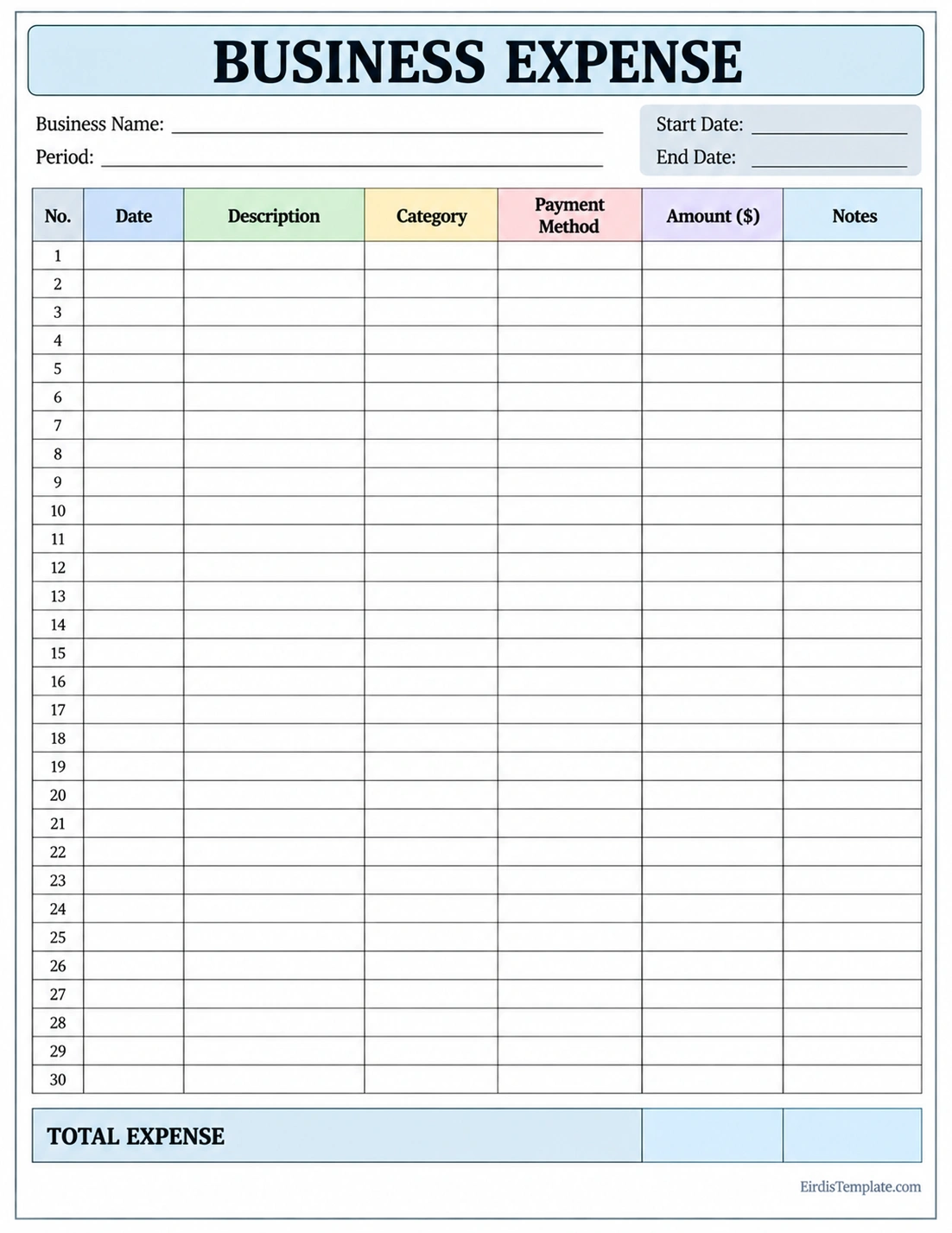
The template includes fields for the business name and reporting period, followed by columns for the transaction date, description, expense category, payment method, amount, and notes. Numbered rows help you record individual transactions, while the total expense section summarizes the amounts entered.
Use one worksheet for a month, project, department, or other reporting period. For larger businesses, consider maintaining a separate sheet for each expense category or employee. You can also transfer the recorded information to accounting software or a spreadsheet for more detailed reporting.
Keep the original receipts, invoices, and payment confirmations with your records. The worksheet is a tracking aid, not a substitute for supporting documents or a complete accounting system.
Common Types of Business Expenses
Organizing expenses into useful categories makes it easier to analyze spending and prepare financial reports. The categories you use should reflect your business activities and accounting policies.
Office and Operating Expenses
These costs support everyday business operations. Examples include office supplies, internet service, utilities, postage, cleaning services, and other routine purchases.
Track recurring expenses separately when possible. This makes it easier to identify price increases, unused services, and opportunities to negotiate better terms.
Rent and Facilities
Businesses may pay for office space, retail premises, warehouses, storage facilities, or coworking memberships. Related costs can include maintenance, security, and certain facility services.
Record the amount, payment date, and relevant invoice or agreement reference. Property-related payments may require different accounting treatment depending on the arrangement.
Payroll and Employee Costs
Employee-related costs can include wages, salaries, employer payroll taxes, benefits, training, and approved reimbursements. Record these expenses using appropriate payroll and accounting records.
Keep confidential employee information secure and limit access to authorized personnel.
Marketing and Advertising
Marketing expenses may include digital advertising, printed promotional materials, website services, branding, event sponsorships, and campaign production.
Tracking these costs by campaign or channel can help businesses compare spending with results. For example, a company may review advertising costs alongside leads, sales, or customer acquisition data.
Travel and Transportation
Business travel costs may include transportation, accommodation, parking, tolls, and qualifying meals. Record the business purpose, date, amount, and supporting documents required under your organization’s policies and applicable tax rules.
Personal travel should not be mixed with business expenses. When a trip includes both business and personal activities, apply the relevant allocation rules and document the business portion.
Software and Professional Services
Businesses often pay for software subscriptions, cloud services, accounting support, legal advice, consulting, and other professional services. Record recurring subscription charges so you can review whether each service remains necessary.
Some software purchases or professional costs may need special accounting treatment depending on their nature and applicable rules.
Inventory, Materials, and Supplies
Retailers and manufacturers may purchase inventory, raw materials, packaging, and production supplies. These purchases do not always become immediate expenses when paid; their accounting treatment may depend on whether items are sold, consumed, or held as assets.
Use categories that reflect your accounting system so that costs are not recorded twice or assigned to the wrong reporting period.
How to Track Business Expenses Step by Step
A consistent process makes expense tracking easier and reduces the risk of missing transactions. Follow these steps to maintain an organized business expense record.
- Step 1: Choose a tracking method. Use a printable worksheet, spreadsheet, accounting software, or a combination that suits your business.
- Step 2: Set a reporting period. Decide whether you will organize expenses weekly, monthly, by project, or by another useful period.
- Step 3: Collect transaction records. Gather receipts, invoices, payment confirmations, and other supporting documents.
- Step 4: Record each transaction. Enter the date, description, category, payment method, and amount.
- Step 5: Assign consistent categories. Use the same classification rules for similar transactions.
- Step 6: Check the documentation. Confirm that the expense relates to business activity and that the amount matches the supporting record.
- Step 7: Calculate totals. Add the transactions for each category and the full reporting period.
- Step 8: Reconcile the records. Compare the expense log with bank statements, card statements, cash records, or accounting entries as appropriate.
- Step 9: Review unusual spending. Investigate unexpected increases, duplicate charges, or transactions that lack documentation.
- Step 10: Store records securely. Keep the worksheet and supporting documents according to your recordkeeping policy and applicable retention rules.
Business Expense Tracking Tips
Effective expense management requires regular attention rather than a single review at the end of the year. These habits can help you keep records accurate and useful.
- Separate business and personal spending: Use dedicated business accounts or payment methods where practical.
- Record transactions promptly: Enter expenses soon after they occur so details are less likely to be forgotten.
- Keep receipts organized: Use folders, digital scans, or a document management system that supports retrieval.
- Review recurring payments: Check subscriptions, memberships, and service contracts regularly.
- Set approval rules: Establish spending limits and approval procedures for employee purchases.
- Compare actual spending with the budget: Identify categories that exceed expectations and determine why.
- Use clear descriptions: Explain the business purpose rather than relying on vague labels.
- Protect financial information: Limit access to expense records and store sensitive documents securely.
- Review tax requirements: Confirm what documentation is required and how different expenses should be treated in your jurisdiction.
Business Expenses and Tax Preparation
Organized expense records can make tax preparation more efficient. They help you identify transactions that may qualify for deductions and provide supporting information when preparing tax returns or responding to questions from a tax authority.
However, an expense recorded on a business worksheet is not automatically tax-deductible. Deductibility depends on local tax law, the nature of the cost, the business purpose, and the required documentation. Some costs may be limited, disallowed, capitalized, or treated differently from ordinary operating expenses.
Keep invoices, receipts, contracts, mileage records where relevant, and explanations of business purpose. Consult a qualified tax professional if you are uncertain about the treatment of a particular expense or the records you must retain.
Common Business Expense Mistakes to Avoid
Even a well-designed expense tracker can produce misleading results if transactions are recorded incorrectly. Avoid these common mistakes.
- Mixing personal and business costs: This makes reporting less reliable and can complicate tax preparation.
- Forgetting small purchases: Frequent low-value transactions can add up over time.
- Misclassifying transactions: Incorrect categories can distort reports and budget comparisons.
- Failing to keep receipts: Missing documents can make it harder to verify transactions or support tax treatment.
- Recording expenses twice: Check for duplicate entries when importing or transferring data.
- Ignoring recurring charges: Unused subscriptions and unnecessary services can quietly increase costs.
- Confusing expenses with all cash outflows: Loan principal repayments and certain asset purchases may not be treated as ordinary expenses.
- Reviewing records too late: Regular checks make errors easier to correct while the details are still available.
Frequently Asked Questions About Business Expenses
What is considered a business expense?
A business expense is generally a cost incurred in connection with business operations or activities. Common examples include rent, utilities, payroll, office supplies, advertising, software, and professional services. Accounting and tax treatment depends on the nature of the cost and applicable rules.
What is the purpose of a business expense tracker?
A business expense tracker records and categorizes spending so owners can monitor costs, compare actual expenses with budgets, prepare financial reports, and organize supporting documents for tax preparation.
Can I use a printable business expense template?
Yes. A printable business expense template is useful for recording transactions manually, especially for small businesses and independent professionals. Larger businesses may benefit from a spreadsheet or accounting system that supports reconciliation and reporting.
How often should business expenses be recorded?
Record expenses as soon as practical after each transaction. Review the records regularly, such as weekly or monthly, to catch missing entries and identify unusual spending.
Are all business expenses tax-deductible?
No. Tax treatment depends on the applicable jurisdiction, the purpose and type of expense, and any relevant restrictions. Keep supporting records and consult a qualified tax professional when necessary.
What is the difference between a business expense and a business asset?
A business expense generally represents a cost recognized during a reporting period. A business asset provides value beyond the immediate period and may be recorded on the balance sheet, with its cost recognized over time where applicable. The correct treatment depends on accounting rules and the nature of the purchase.
How can a business reduce unnecessary expenses?
Review spending by category, cancel unused subscriptions, compare supplier prices, establish approval rules, and investigate recurring increases. Focus on reducing waste while preserving the resources needed for quality, compliance, and growth.
Conclusion
Business expense tracking is an important part of financial management. By recording transactions, organizing categories, retaining supporting documents, and reviewing spending regularly, businesses can gain a clearer understanding of their costs and make better financial decisions.
Use a printable business expense template to maintain a consistent record of dates, descriptions, categories, payment methods, and amounts. Compare spending with your budget, protect sensitive information, and verify accounting and tax requirements. A reliable expense tracking process can improve cost control, simplify reporting, and support healthier long-term business operations.
Download: Business Expense Template

- Free Printable Call Sheet Template - October 12, 2026
- Free Printable Business Hours Template - October 12, 2026
- Business Expense Template - October 12, 2026
