A caregiver schedule helps organize daily care activities, coordinate responsibilities, and ensure that a care recipient receives consistent support. Whether you care for an aging parent, a family member with a disability, or someone recovering from an illness, a clear schedule makes it easier to manage personal care, meals, appointments, medication reminders, and other daily needs.
Without a structured caregiving plan, important tasks can be overlooked, family members may become confused about their responsibilities, and one caregiver may end up carrying too much of the workload. A well-organized schedule provides a shared reference that improves communication, supports continuity of care, and helps caregivers balance their responsibilities with their own well-being.
In this guide, you will learn what a caregiver schedule is, what to include in a daily or weekly care plan, how to organize caregiver shifts, and how to use a printable caregiver schedule template to make caregiving more manageable.
What Is a Caregiver Schedule?
A caregiver schedule is a written plan that outlines when care activities should take place and who is responsible for completing them. It can cover a single day, an entire week, or a rotating schedule shared by several family members and professional caregivers.
The schedule is designed around the care recipient’s individual needs, routines, preferences, and professional care instructions. It may include personal hygiene, meals, mobility assistance, transportation, social activities, household tasks, and medical appointments.
A typical caregiver schedule includes:
- Care recipient information: The person’s name and any essential routine notes.
- Dates and time slots: The days and hours when care activities are planned.
- Daily care tasks: Personal care, meals, mobility support, and other activities.
- Caregiver assignments: The person responsible for each shift or task.
- Appointments: Scheduled medical visits, therapy sessions, and other commitments.
- Important reminders: Relevant care instructions and approved medication reminders.
- Communication notes: Updates, completed tasks, concerns, and follow-up actions.
- Emergency contacts: Contact information for designated family members and relevant professionals.
Why Is a Caregiver Schedule Important?
A clear care schedule supports the person receiving care and the people providing it. By documenting routines and responsibilities, it reduces uncertainty and makes it easier to identify gaps in daily support.
1. Promotes Consistent Care
Regular routines help caregivers remember recurring activities and provide more predictable support. Consistency can be especially helpful for people who benefit from familiar daily patterns, including some individuals experiencing cognitive decline.
2. Prevents Missed Tasks and Appointments
A written timetable provides a place to record appointments, meal times, personal care, and other essential activities. Caregivers can review the schedule at the start of a shift and check it again before handing over responsibilities.
3. Improves Communication Among Caregivers
When several people share caregiving duties, a common schedule helps everyone understand who is working, what needs to be done, and which tasks have already been completed. Notes about changes or concerns also make shift handovers more effective.
4. Helps Prevent Caregiver Burnout
Caregiving can be physically and emotionally demanding, especially when one person handles most of the work. A shared schedule makes responsibilities more visible and helps families identify opportunities to distribute tasks, arrange respite care, and protect time for rest.
5. Supports Safety and Peace of Mind
Documented routines can help caregivers follow agreed care instructions and recognize when something needs attention. A schedule should complement professional care guidance rather than replace medical instructions or clinical judgment.
What to Include in a Caregiver Schedule Template
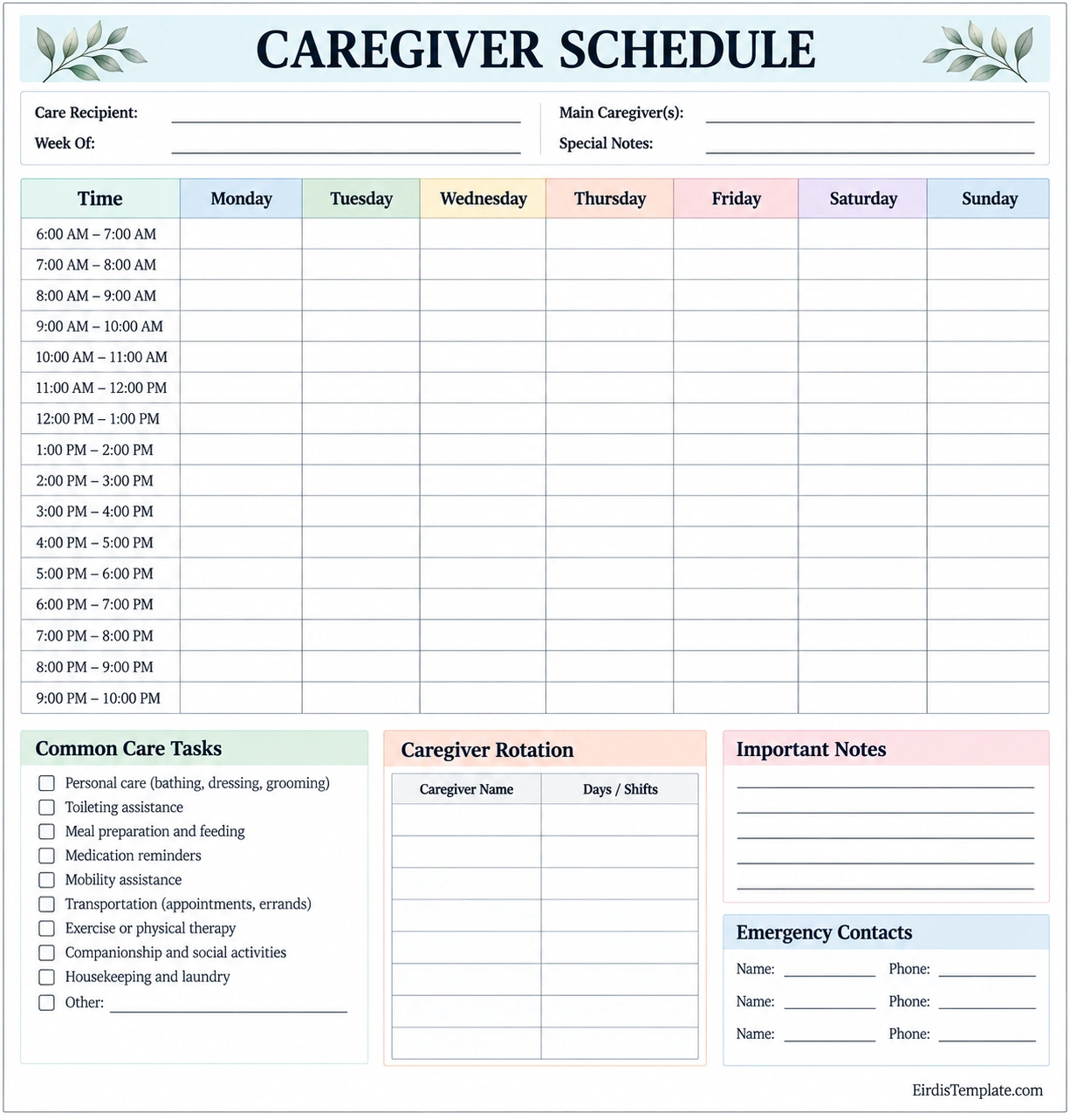
A practical caregiver schedule template should be easy to read and simple to update. The details you include will depend on the person’s needs and the number of people involved in providing care.
Care Recipient and Caregiver Details
Begin with the care recipient’s name, the week or date covered, and the primary caregiver’s contact details. If several people provide care, list their names and preferred contact information so everyone can identify the person responsible for each shift.
Daily Tasks and Time Slots
Divide the day into manageable time blocks. You might use hourly intervals for a detailed care plan or broader morning, afternoon, and evening periods for a simpler routine.
Common tasks to include are:
- Waking up, washing, bathing, dressing, and grooming.
- Breakfast, lunch, dinner, and planned snacks.
- Mobility assistance and safe movement around the home.
- Medication reminders or other tasks specified in the care plan.
- Medical appointments, therapy sessions, and transportation.
- Light housekeeping, laundry, and meal preparation.
- Exercise or other activities recommended by the appropriate professional.
- Social interaction, hobbies, relaxation, and rest periods.
- Evening routines and preparation for sleep.
Caregiver Rotation and Shift Assignments
If several people share care, include a rotation table that identifies who is responsible for each day or shift. Make sure the schedule accounts for travel time, handovers, overnight arrangements, and planned absences.
Important Notes and Emergency Contacts
Reserve space for essential instructions, changes in routine, upcoming appointments, and follow-up actions. Include emergency contacts and information about where to find the current care plan. Store sensitive health information securely and share it only with people who are authorized to access it.
How to Create a Caregiver Schedule Step by Step
Step 1: Identify the Care Recipient’s Needs
Start by listing the activities and support the person needs throughout the day. Consider personal care, meals, mobility, appointments, household assistance, social interaction, and rest. Follow the care recipient’s preferences wherever possible and consult qualified professionals when clinical needs require guidance.
Step 2: Establish a Comfortable Daily Routine
Identify the person’s usual waking time, meal preferences, preferred activities, and bedtime. A practical schedule should support a comfortable routine rather than forcing every activity into an unnecessarily rigid timetable.
Step 3: Break the Day into Time Blocks
Assign approximate times to recurring tasks and appointments. Allow enough time for activities to be completed without rushing, and leave flexibility for unexpected needs. If a task takes longer than expected, prioritize safety and comfort over following the timetable exactly.
Step 4: Assign Caregiver Responsibilities
Identify who will handle each shift or task. If several family members are involved, distribute responsibilities according to availability, ability, and agreed commitments. Be clear about who is responsible for transportation, shopping, meal preparation, and appointment coordination.
Step 5: Add Appointments and Care Instructions
Record upcoming appointments and any relevant instructions provided by healthcare professionals. For medication-related tasks, use an accurate medication list or approved medication management system where appropriate. Do not rely on a general schedule as a substitute for professional instructions about medication doses or treatment.
Step 6: Establish a Handover Process
When one caregiver finishes a shift and another takes over, provide a brief update on completed tasks, upcoming appointments, and any changes or concerns. Use a designated notes section or secure communication method to prevent important information from being lost.
Step 7: Review and Update the Schedule
Review the timetable regularly with the people involved in care. Update it when routines, appointments, responsibilities, or care needs change. A schedule should reflect the current arrangement, not an outdated plan that no longer matches the person’s needs.
Example of a Daily Caregiver Schedule
The following example shows how a typical day might be organized. It is only a starting point; actual activities and timing should reflect the care recipient’s preferences, professional care plan, and level of support required.
- 7:00 AM – Morning routine: Help with waking, personal hygiene, dressing, and preparing for the day as needed.
- 8:00 AM – Breakfast: Prepare or assist with breakfast and follow any applicable dietary guidance.
- 9:00 AM – Daily activities: Support safe movement, a preferred activity, or an exercise routine recommended by a qualified professional.
- 10:30 AM – Appointment or personal time: Attend a scheduled appointment or provide time for a hobby, conversation, or rest.
- 12:00 PM – Lunch: Prepare lunch and provide assistance if needed.
- 1:00 PM – Rest period: Allow time for relaxation, quiet activities, or a nap according to the person’s preferences.
- 2:30 PM – Afternoon tasks: Complete approved errands, light household activities, or planned social activities.
- 4:00 PM – Refreshments and check-in: Offer a snack or drink as appropriate and review any upcoming tasks.
- 6:00 PM – Dinner: Prepare the evening meal and provide the agreed assistance.
- 7:00 PM – Leisure time: Support conversation, entertainment, or another preferred activity.
- 8:30 PM – Evening routine: Assist with personal care and prepare for bedtime as needed.
- 9:00 PM – Handover or overnight preparation: Record relevant updates and confirm who is responsible for the next period of care.
Some care recipients need support throughout the night, while others require only occasional assistance. Plan overnight coverage separately when necessary, and make sure caregivers have adequate rest between shifts.
How to Organize a Weekly Caregiver Rotation
When care is shared among family members or professional caregivers, a weekly rotation can distribute responsibilities more fairly and reduce confusion.
Match Shifts to Availability
Ask each caregiver which days and times they can reliably cover. Consider work schedules, travel time, family responsibilities, and other commitments before assigning shifts.
Provide Clear Shift Handover Notes
Agree on the information that needs to be shared at every handover. This may include completed activities, changes in the person’s condition, upcoming appointments, supplies that need replenishing, and tasks that still require attention.
Plan Backup Coverage
Identify who can step in if a caregiver becomes ill, arrives late, or needs time off. For people who require continuous supervision or essential assistance, make sure there is a dependable backup arrangement rather than assuming another family member will always be available.
Balance Responsibilities Fairly
Equal hours do not always mean equal workloads. One shift may involve transportation and personal care, while another may require only light assistance. Discuss the practical demands of each shift and adjust the rotation to make the arrangement sustainable.
Tips for Making a Caregiver Schedule More Effective
- Keep it easy to read: Use clear time slots, familiar labels, and simple instructions.
- Maintain a consistent routine: Keep recurring activities at predictable times when doing so suits the care recipient.
- Include breaks: Schedule realistic rest periods for caregivers and the person receiving care.
- Allow flexibility: Leave room for appointments, unexpected needs, and activities that take longer than planned.
- Communicate changes promptly: Tell affected caregivers about schedule changes as soon as possible.
- Protect privacy: Keep the schedule in an appropriate location and avoid displaying unnecessary sensitive information.
- Use a shared source of information: Make sure everyone refers to the same current schedule.
- Review caregiver well-being: Watch for signs of exhaustion and discuss respite options before the arrangement becomes unsustainable.
Common Caregiver Scheduling Mistakes to Avoid
- Planning every minute: A timetable with no flexibility can create stress when activities run late.
- Leaving tasks unassigned: If no one is responsible for an activity, it may be missed.
- Ignoring caregiver capacity: Too many hours or demanding shifts can contribute to fatigue and reduced care quality.
- Failing to communicate updates: Changes that are not shared may lead to duplicated work or missed responsibilities.
- Overlooking the care recipient’s preferences: Whenever possible, involve the person in decisions about their routine and activities.
- Using outdated instructions: Update the schedule when care needs or professional recommendations change.
Frequently Asked Questions
What is a caregiver schedule?
A caregiver schedule is a written timetable that organizes care activities, appointments, responsibilities, and caregiver shifts. It helps ensure that daily needs are addressed and that people sharing care understand their assignments.
What should a caregiver schedule include?
A caregiver schedule should include the care recipient’s details, dates and times, daily tasks, caregiver assignments, appointments, important notes, and emergency contacts. Add other sections based on the person’s needs and the care arrangement.
How do I create a caregiver schedule for an elderly parent?
Start by listing your parent’s daily needs, preferred routine, appointments, and required assistance. Divide the day into manageable time blocks, assign responsibilities, coordinate family or professional caregivers, and review the plan regularly. Involve your parent in decisions as much as possible.
How can family members share caregiving responsibilities?
List the tasks that need coverage, ask each family member about their availability, and assign clear shifts or responsibilities. Use a shared schedule and a consistent handover process, and identify backup coverage for emergencies or planned absences.
Can a caregiver schedule help prevent burnout?
Yes. A schedule can make the workload visible, support fairer task distribution, and help families plan breaks or respite care. It cannot eliminate every caregiving challenge, so caregivers should also seek support when responsibilities become overwhelming.
Should a caregiver schedule include medication information?
It may include reminders or notes that support an approved medication management process. However, medication details must be accurate and handled carefully. Follow the current instructions from the prescribing professional and use a dedicated medication record when needed.
How often should a caregiver schedule be updated?
Review the schedule regularly and update it whenever appointments, care needs, caregiver availability, or routines change. Weekly reviews work well for many arrangements, but more frequent updates may be necessary when needs are changing quickly.
Can I use a printable caregiver schedule template?
Yes. A printable caregiver schedule template provides a convenient way to organize weekly routines, assign shifts, record important notes, and list emergency contacts. Customize the template to match the care recipient’s needs and keep the current version accessible to authorized caregivers.
Conclusion
A well-organized caregiver schedule helps make daily care more consistent, coordinated, and manageable. By documenting routines, assigning responsibilities, recording appointments, and planning caregiver rotations, families can reduce confusion and provide more reliable support.
Use a caregiver schedule template to organize tasks, coordinate shifts, and keep important information in one place. Review the plan regularly, respect the care recipient’s preferences, and make sure caregivers have enough support and rest. A flexible, clearly communicated schedule can improve the caregiving experience for everyone involved.
Planning note: This template is for organizing care activities and is not a substitute for individualized medical advice, professional care instructions, or an emergency care plan. Consult appropriate healthcare professionals when care needs require clinical guidance.
Download: Caregiver Schedule Template

- Cash Flow Statement Template - October 15, 2026
- Cash Flow Forecast Template - October 15, 2026
- Free Printable Caregiver Schedule Template - October 15, 2026
