A trip schedule is a simple but valuable tool for organizing the different parts of a trip. It brings important travel details such as transportation, hotel reservations, activities, destinations, and daily plans into one easy-to-follow format.
Whether you are planning a weekend getaway, family vacation, business trip, road trip, or longer international journey, having a clear schedule can make it easier to know where you need to be and when. Instead of keeping flight information, hotel details, activity plans, and transportation arrangements in different places, a trip schedule brings them together in one organized plan.
A well-prepared travel itinerary does not mean every minute of a vacation has to be planned. Instead, it provides a useful framework that helps travelers manage important commitments while leaving enough flexibility for unexpected changes and spontaneous activities.
What Is a Trip Schedule?
A trip schedule is a written or digital plan that organizes the activities and important details of a journey by date and time. It can be as simple as a daily list of activities or as detailed as a complete itinerary containing transportation, accommodation, destinations, reservations, and notes.
A typical schedule may organize information such as:
- Travel dates
- Departure and arrival times
- Flight or train information
- Hotel and accommodation details
- Transportation arrangements
- Daily activities
- Places to visit
- Reservation information
- Important addresses and contact details
- Personal notes and reminders
The format can be customized depending on the type and complexity of the trip.
Why Is a Trip Schedule Important?
Travel often involves multiple moving parts. A traveler may need to coordinate transportation, accommodation, sightseeing, meals, reservations, and activities across several days.
A structured travel schedule can make these details easier to manage by putting important information in one place.
Keeps Important Details Organized
A trip schedule provides a central place for essential information. Instead of searching through emails, messages, booking confirmations, and notes, travelers can refer to one organized itinerary.
Helps Manage Time
Knowing when transportation leaves, when accommodation check-in begins, or when an activity is scheduled can help travelers organize their days more efficiently.
Reduces Forgotten Details
Important information can easily be overlooked during a busy trip. Writing down reservations, departure times, addresses, and planned activities provides useful reminders.
Improves Coordination
When traveling with family, friends, or colleagues, a shared itinerary can help everyone understand the general plan and important meeting times.
Provides Flexibility
A schedule does not have to be rigid. Leaving open blocks of time allows travelers to adjust their plans when weather, transportation, personal preferences, or unexpected opportunities change the original itinerary.
What Should a Trip Schedule Include?
The information included in a trip schedule depends on the type of journey. However, several sections can be useful for most trips.
Destination and Travel Dates
Start by recording the main destination and the dates of the trip. If the journey includes multiple destinations, list each location along with the dates you expect to be there.
This provides a basic framework for organizing the rest of the itinerary.
Transportation Details
Transportation information is one of the most important parts of a travel schedule. Include relevant details such as:
- Flight numbers
- Departure airports
- Arrival airports
- Departure and arrival times
- Train information
- Bus schedules
- Rental car details
- Pickup and drop-off information
When transportation involves connections, allow enough time between arrivals and departures rather than creating an overly tight schedule.
Accommodation Information
Record the name and address of each hotel, vacation rental, or other accommodation. Useful information may also include check-in and check-out times, reservation numbers, and contact details.
Daily Activities
List the main activities planned for each day. These might include sightseeing, tours, meetings, restaurant reservations, shopping, outdoor activities, or personal time.
Activities can be organized by approximate time rather than assigning a precise time to everything. This makes the itinerary easier to follow while preserving flexibility.
Location
Adding the location of each activity can make the schedule more practical. Include an address, neighborhood, landmark, venue, or other useful location information where appropriate.
Notes and Reminders
A notes section can be used for reminders that do not fit neatly into the main schedule. Examples include reservation instructions, check-in requirements, important phone numbers, meeting points, or items that need to be purchased.
How to Create a Trip Schedule
Creating an itinerary becomes easier when the planning process follows a logical order. Start with fixed commitments and then build flexible activities around them.
1. Determine the Travel Dates
Begin with the departure date and return date. If the trip covers several destinations, determine how many days will be spent in each location.
2. Record Fixed Reservations
Add information that cannot easily be changed, such as flights, train tickets, hotel reservations, tours, conferences, or scheduled appointments.
3. Plan Transportation Between Locations
If the trip involves multiple destinations, determine how you will travel between them. Record approximate departure and arrival times and allow reasonable time for transfers.
4. Add Important Activities
Next, add the activities that are a priority for the trip. Avoid filling every available hour. A little free time can make the itinerary more comfortable.
5. Group Activities by Location
Whenever practical, group activities that are close to one another. This can reduce unnecessary travel and make the daily schedule more efficient.
6. Add Practical Information
Include accommodation addresses, transportation information, reservation numbers, contact details, and other information that may be useful during the trip.
7. Review the Schedule
Before traveling, review the entire itinerary. Look for overlapping activities, unrealistic travel times, missing reservations, and days that may be too crowded.
Example of a Simple Daily Trip Schedule
A simple itinerary does not need to contain extensive information. For example, a day might be organized like this:
- 8:00 AM: Breakfast at the hotel
- 9:00 AM: Depart for the morning attraction
- 10:00 AM: Visit the attraction
- 12:30 PM: Lunch
- 2:00 PM: Explore the surrounding area
- 5:00 PM: Return to accommodation
- 7:00 PM: Dinner reservation
- 9:00 PM: Free time
The exact schedule will depend on the destination and traveler. The purpose is to provide structure rather than create unnecessary pressure to follow every activity exactly.
Trip Schedule for Different Types of Travel
A travel itinerary can be adapted to suit different types of journeys.
Family Vacation
Family trips often benefit from a schedule that includes transportation, accommodation, activities, meal plans, and free time. It can also be helpful to include information about child-friendly activities and rest periods.
Business Trip
A business travel schedule may focus more heavily on meetings, conferences, transportation, hotel reservations, and professional appointments.
Road Trip
A road trip itinerary can include driving routes, planned stops, fuel breaks, accommodations, attractions, and estimated arrival times.
Group Trip
Group travel can become complicated when different people have different schedules. A shared trip itinerary can help everyone understand departure times, meeting points, activities, and important reservations.
International Trip
International travel may require additional planning for connecting flights, immigration procedures, transportation, accommodation, local activities, and travel documents.
How Detailed Should a Trip Schedule Be?
The ideal level of detail depends on the traveler and the nature of the trip. A short weekend vacation may only require a few important entries, while a multi-city international trip may benefit from a more comprehensive itinerary.
A useful rule is to document information that is important, difficult to remember, or difficult to find quickly while traveling.
There is usually little benefit in scheduling every minute of a vacation. Instead, prioritize fixed commitments and major activities while leaving room for flexibility.
Tips for Making a Better Travel Itinerary
A good travel itinerary should make the trip easier to manage rather than create additional stress. These practical tips can help.
- Start with fixed commitments: Add flights, hotel reservations, tours, and appointments first.
- Allow buffer time: Avoid scheduling activities too close together.
- Group nearby activities: Reduce unnecessary travel by planning activities in the same area together.
- Leave free time: Give yourself room for rest, exploration, and unexpected changes.
- Keep important information accessible: Record addresses, confirmation numbers, and contact details where they can be found quickly.
- Use realistic travel times: Consider traffic, transfers, security procedures, and possible delays.
- Review before departure: Confirm important reservations and transportation details before the trip begins.
Trip Schedule vs. Travel Itinerary
The terms trip schedule and travel itinerary are often used to describe similar planning documents. In many situations, they can be used interchangeably.
However, a trip schedule may emphasize dates, times, and planned activities, while a travel itinerary can be broader and include additional information such as transportation details, accommodation information, addresses, reservations, and travel notes.
In practice, a well-designed itinerary can function as both a schedule and a central travel reference document.
Using a Printable Trip Schedule Template
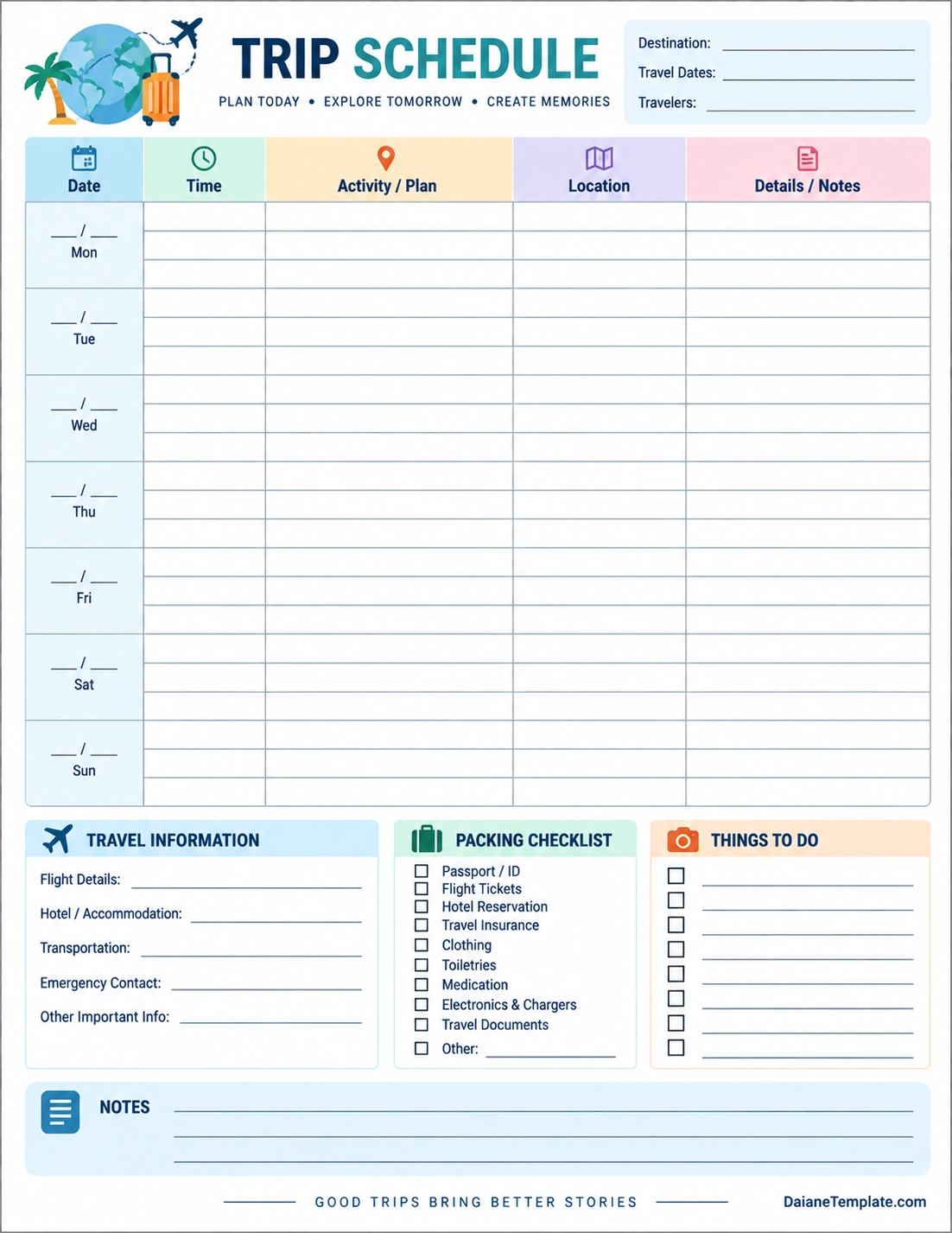
A printable trip schedule template can make travel planning easier by providing predefined sections for dates, times, activities, locations, travel information, packing items, and notes.
Instead of starting with a blank sheet of paper, travelers can simply fill in the relevant information. A printable format can also be useful when traveling somewhere with limited internet access or when a physical backup of the itinerary is preferred.
The template can be customized with additional information depending on the trip. For example, a traveler might add reservation numbers, emergency contacts, restaurant bookings, transportation connections, or important addresses.
What to Keep Outside the Main Schedule
Not every piece of travel information needs to occupy the main itinerary. Keeping supporting information in separate sections can make the schedule easier to read.
Useful supporting information may include:
- Packing checklist
- Important phone numbers
- Emergency contact information
- Hotel addresses
- Reservation numbers
- Transportation confirmation details
- Places to visit
- Restaurant ideas
- Shopping list
- Travel notes
This approach keeps the main daily schedule focused while still providing access to useful information.
Common Trip Planning Mistakes to Avoid
Even a detailed itinerary can become difficult to use if the schedule is unrealistic. Avoiding common planning mistakes can make the trip more enjoyable.
- Overplanning every minute: Leave room for flexibility and rest.
- Ignoring travel time: Activities that look close on a map may still require significant transportation time.
- Scheduling too many activities: A crowded itinerary can make a vacation feel rushed.
- Forgetting transition time: Allow time for hotel check-out, transportation, security, and transfers.
- Keeping information in too many places: Consolidate important details into one primary itinerary.
- Failing to review reservations: Confirm important details before departure.
- Not preparing a backup plan: Weather, delays, closures, and other unexpected events can require changes.
Trip Schedule Checklist
Before finalizing your travel itinerary, use this checklist to make sure the important details have been covered.
- Travel dates are confirmed.
- Transportation details are recorded.
- Accommodation information is included.
- Major activities are scheduled.
- Important reservations are documented.
- Locations and addresses are available.
- Transportation between destinations has been considered.
- Enough buffer time is included.
- Free time has been allowed.
- Important notes and contact information are accessible.
- A packing checklist has been prepared.
- The itinerary has been reviewed before departure.
Conclusion
A trip schedule is a practical way to organize travel plans and keep important information accessible throughout a journey. By bringing together transportation, accommodation, activities, locations, reservations, and notes, it provides a clear overview of what needs to happen and when.
The best travel schedule is not necessarily the most detailed one. It is the one that gives travelers enough structure to stay organized while leaving enough flexibility to adapt when plans change.
Whether you are planning a family vacation, business trip, road trip, group adventure, or international journey, a well-organized trip schedule template can simplify the planning process. With the right balance of structure and flexibility, your itinerary can help you spend less time worrying about logistics and more time enjoying the journey.
Download: Trip Schedule Template

- Free Student Resume Template (Word) - September 21, 2026
- Free Printable Travel Itinerary Template - September 21, 2026
- Free Printable Trip Schedule Template - September 21, 2026
