Career development planning helps individuals create a clear path toward their professional goals. By identifying career aspirations, evaluating current skills, and setting practical development steps, employees can prepare for new responsibilities, improve their capabilities, and build long-term career satisfaction.
A structured career development plan also benefits employers. It helps organizations identify skill gaps, support employee growth, prepare future leaders, and retain valuable talent. When personal ambitions align with business needs, employees gain direction while companies build a more capable and adaptable workforce.
Whether you want to advance in your current role, change careers, develop leadership skills, or prepare for a promotion, a career development plan can turn broad ambitions into achievable actions. This guide explains how to create one, what to include, and how to use a printable career development planning template to track progress.
What Is Career Development Planning?
Career development planning is the process of defining professional goals and identifying the skills, experience, resources, and actions needed to achieve them. It helps individuals understand where they are now, where they want to go, and what steps can move them toward their desired career path.
A career development plan may cover a few months or several years, depending on the goal. Someone preparing for a promotion may focus on developing management skills over six months, while someone planning a career change may need a longer timeline for education, training, and practical experience.
A typical career development plan includes:
- Career vision: A description of the role, responsibilities, or professional position you want to pursue.
- Career goals: Specific outcomes you want to achieve within a defined period.
- Current strengths: Skills, knowledge, and experience that support your progress.
- Development areas: Skills or qualifications you need to improve.
- Action steps: Practical activities that help you reach each goal.
- Resources and support: Training, mentoring, tools, or guidance needed to make progress.
- Target dates: Deadlines for completing development activities.
- Progress reviews: Regular opportunities to evaluate results and adjust the plan.
Why Is Career Development Planning Important?
A career development plan provides direction and helps ensure that professional growth happens intentionally rather than by chance. It also creates a useful framework for evaluating progress and deciding which opportunities deserve attention.
1. Provides Clear Career Direction
Without defined goals, it can be difficult to decide which skills to develop or which opportunities to pursue. Career planning helps connect daily work with longer-term ambitions, making professional decisions more purposeful.
2. Identifies Skill Gaps
Comparing your current capabilities with the requirements of a desired role helps reveal areas for improvement. These may include technical expertise, communication, project management, leadership, problem-solving, or industry-specific knowledge.
3. Encourages Continuous Learning
A development plan turns learning into a practical activity. Instead of waiting for a training opportunity to appear, you can schedule courses, certifications, workshops, stretch assignments, or independent study that support your goals.
4. Improves Motivation and Engagement
Employees who understand their growth opportunities may feel more motivated to develop their skills and contribute to their teams. Clear goals and regular feedback can also help make career conversations with managers more productive.
5. Supports Employee Retention and Workforce Planning
For employers, career development planning can help identify employees who are ready for additional responsibilities and those who need further support. It can also inform succession planning, internal mobility, and future workforce development.
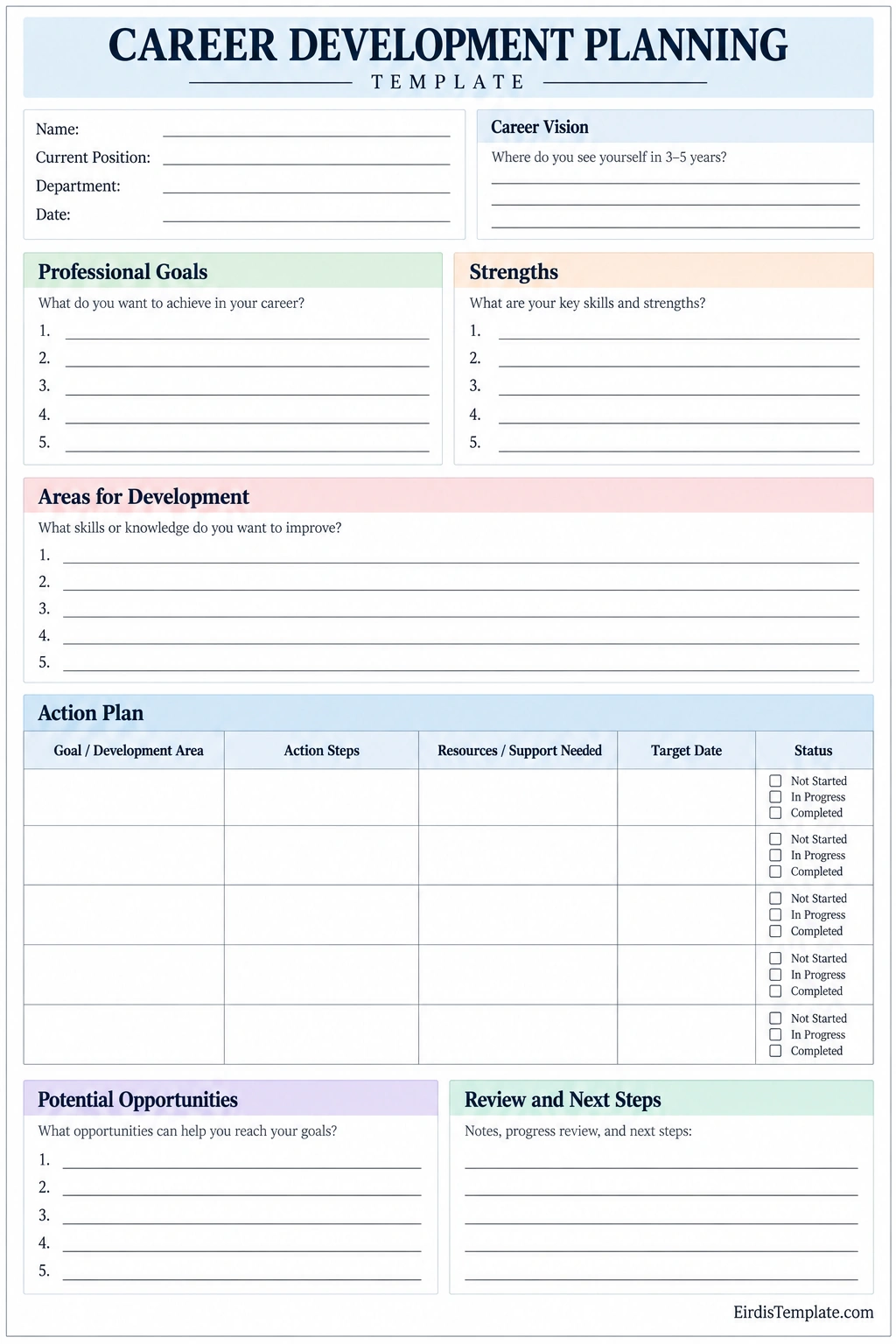
What to Include in a Career Development Plan Template
A useful career development planning template should make it easy to record goals, identify development needs, and monitor progress. The following sections provide a practical structure for employees, managers, and human resources teams.
Career Vision and Professional Goals
Begin by describing where you want your career to go. You might aim to become a team leader, specialize in a technical field, move into a different department, or build the expertise needed for a new industry.
Translate that vision into specific goals. For example, instead of writing “improve leadership,” set a goal such as “lead a cross-functional project and receive feedback from the project team within six months.”
Strengths and Existing Skills
Record the abilities and experiences that can help you achieve your goals. Consider technical knowledge, communication, collaboration, analytical thinking, certifications, previous projects, and positive feedback from colleagues or managers.
Areas for Development
Identify the skills or experiences you still need. Focus on gaps that directly affect your desired career outcome rather than trying to improve everything at once. A targeted development plan is easier to manage and evaluate.
Action Steps and Resources
For each goal, list specific activities and the resources required. Actions might include completing a course, working with a mentor, leading an assignment, shadowing an experienced colleague, or practicing a new skill through regular work.
Target Dates and Progress Status
Assign realistic deadlines to development activities and track whether each task is not started, in progress, or completed. Include space for notes about achievements, obstacles, and any support needed.
Review and Next Steps
Include a section for reviewing progress and updating the plan. Career priorities can change as responsibilities, interests, and business needs evolve. A review section helps keep the plan relevant rather than allowing it to become an outdated document.
How to Create a Career Development Plan Step by Step
Step 1: Assess Your Current Position
Start by evaluating your current role, experience, strengths, interests, and areas for improvement. Review recent achievements, feedback, performance evaluations, and responsibilities. This assessment creates a realistic starting point for your development plan.
Step 2: Define Your Career Goals
Decide what you want to achieve in the short and long term. Short-term goals might include learning a software tool or completing a certification. Longer-term goals may involve moving into management, becoming a subject-matter expert, or changing career paths.
Make each goal specific and measurable. Instead of saying “become better at presentations,” consider “deliver three team presentations and request feedback by the end of the next quarter.”
Step 3: Identify the Skills You Need
Research the responsibilities and qualifications associated with your desired role. Compare those requirements with your current abilities and identify the most important gaps. Job descriptions, professional standards, mentors, and manager feedback can help guide this assessment.
Step 4: Choose Practical Development Activities
Select activities that help close the identified gaps. Depending on your goals, these may include formal education, online courses, professional certifications, mentoring, job shadowing, networking, or stretch assignments.
Prioritize activities that provide relevant practice, not just theoretical knowledge. For example, someone developing project management skills may benefit from coordinating a small project as well as completing a course.
Step 5: Set Deadlines and Success Measures
Give each action a target date and define how you will know it has been completed successfully. Measures may include earning a certification, completing a project, demonstrating a skill, receiving feedback, or achieving an agreed performance target.
Step 6: Seek Feedback and Support
Discuss your plan with a manager, mentor, career adviser, or trusted professional where appropriate. Ask for feedback on your goals, the skills required, and opportunities to gain relevant experience. If you are an employee, clarify which development resources your organization can provide.
Step 7: Review Progress Regularly
Schedule reviews monthly or quarterly, depending on the nature of your goals. Record completed activities, assess results, and identify barriers. If a goal becomes less relevant or an opportunity changes, revise the plan rather than continuing with an outdated approach.
Career Development Planning Examples
The structure of a career development plan depends on the person’s current position and professional ambitions. These examples illustrate how broad goals can become actionable plans.
Example 1: Preparing for a Promotion
An employee who wants to become a team leader may focus on delegation, communication, conflict resolution, and performance management. Actions could include leading a small project, attending a leadership workshop, and requesting monthly feedback from a manager.
Example 2: Developing Technical Expertise
A professional who wants to specialize in data analysis may plan to learn a new analytical tool, complete a relevant certification, and apply the new skills to a real business problem. Progress can be measured through course completion and a portfolio of completed projects.
Example 3: Planning a Career Change
Someone moving into a new industry may research target roles, identify transferable skills, complete introductory training, build relevant work samples, and connect with professionals in the field. The plan should include realistic milestones for learning and job applications.
Tips for Making Career Development Planning Effective
- Focus on a few priorities: Choose a manageable number of meaningful goals instead of creating an overwhelming list.
- Use measurable outcomes: Define what success looks like and how progress will be assessed.
- Connect learning to practice: Apply new knowledge through projects, assignments, or real workplace situations.
- Set realistic deadlines: Consider workload, available resources, and other commitments when planning activities.
- Ask for regular feedback: Use feedback to recognize strengths and identify areas that need more attention.
- Record achievements: Document completed training, successful projects, new responsibilities, and positive results.
- Stay flexible: Update goals when your interests, circumstances, or career opportunities change.
- Take ownership: Seek opportunities and follow through on agreed actions rather than waiting for every step to be assigned.
Career Development Planning for Employers and Managers
Career development planning is not only an individual responsibility. Employers and managers can create an environment where professional growth is supported and connected to organizational needs.
Hold Regular Career Conversations
Managers can ask employees about their interests, strengths, ambitions, and development priorities during one-to-one meetings. These conversations should explore future possibilities without promising promotions or roles that cannot be guaranteed.
Provide Relevant Learning Opportunities
Organizations can support development through training budgets, mentoring, cross-functional projects, job shadowing, and internal learning programs. Development opportunities should be relevant to both employee goals and the capabilities the organization needs.
Connect Individual Goals with Business Needs
When appropriate, align development activities with future projects, leadership requirements, and critical skills. This helps employees gain meaningful experience while supporting workforce planning and business continuity.
Measure Progress Fairly
Review development progress using agreed goals, demonstrated skills, completed activities, and constructive feedback. A development plan should support learning and growth, not become a rigid checklist that ignores changing circumstances or unequal access to opportunities.
Common Career Development Planning Mistakes to Avoid
- Setting vague goals: Broad intentions are difficult to measure and may not lead to clear action.
- Ignoring skill gaps: Goals may remain out of reach if the required capabilities are not identified and developed.
- Creating an unrealistic timeline: Overly ambitious deadlines can make progress difficult to sustain.
- Focusing only on training: Practical experience, feedback, and mentoring are also important forms of development.
- Failing to review progress: Without regular check-ins, obstacles and outdated priorities can go unnoticed.
- Assuming a plan guarantees promotion: Career development improves preparation but cannot guarantee a specific role or outcome.
Frequently Asked Questions
What is the purpose of career development planning?
The purpose of career development planning is to help individuals define professional goals and identify the skills, experiences, and actions needed to achieve them. It provides direction, supports continuous learning, and helps people make informed career decisions.
What should a career development plan include?
A career development plan should include a career vision, specific goals, current strengths, development areas, action steps, required resources, target dates, success measures, and regular progress reviews.
How often should a career development plan be reviewed?
Many people review their plans monthly or quarterly. The appropriate frequency depends on the goals and work environment. Review the plan whenever responsibilities, priorities, or career opportunities change significantly.
Who is responsible for career development planning?
Individuals should take an active role in defining and pursuing their career goals. Managers and employers can support the process by providing feedback, resources, mentoring, and relevant development opportunities.
What is the difference between career development planning and a performance improvement plan?
Career development planning focuses on longer-term professional growth, skill building, and future opportunities. A performance improvement plan generally addresses specific performance concerns and the actions needed to meet expected standards. The two processes may overlap, but their primary purposes differ.
Can I use a career development planning template for personal goals?
Yes. A career development planning template can help organize goals, record skills to improve, schedule learning activities, and track achievements. You can adapt the sections to suit your career stage and preferred working style.
How can I measure career development progress?
Measure progress through completed learning activities, demonstrated skills, project outcomes, certifications, feedback, and increased responsibilities. Choose indicators that relate directly to each goal rather than relying only on the number of courses completed.
Conclusion
Career development planning provides a practical framework for turning professional ambitions into clear goals and achievable actions. By assessing current skills, identifying development needs, selecting relevant learning activities, and reviewing progress regularly, individuals can take a more active role in shaping their careers.
For employers, career planning can support employee engagement, talent retention, succession planning, and workforce development. Use a career development planning template to organize goals, resources, deadlines, and progress in one place. With consistent effort, useful feedback, and a willingness to adapt, career development becomes an ongoing process that benefits both individuals and organizations.
Planning note: Career outcomes depend on individual circumstances, available opportunities, and organizational needs. A development plan supports preparation and progress but does not guarantee a promotion, new role, or specific career result.
Download: Career Development Planning Template

- Cash Flow Statement Template - October 15, 2026
- Cash Flow Forecast Template - October 15, 2026
- Free Printable Caregiver Schedule Template - October 15, 2026
