A baseball schedule is a structured plan that organizes games, practices, opponents, dates, times, and locations throughout a baseball season. A well-planned schedule helps teams coordinate competition, manage travel, prepare players, and keep coaches, families, and fans informed.
Whether you are organizing a youth baseball team, school league, recreational program, or competitive season, a clear schedule can make the entire season easier to manage. It provides everyone with a central reference for upcoming games and helps prevent conflicts between practices, tournaments, school activities, and personal commitments.
A good baseball schedule should be practical, easy to update, and balanced. The following guide explains what a baseball schedule should include, how to create one, and how to make it work effectively for teams and players.
What Is a Baseball Schedule?
A baseball schedule is a chronological list of games and related activities planned for a team or league. It typically identifies when and where each game will take place and which teams will compete.
A basic schedule may contain only game dates and opponents, while a more detailed baseball season schedule can include practice sessions, tournaments, travel information, field assignments, arrival times, and special notes.
For youth baseball, the schedule may also need to consider school calendars, family activities, transportation, and player development. This makes careful planning especially important.
Why Is a Baseball Schedule Important?
A structured schedule helps keep a baseball season organized and predictable. Without a clear schedule, teams may experience conflicts, missed games, unnecessary travel, or confusion about locations and start times.
Improves Team Organization
Players and coaches can use the schedule to prepare for upcoming games and practices. Families can also plan transportation and other commitments around the team’s activities.
Creates a Consistent Flow of Games
A balanced schedule distributes games across the season instead of placing too many competitions close together. This gives players time to recover, practice, and prepare for their next opponent.
Helps Manage Travel
Travel is an important consideration when teams play at different fields. Including locations in the baseball schedule allows coaches and families to estimate travel time and prepare accordingly.
Supports Fair Competition
League organizers can use scheduling rules to distribute home and away games, avoid excessive back-to-back games, and create a reasonable competitive structure.
What Should a Baseball Schedule Include?
The information included in a baseball schedule depends on the level of competition and the needs of the team. However, several details are useful for almost every schedule.
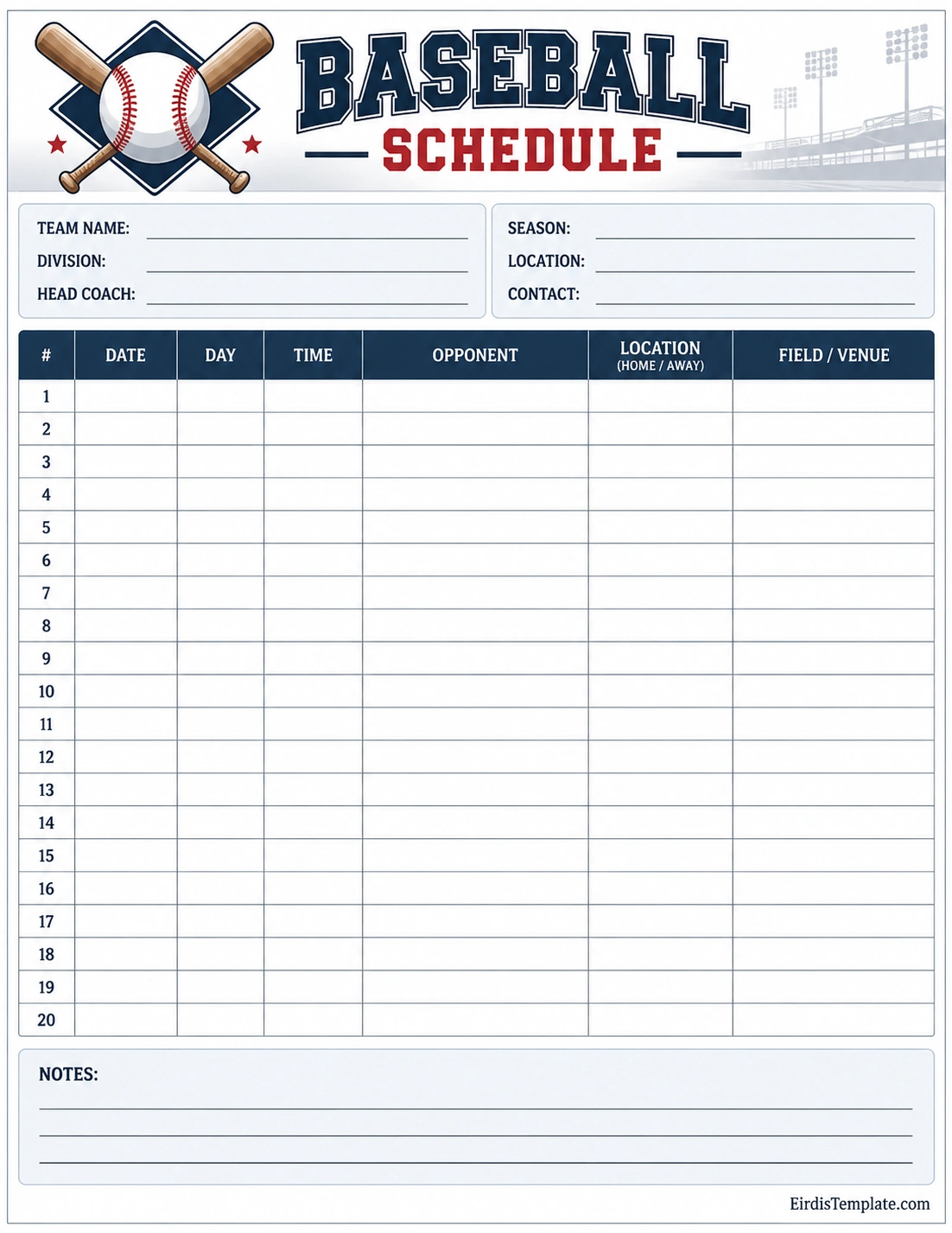
- Date: The day on which the game or activity takes place.
- Day: The weekday can make the schedule easier to scan.
- Start time: The scheduled beginning of the game.
- Opponent: The team playing against your team.
- Location: The city, field, or general location.
- Venue or field: The specific baseball field or stadium.
- Home or away status: Identifies whether your team is hosting or traveling.
- Team information: Team name, division, coach, and contact details.
- Notes: Space for special instructions, changes, arrival times, or other information.
How to Create a Baseball Schedule
Creating a baseball schedule becomes easier when you work through the season systematically. Start with the required games and then add practices, tournaments, and other activities around them.
1. Determine the Season Dates
Begin by identifying the official start and end dates of the baseball season. Consider league requirements, school schedules, holidays, and field availability.
Establishing the season window first provides a clear framework for adding games and practices.
2. List the Teams and Opponents
Write down all teams that will participate in the league or competition. Identify which teams need to play each other and how many times they should meet.
For a league format, organizers may need to determine whether teams play each opponent once, twice, or multiple times.
3. Assign Game Dates
Distribute games across the available dates. Avoid scheduling too many games within a short period, especially for younger players.
Leave sufficient time between games when possible so players can recover and coaches can prepare effectively.
4. Assign Locations
Determine which games will be played at home and which will require travel. Confirm that the selected fields are available before publishing the schedule.
5. Add Game Times
Assign realistic start times based on field availability, travel requirements, league rules, and the age of the players.
For youth teams, consider whether families need additional time to arrive, warm up, and prepare equipment before the game begins.
6. Add Practices and Special Events
A complete baseball season plan may include practices, tournaments, team meetings, evaluations, fundraising events, or other activities.
Adding these activities to the same planning system can help prevent conflicts with scheduled games.
Baseball Schedule for Youth Teams
Youth baseball scheduling requires special consideration because players often have school, family, and other extracurricular commitments. The goal should be to provide meaningful competition without making the schedule unnecessarily demanding.
Balance Games and Practices
Young players benefit from practice time between games. Practices provide opportunities to develop throwing, hitting, fielding, base running, and teamwork skills.
A schedule that contains only games may provide competition but not enough structured time for skill development.
Consider Family Commitments
Parents and guardians often coordinate transportation, schoolwork, vacations, and other activities. Publishing the baseball schedule early gives families more time to organize their calendars.
Avoid Excessive Travel
When possible, group away games logically to reduce unnecessary travel. Long-distance games may require additional preparation and should be scheduled with enough travel time.
How to Build a Fair Baseball League Schedule
League scheduling requires more planning than creating a schedule for one team. The organizer must consider every participating team and ensure that the overall schedule is practical and reasonably balanced.
Balance Home and Away Games
When the league format allows it, distribute home and away games fairly among teams. This prevents one team from having a significantly higher travel burden than another.
Distribute Opponents
Avoid repeatedly scheduling the same opponents within a short period unless the league format requires it. Spreading matchups throughout the season can create a more balanced competition.
Consider Rest Between Games
Teams should have adequate time between demanding games when possible. Rest periods become especially important when tournaments or multiple games are scheduled on the same day.
Baseball Tournament Schedule
A tournament schedule is more complex because several games may take place within a limited period. Organizers must coordinate teams, fields, game times, brackets, and advancement rules.
A tournament schedule may include:
- Team check-in times
- Opening games
- Field assignments
- Game start times
- Bracket rounds
- Semifinal games
- Championship game
- Break periods
- Award or closing activities
When creating a tournament schedule, allow enough time between games for field preparation, warm-ups, transitions, and unexpected delays.
Home and Away Games
Clearly identifying home and away games makes a baseball schedule easier to understand. Players and families immediately know whether they need to travel to another field.
For away games, include the full venue name and location whenever possible. If the venue is unfamiliar, additional directions or parking information can be provided separately.
For home games, include the field name and any special arrival instructions. Coaches may also need to know when they should arrive to prepare the field and equipment.
How to Handle Schedule Changes
Baseball schedules can change because of weather, field availability, transportation issues, league decisions, or other unexpected circumstances. A good schedule should therefore be easy to update.
Record the Original Schedule
Keep a copy of the original schedule before making changes. This provides a reference if you need to compare dates or resolve confusion later.
Communicate Changes Quickly
When a game is postponed or moved, notify players, families, coaches, officials, and other affected teams as soon as possible.
Clearly Mark the New Information
Use a consistent method to identify updated dates and times. Avoid distributing multiple versions without explaining which schedule is current.
Tips for Making a Baseball Schedule Easy to Use
A schedule should not only be accurate; it should also be easy to read. A simple layout can make a significant difference when people need to find information quickly.
- Use clear headings: Separate dates, times, opponents, and locations.
- Keep the layout consistent: Use the same format for every game.
- Include complete locations: Avoid vague field descriptions.
- Leave room for notes: Record changes, arrival instructions, or special events.
- Publish early: Give families enough time to plan around the season.
- Update promptly: Replace outdated information after schedule changes.
- Keep a master copy: Maintain one version as the primary reference.
Using a Baseball Schedule Template
A baseball schedule template provides a ready-made structure for organizing games and team information. Instead of creating a table from scratch, coaches and league organizers can enter their information into predefined fields.
A printable baseball schedule template can be particularly useful for teams that want a physical copy in a coaching binder, equipment bag, office, or team meeting area.
A digital version can also be useful for sharing updates with players and families. Regardless of the format, the most important consideration is keeping the information accurate and easy to understand.
Baseball Schedule Checklist
Before publishing a baseball season schedule, review the following checklist:
- Confirm the official season dates.
- List every participating team.
- Confirm the required matchups.
- Assign game dates.
- Confirm field availability.
- Assign game times.
- Identify home and away games.
- Check travel requirements.
- Add practices and tournaments.
- Review the schedule for conflicts.
- Confirm information with coaches and league officials.
- Publish the final schedule.
Frequently Asked Questions About Baseball Schedules
What is a baseball schedule?
A baseball schedule is a structured list of games and related team activities. It usually includes dates, times, opponents, locations, and other information needed to organize a baseball season.
What should be included in a baseball schedule?
A baseball schedule should generally include the game date, day, start time, opponent, location, field or venue, and home or away status. Additional information can include team contacts, arrival times, practices, and notes.
How do you make a baseball schedule?
Start by determining the season dates and participating teams. Then assign opponents, game dates, locations, and times while considering field availability, travel, rest periods, practices, and other commitments.
How do you create a youth baseball schedule?
A youth baseball schedule should balance games with practices and consider school, family commitments, travel, player development, and adequate rest. Publishing the schedule early can also help families plan transportation and other activities.
How many games should a baseball team play in a season?
The number of games varies depending on the age group, league, competition level, and local rules. Youth recreational teams may have a different schedule from school, travel, or competitive baseball teams.
How do you schedule baseball games fairly?
Fair scheduling generally involves distributing opponents, home and away games, travel requirements, and rest periods as evenly as practical. League rules and field availability should also be considered.
What is a baseball schedule template?
A baseball schedule template is a preformatted document used to organize games and team information. It may include columns for dates, times, opponents, locations, venues, and notes.
How should schedule changes be communicated?
Schedule changes should be communicated as soon as possible to everyone affected. The updated date, time, location, and reason for the change should be clear, and everyone should know which version of the schedule is current.
Conclusion
A well-organized baseball schedule helps teams, coaches, players, families, and league organizers manage an entire season more effectively. By clearly organizing dates, opponents, times, locations, practices, and special events, a schedule creates a reliable structure for competition and player development.
For youth baseball in particular, thoughtful scheduling can help balance competitive play with school, family commitments, rest, and skill development. Whether you are organizing a single team, a recreational league, or a tournament, using a clear baseball schedule template can make planning easier and help everyone stay informed throughout the season.
Download: Baseball Schedule Template

- Printable Bill of Lading Form Template - October 8, 2026
- Free Behavior Contract Template (Word) - October 8, 2026
- Free Printable Baseball Schedule Template - October 8, 2026
