Keeping a home clean can feel overwhelming when every chore seems to need attention at the same time. A Weekly Cleaning Chart provides a simple way to organize household tasks across the week, so cleaning becomes a manageable routine instead of a stressful weekend project.
Rather than trying to clean the entire house in one day, you can divide chores into smaller tasks and assign them to specific days. This approach makes it easier to stay consistent, prevent clutter and dirt from building up, and keep your home comfortable throughout the week.
A weekly cleaning schedule can also make household responsibilities easier to share. Family members or roommates can see what needs to be done and when, creating a clearer system for everyone.
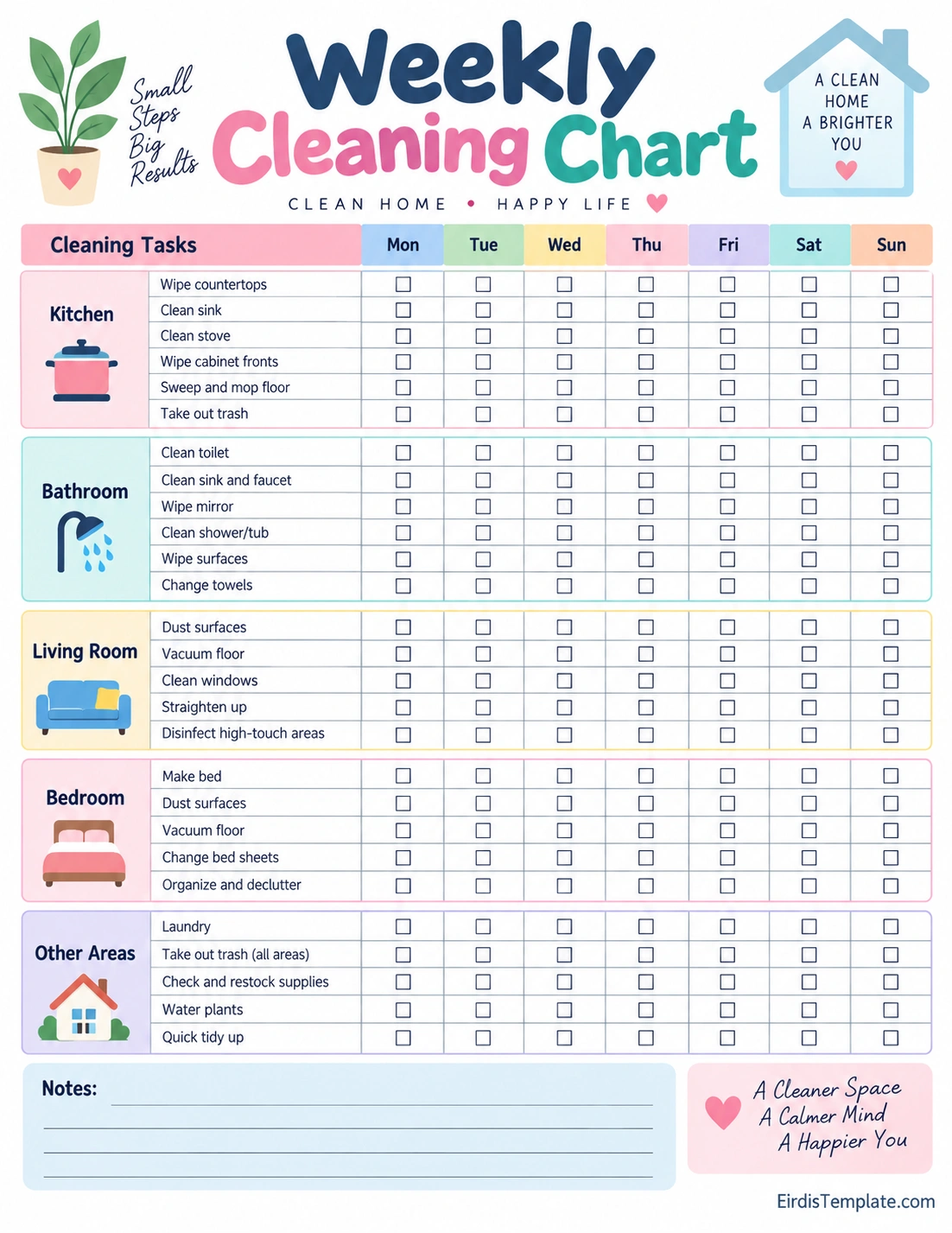
What Is a Weekly Cleaning Chart?
A weekly cleaning chart is a visual schedule that lists household cleaning tasks and assigns them to particular days of the week. It can be as simple as a checklist or as detailed as a room-by-room cleaning planner.
The purpose is not to create a complicated cleaning system. Instead, it provides a clear overview of what needs to be cleaned, allowing you to work through chores gradually.
A typical weekly cleaning chart may include tasks such as:
- Wiping kitchen countertops
- Cleaning sinks and appliances
- Vacuuming and mopping floors
- Cleaning bathrooms
- Dusting furniture and surfaces
- Changing bed sheets
- Doing laundry
- Taking out the trash
- Decluttering common areas
- Restocking household cleaning supplies
The exact tasks can be adjusted based on the size of your home, the number of people living there, and your personal cleaning preferences.
Why Use a Weekly Cleaning Chart?
A consistent cleaning schedule can make household maintenance feel more predictable. Instead of deciding what to clean every day, you can simply follow the plan.
Reduces Cleaning Overwhelm
Cleaning an entire home at once can be exhausting. Dividing larger chores into smaller daily tasks makes the workload easier to manage.
For example, you might focus on the kitchen on Monday, bathrooms on Tuesday, and bedrooms on Wednesday. The tasks do not have to take hours. Even a short cleaning session can help prevent chores from accumulating.
Prevents Dirt and Clutter From Building Up
Regular cleaning helps address small messes before they become larger problems. Wiping surfaces, vacuuming floors, and organizing frequently used areas on a regular basis can make the home easier to maintain.
Creates a Clear Routine
A cleaning chart removes much of the guesswork from household chores. When tasks are written down, you do not need to spend time deciding what should be cleaned next.
Frees Up Your Weekend
One major advantage of a weekly cleaning routine is that it can prevent the need for a large cleaning session at the end of the week. Completing smaller tasks throughout the week can leave more weekend time for rest, hobbies, family, or other activities.
Encourages Shared Responsibility
A cleaning chart can also help distribute household chores. Instead of one person remembering everything that needs to be done, responsibilities can be assigned among household members.
How to Create a Weekly Cleaning Schedule
Start With the Essential Chores
Begin by identifying the cleaning tasks that genuinely need to happen every week. Avoid creating an unnecessarily long list. The goal is to build a routine that you can realistically maintain.
Think about the areas that become dirty or cluttered most quickly. These should receive more frequent attention than areas that require occasional cleaning.
Divide Tasks by Room
Organizing chores by room can make your cleaning routine easier to follow. Common categories include the kitchen, bathrooms, living room, bedrooms, and other areas.
For example, kitchen tasks might include wiping countertops, cleaning the sink, wiping cabinet fronts, sweeping the floor, and taking out the trash.
Assign Tasks to Different Days
Spread your cleaning tasks across Monday through Sunday rather than placing everything on one day. Try to create a balanced schedule that fits your available time.
Daily maintenance tasks can be short, while more demanding chores can be scheduled for days when you have more free time.
Include a Small Daily Reset
A quick daily reset can help keep the home under control. This might include putting items back where they belong, clearing surfaces, washing dishes, or dealing with visible clutter.
These small actions can complement the larger weekly cleaning tasks without turning every day into a major cleaning session.
Example Weekly Cleaning Chart
There is no single correct way to organize a cleaning schedule, but the following structure can provide a useful starting point.
- Monday: Kitchen surfaces, sink, appliances, and floors
- Tuesday: Bathrooms, mirrors, sinks, and toilets
- Wednesday: Living room dusting, vacuuming, and tidying
- Thursday: Bedrooms, bedding, dusting, and floors
- Friday: Laundry, trash, and household organization
- Saturday: Deeper cleaning tasks or areas that need extra attention
- Sunday: Light reset, preparation, and rest
This example can be changed to match your household. If Saturday is your busiest day, for example, heavier cleaning tasks can be moved to another day.
Weekly Cleaning Chart for Different Household Needs
For Busy Households
If you have limited time, focus on the tasks that have the greatest impact on cleanliness. Short cleaning sessions of 10 to 20 minutes can be easier to maintain than trying to complete a large list all at once.
For Families
A cleaning chart can help divide age-appropriate chores among household members. Simple responsibilities such as putting items away, organizing personal spaces, wiping surfaces, or taking out the trash can be incorporated into the routine.
For Roommates
Roommates can use a shared cleaning checklist to clarify responsibilities. Tasks can be rotated each week or assigned permanently depending on what works best for the household.
For Small Homes and Apartments
Smaller homes may not require a long list of chores. A compact weekly cleaning planner can focus on high-use areas such as the kitchen, bathroom, bedroom, and living space.
How to Make Your Cleaning Routine Easier
Keep Cleaning Supplies Accessible
Store frequently used cleaning supplies where they are easy to access. Having the necessary tools nearby can reduce the friction of starting a task.
Clean From Top to Bottom
When cleaning a room, work from higher surfaces toward the floor. Dust and debris can fall downward, allowing you to finish with vacuuming or sweeping.
Use a Timer
If you tend to postpone cleaning because it feels like a large task, set a short timer and focus only on the assigned chores. A defined time limit can make a cleaning session feel more manageable.
Check Off Completed Tasks
Using checkboxes provides a simple visual indication of progress. Completing each item can also make the routine feel more structured and satisfying.
Adjust the Schedule When Necessary
A cleaning chart should support your lifestyle rather than create additional stress. If a particular day becomes busy, move the task to another day instead of abandoning the entire routine.
Weekly Cleaning Chart vs. Daily Cleaning Checklist
A weekly cleaning chart and a daily cleaning checklist serve slightly different purposes.
A weekly cleaning chart provides a broader overview of household chores across the entire week. It helps you see what needs to be completed and when.
A daily cleaning checklist focuses on the tasks for a particular day. It can be useful when you prefer to work through a short, specific list rather than look at the entire week’s schedule.
You can also use both together. The weekly chart can provide the overall plan, while a daily checklist can provide the details for each cleaning session.
Tips for Staying Consistent With a Cleaning Schedule
- Keep the list realistic: Include tasks that you can reasonably complete each week.
- Prioritize high-use areas: Focus on rooms that become dirty or cluttered quickly.
- Keep tasks short: Breaking large chores into smaller steps makes them easier to start.
- Share responsibilities: Assign appropriate chores to family members or roommates.
- Review the chart weekly: Remove unnecessary tasks and add chores that are being overlooked.
- Allow flexibility: Your schedule does not need to be perfect every week.
Final Thoughts on Using a Weekly Cleaning Chart
A Weekly Cleaning Chart can turn household cleaning from an overwhelming responsibility into a simple, organized routine. By dividing chores across several days, you can maintain your home more consistently without relying on one large cleaning session.
The most effective cleaning schedule is one that fits your household and is easy to follow. Start with essential chores, distribute them realistically throughout the week, and adjust the routine as your needs change.
Whether you live alone, with roommates, or with a family, a clear weekly cleaning plan can help reduce clutter, save time, encourage shared responsibility, and make it easier to enjoy a clean and comfortable home.
Download: Weekly Cleaning Chart Template

- Printable Weekly Food Chart Template - September 18, 2026
- Free Printable Weekly Cleaning Chart Template - September 18, 2026
- Free Separation Agreement Template (Word) - September 18, 2026
