Caregiver Agreement: Free Template and Complete Guide
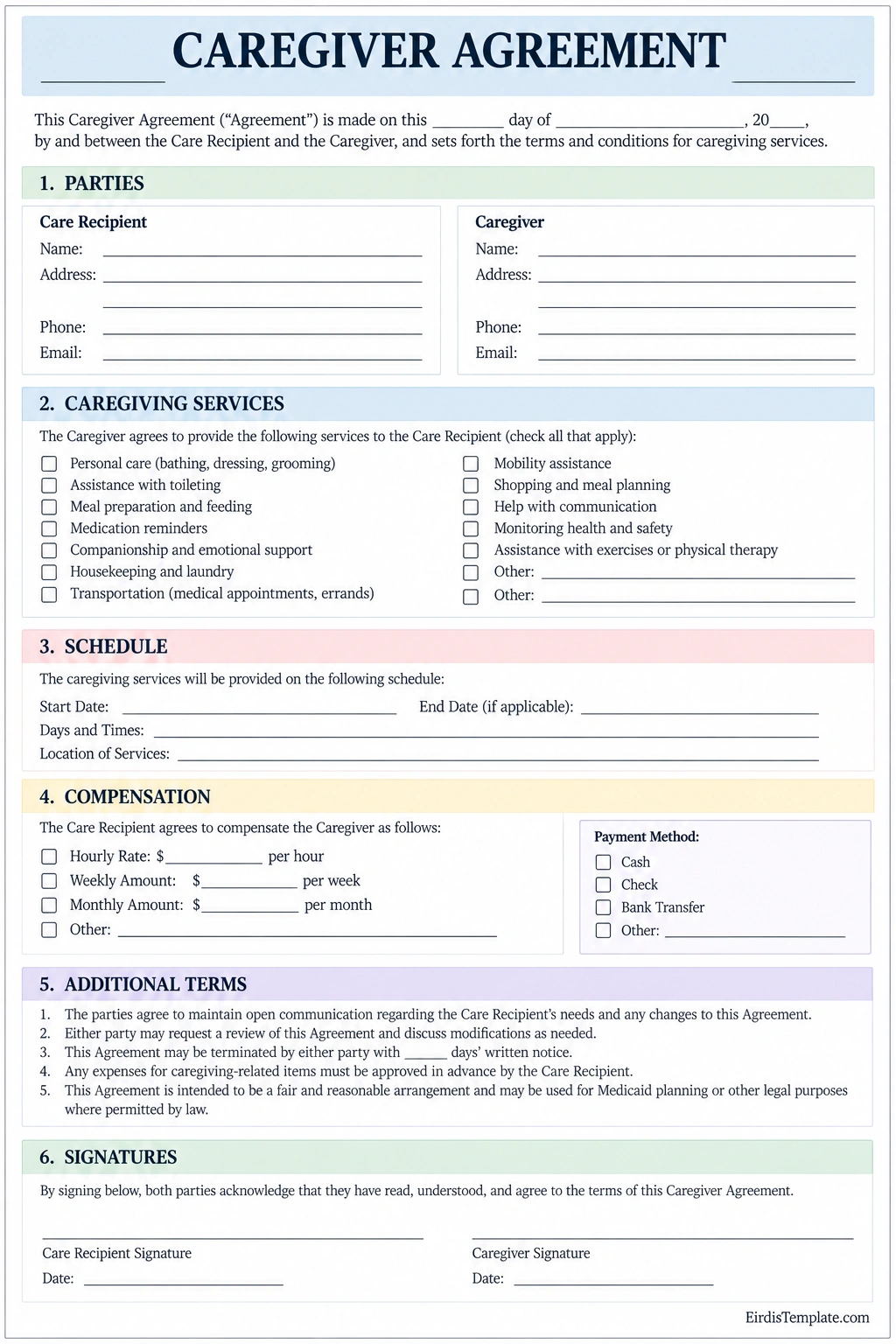
A caregiver agreement is a written contract that explains the arrangement between a person receiving care and the individual providing it. It outlines the caregiving services, work schedule, compensation, responsibilities, and other important terms. Whether the caregiver is a family member or a hired professional, a clear agreement can help prevent misunderstandings and establish expectations for everyone involved.
When a relative provides ongoing care to an aging parent or another loved one, families may assume that verbal arrangements are sufficient. However, unclear expectations about working hours, payment, household responsibilities, and reimbursements can create disagreements later. A written caregiving contract helps document the arrangement and provides a reference if questions arise.
In this guide, you will learn what a caregiver agreement is, what to include in the document, how to create one, and how a printable caregiver agreement template can help organize a caregiving arrangement. You will also learn why compensation records and legal review can be particularly important when government benefits or long-term care planning are involved.
What Is a Caregiver Agreement?
A caregiver agreement is a written document between a care recipient and a caregiver that defines the terms of the caregiving relationship. The care recipient may sign directly or, when legally authorized, through a representative. The caregiver may be a relative, friend, independent provider, or another person hired to provide assistance.
The agreement describes the services to be provided, when those services will occur, how the caregiver will be paid, and how the arrangement can be changed or ended. Depending on the circumstances, it may also address transportation, approved expenses, privacy, emergency procedures, and recordkeeping.
A caregiver agreement commonly includes:
- Parties: The care recipient and caregiver, including their contact details.
- Caregiving services: The specific personal care, household assistance, transportation, or companionship duties covered.
- Schedule: The days, hours, start date, and expected duration of the arrangement.
- Compensation: The hourly rate, weekly amount, monthly amount, or other agreed payment structure.
- Payment method: How and when payments will be made.
- Approved expenses: The rules for reimbursing documented caregiving-related costs.
- Additional terms: Responsibilities, communication procedures, and conditions for changing the arrangement.
- Signatures: The signatures and dates required to document agreement.
Why Is a Caregiver Agreement Important?
A caregiving arrangement often involves personal relationships, financial decisions, and sensitive responsibilities. Documenting the terms can help everyone understand what has been agreed upon and reduce the risk of future conflict.
1. Clarifies Services and Responsibilities
The agreement identifies which tasks the caregiver is expected to perform. This may include meal preparation, help with dressing, transportation to appointments, housekeeping, or companionship. Clear boundaries make it easier to distinguish agreed duties from additional requests that may require a revised arrangement.
2. Establishes Fair Compensation
When caregiving involves payment, the agreement records the amount, payment frequency, and method. This can help prevent disputes about unpaid hours, unexpected expenses, or whether a family member was supposed to provide care without compensation.
3. Helps Prevent Family Disagreements
Family members may have different expectations about how caregiving responsibilities should be shared or paid for. A written contract provides a common reference point and can help separate the caregiving arrangement from assumptions or informal promises.
4. Supports Accurate Financial Records
Documented services, payment records, and receipts can help explain how funds were used. This can be particularly important when a family is reviewing long-term care costs, managing a care recipient’s finances, or preparing records for a professional adviser.
5. Creates Clearer Expectations for Both Parties
A written agreement gives the caregiver and care recipient an opportunity to discuss schedules, duties, compensation, and changes before the arrangement begins. It also provides a process for reviewing the terms when care needs evolve.
What to Include in a Caregiver Agreement Template
A useful caregiver agreement template should cover the practical details of the arrangement without leaving important responsibilities unclear. Customize the following sections to reflect the care recipient’s needs and the caregiver’s role.
1. Names and Contact Information
Include the full names and contact details of the care recipient and caregiver. If someone signs on behalf of the care recipient, identify that person’s role and legal authority. A family relationship alone does not necessarily grant someone authority to sign contracts or manage another person’s finances.
2. Description of Caregiving Services
List the services the caregiver agrees to provide. Depending on the arrangement, these may include:
- Assistance with bathing, dressing, grooming, and other personal care tasks.
- Meal planning, food preparation, and help with eating.
- Transportation to medical appointments and essential errands.
- Light housekeeping, laundry, and household organization.
- Companionship and assistance with daily activities.
- Medication reminders, when appropriate and within the caregiver’s permitted role.
- Communication with designated family members or care professionals, subject to applicable privacy rules.
Be specific about what is included and what is excluded. Clinical tasks, medication administration, and other regulated services may require appropriate training, authorization, or a licensed professional.
3. Schedule and Location
Record the start date, expected days and hours, service location, and any planned end date. If overnight care, on-call duties, holidays, or substitute caregivers are involved, explain how those arrangements will work.
It is also useful to describe how the parties will handle missed shifts, schedule changes, emergencies, and requests for additional hours.
4. Compensation and Payment Terms
State the agreed payment rate and how it will be calculated. The agreement should explain whether payment is hourly, weekly, monthly, or based on another arrangement. Include payment dates, the method of payment, and the process for documenting hours worked.
For a paid family caregiver, the rate should be reasonable for the services provided and consistent with applicable wage, employment, and tax requirements. Depending on the circumstances, the arrangement may create employer obligations that should be reviewed with a qualified professional.
5. Expense Reimbursement
If the caregiver will be reimbursed for approved expenses, describe which expenses qualify and how reimbursement requests must be submitted. Examples may include authorized mileage, parking for care-related appointments, or supplies purchased specifically for the care recipient.
Specify whether prior approval is required, which receipts must be retained, and when reimbursement will occur. Keep expense reimbursements separate from wages unless a qualified adviser confirms that a different treatment is appropriate.
6. Changes, Termination, and Signatures
Explain how the agreement can be updated and how either party can end the arrangement. Include a reasonable notice procedure where appropriate, while recognizing that emergencies and legal requirements may affect termination rules.
Provide signature and date lines for the care recipient or authorized representative and the caregiver. Each party should receive a complete signed copy, and any later changes should be documented in writing.
How to Create a Caregiver Agreement Step by Step
Step 1: Discuss the Care Recipient’s Needs
Begin by identifying the assistance the care recipient needs and the tasks the caregiver can reasonably provide. Consider daily routines, mobility needs, appointment schedules, household support, and any services that require a trained professional.
Step 2: Define the Caregiver’s Responsibilities
Translate the care needs into a specific list of services. Avoid vague descriptions such as “provide full care” without explaining the actual duties. Clear descriptions help the caregiver plan their time and help the care recipient understand what to expect.
Step 3: Agree on Hours and Compensation
Set a realistic schedule and determine how the caregiver will be compensated. Consider the expected workload, local rates for comparable services, travel requirements, and applicable employment rules. If the arrangement is between relatives, documenting the terms can help demonstrate that the arrangement is genuine rather than an informal transfer of money.
Step 4: Establish Payment and Recordkeeping Procedures
Decide how work hours will be recorded, when payments will be made, and which receipts are required for reimbursements. Retain copies of the agreement, time records, payment confirmations, and expense documentation. Consistent records are especially important when someone else manages the care recipient’s finances.
Step 5: Review Legal and Benefit Considerations
Before signing, consider whether the agreement affects employment taxes, public benefits, long-term care planning, or the care recipient’s eligibility for assistance programs. Rules differ by jurisdiction and program. Obtain advice from an attorney, accountant, or benefits specialist familiar with the applicable requirements.
Step 6: Sign and Review the Agreement Regularly
Make sure all parties understand the terms before signing and retain a complete copy. Review the agreement when care needs, schedules, payment rates, or responsibilities change. Record amendments in writing and obtain the required approvals and signatures.
Caregiver Agreements and Medicaid Planning
Families sometimes use a caregiver agreement when a relative provides paid care to someone who may need long-term care or apply for Medicaid in the United States. A properly documented agreement may help explain the services provided and the payments made, but it does not automatically guarantee eligibility or protect assets.
Medicaid eligibility and long-term care rules can vary by state and program. Payments to family caregivers, transfers of assets, retroactive agreements, compensation rates, and the timing of payments may receive particular scrutiny. Some transfers made for less than fair market value can affect eligibility under applicable rules.
For that reason, families should avoid backdating agreements or assuming that payments will be accepted simply because a written document exists. Before transferring funds or beginning a paid family caregiving arrangement, consult an elder law attorney or qualified Medicaid planning professional in the relevant state.
Tips for Keeping a Caregiver Agreement Clear and Useful
- Use specific language: Describe actual tasks, expected hours, and payment terms rather than relying on broad statements.
- Keep compensation reasonable: Consider comparable local caregiving rates and the complexity of the services.
- Document work performed: Maintain timesheets, service notes where appropriate, and payment records.
- Keep receipts for expenses: Record the purpose, date, amount, and approval for reimbursed purchases.
- Respect the care recipient’s rights: Address privacy, dignity, consent, and decision-making authority appropriately.
- Separate duties from medical treatment: Make sure regulated or clinical tasks are handled by qualified individuals.
- Review the terms when needs change: Update the agreement if the care recipient needs more or less support.
- Get professional advice when needed: Legal, tax, employment, and benefit requirements can affect how the agreement should be structured.
Common Caregiver Agreement Mistakes to Avoid
- Relying only on verbal promises: Informal arrangements can lead to disagreements about payment, duties, and schedules.
- Using vague service descriptions: Unclear duties may create unreasonable expectations for the caregiver.
- Failing to document payments: Missing records can make it difficult to explain compensation or reimbursements later.
- Ignoring employment requirements: Calling someone an independent contractor or family caregiver does not automatically determine their legal classification.
- Assuming the agreement guarantees benefit eligibility: Public assistance programs have specific rules that a contract alone cannot override.
- Signing without proper authority: Confirm that anyone signing for the care recipient is legally authorized to do so.
- Leaving out a review process: Care needs and schedules can change, so the agreement should provide a practical way to update its terms.
Frequently Asked Questions
What is a caregiver agreement?
A caregiver agreement is a written contract that defines the services, schedule, compensation, responsibilities, and other terms of a caregiving arrangement between a care recipient and a caregiver.
Can a family member be paid under a caregiver agreement?
In many situations, a family member can be paid for caregiving services. However, the arrangement should reflect genuine services, reasonable compensation, accurate records, and compliance with applicable employment, tax, and benefit rules.
Does a caregiver agreement need to be notarized?
Not every caregiver agreement requires notarization. Requirements depend on local law, the parties involved, and the purpose of the document. Some circumstances may justify additional formalities or legal review, particularly when an authorized representative signs for the care recipient.
What should a caregiver agreement include?
It should generally identify the parties, describe caregiving services, specify schedules and compensation, explain expense reimbursement, address changes and termination, and include the necessary signatures and dates.
Can a caregiver agreement help with Medicaid planning?
A written agreement and supporting records may help document a legitimate paid caregiving arrangement, but they do not guarantee Medicaid eligibility or asset protection. State-specific rules, payment timing, fair compensation, and transfer-of-assets provisions can affect the outcome. Seek qualified elder law or Medicaid planning advice.
Can a caregiver agreement be changed?
Yes. The parties can generally revise an agreement when care needs, schedules, services, or compensation change, subject to applicable law and the existing contract. Record changes in writing and obtain the required signatures.
Should a caregiver agreement include expense reimbursement?
If the caregiver will incur approved costs while providing services, the agreement should explain which expenses qualify, whether prior approval is required, what documentation must be submitted, and when reimbursement will be paid.
Can I use a free caregiver agreement template?
Yes. A template can help organize the main terms and make sure important details are considered. However, a general template may not address every legal, tax, employment, or benefits issue. Customize it to the arrangement and seek professional review when appropriate.
Conclusion
A caregiver agreement helps create a clear, documented understanding between a care recipient and the person providing care. By defining services, schedules, compensation, expense reimbursement, and responsibilities, the agreement can reduce misunderstandings and support a more organized caregiving arrangement.
Use a caregiver agreement template as a starting point, maintain accurate records, and review the terms whenever circumstances change. When the arrangement involves significant payments, an authorized representative, employment obligations, or Medicaid planning, obtain qualified professional advice before relying on the agreement.
Disclaimer: This article and template are for general informational purposes only and do not constitute legal, tax, medical, or benefits advice. Laws and government program requirements vary by jurisdiction. Consult a qualified professional to determine whether an agreement is appropriate for your circumstances.
Download: Caregiver Agreement Template

- Cash Flow Statement Template - October 15, 2026
- Cash Flow Forecast Template - October 15, 2026
- Free Printable Caregiver Schedule Template - October 15, 2026
