Preschool is a crucial time in a child’s development, and having a well-structured daily schedule can make a significant impact on their learning and growth. A preschool daily schedule is designed to provide a balance of activities that promote social, emotional, cognitive, and physical development. Teachers need to create a schedule that is engaging, fun, and developmentally appropriate for young children.
Let’s explore what a preschool daily schedule entails and why it is important.
What is a Preschool Daily Schedule?
A preschool daily schedule is a planned routine that outlines the activities and events that will take place throughout the day. It typically includes a mix of structured activities, such as circle time, arts and crafts, outdoor play, and free play, as well as unstructured time for meals, nap time, and restroom breaks. The schedule is designed to provide a balance of learning opportunities, physical activity, and rest periods to support the overall well-being of the children.
Why is a Preschool Daily Schedule Important?
Having a consistent daily schedule in preschool is crucial for several reasons. First and foremost, a predictable routine helps children feel safe, secure, and comfortable in their environment. It provides a sense of structure and order that can reduce anxiety and behavioral issues. A well-planned schedule also ensures that children have a variety of learning experiences throughout the day, which promotes cognitive development, social skills, and physical health.
Additionally, a daily schedule helps teachers stay organized and manage their time effectively.
What to Include in a Preschool Daily Schedule
When creating a preschool daily schedule, it is essential to include a mix of activities that cater to the diverse needs and interests of young children. Here are some key components to consider:
– Circle Time: A time for group activities, songs, stories, and discussions to promote social skills and language development.
– Arts and Crafts: Creative activities that allow children to express themselves and develop fine motor skills.
– Outdoor Play: Time for physical exercise, exploration, and fresh air to support gross motor development.
– Free Play: Unstructured time for children to choose their activities and play independently or with peers.
– Meal Time: Nutritious meals and snacks to support physical health and social interaction.
– Rest Time: A quiet period for children to recharge and nap if needed.
– Learning Centers: Stations for hands-on learning activities in areas such as math, science, literacy, and sensory play.
Examples
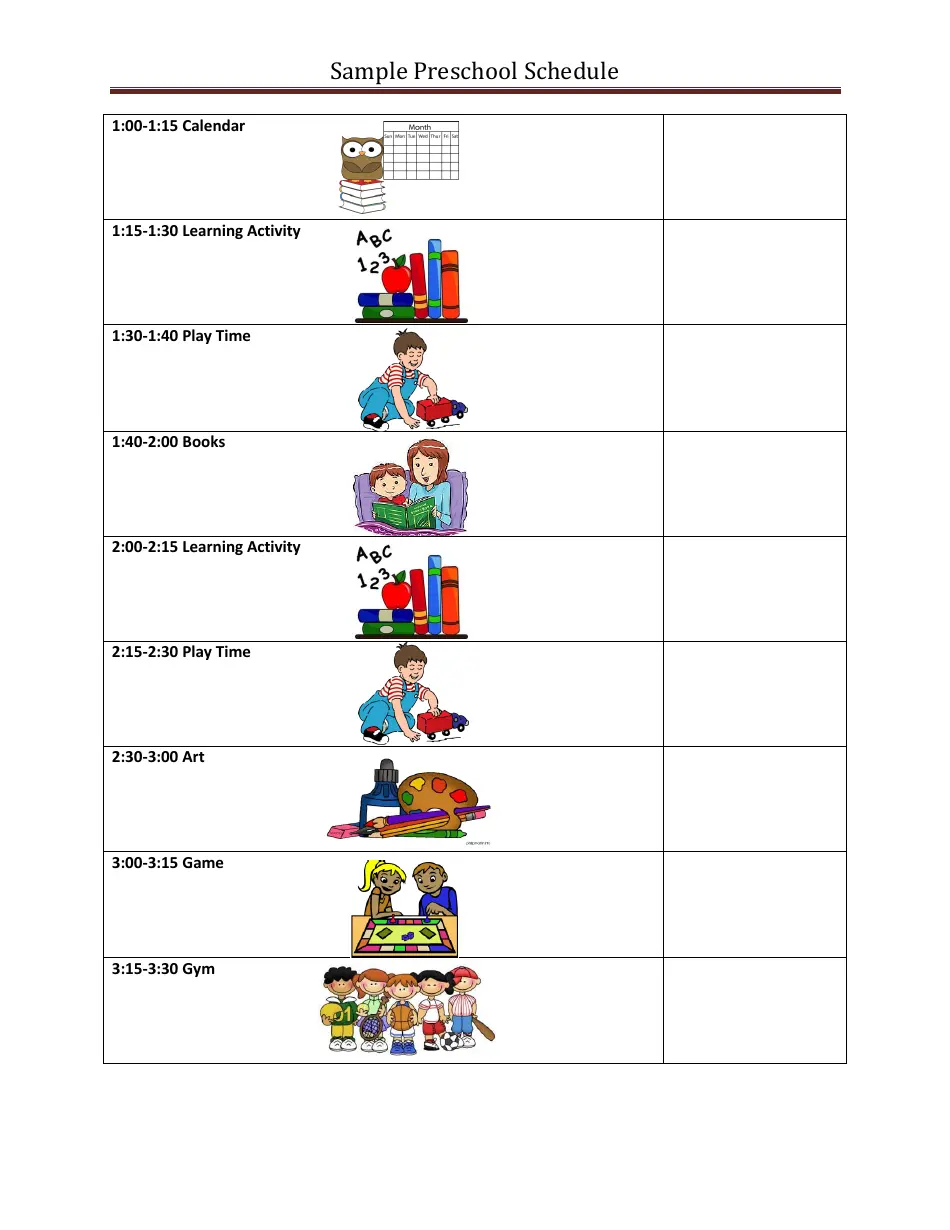
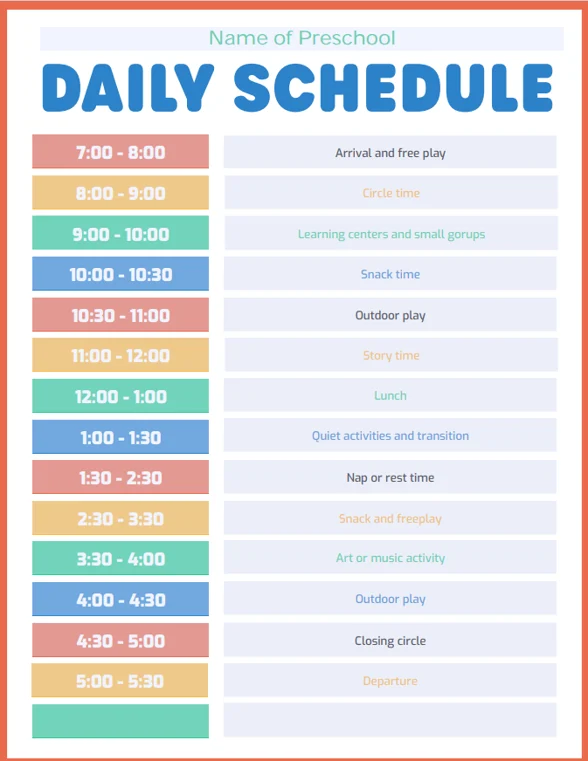
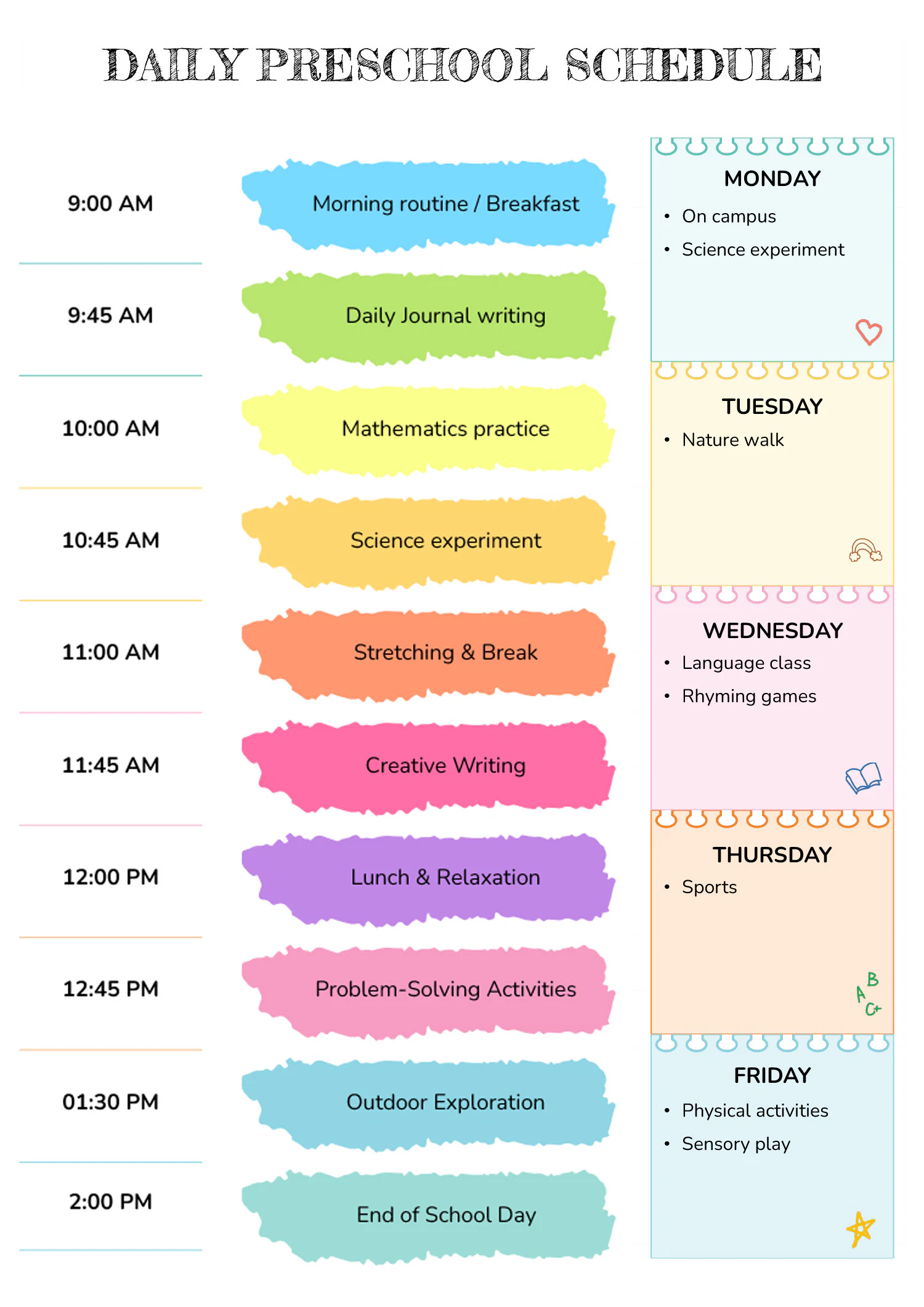
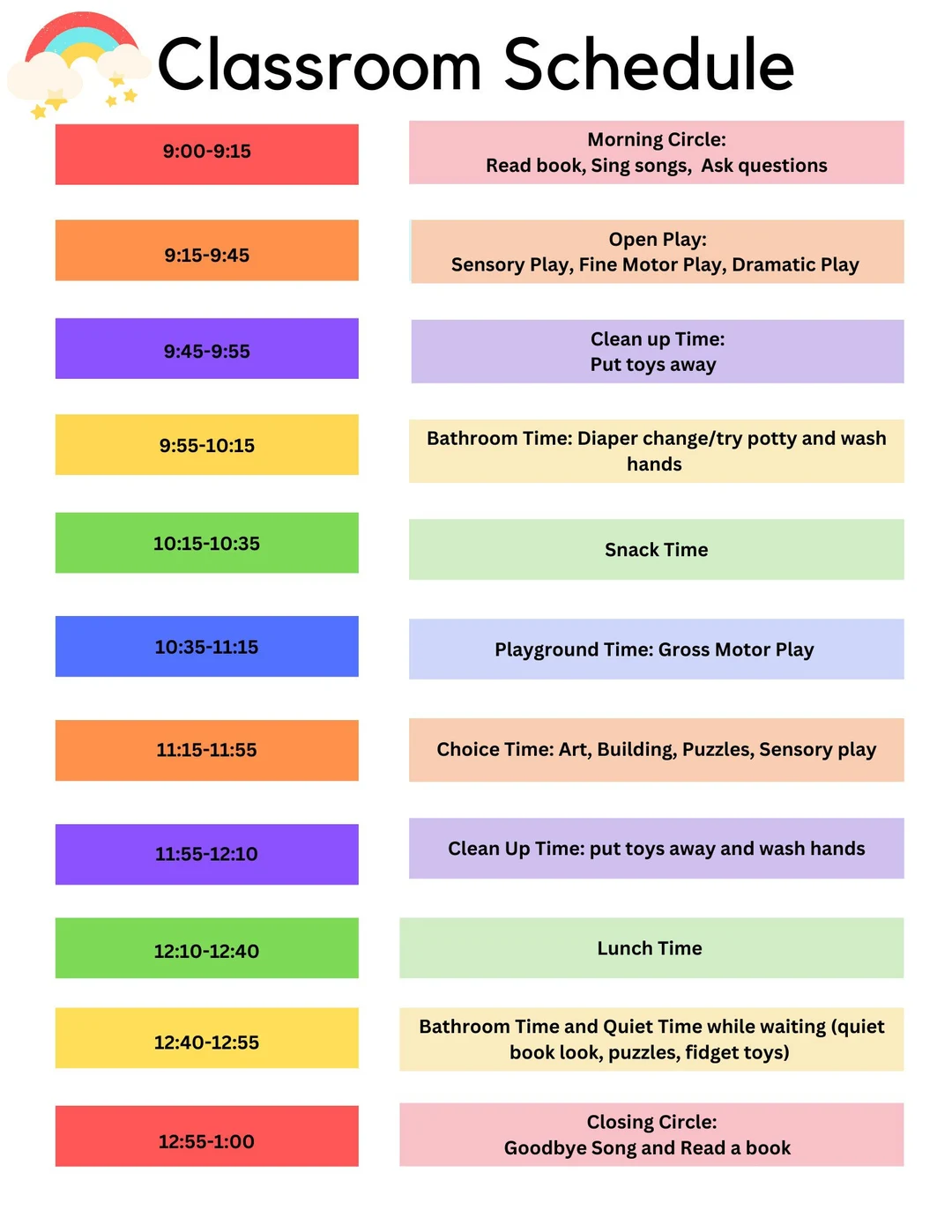
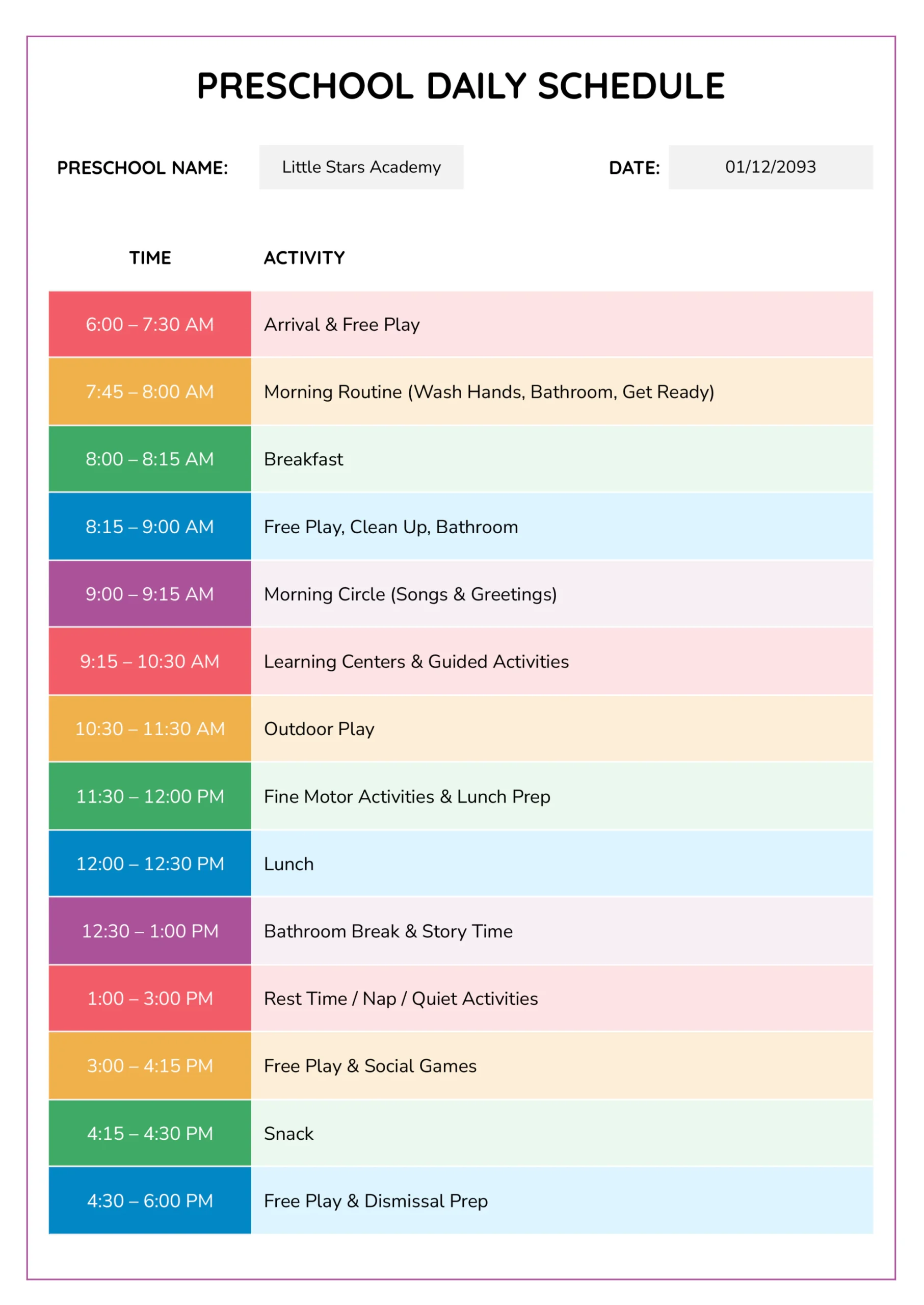
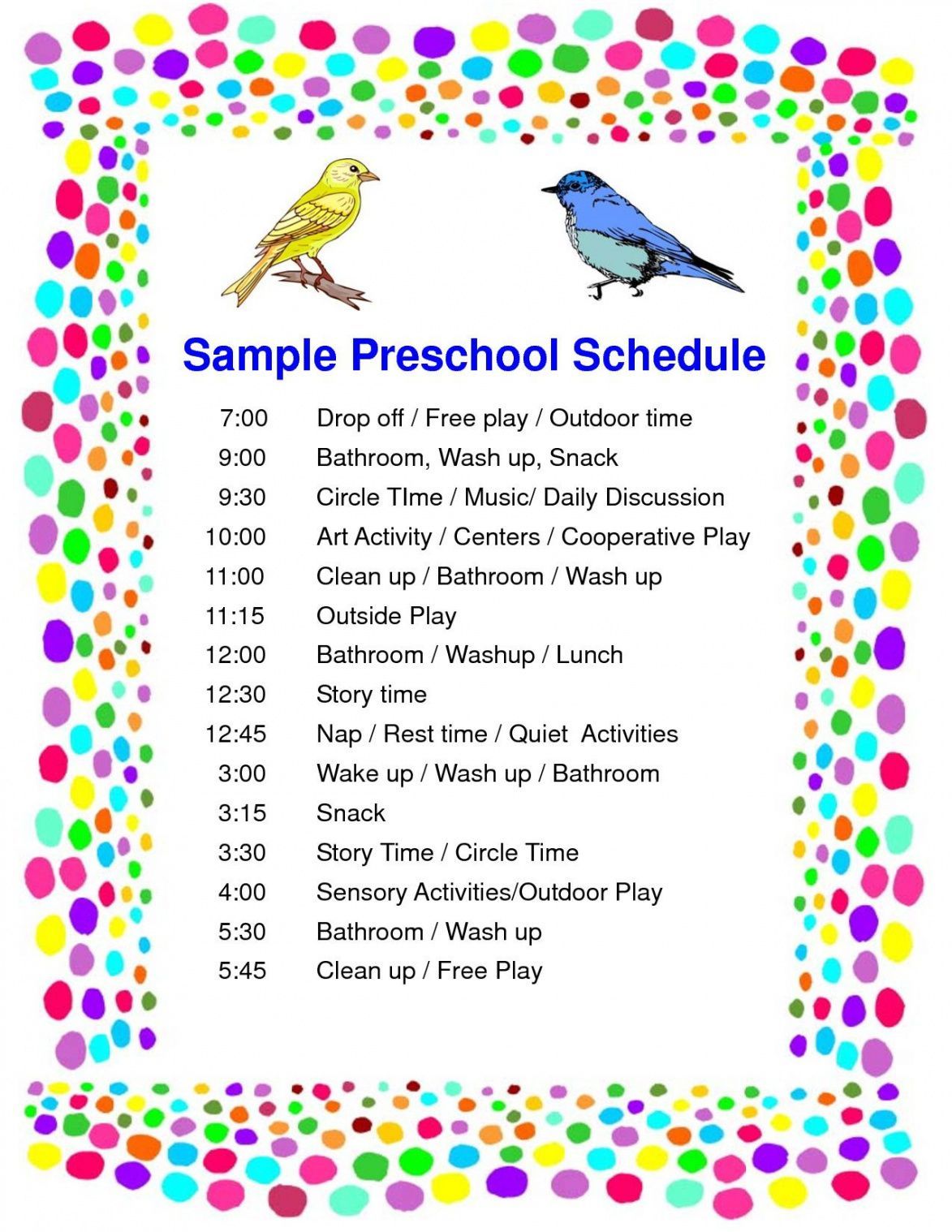
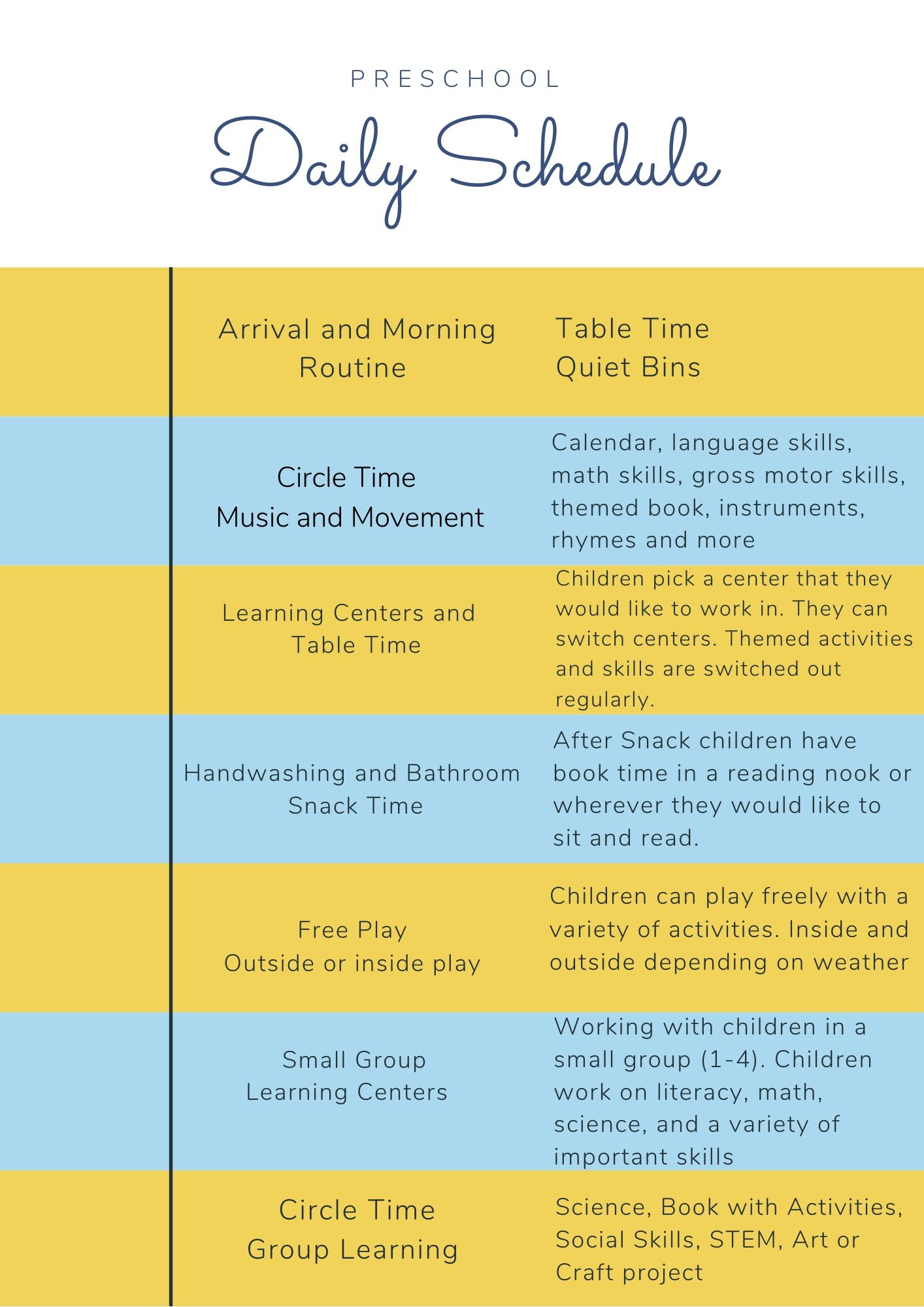
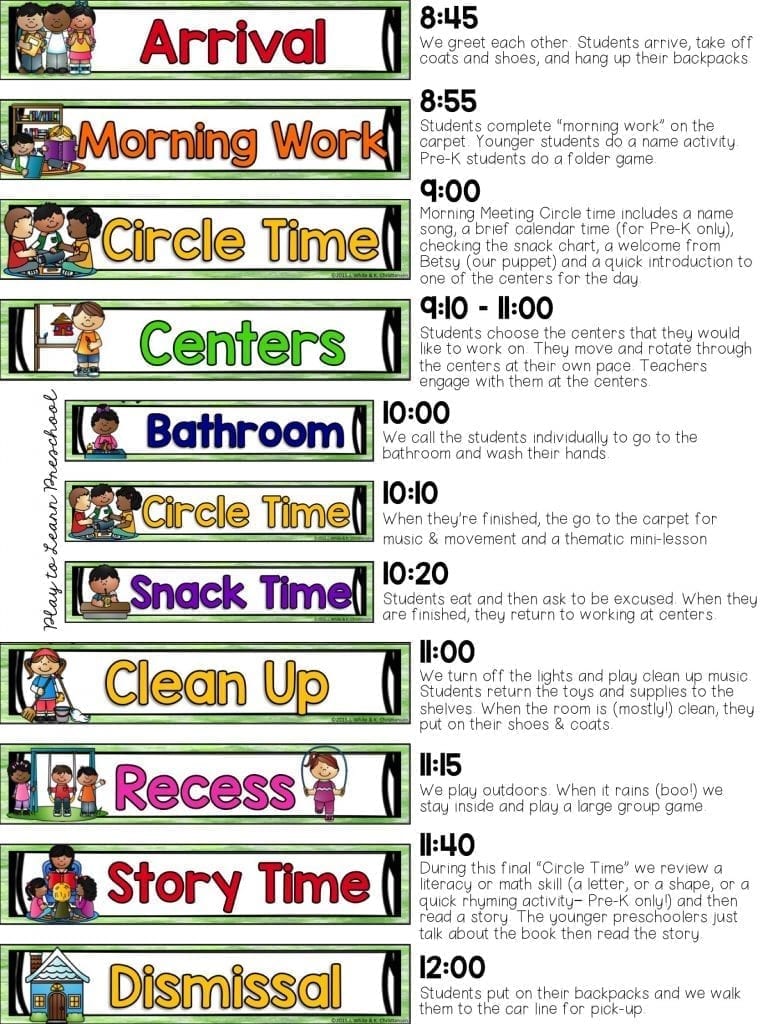
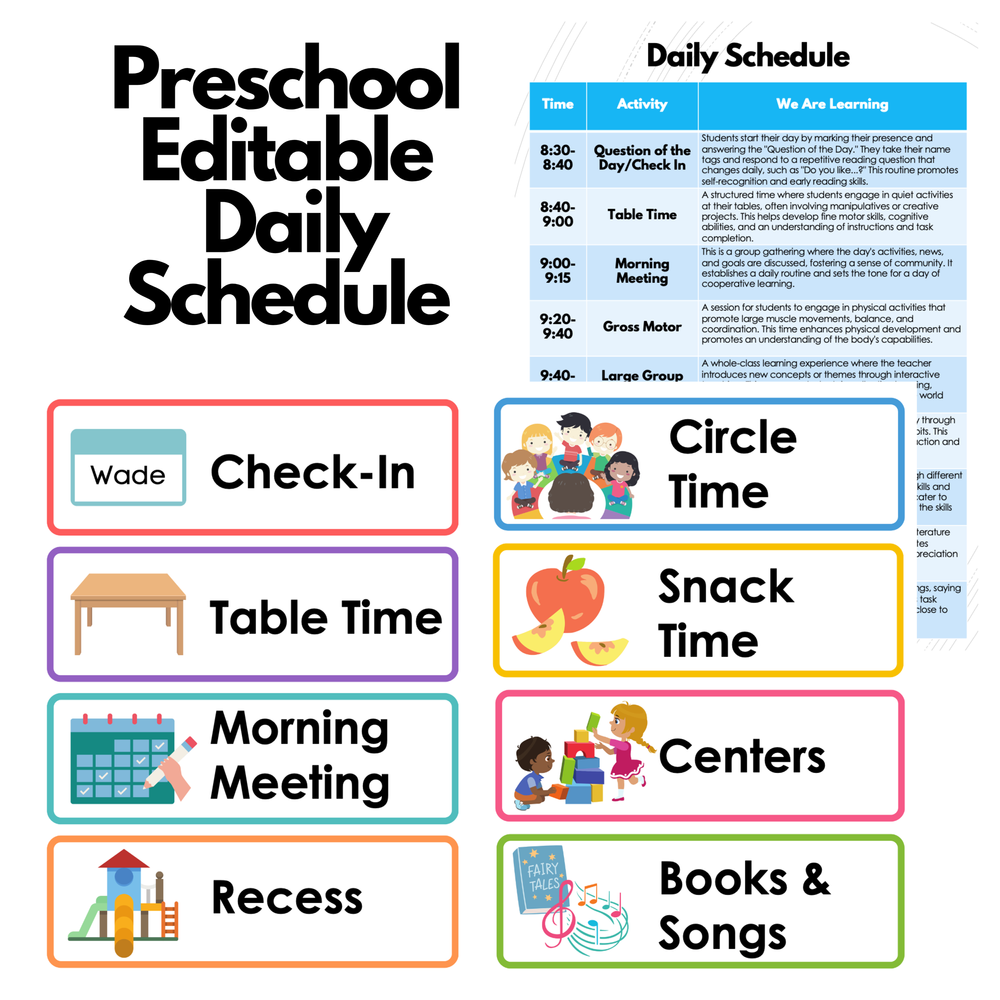
How to Create a Preschool Daily Schedule
When creating a preschool daily schedule, it is essential to consider the age, developmental level, and interests of the children in your care. Here are some tips for designing an effective schedule:
1. Start with the basics: Begin by outlining essential activities such as arrival time, circle time, meal times, nap time, and departure time.
2. Balance structured and unstructured activities: Alternate between teacher-led activities and free play to keep children engaged and motivated.
3. Include a variety of activities: Incorporate activities that cater to different learning styles and interests, such as music, art, sensory play, and outdoor exploration.
4. Allow for flexibility: Be prepared to adjust the schedule as needed based on the children’s energy levels, interests, and needs.
5. Communicate with parents: Keep parents informed about the daily schedule and any changes or special events so they can support their child’s learning at home.
6. Be mindful of transitions: Provide clear signals and routines for transitioning between activities to help children feel secure and prepared for what comes next.
7. Evaluate and revise: Regularly assess the effectiveness of the schedule and make changes as needed to meet the evolving needs of the children in your care.
Tips for Implementing a Preschool Daily Schedule
Implementing a preschool daily schedule can be challenging, but with the right approach, it can be a rewarding experience for both teachers and children. Here are some tips to help you successfully implement a daily schedule in your preschool classroom:
– Be consistent: Stick to the schedule as much as possible to establish a sense of routine and predictability for the children.
– Set clear expectations: Communicate the schedule to the children in a visual and age-appropriate way so they know what to expect throughout the day.
– Use transition cues: Use visual timers, songs, or signals to help children transition between activities smoothly and reduce anxiety.
– Offer choices: Provide opportunities for children to make choices within the schedule to promote independence and autonomy.
– Foster a positive environment: Create a warm and welcoming classroom atmosphere where children feel safe, respected, and valued.
– Seek feedback: Regularly solicit feedback from children, parents, and staff to identify areas for improvement and make adjustments as needed.
– Have fun: Incorporate play, laughter, and joy into the daily schedule to create a happy and engaging learning environment for all.
In conclusion, a well-planned and executed preschool daily schedule is essential for supporting the holistic development of young children. By including a mix of activities that cater to their social, emotional, cognitive, and physical needs, teachers can create a nurturing and stimulating environment where children can learn, grow, and thrive. With careful planning, flexibility, and creativity, a preschool daily schedule can be a valuable tool for promoting positive outcomes for young learners.
Preschool Daily Schedule Template – Download

- Cash Flow Statement Template - October 15, 2026
- Cash Flow Forecast Template - October 15, 2026
- Free Printable Caregiver Schedule Template - October 15, 2026
