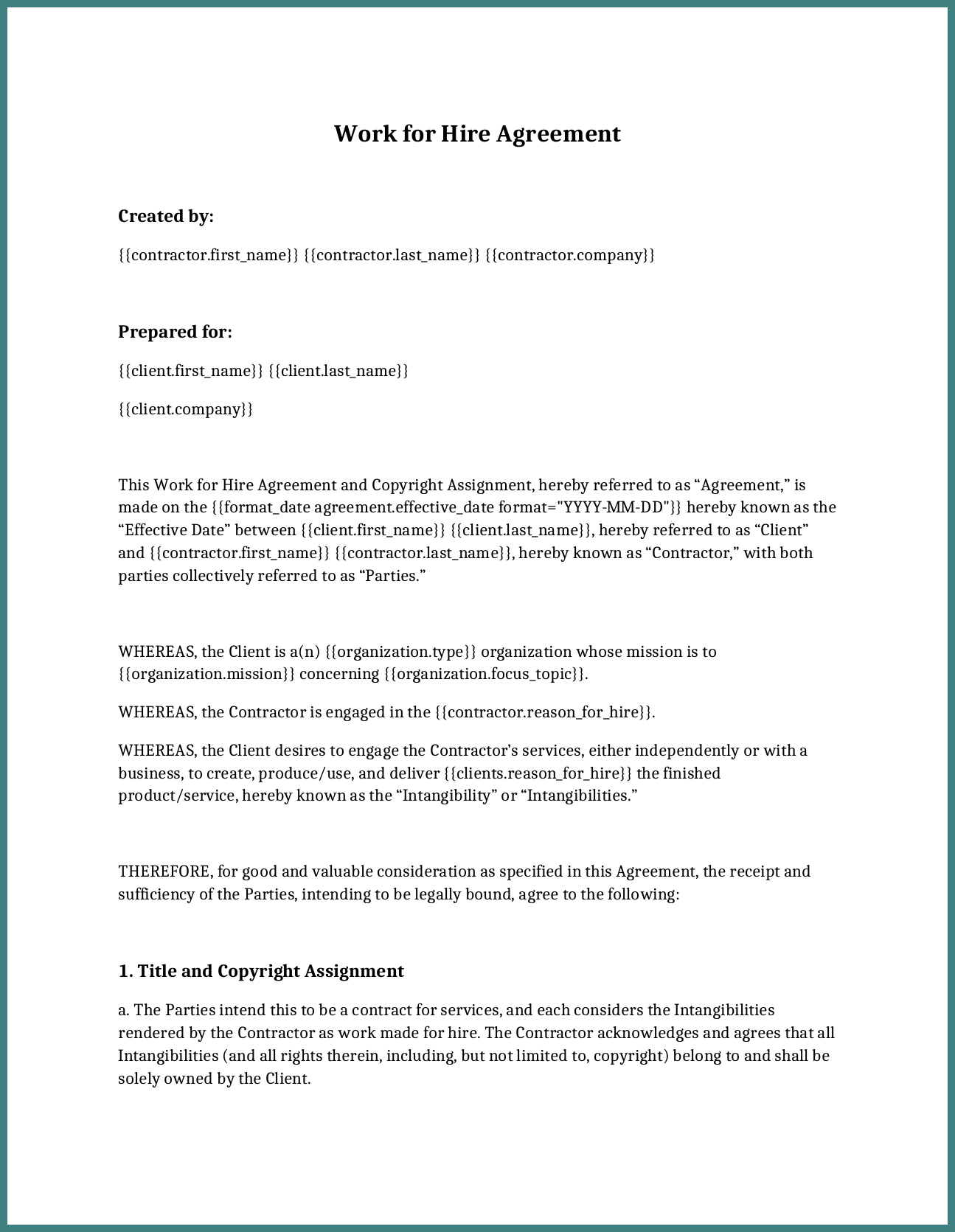
Work-for-hire agreements are commonly used in various industries to clearly define the relationship between a client and a contractor. These agreements outline the scope of work, payment terms, and intellectual property rights, among other important details. Whether you are a freelance writer, graphic designer, photographer, or any other type of independent contractor, understanding work-for-hire agreements is crucial to protect your rights and ensure a successful working relationship with your clients.
What is a Work-for-Hire Agreement?
A work-for-hire agreement is a contract between a client and a contractor where the contractor agrees to create a specific work or provide a service in exchange for compensation. Unlike a traditional employment agreement where the employer owns the work created by the employee, a work-for-hire agreement specifies that the client will own the rights to the work created by the contractor. This type of agreement is commonly used in creative industries where intellectual property rights are a key consideration.
Why Use a Work-for-Hire Agreement?
There are several reasons why both clients and contractors should use work-for-hire agreements. For clients, having a work-for-hire agreement in place ensures that they will own the rights to the work created by the contractor, allowing them to use and distribute the work as they see fit. For contractors, a work-for-hire agreement provides clarity on the scope of work, payment terms, and other important details, reducing the risk of misunderstandings and disputes down the line.
Key Elements of a Work-for-Hire Agreement
When drafting a work-for-hire agreement, there are several key elements that should be included to protect the interests of both parties. These elements may vary depending on the nature of the work being performed, but some common elements include:
- Scope of Work. Clearly define the specific work or services that the contractor will provide.
- Payment Terms. Outline the payment amount, schedule, and method of payment.
- Intellectual Property Rights. Specify that the client will own the rights to the work created by the contractor.
- Confidentiality. Include provisions to protect confidential information shared during the project.
- Term and Termination. Define the duration of the agreement and the circumstances under which either party can terminate the contract.
- Indemnification. Clarify each party’s responsibility in case of legal claims arising from the work performed.
- Dispute Resolution. Establish a process for resolving any disputes that may arise during the project.
- Governing Law. Specify the state or country laws that will govern the agreement.
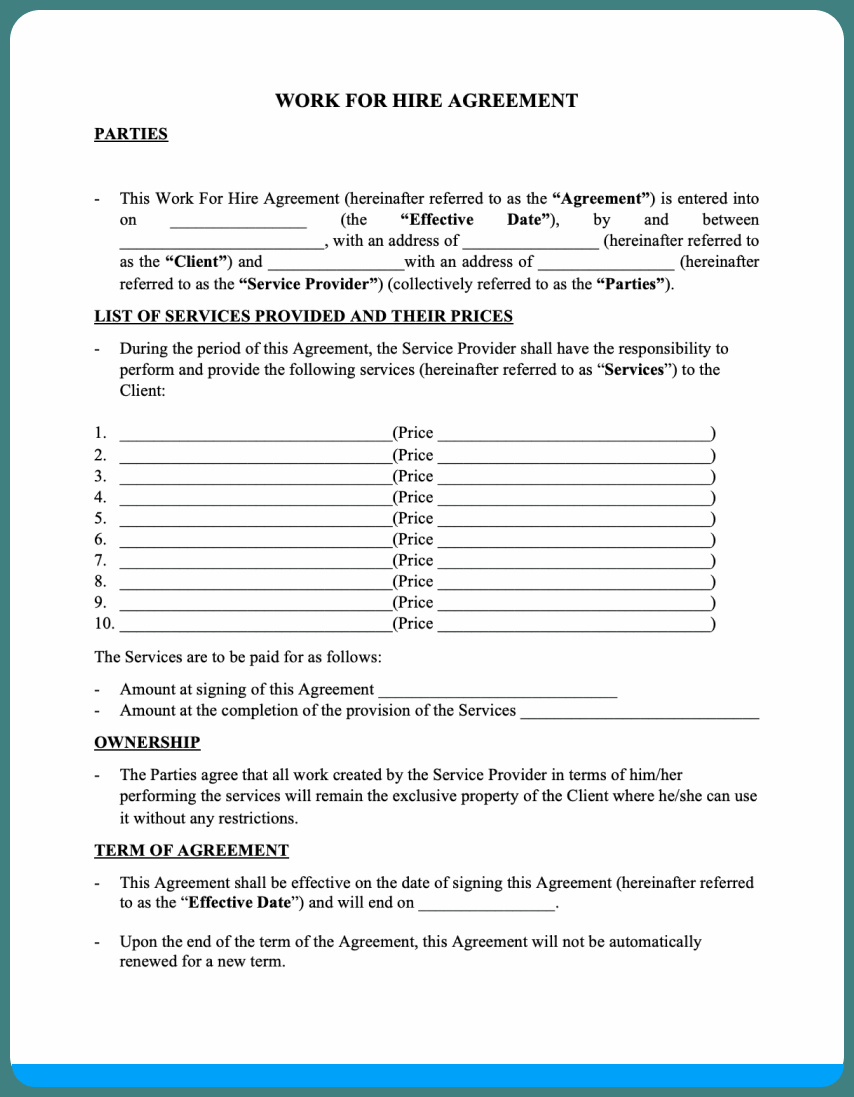
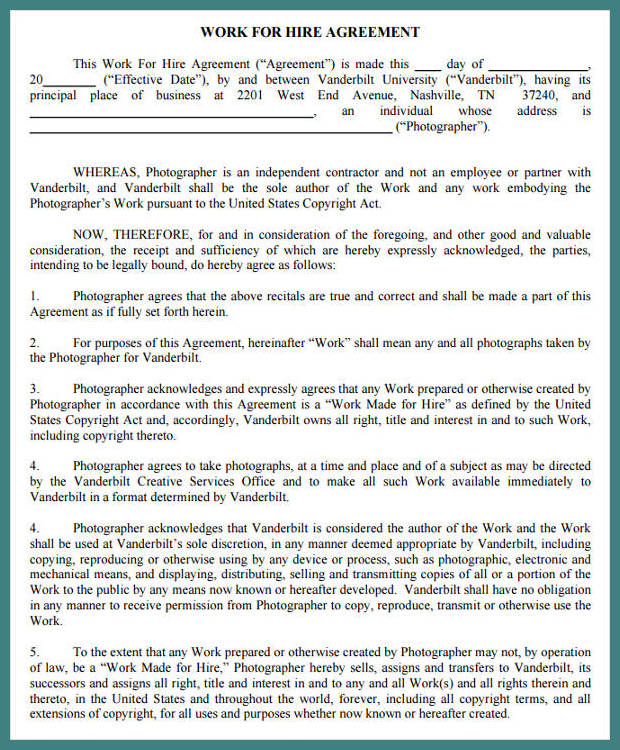
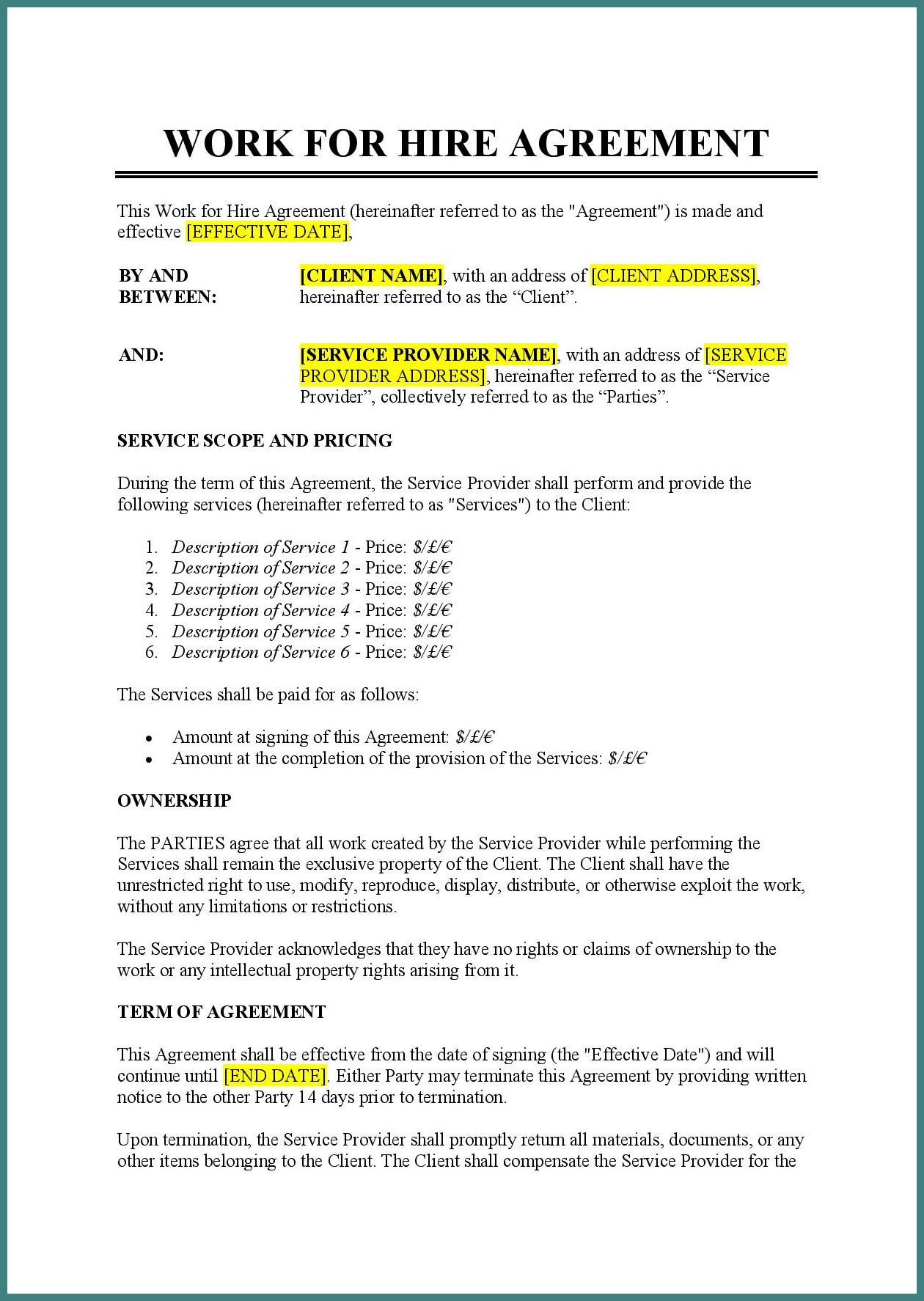
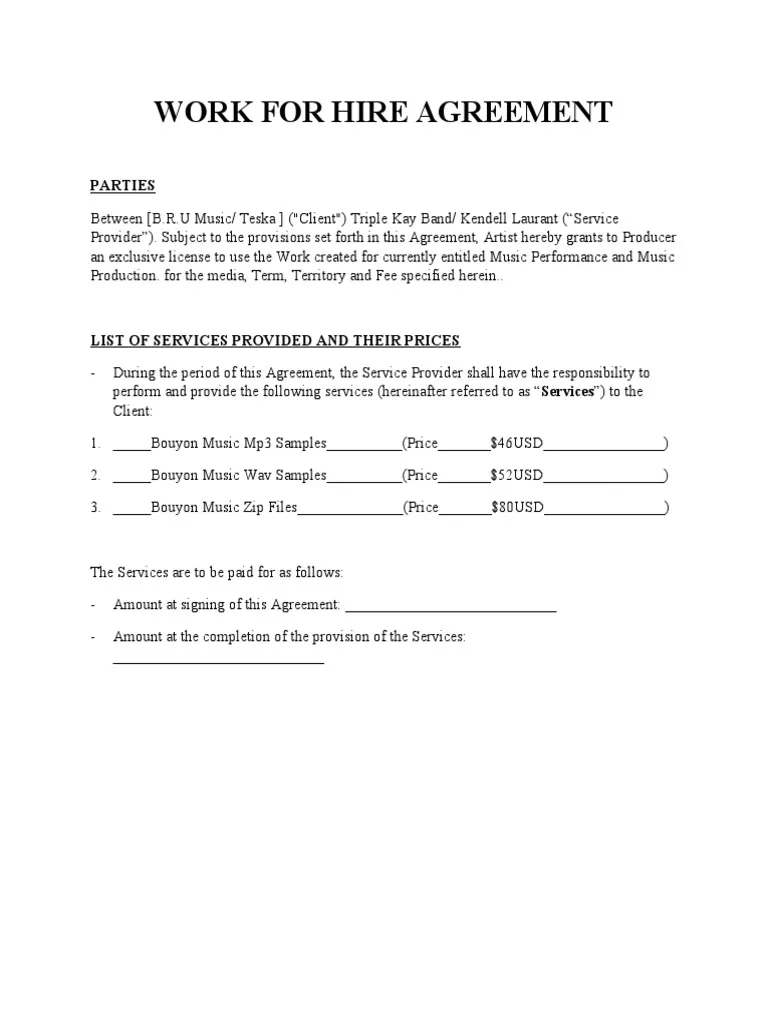
How to Create a Work-for-Hire Agreement
Creating a work-for-hire agreement involves careful consideration of the specific details of the project and the expectations of both parties. Here are some steps to follow when drafting a work-for-hire agreement:
1. Start by clearly defining the scope of work and deliverables expected from the contractor.
2. Outline the payment terms, including the amount, schedule, and method of payment.
3. Specify the intellectual property rights, ensuring that the client will own the work created by the contractor.
4. Include provisions for confidentiality to protect sensitive information shared during the project.
5. Define the term of the agreement and the conditions under which it can be terminated.
6. Address indemnification to allocate responsibility in case of legal claims related to the work performed.
7. Establish a process for resolving disputes that may arise during the project.
8. Determine the governing law that will apply to the agreement to avoid jurisdictional issues.
Tips for Negotiating a Work-for-Hire Agreement
Negotiating a work-for-hire agreement can be a delicate process, but there are some tips that can help both parties reach a mutually beneficial agreement:
1. Clearly communicate expectations and deliverables from the beginning to avoid misunderstandings.
2. Discuss payment terms and ensure that they are fair and reasonable for both parties.
3. Seek legal advice if necessary to ensure that the agreement complies with relevant laws and regulations.
4. Consider adding provisions for revisions and modifications to the work to accommodate changes during the project.
5. Be open to compromise and willing to negotiate terms that are acceptable to both parties.
6. Review the agreement carefully before signing to ensure that all terms are clearly defined and understood.
7. Keep a record of all communications and agreements related to the project for future reference.
8. Regularly communicate with the client throughout the project to address any issues or concerns promptly.
Conclusion
In conclusion, work-for-hire agreements are essential for establishing clear expectations and protecting the rights of both clients and contractors in various industries. By including key elements such as scope of work, payment terms, intellectual property rights, and dispute resolution provisions, both parties can ensure a successful working relationship. By following the tips for negotiating a work-for-hire agreement, you can navigate the process with confidence and achieve a mutually beneficial outcome. Remember to seek legal advice if needed and communicate openly with the client to ensure a smooth and successful project.
Work-for-Hire Agreement Template

- Free Printable Call Sheet Template - October 12, 2026
- Free Printable Business Hours Template - October 12, 2026
- Business Expense Template - October 12, 2026
