A Weekly Cleaning Schedule makes it easier to keep your home clean and organized without trying to complete every household chore in one exhausting session. By dividing cleaning tasks across the week, you can create a manageable routine that keeps dirt, dust, clutter, and everyday messes under control.
A consistent cleaning routine can also make household chores feel less overwhelming. Instead of wondering what needs to be cleaned each day, you have a simple plan to follow. A weekly cleaning checklist can be adjusted to fit your home, schedule, family, and personal preferences, making it a practical tool for maintaining a comfortable living space.
What Is a Weekly Cleaning Schedule?
A Weekly Cleaning Schedule is a plan that organizes household cleaning tasks across the days of the week. Instead of completing every chore at once, the schedule assigns specific tasks to particular days.
For example, Monday might focus on the living room, Tuesday on the kitchen, and Wednesday on the bathrooms. Other days can be used for bedrooms, floors, laundry, outdoor areas, or general cleaning.
The goal is not to create a rigid routine that makes cleaning stressful. A good weekly house cleaning schedule should make household maintenance easier by breaking larger responsibilities into smaller and more manageable tasks.
Why Use a Weekly Cleaning Schedule?
Without a cleaning routine, small chores can easily accumulate. A few dishes, dusty surfaces, cluttered rooms, or overdue laundry may eventually become a much larger task.
A weekly cleaning plan helps distribute those responsibilities throughout the week. This can make cleaning more predictable and easier to fit around work, school, family activities, and personal time.
Some benefits of using a cleaning schedule include:
- Reduces cleaning stress: Smaller daily tasks can feel easier than a large cleaning session.
- Creates consistency: Regular tasks are less likely to be forgotten.
- Prevents large messes: Routine cleaning helps keep dirt and clutter from building up.
- Saves time: Having a plan reduces the time spent deciding what to clean.
- Improves organization: Cleaning and decluttering can become part of a predictable routine.
- Supports household hygiene: Frequently used areas can be cleaned regularly.
- Helps divide responsibilities: Household members can share specific chores.
- Protects surfaces and belongings: Regular maintenance can help prevent accumulated grime from becoming difficult to remove.
Weekly Cleaning Schedule Template
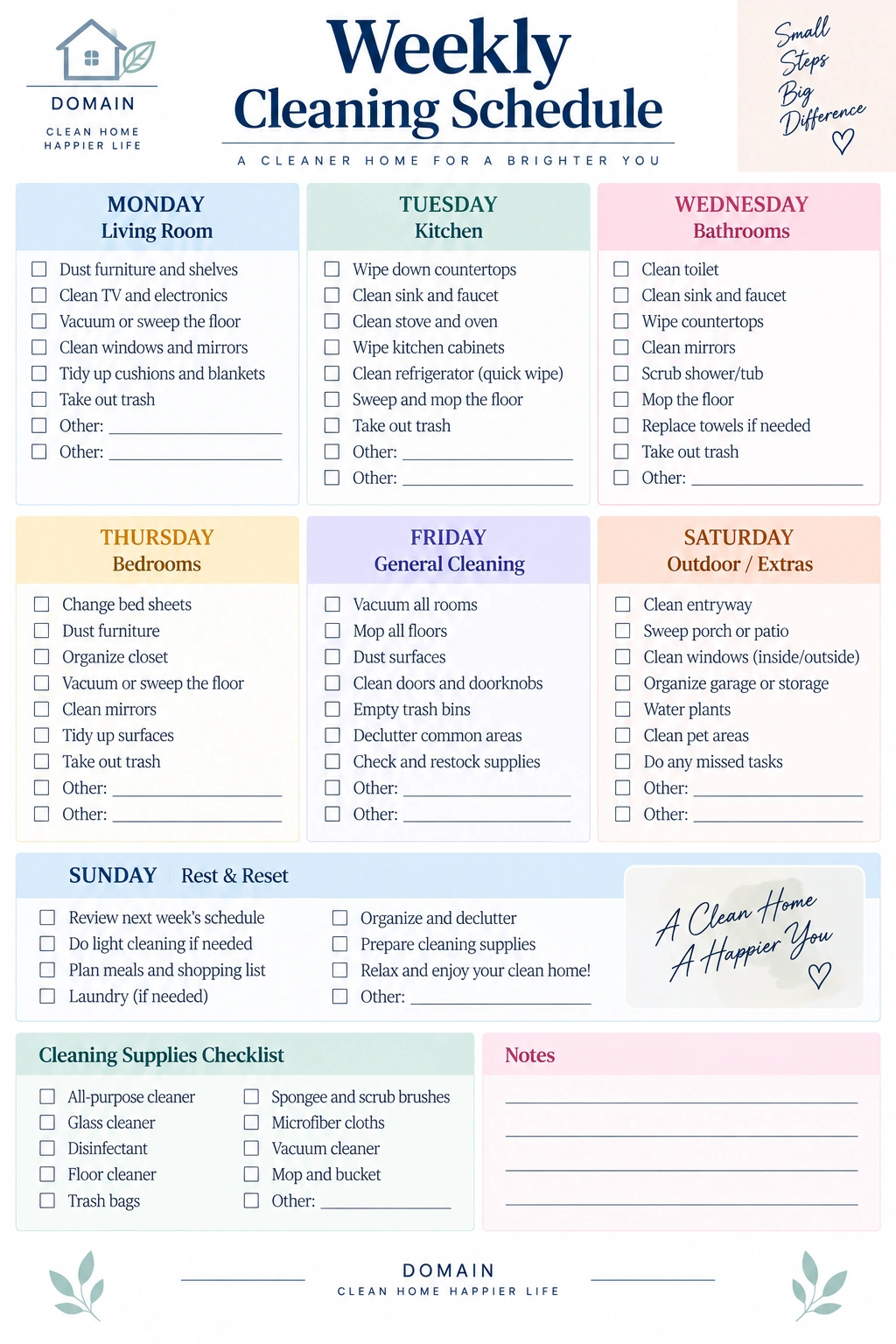
A Weekly Cleaning Schedule Template gives you a ready-made framework for organizing chores throughout the week. Instead of creating a checklist from scratch, you can customize the schedule by adding, removing, or rearranging tasks based on your household needs.
A useful template can include daily cleaning tasks, room-specific chores, general cleaning activities, a cleaning supplies checklist, and space for notes. This makes it easier to see the entire week at a glance.
How to Create a Weekly Cleaning Schedule
Step 1: List All Your Regular Cleaning Tasks
Start by making a complete list of household chores. Include both small recurring tasks and larger cleaning jobs.
Your list might include dusting, vacuuming, mopping, wiping kitchen surfaces, cleaning bathrooms, changing bed sheets, doing laundry, taking out trash, and organizing clutter.
Writing everything down first helps you understand how much work actually needs to be completed during a typical week.
Step 2: Divide Tasks by Room
Group cleaning tasks according to the rooms or areas they belong to. For example, create categories for the kitchen, bathrooms, bedrooms, living room, entryway, and outdoor spaces.
Grouping tasks by location can make cleaning more efficient because you can complete several related chores during the same cleaning session.
Step 3: Assign Tasks to Different Days
Distribute the tasks throughout the week. Try to balance heavier cleaning days with lighter ones.
For example, you might dedicate one day to bathrooms and another to bedrooms. A separate day can be reserved for vacuuming and mopping throughout the home.
Step 4: Consider Your Available Time
Your cleaning schedule should reflect your actual lifestyle. If you have limited time on weekdays, assign only short tasks to those days and save larger chores for the weekend.
There is no universal schedule that works for every household. The most useful routine is one that you can realistically follow.
Step 5: Add Daily Maintenance Tasks
Some tasks are easier to manage when they are performed regularly. Depending on your household, daily maintenance may include washing dishes, wiping frequently used surfaces, tidying common areas, and dealing with obvious clutter.
These small tasks can prevent the weekly cleaning workload from becoming unnecessarily large.
Step 6: Review and Adjust the Schedule
After following the schedule for a few weeks, evaluate what works and what does not. If one day consistently contains too many chores, move some tasks to another day.
Your cleaning checklist should evolve with your household rather than becoming an additional source of stress.
Weekly Cleaning Schedule Example
A simple weekly cleaning routine can divide responsibilities according to rooms and cleaning priorities.
Monday: Living Room
Start the week by refreshing the main living area. Dust furniture, clean commonly used surfaces, vacuum or sweep the floor, tidy cushions, and remove unnecessary clutter.
Tuesday: Kitchen
Focus on kitchen maintenance. Wipe countertops, clean the sink and faucet, wipe appliances, clean cabinet surfaces, sweep and mop the floor, and take out the trash.
Wednesday: Bathrooms
Clean the bathrooms by focusing on toilets, sinks, mirrors, countertops, showers, tubs, and floors. Replace towels when needed and restock frequently used supplies.
Thursday: Bedrooms
Refresh bedrooms by changing bed sheets, dusting furniture, vacuuming or sweeping floors, organizing surfaces, and dealing with clothing or other items that have accumulated during the week.
Friday: General Cleaning
Use Friday for tasks that affect several rooms. Vacuum and mop floors, dust surfaces, clean frequently touched areas, empty trash bins, and check whether cleaning supplies need to be replenished.
Saturday: Outdoor Areas and Extras
Saturday can be useful for cleaning entryways, patios, porches, garages, storage areas, windows, or other spaces that do not require daily attention.
Sunday: Rest and Reset
Keep Sunday relatively light. Review the upcoming week’s schedule, organize supplies, complete any missed small tasks, and prepare for the next cleaning cycle.
Daily Cleaning vs. Weekly Cleaning
Daily cleaning and weekly cleaning serve different purposes. Daily tasks are usually quick maintenance activities that keep common areas under control. Weekly chores can involve more detailed cleaning that does not need to happen every day.
For example, wiping a kitchen counter may be a daily task, while cleaning cabinet doors or thoroughly cleaning an appliance may be included in a weekly or less frequent routine.
Combining both types of tasks creates a more balanced household cleaning system.
What Should Be Cleaned Every Week?
The exact frequency of cleaning depends on how your home is used, the number of occupants, pets, personal preferences, and other household factors. However, many homes benefit from regularly addressing the following areas:
- Kitchen surfaces and sink
- Bathroom fixtures and surfaces
- Frequently used floors
- Living room surfaces
- Bedroom surfaces
- Mirrors and commonly used glass surfaces
- Trash bins
- Frequently touched surfaces
- Cluttered common areas
- Bed linens, according to your household routine
Some cleaning tasks may need to be completed more or less frequently. Your schedule should be adjusted according to actual household conditions.
How to Make Weekly Cleaning Easier
Keep Cleaning Supplies Organized
Store commonly used cleaning supplies in a convenient and organized location. Having the necessary tools available can reduce interruptions during cleaning sessions.
Clean From Top to Bottom
When cleaning a room, starting with higher surfaces before moving to floors can help prevent dust and debris from landing on areas you have already cleaned.
Declutter Before Deep Cleaning
Removing unnecessary items first can make surfaces and floors easier to clean. A quick decluttering step can also make a room look more organized.
Use a Timer
If you have limited time, consider setting a short cleaning period and focusing on the highest-priority tasks. This approach can make cleaning feel more manageable on busy days.
Work From a Checklist
A checklist prevents you from repeatedly deciding what needs to be done. Simply move through the listed tasks and mark them as completed.
Weekly Cleaning Schedule for Busy People
People with demanding work schedules do not need to spend hours cleaning every day. A busy household can use a shorter cleaning routine that focuses on the areas that require the most attention.
For example, you could spend 15 to 30 minutes on a specific room each weekday and reserve a longer session for Saturday. Prioritize kitchens, bathrooms, floors, trash, and frequently used spaces before less urgent tasks.
The goal is consistency rather than perfection. A realistic cleaning schedule that you follow regularly can be more useful than an ambitious plan that quickly becomes difficult to maintain.
Weekly Cleaning Schedule for Families
Families can use a shared household chore chart to distribute responsibilities. Children and adults can be assigned age-appropriate or role-appropriate tasks, while larger chores can be shared.
For example, one household member might handle trash and tidying while another manages vacuuming or laundry. A shared checklist makes responsibilities visible and can reduce confusion about who needs to complete each task.
Cleaning Schedule for Small Homes and Apartments
Smaller homes may require less time to clean, but limited space can also make clutter more noticeable. A weekly apartment cleaning schedule can therefore combine cleaning and organization.
Focus on high-use areas first. Keep kitchen counters, bathroom surfaces, floors, entryways, and common living areas under control. Smaller spaces can often benefit from short, frequent maintenance rather than occasional large cleaning sessions.
Common Weekly Cleaning Schedule Mistakes
- Trying to clean everything in one day: This can make cleaning feel unnecessarily exhausting.
- Creating an unrealistic checklist: Too many tasks can make the schedule difficult to maintain.
- Ignoring high-use areas: Frequently used spaces often need more attention than rarely used rooms.
- Forgetting supplies: Running out of basic cleaning products can interrupt your routine.
- Never adjusting the schedule: Household needs can change over time.
- Focusing only on appearance: Cleaning routines should also address practical maintenance and household hygiene.
- Expecting perfection: A cleaning schedule is a tool for managing chores, not a requirement to keep the home perfect at every moment.
How to Maintain Your Cleaning Routine
Consistency is easier when the schedule fits naturally into your week. Choose realistic cleaning periods and avoid assigning too many demanding tasks to the same day.
It can also help to keep your cleaning checklist visible. A printed Weekly Cleaning Schedule can be placed somewhere convenient, such as a home office, utility area, refrigerator, or household command center.
Marking completed tasks provides a simple sense of progress. At the end of the week, review unfinished tasks and decide whether they should be completed, moved to the following week, or removed because they are not essential.
Weekly Cleaning Checklist
Before starting your week, use the following checklist to make sure your cleaning routine covers the most important areas:
- Living areas are dusted and tidied.
- Kitchen counters and sink are cleaned.
- Bathroom surfaces and fixtures are cleaned.
- Bedrooms are refreshed and organized.
- Floors are vacuumed, swept, or mopped as appropriate.
- Trash is removed.
- Clutter is addressed.
- Frequently used surfaces receive regular attention.
- Cleaning supplies are checked and restocked.
- Outdoor or less frequently used areas are reviewed.
- Any missed tasks are carried into the next suitable cleaning period.
Final Thoughts
A Weekly Cleaning Schedule can turn household cleaning from an overwhelming collection of chores into a simple, repeatable routine. By dividing responsibilities across different days, you can keep important areas maintained while reducing the need for large and stressful cleaning sessions.
The most effective schedule is one that matches your home and lifestyle. Start with essential tasks, organize them into manageable groups, and adjust the routine as your needs change. A printable Weekly Cleaning Schedule Template can make the process even easier by giving you a clear place to plan, track, and review your household cleaning tasks.
Download: Weekly Cleaning Schedule Template

- Teacher Letter of Recommendation Template - September 17, 2026
- Free Printable Treatment Plan Template - September 17, 2026
- Free Printable Service Invoice Template - September 17, 2026
