Change management planning helps organizations prepare for change, support employees through transitions, and maintain productivity while new processes, systems, or structures are introduced. Without a clear plan, even a well-designed project can face confusion, resistance, delays, and low adoption.
A change management plan provides a structured approach to identifying stakeholders, communicating updates, delivering training, managing risks, and measuring progress. It helps leaders and teams understand what is changing, why it matters, and what they need to do to make the transition successful.
Whether your organization is implementing new software, restructuring a department, updating business processes, or introducing a new operating model, this guide explains how to build a practical change management plan and use a template to organize the work.
What Is Change Management Planning?
Change management planning is the process of preparing people and an organization to move from a current state to a desired future state. It identifies the activities, resources, communication methods, and support systems needed to help people understand, adopt, and sustain a change.
Change management focuses on the people side of a transition, while project management often focuses on delivering the technical solution, scope, schedule, and project outputs. These disciplines work best together because a project is not fully successful simply because a new system or process has been delivered. People must also be able and willing to use it effectively.
A change management plan typically documents the purpose of the change, its expected impact, stakeholder needs, communication activities, training requirements, implementation timeline, risks, and success measures.
Why Is Change Management Planning Important?
A structured change management plan helps an organization anticipate challenges instead of reacting to them after implementation. It also gives project leaders a consistent way to coordinate activities and evaluate whether the change is delivering its intended benefits.
Reduce Confusion and Resistance
Employees may resist change when they do not understand its purpose, fear losing responsibilities, or feel excluded from decisions. Early communication and opportunities for feedback can help address concerns before they become larger obstacles.
Improve Employee Adoption
Training, practical guidance, and ongoing support help employees learn new processes and tools. A good plan considers what different groups need to know and do, rather than assuming one announcement will prepare everyone.
Minimize Operational Disruptions
Planning helps teams identify periods of high workload, dependencies, resource constraints, and potential service interruptions. Organizations can then schedule activities, prepare support resources, and develop contingency measures.
Align Stakeholders Around Shared Goals
A change initiative often affects multiple departments, managers, customers, and partners. A documented plan clarifies responsibilities, establishes consistent messages, and helps stakeholders work toward the same outcomes.
Change Management Planning Template
A change management planning template provides a practical structure for organizing the key elements of a transition. It can be used for technology implementations, policy updates, organizational restructuring, process improvements, and other business changes.
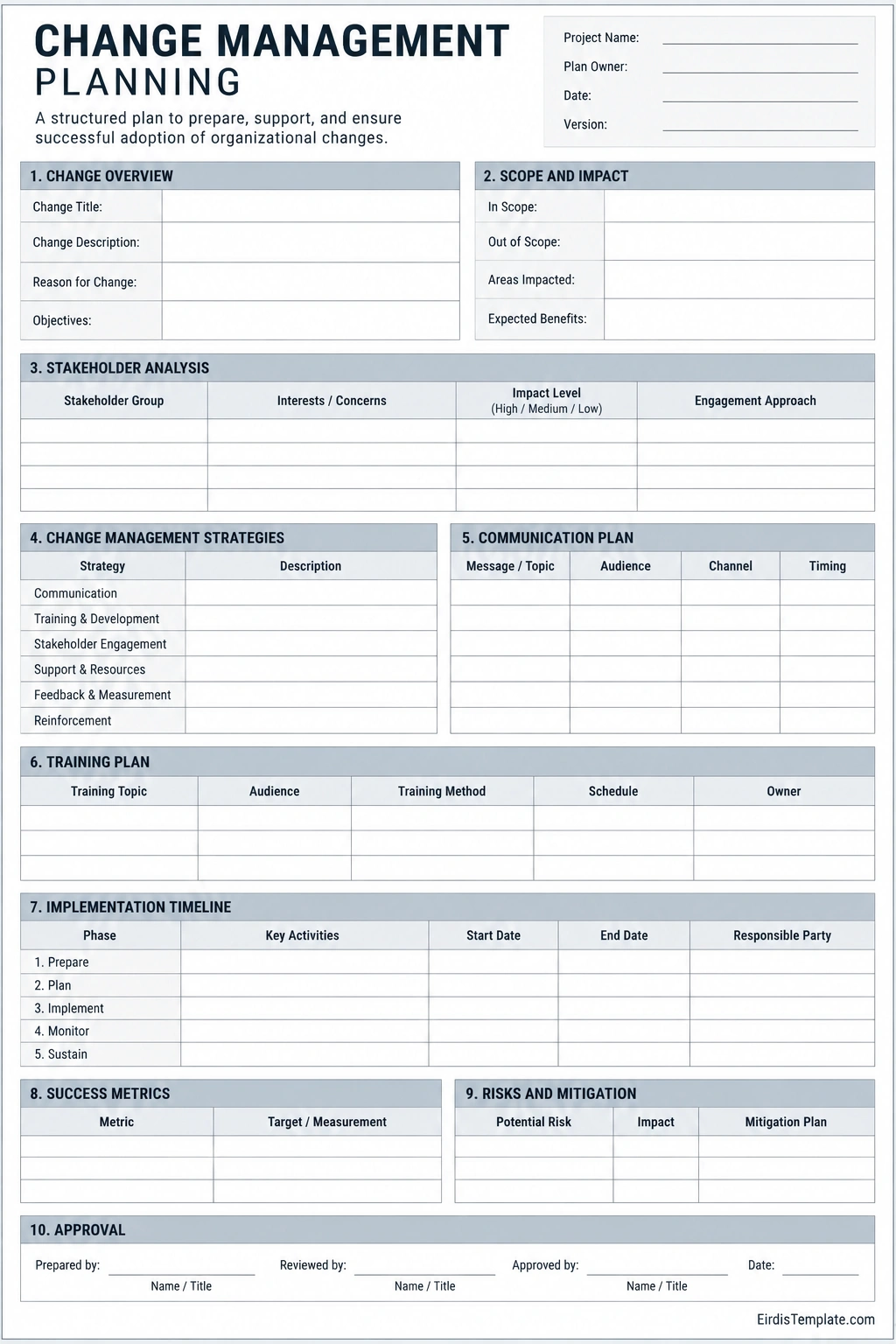
Customize the template to match the scale and complexity of your initiative. A small process update may require only a brief plan, while a company-wide transformation may need detailed stakeholder assessments, separate communication schedules, and formal approval checkpoints.
Key Components of a Change Management Plan
A useful plan connects the reason for change with the actions required to help people adopt it. The following components provide a strong starting point.
1. Change Overview and Objectives
Describe what is changing, why the change is necessary, and what the organization expects to achieve. Define the desired future state and explain how the change supports business priorities.
Include clear objectives wherever possible. For example, an organization implementing new customer service software might aim to standardize workflows, improve response times, or reduce manual data entry.
2. Scope and Impact Assessment
Identify which departments, roles, locations, processes, and systems will be affected. Clarify what is included in the change and what falls outside its scope.
Assess how daily responsibilities may change. Consider the impact on workloads, skills, reporting relationships, customer interactions, and existing procedures. This assessment helps determine where additional communication or training is needed.
3. Stakeholder Analysis
List the people and groups who influence or experience the change. Their concerns and level of involvement may differ, so the plan should identify an appropriate engagement approach for each group.
- Executive sponsors: Provide direction, visible support, and decision-making authority.
- Managers: Explain the change to their teams and identify local concerns.
- Employees: Learn and apply the new processes, tools, or responsibilities.
- Project team: Coordinates delivery activities and works with change leaders.
- Customers or external partners: Receive updates or guidance when the change affects them.
4. Communication Plan
A communication plan explains what information will be shared, who needs to receive it, which channels will be used, and when messages will be delivered.
Different audiences may need different levels of detail. Executives may need information about business outcomes and risks, while employees may need practical instructions about how their daily work will change.
Useful communication channels include team meetings, email updates, internal announcements, manager briefings, frequently asked questions, and dedicated project pages. Provide opportunities for questions and feedback instead of relying entirely on one-way announcements.
5. Training and Support
Identify the knowledge and skills people will need after implementation. Determine who requires training, which topics should be covered, how training will be delivered, and who will provide ongoing assistance.
Depending on the change, support may include workshops, demonstrations, short instructional videos, written procedures, practice sessions, help desks, or peer support. Training should be scheduled close enough to implementation that people can apply what they learn.
6. Implementation Timeline and Responsibilities
Break the change into manageable phases with milestones, target dates, dependencies, and accountable owners. Common phases include preparation, planning, implementation, monitoring, and reinforcement.
Assign clear responsibility for each activity. When ownership is unclear, important tasks such as training preparation, stakeholder updates, or post-launch support can be overlooked.
7. Success Metrics
Define how the organization will determine whether the change has been adopted and whether it is producing the intended results. Combine measures of participation and adoption with measures of business performance.
- Training completion rates
- Employee awareness and readiness survey results
- Usage or adoption rates for a new system
- Process compliance or error rates
- Customer satisfaction or service quality
- Achievement of project and operational objectives
Set a baseline and a realistic target where possible. Choose measures that reflect the change’s actual goals rather than tracking activity without understanding its impact.
8. Risks and Mitigation Actions
Identify factors that could delay adoption or disrupt operations. Common risks include limited employee availability, insufficient training, unclear leadership messages, technical problems, and concerns about new responsibilities.
For each major risk, document its potential impact, likelihood, mitigation action, and responsible owner. Review risks regularly as the implementation progresses.
How to Create a Change Management Plan Step by Step
Use the following process to develop a plan that is practical, measurable, and suited to your organization.
Step 1: Define the Reason for Change
Start by documenting the problem, opportunity, or business requirement driving the initiative. Explain why the current state needs to change and what could happen if the organization does nothing.
Step 2: Identify Affected Groups
Determine who will experience the change and how their work may be affected. Consult representatives from different groups to validate assumptions and identify concerns that may not be visible to the project team.
Step 3: Assess Readiness and Potential Resistance
Review existing skills, workload, leadership support, organizational culture, and previous change experiences. Use surveys, interviews, workshops, or manager feedback to understand where additional support may be necessary.
Step 4: Develop Communication and Training Activities
Create a schedule that connects each audience with the information and learning opportunities they need. Assign an owner to every activity and provide a way for participants to ask questions or report problems.
Step 5: Coordinate the Plan With Project Delivery
Align change activities with the technical or operational implementation schedule. Training, communications, and support arrangements should be ready before people are expected to use the new process or system.
Step 6: Monitor Adoption and Adjust
Collect feedback and review the success measures after launch. If adoption is lower than expected, investigate the reasons before choosing a response. People may need more practice, clearer instructions, better system access, or additional management support.
Step 7: Reinforce and Sustain the Change
Continue support after implementation. Share progress, recognize improvements, address recurring issues, and update procedures as necessary. A change is more likely to last when the new way of working becomes part of normal operations.
Common Change Management Planning Mistakes
Even a detailed plan can fail if it overlooks the practical needs of the people affected. Avoid these common mistakes:
- Communicating too late: Share the purpose and expected impact early enough for people to prepare.
- Using the same message for everyone: Tailor communication to each audience’s responsibilities and concerns.
- Ignoring employee feedback: Provide channels for questions and use feedback to improve implementation.
- Underestimating training needs: Allow sufficient time for practice, support, and follow-up.
- Failing to assign owners: Give every major activity a clear responsible person or team.
- Measuring only completion: Assess actual adoption and business outcomes, not just whether tasks were delivered.
- Stopping support too soon: Continue monitoring and reinforcement after launch.
Frequently Asked Questions About Change Management Planning
What is the main purpose of change management planning?
The main purpose is to prepare and support people through an organizational transition. It helps coordinate communication, stakeholder engagement, training, risk management, and adoption measurement while reducing avoidable disruption.
What should a change management plan include?
A change management plan typically includes the change overview, objectives, scope, impact assessment, stakeholder analysis, communication strategy, training plan, timeline, responsibilities, success metrics, risks, and approval requirements.
Who is responsible for change management planning?
Responsibility varies by organization. A change manager, project manager, HR professional, business leader, or dedicated change team may coordinate the plan. Successful implementation also requires support from sponsors, managers, and the people affected by the change.
What is the difference between change management and project management?
Project management focuses on delivering the required solution, such as a new system or process. Change management focuses on helping people understand, adopt, and sustain that solution. The two disciplines should be coordinated to achieve the intended business outcomes.
How long should a change management plan be?
There is no universal length. A small operational change may need only a few pages, while a large transformation may require detailed assessments, communication schedules, training plans, and supporting documents. The plan should be detailed enough to guide action without creating unnecessary administration.
How do you measure the success of change management?
Measure whether affected people understand the change, complete required training, adopt the new process, and sustain the expected behaviors. Combine these indicators with relevant business outcomes, such as improved service quality, fewer errors, or achievement of project objectives.
Can I use a change management planning template for any project?
A general template can be adapted for many initiatives, including software implementation, restructuring, policy updates, process improvements, and cultural change. Customize the sections to match the project’s size, risk, stakeholders, and organizational requirements.
Conclusion
Change management planning provides a structured way to prepare people, coordinate activities, and support successful organizational transitions. By defining objectives, assessing stakeholder impact, communicating clearly, delivering appropriate training, and measuring adoption, organizations can reduce confusion and improve the likelihood that a change will deliver lasting benefits.
Start with a practical change management planning template, assign clear responsibilities, and review the plan as conditions evolve. Most importantly, treat change as a process that involves people, not simply a project milestone. Consistent support and reinforcement help turn a planned transition into sustainable results.
Download: Change Management Planning Template

- Change Management Planning Template - October 26, 2026
- Certificate of Recognition Template - October 26, 2026
- Certificate of Participation Template - October 26, 2026
