Stakeholder analysis is a structured process for identifying, understanding, and prioritizing the people, groups, or organizations that have an interest in a project, program, or organization. It helps project teams understand who can influence outcomes, who may be affected by decisions, and how different stakeholders should be engaged throughout the work.
A project can have many stakeholders with different expectations, levels of influence, concerns, and priorities. Some may actively support an initiative, while others may have limited interest or raise concerns about how changes will affect them. Without a clear understanding of these differences, communication can become inefficient and important concerns may be overlooked.
A well-organized stakeholder analysis provides a practical foundation for communication planning, relationship management, risk identification, and decision-making. By understanding stakeholders early, teams can develop appropriate engagement strategies and increase the likelihood of achieving project objectives.
What Is Stakeholder Analysis?
Stakeholder analysis is the process of collecting and evaluating information about stakeholders who may affect or be affected by a project or organizational initiative.
The analysis typically considers factors such as stakeholder interest, influence, impact, expectations, concerns, and relationship to the project. The resulting information can then be used to determine how frequently each stakeholder should receive updates, how closely they should be involved, and what type of communication is most appropriate.
Stakeholder analysis is commonly used in project management, business planning, organizational change, product development, construction, technology projects, nonprofit initiatives, and strategic planning.
Why Is Stakeholder Analysis Important?
Stakeholder analysis helps teams move beyond simply creating a list of people involved in a project. It provides a clearer picture of the relationships, expectations, and potential influence surrounding an initiative.
Understanding stakeholders can help a project team:
- Identify important individuals and groups early.
- Understand stakeholder expectations and concerns.
- Recognize potential sources of support or resistance.
- Prioritize communication and engagement efforts.
- Identify potential project risks related to stakeholder relationships.
- Improve collaboration and information sharing.
- Reduce misunderstandings and communication gaps.
- Support better planning and decision-making.
- Build stronger relationships throughout the project lifecycle.
The goal is not to treat every stakeholder identically. Instead, stakeholder analysis helps teams determine the appropriate level and type of engagement for different groups.
Who Is a Stakeholder?
A stakeholder is an individual, group, or organization that has an interest in a project or may influence or be affected by its activities or outcomes.
Stakeholders can be internal or external. Their relationship with a project can also change over time, which is why stakeholder analysis should not necessarily be treated as a one-time activity.
Internal Stakeholders
Internal stakeholders may include people within the organization responsible for or affected by the project.
- Project sponsors
- Project managers
- Employees
- Department leaders
- Executives
- Project team members
- Product owners
- Internal subject matter experts
External Stakeholders
External stakeholders are individuals or organizations outside the project team or organization that may have an interest in the outcome.
- Customers
- Suppliers
- Contractors
- Business partners
- Community groups
- Regulators
- Investors
- Industry organizations
The exact stakeholder groups will depend on the project’s purpose, industry, scope, and organizational environment.
Key Elements of Stakeholder Analysis
A useful stakeholder analysis usually considers several characteristics for each stakeholder. The goal is to create enough information to support practical engagement decisions.
Stakeholder Name and Role
Begin by identifying the stakeholder and describing their role or relationship to the project. This makes it easier to understand why the person or group matters.
Interest
Interest represents how much a stakeholder cares about the project or its outcome. A stakeholder with high interest may want frequent information and opportunities to provide feedback, while someone with low interest may only need occasional updates.
Influence
Influence refers to a stakeholder’s ability to affect decisions, resources, project direction, or outcomes. A stakeholder with significant decision-making authority may require more direct and frequent engagement.
Impact
Impact considers how significantly the project may affect the stakeholder. A stakeholder can have limited decision-making authority but still experience substantial effects from the project’s outcome.
Expectations and Concerns
Documenting expectations, priorities, concerns, and potential objections can help the project team anticipate communication needs and address important issues before they become larger problems.
Engagement Strategy
The final step is determining how the stakeholder should be engaged. Strategies can range from regular collaboration and consultation to periodic updates or basic monitoring.
How to Conduct a Stakeholder Analysis
A stakeholder analysis can be completed through a series of practical steps. The process does not have to be complicated, but it should be systematic enough to capture the stakeholders who matter to the project’s success.
Step 1: Identify All Potential Stakeholders
Start by creating a broad list of individuals, groups, departments, organizations, and other parties that may influence or be affected by the project.
Consider the project’s customers, leadership, employees, suppliers, partners, regulators, community members, and other relevant groups. At this stage, it is generally better to capture potential stakeholders first and prioritize them later.
Step 2: Gather Stakeholder Information
For each stakeholder, record relevant information such as their role, interest, influence, potential impact, expectations, concerns, and relationship with the project.
Information may come from project documentation, interviews, workshops, organizational knowledge, surveys, or discussions with project team members.
Step 3: Assess Interest and Influence
Evaluate each stakeholder based on their level of interest and influence. A simple low, medium, and high scale can make the assessment easier to understand.
For example, a senior decision-maker may have high influence even if they have limited day-to-day interest in the project. A customer group may have high interest but less direct influence over project decisions.
Step 4: Map Stakeholders
Use the interest and influence assessment to place stakeholders on a stakeholder matrix. This visual representation makes it easier to identify which relationships deserve the greatest attention.
Step 5: Develop Engagement Strategies
Determine how each stakeholder should be managed. Consider the information they need, how frequently they should be contacted, which communication channels are appropriate, and whether they should participate directly in decisions.
Step 6: Review and Update the Analysis
Stakeholder relationships can change as a project progresses. New stakeholders may become involved, priorities may change, and levels of influence may increase or decrease. Review the analysis periodically and update it when necessary.
Stakeholder Influence and Interest Matrix
One of the most common stakeholder analysis techniques is the influence-interest matrix. It organizes stakeholders according to two dimensions: their level of influence and their level of interest.
High Influence and High Interest
These stakeholders generally require close engagement because they have both a strong interest in the project and significant ability to influence its outcome.
Communication may include regular meetings, progress updates, decision discussions, feedback sessions, and active collaboration.
High Influence and Low Interest
These stakeholders may not require constant communication, but their influence means the project team should keep them satisfied and informed about important developments.
Low Influence and High Interest
These stakeholders may have limited authority but a strong interest in the project. Keeping them informed and providing appropriate opportunities for feedback can help maintain a constructive relationship.
Low Influence and Low Interest
These stakeholders generally require less intensive engagement. The project team can monitor them and provide information when relevant or when their level of interest or influence changes.
Stakeholder Engagement Strategies
Stakeholder analysis becomes most useful when it leads to specific engagement actions. Different stakeholders may require different communication approaches.
- Manage closely: Collaborate regularly, involve stakeholders in important decisions, and address concerns promptly.
- Keep satisfied: Provide important updates and maintain a positive relationship without unnecessary communication.
- Keep informed: Share relevant progress information and provide opportunities for feedback.
- Monitor: Maintain awareness of changes while using a lighter communication approach.
These categories are not permanent. A stakeholder may move from one category to another as project circumstances change.
Stakeholder Analysis in Project Management
Project managers can use stakeholder analysis during project initiation, planning, execution, and monitoring. Early analysis can help identify decision-makers, potential supporters, affected groups, and sources of potential conflict.
During planning, stakeholder information can support the creation of a communication management plan and engagement strategy. During execution, the analysis can help project managers determine where communication and relationship management require additional attention.
Stakeholder analysis can also support risk management. A stakeholder who controls an important resource, approval, dependency, or decision may represent a significant project consideration even if they are not part of the project team.
Common Stakeholder Analysis Mistakes
Several common mistakes can reduce the usefulness of a stakeholder analysis.
- Creating an incomplete stakeholder list: Important external or indirect stakeholders may be overlooked.
- Treating every stakeholder equally: Different stakeholders often require different engagement approaches.
- Ignoring stakeholder concerns: Concerns can provide valuable information about project risks and communication needs.
- Making assumptions without evidence: Whenever possible, validate important assumptions through discussions, research, or stakeholder feedback.
- Failing to update the analysis: Stakeholder influence and interest can change throughout a project.
- Focusing only on influence: Stakeholders with lower influence may still experience significant project impacts.
- Creating the analysis but taking no action: The value of stakeholder analysis comes from turning information into practical engagement strategies.
Tips for Creating an Effective Stakeholder Analysis
Keep the analysis practical and focused on information that will actually support project decisions and stakeholder engagement.
- Start the analysis early in the project.
- Use clear and consistent criteria for interest and influence.
- Separate facts from assumptions.
- Document stakeholder concerns and expectations.
- Identify communication preferences where relevant.
- Connect stakeholder findings to project risks.
- Define specific engagement actions.
- Review the analysis at important project milestones.
- Update stakeholder priorities when circumstances change.
- Keep sensitive stakeholder information appropriately controlled.
Using a Stakeholder Analysis Template
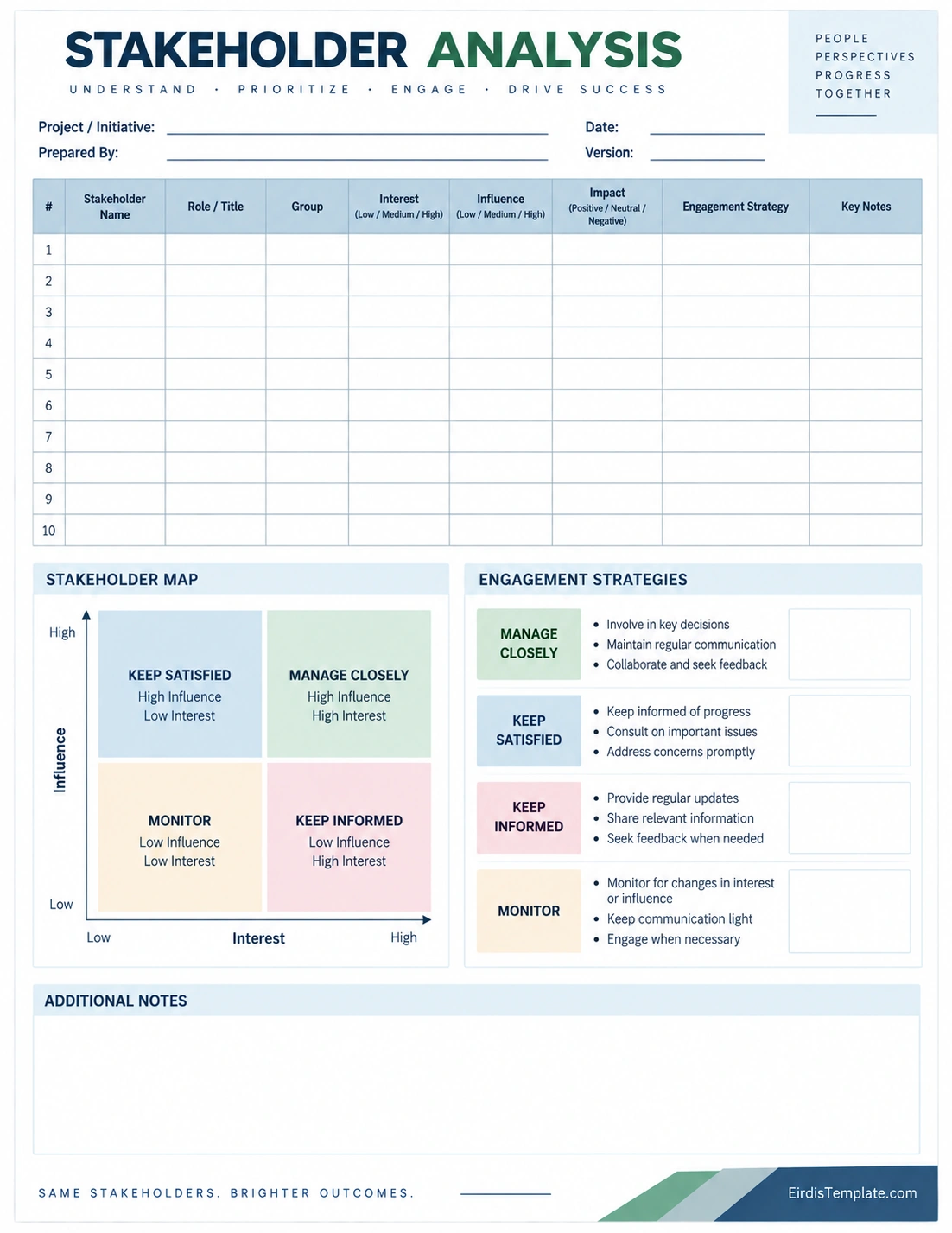
A stakeholder analysis template can simplify the process by providing predefined areas for recording stakeholder information. Instead of creating a new worksheet from scratch, a team can use a structured format to document stakeholder names, roles, interest, influence, impact, engagement strategies, and notes.
A stakeholder analysis worksheet can also include a stakeholder matrix or influence-interest map. This provides a visual summary that makes stakeholder priorities easier to discuss during project meetings and planning sessions.
When using a template, customize the categories to fit the project. A small internal project may require only a simple stakeholder list, while a complex organizational initiative may require more detailed information about influence, impact, communication preferences, risks, and engagement activities.
Stakeholder Analysis Checklist
Before finalizing your analysis, check that you have covered the following areas:
- Identify internal and external stakeholders.
- Record each stakeholder’s role or relationship to the project.
- Assess stakeholder interest.
- Assess stakeholder influence.
- Consider the potential impact on each stakeholder.
- Document major expectations and concerns.
- Map stakeholders using an appropriate matrix.
- Define an engagement strategy for important stakeholders.
- Identify communication needs.
- Review stakeholder-related project risks.
- Schedule periodic reviews of the analysis.
- Update the stakeholder list when project circumstances change.
Conclusion
Stakeholder analysis is an important project and organizational planning tool because it helps teams understand who matters to an initiative, what those stakeholders expect, how much influence they have, and how the project may affect them.
A structured analysis can improve communication, reveal potential risks, support collaboration, and help project teams focus their engagement efforts where they are most useful. The process is especially valuable when stakeholder relationships are complex or when a project involves multiple groups with different priorities.
By identifying stakeholders early, assessing their interest and influence, mapping their priorities, and creating appropriate engagement strategies, teams can build a more organized approach to stakeholder management. A well-maintained stakeholder analysis template makes this process easier to document, review, and update throughout the project lifecycle.
Download: Stakeholder Analysis Template

- Free Printable Weekly Lesson Planner Template - September 23, 2026
- Free Printable Wedding Day Timeline Template - September 23, 2026
- Free Printable Stakeholder Analysis Template - September 23, 2026
