A car sale agreement is an important document that records the terms of a vehicle sale between a buyer and a seller. It identifies the parties, describes the vehicle, states the purchase price, and explains the conditions of the transaction. By putting these details in writing, both parties have a clear record of what they agreed to before ownership changes hands.
Whether you are selling a used car privately or buying a vehicle directly from its current owner, a written car sale agreement can help prevent misunderstandings. It can document the payment arrangement, vehicle condition, known defects, title transfer responsibilities, and the date of sale. These details may also be useful when completing registration, insurance, or other vehicle ownership procedures.
A car sale agreement template makes it easier to organize the essential information in one document. This guide explains what the agreement should include, how to prepare one, and what buyers and sellers should check before signing. Because vehicle sale and title-transfer requirements vary by location, the document should be adapted to applicable local rules.
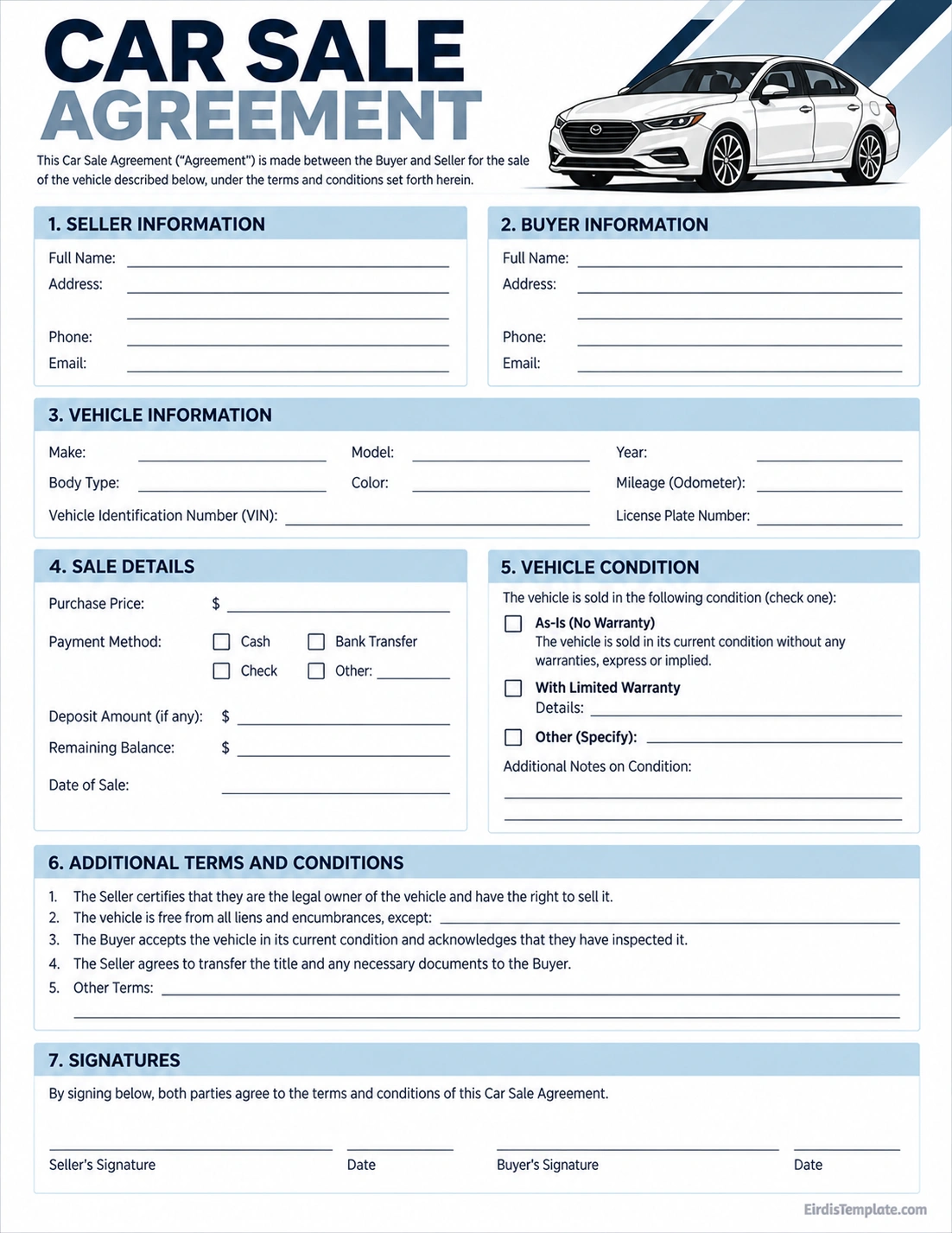
What Is a Car Sale Agreement?
A car sale agreement is a written contract between a vehicle seller and a buyer. It records the terms under which the seller agrees to transfer the vehicle and the buyer agrees to purchase it. The agreement typically includes the vehicle’s identifying information, the sale price, payment arrangements, and any conditions agreed upon by the parties.
People commonly use a car sale agreement when buying or selling a used vehicle privately. A dealership may use its own sales contract and supporting paperwork instead. In either situation, the purpose is to document the transaction clearly and establish a reference if questions arise later.
A car sale agreement may help the parties:
- Record the sale: Document the agreed price, sale date, and identity of the buyer and seller.
- Identify the vehicle: Record details such as the make, model, year, VIN, and odometer reading.
- Clarify payment terms: Explain deposits, payment methods, and any remaining balance.
- Describe vehicle condition: Record disclosed defects, inspection findings, and agreed condition terms.
- Coordinate ownership transfer: Identify the documents and steps needed to complete the transfer.
- Reduce misunderstandings: Give both parties a written record of their agreement.
A car sale agreement is sometimes called a vehicle sale agreement or motor vehicle purchase agreement. A bill of sale is a related document that records the sale and transfer details. The documents may overlap, but local authorities may require specific forms for registration or title transfer.
Why Is a Car Sale Agreement Important?
A written agreement helps buyers and sellers understand the transaction before they exchange payment and vehicle documents. It can also support better recordkeeping after the sale is completed.
Protects Both Buyer and Seller
The agreement records the terms accepted by both parties. It can help clarify what was promised, which documents must be provided, and when payment and vehicle delivery will occur. A clear written record may reduce disputes, although it cannot eliminate every legal risk.
Documents the Purchase Price and Payment
Recording the purchase price helps establish the financial terms of the sale. If the buyer pays a deposit and settles the balance later, the agreement should explain the amount already paid, the remaining balance, and the payment deadline.
For larger transactions, the parties should consider using a secure payment method and confirming that the payment has cleared before completing the handover.
Records the Vehicle’s Condition
Used vehicles may have scratches, mechanical problems, accident history, or other conditions that affect their value. Recording known issues and the terms of the sale helps both parties understand what has been disclosed and accepted.
Buyers should still inspect the vehicle and consider an independent mechanical inspection. A signed agreement does not replace due diligence or automatically resolve questions about undisclosed defects.
Supports Registration and Insurance Procedures
A completed agreement may be useful when arranging insurance or documenting a vehicle purchase. However, registration authorities may require a separate bill of sale, title certificate, tax form, transfer application, or other official documents. Check the requirements in the relevant jurisdiction before finalizing the transaction.
What to Include in a Car Sale Agreement Template
A useful car sale agreement template should identify the parties, describe the vehicle, and explain the key financial and transfer terms. The following sections provide a practical starting point.
Buyer and Seller Information
Include the full legal names and relevant contact details of both parties. Add addresses or other information where required for identification and official transfer paperwork. Check that the details match the documents used for the transaction.
For privacy, collect and share only the personal information needed to complete the sale and comply with applicable requirements.
Vehicle Identification Details
Describe the vehicle accurately so the agreement clearly identifies the item being sold. Common details include:
- Make and model.
- Model year.
- Vehicle identification number (VIN) or the locally applicable vehicle identifier.
- License plate or registration number.
- Body style and color, where useful.
- Odometer reading at the time of sale.
Compare the information with the vehicle and ownership documents. Correct identification details are particularly important when completing title or registration paperwork.
Purchase Price and Payment Terms
State the agreed purchase price and currency. Explain the payment method, any deposit, the remaining balance, and when payment is due. If the parties agree to installments or another payment arrangement, record the schedule and relevant conditions clearly.
Include a statement confirming the amount received only when the payment has actually been made. Avoid describing the transaction as fully paid while any agreed balance remains outstanding.
Vehicle Condition and Disclosures
Describe the vehicle’s condition and record known issues that the seller has disclosed. The parties may document visible damage, mechanical concerns, modifications, included accessories, or inspection results.
If the sale is intended to be made “as is,” explain that term carefully and verify its effect under applicable law. Such wording may not remove every seller obligation or override mandatory consumer protections. Any express warranty or specific promise should be documented accurately.
Ownership and Title Transfer
Identify the documents the seller will provide and the steps each party must take to complete the transfer. Depending on the location, this may include the vehicle title, registration documents, a signed transfer form, tax documentation, or an official bill of sale.
The seller should confirm their authority to sell the vehicle and disclose any known liens or other restrictions that could affect the transfer. If a loan or lien remains on the vehicle, the parties should establish a lawful process for resolving it before ownership is transferred.
Sale Date and Vehicle Handover
Record the date of sale and, where useful, the time and location of delivery. State when the buyer will receive the vehicle, keys, and agreed accessories or documents. The parties should also confirm who is responsible for completing any remaining administrative steps.
Signatures and Additional Terms
Include signature and date fields for the buyer and seller. Add space for any other agreed conditions, such as included equipment, outstanding payments, delivery arrangements, or documents that will be provided later.
Both parties should review the entire agreement, correct any errors, and retain a copy of the signed document. Follow local requirements for witnesses, notarization, or official forms where applicable.
How to Prepare a Car Sale Agreement Step by Step
Preparing the agreement carefully helps the buyer and seller complete the transaction with fewer misunderstandings. Follow these steps before signing.
Verify the Seller and Vehicle
Confirm that the seller has the right to sell the vehicle. Compare the VIN and other identifying details with the vehicle’s documents. Check for outstanding liens, title restrictions, or other issues that could prevent a proper ownership transfer.
Inspect the Vehicle and Review Its History
The buyer should inspect the car, review available maintenance records, and ask about known defects or previous damage. An independent mechanic can help identify problems that may not be obvious during a basic inspection. Record any important disclosures or agreed repairs in writing.
Agree on the Price and Payment Method
Confirm the total purchase price, deposit, remaining balance, and payment method. If payment will occur in stages, document the schedule and the conditions for handing over the vehicle and ownership documents. Keep appropriate payment confirmations.
Complete the Agreement
Enter the buyer’s and seller’s details, vehicle information, sale terms, condition disclosures, and transfer responsibilities. Review every section together. Do not leave important terms ambiguous or rely on verbal promises that are not reflected in the written agreement.
Sign and Complete the Transfer
Both parties should sign the agreement and retain copies. Complete the official title, registration, tax, and insurance steps required in the relevant jurisdiction. Confirm when the vehicle, keys, and required documents are handed over.
Car Sale Agreement vs. Bill of Sale
A car sale agreement and a bill of sale both document a vehicle transaction, but their purpose and level of detail may differ.
- Car sale agreement: May explain the purchase price, payment schedule, vehicle condition, disclosures, transfer responsibilities, and additional terms agreed upon by the parties.
- Bill of sale: Often serves as a concise record of the buyer, seller, vehicle, purchase price, and date of sale.
Some transactions use a single document for both purposes. Others require separate paperwork. The correct approach depends on local law and the requirements of the registration authority. A private agreement should not be assumed to replace an official title or transfer document.
Tips for Using a Car Sale Agreement Template
A car sale agreement template can save time, but it should always reflect the actual transaction. Use these practical tips to make the document more reliable:
- Check every vehicle detail: Verify the VIN, registration number, model year, and odometer reading.
- Write the full purchase price: Include the currency and clearly state any deposit or remaining balance.
- Document known defects: Record relevant condition disclosures instead of relying only on verbal discussions.
- Clarify title transfer: Identify the documents and actions required from each party.
- Use clear payment terms: State when payment is due and when the vehicle will be handed over.
- Avoid blank spaces: Complete relevant fields or mark them as not applicable before signing.
- Keep supporting records: Retain payment confirmations, inspection reports, and copies of ownership documents as appropriate.
- Check local rules: Confirm any requirements for official transfer forms, signatures, witnesses, taxes, and registration.
For unusual transactions, such as sales involving liens, installment payments, multiple owners, or cross-border transfers, consider obtaining advice from a qualified legal professional before signing.
Frequently Asked Questions About Car Sale Agreements
Is a car sale agreement legally binding?
A car sale agreement may be legally binding if it satisfies the applicable requirements for a valid contract. Its enforceability depends on the terms, the parties’ circumstances, and local law. A generic template does not guarantee legal validity or replace required official transfer documents.
Can I use a car sale agreement for a private sale?
Yes. A car sale agreement is commonly used when an individual sells a vehicle to another individual. The parties should verify ownership, document the agreed terms, and complete the official transfer procedures required in their location.
Does a car sale agreement prove ownership?
It can provide evidence of the transaction, but it may not be sufficient on its own to establish or register legal ownership. A title certificate, registration record, or other official document may also be required.
Should the agreement include the vehicle’s condition?
Yes. Recording the vehicle’s known condition, disclosed defects, and relevant inspection findings helps establish what the parties understood at the time of sale. The wording should accurately reflect the transaction and applicable legal requirements.
Can a car sale agreement state that the vehicle is sold as is?
It may include an as-is provision where permitted by law. However, the effect of that provision varies by jurisdiction, and it may not override mandatory protections or every obligation relating to misrepresentation or disclosure. Both parties should understand the applicable rules before relying on this wording.
Do both the buyer and seller need to sign?
Having both parties sign is a common way to document their agreement. Additional formalities, such as witnesses, notarization, or official transfer forms, may be required depending on local rules and the type of transaction.
What documents should accompany a car sale agreement?
Depending on the jurisdiction, supporting documents may include the vehicle title, registration papers, official transfer forms, inspection reports, maintenance records, payment confirmation, and any required tax documents. Check the relevant authority’s requirements before completing the sale.
Conclusion
A car sale agreement provides a written record of a vehicle transaction and helps buyers and sellers understand their rights, responsibilities, and agreed terms. By documenting vehicle details, the purchase price, payment arrangements, condition disclosures, and ownership transfer steps, both parties can approach the sale with greater clarity.
Using a car sale agreement template makes it easier to prepare a consistent document, but accuracy is essential. Verify the vehicle information, review the payment terms, disclose known issues, and complete all required transfer procedures. A carefully prepared agreement can support a smoother transaction and provide a useful record for future reference.
Download: Car Sale Agreement Template

- Car-Buying Agreement Template - October 13, 2026
- Car Sale Agreement Template - October 13, 2026
- Car Repair Invoice Template - October 13, 2026
