A Chore Chart List is a simple way to organize household tasks, establish routines, and help family members understand their responsibilities. Instead of relying on reminders or trying to remember every task, you can use a chore chart to track daily, weekly, and monthly chores in one convenient place.
Whether you are creating a cleaning routine for your family, teaching children responsibility, or organizing your own household schedule, a printable chore chart list can make everyday tasks easier to manage. You can customize the list to fit your home, assign chores to different family members, and check off completed tasks throughout the week.
In this guide, you will find practical chore ideas for different schedules, tips for creating an effective household chore chart, and advice for making chores manageable for children and adults. You will also find a printable chore chart template preview to help you get started.
What Is a Chore Chart List?
A chore chart list is an organized record of household tasks that need to be completed regularly. It may include daily cleaning tasks, weekly household responsibilities, and monthly maintenance activities.
Most chore charts use a table with task names and checkboxes. Some include columns for each day of the week, while others provide spaces for names, due dates, rewards, or notes.
A printable household chore chart can be used by individuals, couples, roommates, and families with children. The goal is to make responsibilities visible, manageable, and easier to track.
Why Use a Household Chore Chart?
A chore chart can help create a more organized home by turning general expectations into specific tasks. When everyone understands what needs to be done, household routines can become easier to maintain.
1. Keeps Household Tasks Organized
A written list helps you remember routine responsibilities, from making beds to cleaning bathrooms. Grouping tasks by frequency makes it easier to plan your time and avoid leaving everything until the weekend.
2. Builds Consistent Habits
Repeating small tasks regularly can help establish sustainable routines. A daily chore chart encourages consistency, while a weekly or monthly schedule helps you remember less frequent cleaning and maintenance tasks.
3. Encourages Shared Responsibility
When household chores are visible, family members can see how responsibilities are distributed. A shared chart can help reduce confusion and encourage everyone to contribute in an age-appropriate way.
4. Helps Children Learn Responsibility
Children can use a chore chart to practice following instructions, completing simple tasks, and taking care of their belongings. Checkboxes and clear expectations can make responsibilities easier to understand.
5. Reduces Mental Clutter
Keeping chores in one place reduces the need to remember every task. You can review the chart at the beginning of the week, check progress throughout the day, and adjust the schedule when necessary.
Free Printable Chore Chart List Template
A printable chore chart list template provides a structured way to organize household responsibilities. A useful layout separates daily, weekly, and monthly chores and includes checkboxes for tracking progress.
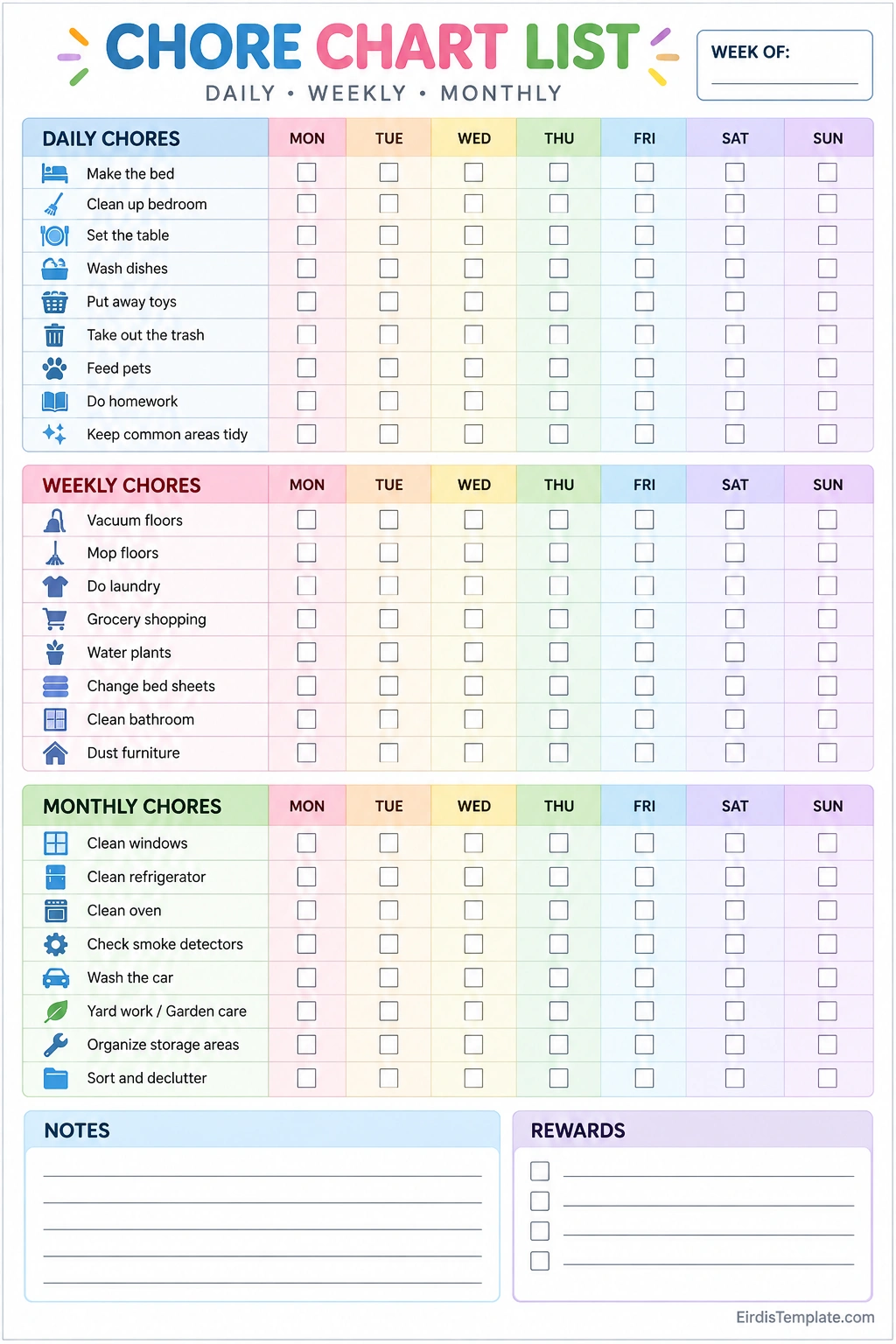
You can use the template as a starting point and customize the tasks to suit your household. Remove chores that do not apply, add your own responsibilities, and decide whether to assign each task to a particular family member.
Daily Chore Chart List Ideas
Daily chores are small tasks that help keep your home tidy and prevent mess from accumulating. Choose a manageable set of responsibilities rather than trying to complete every household task each day.
Bedroom and Personal Tasks
- Make the bed.
- Put dirty clothes in the laundry basket.
- Put away toys, books, and personal belongings.
- Keep the bedroom floor clear.
- Organize the desk or bedside table.
Kitchen and Dining Tasks
- Clear the dining table after meals.
- Wash dishes or load the dishwasher.
- Wipe kitchen counters.
- Put food and ingredients away.
- Take out the trash when needed.
Shared Household Tasks
- Tidy common areas.
- Feed pets according to their care schedule.
- Put shoes and bags in their designated places.
- Return shared items to their proper storage areas.
- Complete a quick evening tidy-up.
Daily tasks should usually be brief enough to fit into an ordinary routine. You can divide them between morning, afternoon, and evening to make the workload easier to manage.
Weekly Chore Chart List Ideas
Weekly chores usually require more time than daily tidying. Scheduling them across several days can prevent the entire housework routine from becoming overwhelming.
Cleaning Tasks
- Vacuum carpets and rugs.
- Sweep and mop hard floors.
- Clean bathroom sinks, mirrors, and surfaces.
- Dust furniture and shelves.
- Change bed sheets.
- Clean frequently touched surfaces.
Laundry and Household Organization
- Wash and fold laundry.
- Put clean clothes away.
- Organize the refrigerator and check food freshness.
- Restock essential household supplies.
- Water indoor plants according to their needs.
Planning and Errands
- Prepare a grocery list.
- Shop for groceries and household essentials.
- Plan meals for the coming week.
- Review the family calendar.
- Prepare school bags or work items for the next week.
Assigning one or two larger chores to each day can make weekly cleaning more manageable. For example, you might clean bathrooms on Tuesday, handle laundry on Wednesday, and vacuum the house on Saturday.
Monthly Chore Chart List Ideas
Monthly chores focus on areas that do not need attention every day or every week. Adding them to your printable chore chart can help you remember maintenance tasks that are easy to overlook.
- Clean windows and window tracks.
- Clean refrigerator shelves and drawers.
- Clean the oven according to the manufacturer’s instructions.
- Wash washable curtains or clean window coverings as appropriate.
- Organize closets and storage areas.
- Sort unused belongings for donation or disposal.
- Check smoke detectors and carbon monoxide alarms according to manufacturer guidance.
- Inspect household supplies and replace expired items safely.
- Clean accessible vents and fan covers where appropriate.
- Review the household maintenance checklist.
Some tasks may need to be completed more or less frequently depending on your home, appliances, and local conditions. Follow manufacturer instructions and safety guidance for equipment and maintenance tasks.
Age-Appropriate Chore Chart Ideas for Kids
A chore chart for kids should match their abilities, attention span, and level of independence. Start with simple tasks and introduce additional responsibilities gradually as children develop new skills.
Chores for Preschoolers
- Put toys into a storage bin.
- Place books on a low shelf.
- Put dirty clothes in a laundry basket.
- Help place napkins on the table.
- Put away safe, lightweight belongings.
Chores for Elementary-Age Children
- Make the bed.
- Keep the bedroom tidy.
- Feed pets with adult supervision where needed.
- Help sort laundry.
- Set and clear the table.
- Wipe appropriate surfaces using child-safe supplies.
Chores for Teenagers
- Do their own laundry.
- Prepare simple meals with appropriate safety skills.
- Clean the bathroom.
- Vacuum and mop floors.
- Help plan meals and grocery lists.
- Manage a regular household cleaning assignment.
Always supervise children according to their age and abilities. Keep cleaning chemicals, sharp tools, hot appliances, and other hazardous items away from children who cannot use them safely.
How to Create an Effective Chore Chart
A chore chart works best when it is realistic, easy to understand, and simple to maintain. Follow these steps to build a household chore system that fits your routine.
Step 1: List All Household Tasks
Write down the chores your household needs to complete. Include cleaning, laundry, meal preparation, pet care, organizing, and routine maintenance.
Step 2: Group Tasks by Frequency
Separate tasks into daily, weekly, and monthly categories. This makes it easier to plan when each responsibility should be completed.
Step 3: Assign Responsibilities
Decide who will handle each task. Consider each person’s schedule, abilities, preferences, and existing responsibilities. Distribute the workload fairly rather than assigning every difficult task to one person.
Step 4: Set Clear Expectations
Use specific task descriptions. For example, “wipe the kitchen counters and dining table” is clearer than simply writing “clean kitchen.”
Step 5: Choose a Tracking Method
Use checkboxes, initials, colored markers, or a simple completion column. A printable chore chart can be placed somewhere visible, such as a family command center, kitchen noticeboard, or home office.
Step 6: Review and Adjust Weekly
Check which tasks were completed and which were difficult to manage. Adjust the schedule when necessary, especially when family routines, school schedules, or work commitments change.
Should You Include Rewards in a Chore Chart?
A reward system can help some children stay motivated, especially when they are learning a new routine. However, rewards are optional. A chore chart can also work through clear expectations, encouragement, and shared responsibility.
If you choose to include rewards, keep them simple and appropriate for the child’s age. Possible ideas include:
- Choosing a family game or movie.
- Picking a weekend activity.
- Extra time for a favorite hobby.
- Choosing a meal or snack for the family.
- Working toward a larger shared goal.
Explain how the reward system works before the week begins. Avoid making basic care, affection, or essential needs conditional on completing chores. The purpose is to encourage positive habits, not create unnecessary pressure.
Common Chore Chart Mistakes to Avoid
Even a well-designed chore chart can become difficult to maintain if it is too complicated. Avoid these common problems:
- Listing too many chores: Start with a manageable number of tasks and add more gradually.
- Using unclear instructions: Describe each responsibility in simple, specific language.
- Ignoring age and ability: Choose tasks that each person can complete safely.
- Assigning an unfair workload: Consider the time and effort required for each chore.
- Forgetting to review the chart: Check progress regularly and adjust the schedule when needed.
- Making the system too complicated: Keep tracking simple enough that everyone can use it.
- Expecting perfection immediately: Allow time for family members to learn the routine and develop consistency.
Frequently Asked Questions
What should be included in a Chore Chart List?
A chore chart list can include daily tasks, weekly cleaning responsibilities, monthly maintenance, assigned family members, checkboxes, notes, and optional rewards. The best layout depends on your household’s needs.
How many chores should be on a chore chart?
There is no universal number. Start with a manageable list of essential tasks and add responsibilities as the routine becomes established. Children generally benefit from a smaller number of clear, age-appropriate chores.
What is the difference between a daily and weekly chore chart?
A daily chore chart tracks recurring tasks such as making beds and tidying shared areas. A weekly chore chart covers less frequent activities such as vacuuming, changing bed sheets, and cleaning bathrooms. One printable chart can include both schedules.
At what age can children start doing chores?
Children can begin helping with simple, safe tasks when they are developmentally ready, often during the preschool years. The specific chores should match their abilities, and adults should supervise tasks that involve potential hazards.
Should a chore chart include rewards?
Rewards are optional. Some families find that small incentives help children build new habits, while others prefer encouragement and shared responsibility. Choose an approach that supports cooperation without creating excessive pressure.
How often should I update my household chore chart?
Review it weekly to check progress and adjust assignments. You may also need to update it when schedules change, children develop new skills, or seasonal household tasks become necessary.
Can adults use a chore chart too?
Yes. Adults, couples, and roommates can use a household chore chart to divide responsibilities, track cleaning tasks, and coordinate schedules. A shared list can help everyone understand what needs to be done.
Conclusion
A Chore Chart List is a practical tool for organizing household responsibilities and building consistent routines. By separating tasks into daily, weekly, and monthly categories, you can make cleaning and home maintenance easier to plan.
Choose realistic chores, assign responsibilities fairly, and use a simple tracking system. If children are involved, select age-appropriate tasks and provide supervision when necessary. With regular reviews and small adjustments, a printable chore chart can help your household stay organized without making everyday tasks feel overwhelming.
Download: Chore Chart List Template

- Chore Chart for Family Template - October 28, 2026
- Printable Weekly Chore Chart Template - October 28, 2026
- Printable Teenage Chore Chart Template - October 28, 2026
