Keeping a commercial property clean requires clear expectations, consistent service, and reliable communication between the business owner and cleaning provider. A commercial cleaning agreement helps establish these expectations by documenting the cleaning services to be performed, the service schedule, payment terms, and responsibilities of both parties.
Whether you manage an office, retail store, medical facility, or other commercial property, having a written cleaning contract can help prevent misunderstandings and keep daily operations organized. It also gives the cleaning company a clear understanding of the client’s requirements and service expectations.
In this guide, you will learn what a commercial cleaning agreement includes, why it is important, and how to prepare one. You will also find a printable commercial cleaning agreement template that can help you organize the essential terms before signing a service contract.
What Is a Commercial Cleaning Agreement?
A commercial cleaning agreement is a written contract between a business or property manager and a professional cleaning service provider. It describes the cleaning tasks the contractor agrees to perform, how frequently the services will be provided, and how the client will pay for them.
The agreement may cover routine janitorial services, restroom sanitation, floor maintenance, trash removal, window cleaning, carpet vacuuming, and other property maintenance tasks. The exact services depend on the client’s requirements and the cleaning provider’s capabilities.
Unlike a simple verbal arrangement, a written commercial cleaning contract gives both parties a document they can refer to when questions arise. It can also explain procedures for handling missed services, additional work, schedule changes, and contract termination.
Why Is a Commercial Cleaning Agreement Important?
A clearly written cleaning service agreement benefits both the business hiring the contractor and the company providing the cleaning services.
1. Defines the Scope of Work
The agreement identifies exactly which areas and surfaces must be cleaned. This helps prevent disagreements about whether a particular task is included in the regular service.
2. Establishes a Cleaning Schedule
Commercial properties have different cleaning requirements. Some businesses need daily janitorial services, while others may only require weekly or monthly cleaning. A written schedule helps both parties understand when services are expected.
3. Clarifies Payment Terms
The contract explains the service fee, payment frequency, due dates, and accepted payment methods. Clear payment terms help reduce billing misunderstandings and support better financial planning.
4. Sets Responsibilities and Expectations
The agreement can explain which party supplies cleaning products, equipment, and access to the property. It can also establish expectations for staff conduct, property security, and reporting problems.
5. Provides a Written Reference
If a disagreement occurs, both parties can review the signed document to understand the original service requirements. A written agreement is especially useful when a cleaning arrangement continues for several months or years.
What Should a Commercial Cleaning Agreement Include?
A useful commercial cleaning agreement should cover the important details of the business relationship. The following sections help make the contract clear and practical.
1. Client and Cleaning Provider Information
Identify both parties by their legal names and include their business addresses and contact details. The client may be a business owner, tenant, property manager, or authorized representative. The contractor should be the cleaning company or service provider responsible for the work.
2. Service Location
Specify the property where cleaning services will take place. Include the complete address, property or business name, and the areas covered by the agreement.
For example, a contract may cover an office building’s reception area, conference rooms, hallways, restrooms, and employee breakroom.
3. Scope of Cleaning Services
This section is one of the most important parts of the agreement. List the tasks the cleaning provider is expected to complete rather than relying on a general description such as office cleaning.
Common commercial cleaning services include:
- General office cleaning and surface wiping.
- Restroom cleaning and sanitizing.
- Floor sweeping, mopping, and maintenance.
- Carpet vacuuming and spot cleaning.
- Trash collection and disposal.
- Window and glass cleaning.
- Kitchen and breakroom cleaning.
- Dusting desks, shelves, and accessible surfaces.
- Disinfection of agreed high-touch surfaces.
- Other tasks specifically requested by the client.
Specify whether services are performed throughout the property or only in designated areas. If certain tasks require special equipment, products, or additional charges, explain those requirements in writing.
4. Cleaning Frequency and Schedule
State how often the cleaning provider will visit the property and when the work should be completed. The schedule may be daily, weekly, biweekly, monthly, or based on another agreed arrangement.
Include details such as:
- Scheduled service days.
- Expected arrival or service hours.
- Access arrangements for the property.
- Procedures for holidays and closures.
- How schedule changes or missed visits will be handled.
5. Payment Terms and Service Fees
Clearly explain how much the client must pay for the cleaning services. The agreement should identify whether the fee is charged per visit, per week, per month, or according to another pricing arrangement.
Also specify the payment due date, accepted payment methods, invoicing procedure, and any agreed additional charges. If taxes or special cleaning expenses apply, explain how they will be handled.
6. Contract Duration and Termination
Include the effective date and the expected duration of the agreement. Some commercial cleaning contracts run for a fixed period, while others continue until one party provides notice of termination.
Explain how either party can end the contract, how much advance notice is required, and what happens to outstanding payments or scheduled services after termination.
7. Additional Terms and Responsibilities
The agreement may include other conditions that help protect the property and clarify each party’s obligations.
Depending on the arrangement, these terms may address:
- Who provides cleaning supplies and equipment.
- Access to keys, security codes, and restricted areas.
- Property damage and incident reporting procedures.
- Health, safety, and workplace requirements.
- Confidentiality and protection of business information.
- Insurance and responsibility for workers.
- Procedures for requesting additional services.
8. Signatures of Both Parties
Provide signature lines for the client and cleaning service provider. Include the printed names, authorized titles where applicable, and signing dates. Both parties should receive a copy of the completed agreement.
Free Printable Commercial Cleaning Agreement Template
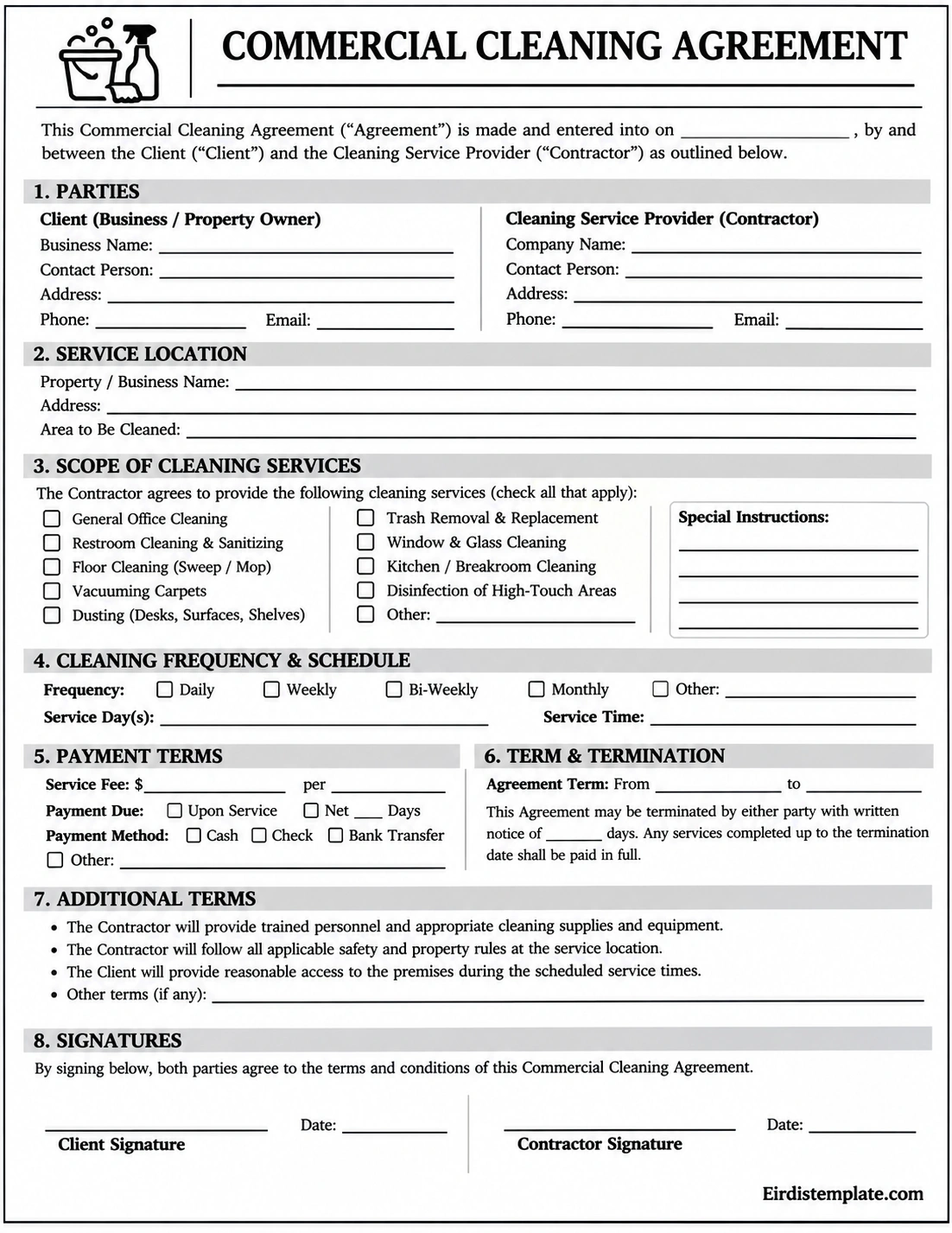
A printable commercial cleaning agreement template can save time when preparing a service contract. Instead of starting with a blank document, you can use a structured form to record the main details of the cleaning arrangement.
The template below includes sections for client and contractor information, service location, cleaning tasks, service frequency, payment terms, contract duration, additional conditions, and signatures.
Review each section and fill in the details that apply to your property and cleaning requirements. Add any necessary terms before both parties sign the document.
How to Create a Commercial Cleaning Agreement
Preparing a cleaning contract requires both parties to discuss their expectations before services begin. Follow these steps to create an agreement that reflects the actual arrangement.
Step 1: Identify Both Parties
Enter the correct legal names and contact information of the client and cleaning provider. Make sure the individuals signing the agreement are authorized to represent their respective businesses.
Step 2: Inspect the Commercial Property
Review the property to identify the rooms, surfaces, and facilities that require cleaning. A site inspection can help the cleaning provider estimate the time, equipment, and supplies needed to complete the work.
Step 3: List the Required Cleaning Tasks
Write down each service that the contractor must perform. Be specific about areas, cleaning standards, and tasks that are excluded from the regular service.
Step 4: Agree on the Schedule
Choose service days and hours that work for both parties. Consider business operating hours, employee access, security requirements, and periods when the property is less busy.
Step 5: Confirm the Pricing and Payment Method
Discuss the service fee and agree on how invoices will be issued and paid. Make sure both parties understand the charges for additional work, supplies, or services outside the original scope.
Step 6: Review the Contract Terms
Read the agreement carefully before signing. Confirm that the responsibilities, service schedule, payment conditions, and termination provisions accurately reflect what both parties discussed.
Step 7: Sign and Distribute Copies
Once all details are confirmed, both parties should sign and date the agreement. Provide a completed copy to each party for future reference.
Tips for Managing a Commercial Cleaning Contract
Signing the agreement is only the beginning of a successful cleaning arrangement. Regular communication and clear procedures help maintain service quality over time.
- Use a detailed cleaning checklist: Create a separate checklist for daily, weekly, and monthly tasks when appropriate.
- Set clear cleaning standards: Explain the expected condition of floors, restrooms, workspaces, and shared facilities.
- Keep communication consistent: Establish a contact person for service requests, schedule changes, and complaints.
- Review service quality: Conduct periodic inspections to confirm that agreed tasks are being completed.
- Document additional requests: Record extra work and confirm any additional fees before the contractor performs it.
- Report problems promptly: Establish a process for reporting missed services, property damage, or safety concerns.
- Update the agreement when necessary: Document changes to the service scope, schedule, pricing, or other important terms in a written amendment signed by both parties.
Common Mistakes to Avoid in a Commercial Cleaning Agreement
A vague or incomplete cleaning contract can create problems even when both parties have good intentions. Avoid these common mistakes when preparing your agreement.
- Using vague service descriptions: Simply writing general cleaning may lead to different expectations. List the specific tasks and areas included.
- Leaving out the service schedule: Specify the days and hours when cleaning should take place.
- Not explaining additional charges: Identify how special requests, deep cleaning, and emergency services will be priced.
- Ignoring access and security: Explain how keys, entry codes, alarms, and restricted areas will be managed.
- Leaving termination conditions unclear: State the notice period and how outstanding obligations will be handled.
- Failing to document changes: Important changes should be recorded in writing rather than relying only on verbal discussions.
Frequently Asked Questions About Commercial Cleaning Agreements
What is the purpose of a commercial cleaning agreement?
A commercial cleaning agreement establishes the terms between a business and a cleaning service provider. It defines the services, schedule, fees, responsibilities, and other conditions that apply to the cleaning arrangement.
Is a commercial cleaning agreement legally binding?
A properly formed and signed commercial cleaning agreement can be legally binding. Its enforceability depends on applicable law, the contract’s terms, the authority of the parties, and other legal requirements. Consider having a qualified legal professional review the document before signing.
What is the difference between a commercial cleaning agreement and a janitorial service contract?
The terms are often used interchangeably. Both documents generally describe cleaning services provided to a commercial property. A janitorial service contract may focus more specifically on routine maintenance and cleaning tasks, while a commercial cleaning agreement can cover a broader range of services.
How long should a commercial cleaning contract last?
The duration depends on the needs of the business and the cleaning provider. Some agreements cover a few months, while others run for one year or continue on a month-to-month basis. The contract should clearly state its effective date, duration, and renewal conditions.
Who provides cleaning supplies and equipment?
Either the client or the cleaning provider may supply the products and equipment. The agreement should clearly identify who is responsible for purchasing, maintaining, and replacing them.
Can the cleaning service fee be changed after signing?
A service fee can be changed if the contract allows it or both parties agree to a modification. The revised price, effective date, and any related conditions should be documented in writing.
Can either party terminate a commercial cleaning agreement?
Termination depends on the contract terms and applicable law. The agreement should explain when either party can end the arrangement, how much notice is required, and how outstanding services and payments will be handled.
Should a commercial cleaning agreement include insurance requirements?
It can be useful to specify appropriate insurance requirements, depending on the property, services, and risks involved. The parties should discuss relevant coverage and verify any required documentation before work begins.
Can I use a printable commercial cleaning agreement template?
Yes. A printable template can provide a convenient starting point for documenting the cleaning arrangement. However, you should customize it to reflect the property, services, payment terms, and applicable legal requirements before signing.
Conclusion
A commercial cleaning agreement helps businesses and professional cleaning providers establish clear expectations before starting a service arrangement. By documenting the scope of work, cleaning frequency, payment terms, responsibilities, and termination conditions, both parties have a written reference for managing their professional relationship.
Use a printable commercial cleaning agreement template to organize the essential details and review every section carefully before signing. A clear, customized contract can help prevent misunderstandings, support consistent cleaning services, and create a more reliable working relationship.
Legal Notice: This template is provided for general informational purposes and is not legal advice. Contract requirements and enforceability vary by jurisdiction. Have the agreement reviewed by a qualified legal professional to ensure it meets your specific needs and applicable laws.
Download: Commercial Cleaning Agreement Template

- Coaching Contract Agreement Template - November 5, 2026
- Cleaning Service Agreement Template - November 5, 2026
- Commercial Cleaning Agreement Template - November 5, 2026
