A successful organization needs more than good ideas and strong products. It also needs clear, consistent, and well-organized communication. Without a structured approach, important messages can reach the wrong audience, arrive too late, or confuse employees and stakeholders. A communication planner helps prevent these problems by turning communication goals into an organized and actionable strategy.
Whether you are managing an internal company announcement, launching a marketing campaign, coordinating a project, or building public relations activities, a communication planner provides a practical roadmap. It helps define what to communicate, who needs to receive the message, which channels to use, and when each activity should happen.
In this guide, you will learn what a communication planner is, why organizations need one, what information to include, and how to create a practical communication plan. You will also find useful planning templates to help organize your communication activities.
What Is a Communication Planner?
A communication planner is a structured document or worksheet used to organize an organization’s communication activities. It outlines communication objectives, target audiences, key messages, communication channels, responsibilities, timelines, and performance measurements.
Its primary purpose is to ensure that the right information reaches the right people at the right time. Instead of sending messages without a clear direction, organizations can use a communication planning template to coordinate activities and maintain consistent communication across departments.
A communication planner can support several types of organizational communication, including:
- Internal communication: Sharing company updates, policies, announcements, and operational information with employees.
- External communication: Communicating with customers, suppliers, partners, investors, and other stakeholders.
- Marketing communication: Coordinating promotional campaigns, product launches, newsletters, and social media content.
- Corporate communication: Maintaining brand reputation, public relations, and organizational messaging.
- Project communication: Keeping project teams, managers, and stakeholders informed about progress and important decisions.
A well-organized plan gives everyone a shared understanding of communication priorities and their responsibilities.
Why Is a Communication Planner Important?
Communication problems can affect productivity, employee engagement, customer relationships, and brand reputation. A documented communication strategy helps organizations reduce these risks while improving coordination.
1. Creates Consistent Messaging
When multiple departments communicate about the same initiative, inconsistent information can create misunderstandings. A communication planner establishes approved key messages, helping teams deliver information with a consistent tone and purpose.
2. Keeps Teams Aligned
Employees and departments need to understand what is happening and what actions are expected. A shared communication roadmap clarifies responsibilities, deadlines, and information-sharing requirements.
3. Reaches the Right Audience
Different audiences have different information needs. Managers may require detailed progress reports, while customers may need concise product updates. Audience planning helps tailor messages to each group’s expectations.
4. Improves Time Management
A communication schedule helps teams prepare announcements, meetings, newsletters, and campaign updates in advance. This reduces last-minute communication and makes important deadlines easier to manage.
5. Supports Performance Measurement
By defining communication objectives and key performance indicators (KPIs), organizations can evaluate whether their messages are reaching people and producing the intended results.
What Should a Communication Planner Include?
An effective communication planner should contain several essential sections. Each section addresses a different part of the communication process and helps turn organizational objectives into practical activities.
1. Communication Goals and Objectives
Start by identifying what the organization wants to achieve. Communication goals should be specific enough to guide decisions and evaluate results.
Common communication objectives include:
- Increasing employee awareness of organizational changes.
- Improving stakeholder engagement.
- Introducing a new product or service.
- Strengthening brand awareness and reputation.
- Providing regular project updates.
- Encouraging employees or customers to take a specific action.
Whenever possible, use measurable objectives. For example, instead of writing “improve employee awareness,” set a target such as achieving 90% employee participation in a company update session.
2. Target Audience Identification
Identify everyone who needs to receive or understand the information. Depending on the initiative, your audiences may include employees, executives, customers, suppliers, business partners, media representatives, or investors.
For each audience, consider their interests, existing knowledge, communication preferences, and information requirements. This makes it easier to develop relevant messages.
3. Key Messages
Key messages are the main points an organization wants its audience to remember. They should be clear, accurate, relevant, and consistent across communication channels.
For each message, determine what information must be shared, why it matters, and what action the audience should take. Avoid complicated language when a simple explanation can communicate the same idea.
4. Communication Channels
Choose channels that match your audience and communication objectives. Some messages are better delivered through direct conversations, while others are more effective through written or digital communication.
- Email: Suitable for formal announcements, detailed updates, and direct information sharing.
- Team meetings: Useful for discussions, questions, and collaborative decision-making.
- Company intranet: Provides employees with access to policies, documents, and organizational updates.
- Newsletters: Helpful for delivering recurring updates and important announcements.
- Social media: Supports public engagement, brand awareness, and promotional communication.
- Messaging platforms: Useful for quick coordination and day-to-day team communication.
5. Communication Schedule
Establish when each communication activity should take place. Include planned dates, frequency, deadlines, and the people responsible for preparing and delivering messages.
A communication calendar can help prevent overlapping announcements and ensure that important information is shared at the appropriate time.
6. Roles and Responsibilities
Assign ownership for each communication task. Identify who creates the content, reviews the message, approves it, distributes it, and monitors the response.
Clear responsibilities reduce duplication and help teams complete communication activities efficiently.
7. Success Metrics and Evaluation
Determine how you will measure communication effectiveness. Useful performance indicators include email open rates, event attendance, audience reach, engagement, feedback, website traffic, and completion of requested actions.
Choose metrics that directly relate to your original objectives. Reviewing these results helps identify what worked and what should be improved.
How to Create an Effective Communication Planner
Creating a communication plan does not have to be complicated. Follow these practical steps to build a roadmap that supports your organization’s needs.
Step 1: Define the Purpose
Begin with the reason behind your communication initiative. Determine whether you need to inform, educate, persuade, engage, or encourage action. A clear purpose will guide every subsequent planning decision.
Step 2: Identify Your Audiences
List the groups that need to receive your messages. Separate audiences when their information needs or communication preferences differ significantly.
Step 3: Develop Your Core Messages
Write the most important points that each audience should understand. Keep your messages focused and ensure they support the overall communication objective.
Step 4: Select Appropriate Channels
Choose communication methods based on audience preferences, message complexity, urgency, and available resources. Consider combining multiple channels when an important message requires broader coverage.
Step 5: Build a Communication Timeline
Organize activities into a realistic schedule. Add deadlines, publication dates, meeting dates, and follow-up activities. Make sure the timing allows enough preparation and review.
Step 6: Assign Responsibilities
Give each task a clear owner. Confirm who is responsible for writing, reviewing, approving, publishing, and measuring communication activities.
Step 7: Monitor and Improve
Review communication results regularly. Collect feedback, compare performance against targets, and adjust your approach when certain messages or channels are not producing the expected results.
How to Use a Communication Planner Template
A communication planner template makes the planning process easier because it provides a ready-made structure for recording important information. Instead of building a document from scratch, you can fill in each section and adapt it to your organization’s requirements.
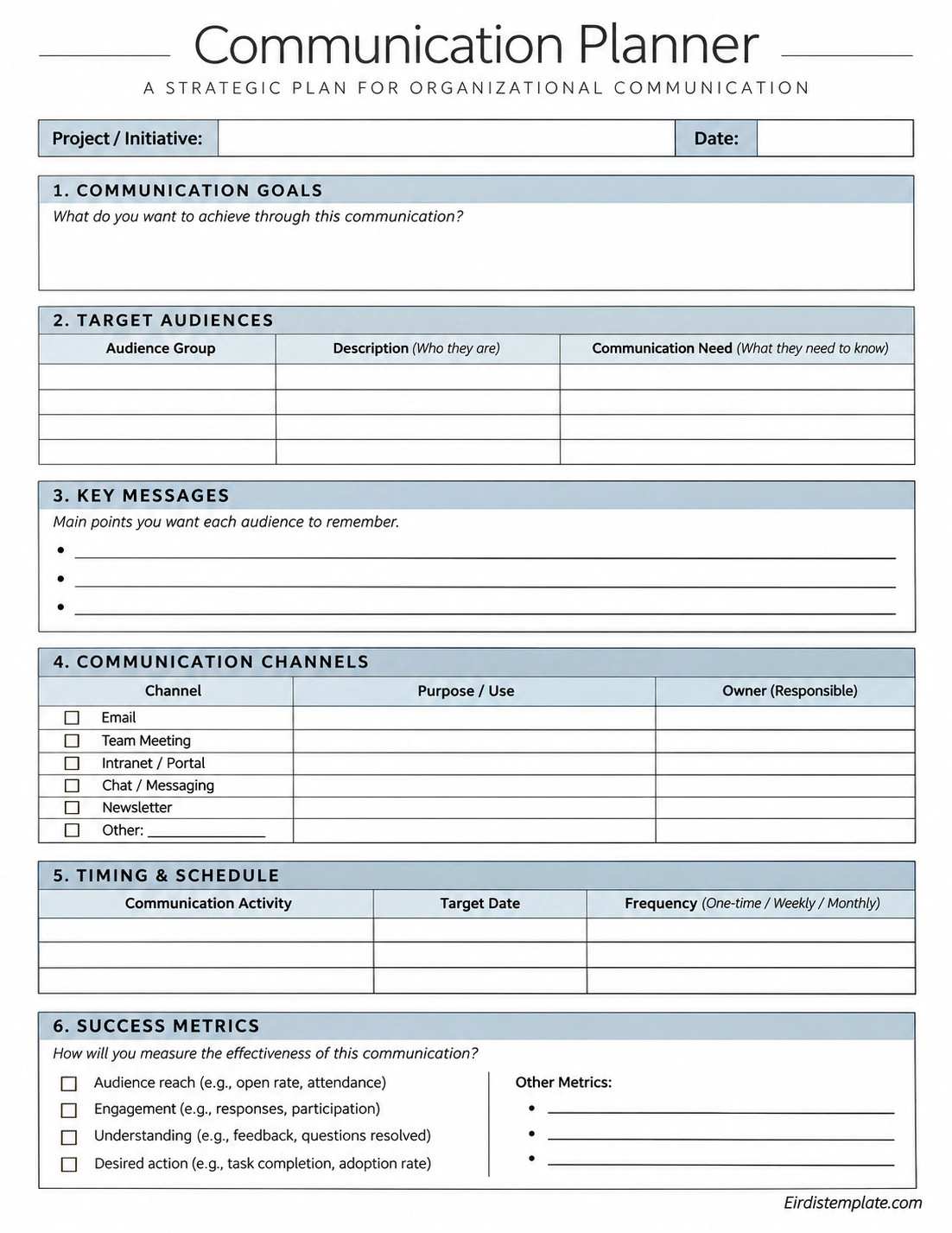
Start with the main Communication Planner template to record your goals, audiences, key messages, channels, schedule, and success metrics.
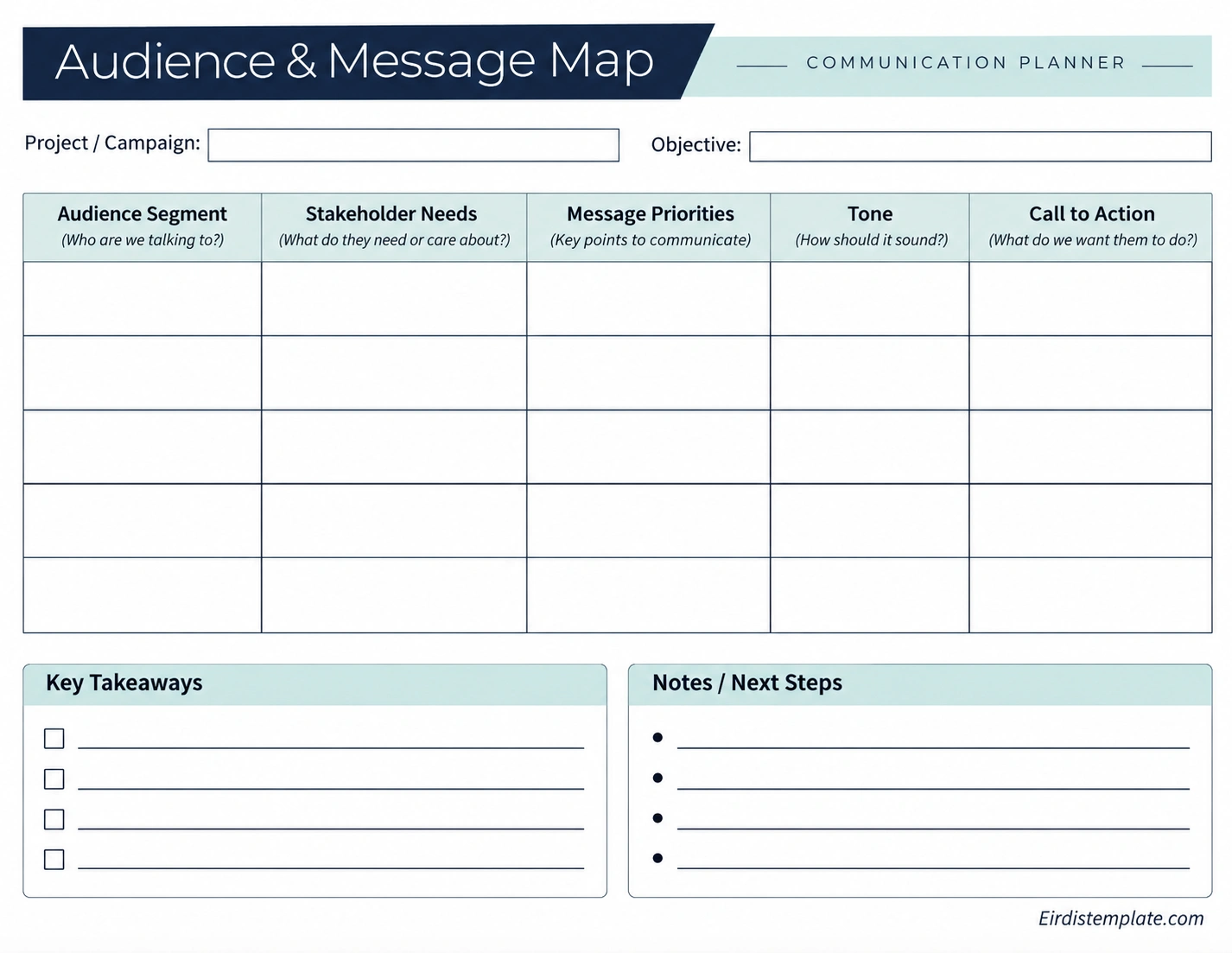
If your initiative involves several stakeholder groups, use an audience and message map to identify what each group needs to know. This helps ensure that communication remains relevant and audience-focused.
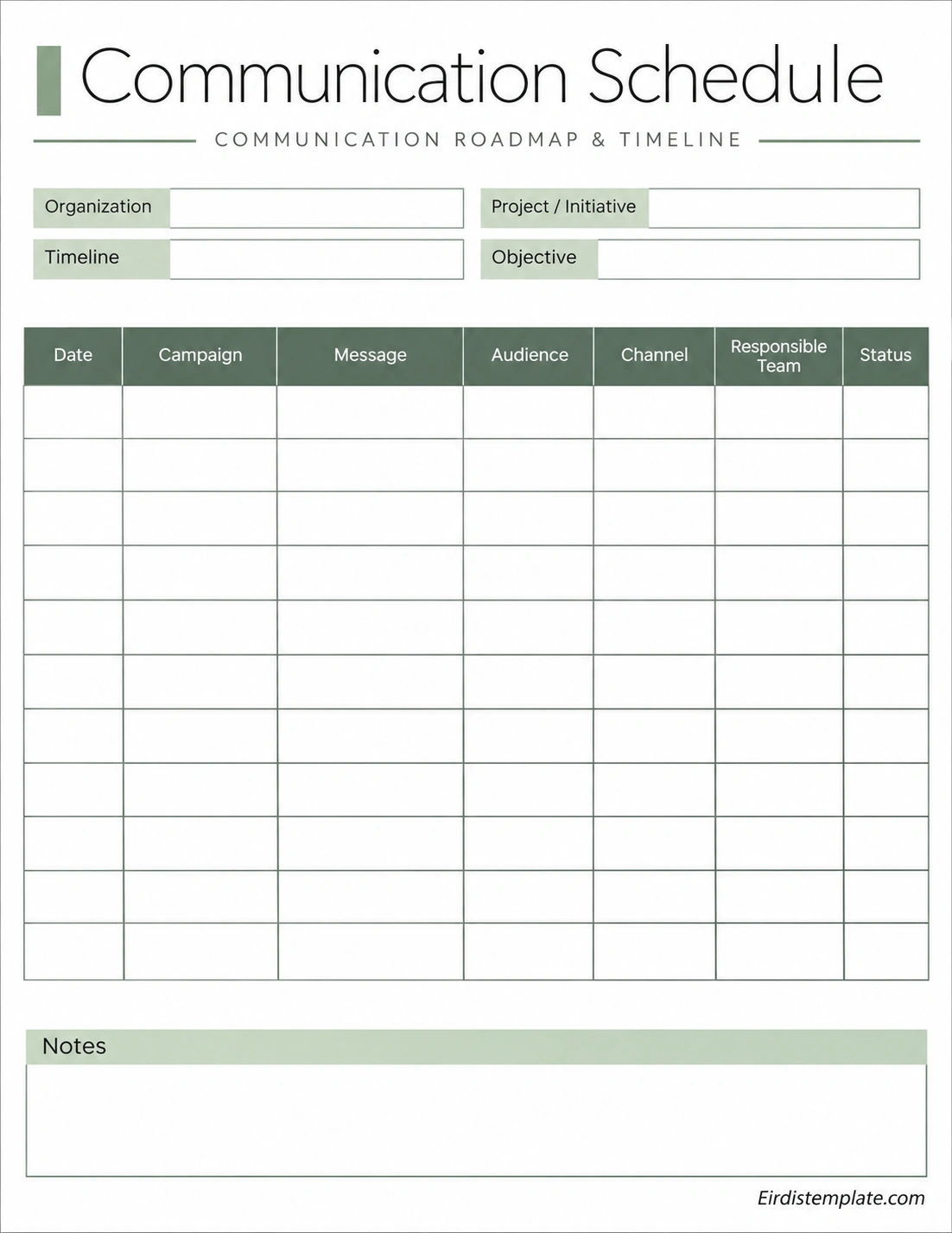
Next, organize communication activities using a schedule. Record each planned activity, its target date, the responsible team, and its current status.
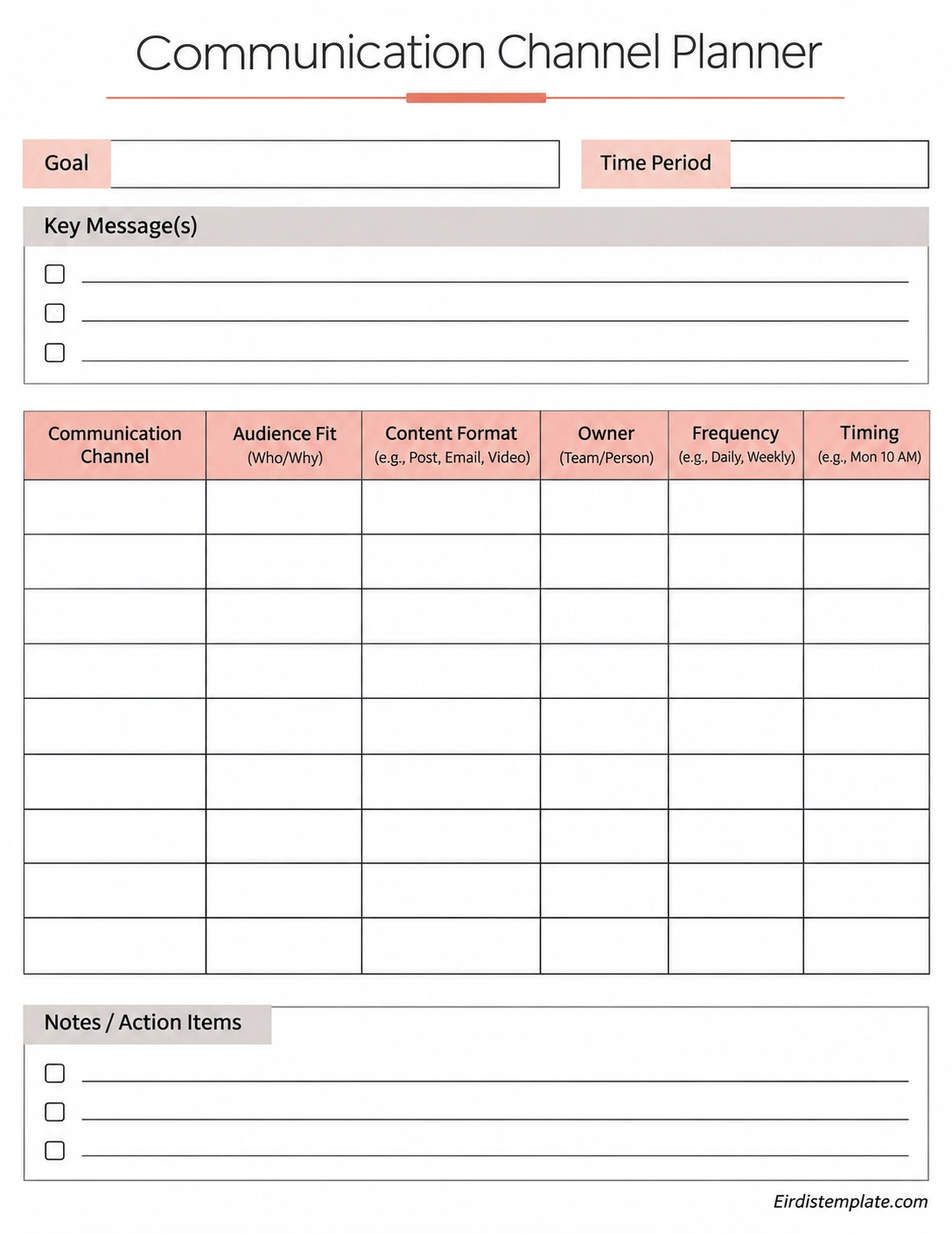
You can also use a channel planner to compare communication methods and decide which format, frequency, and timing are appropriate for each audience.
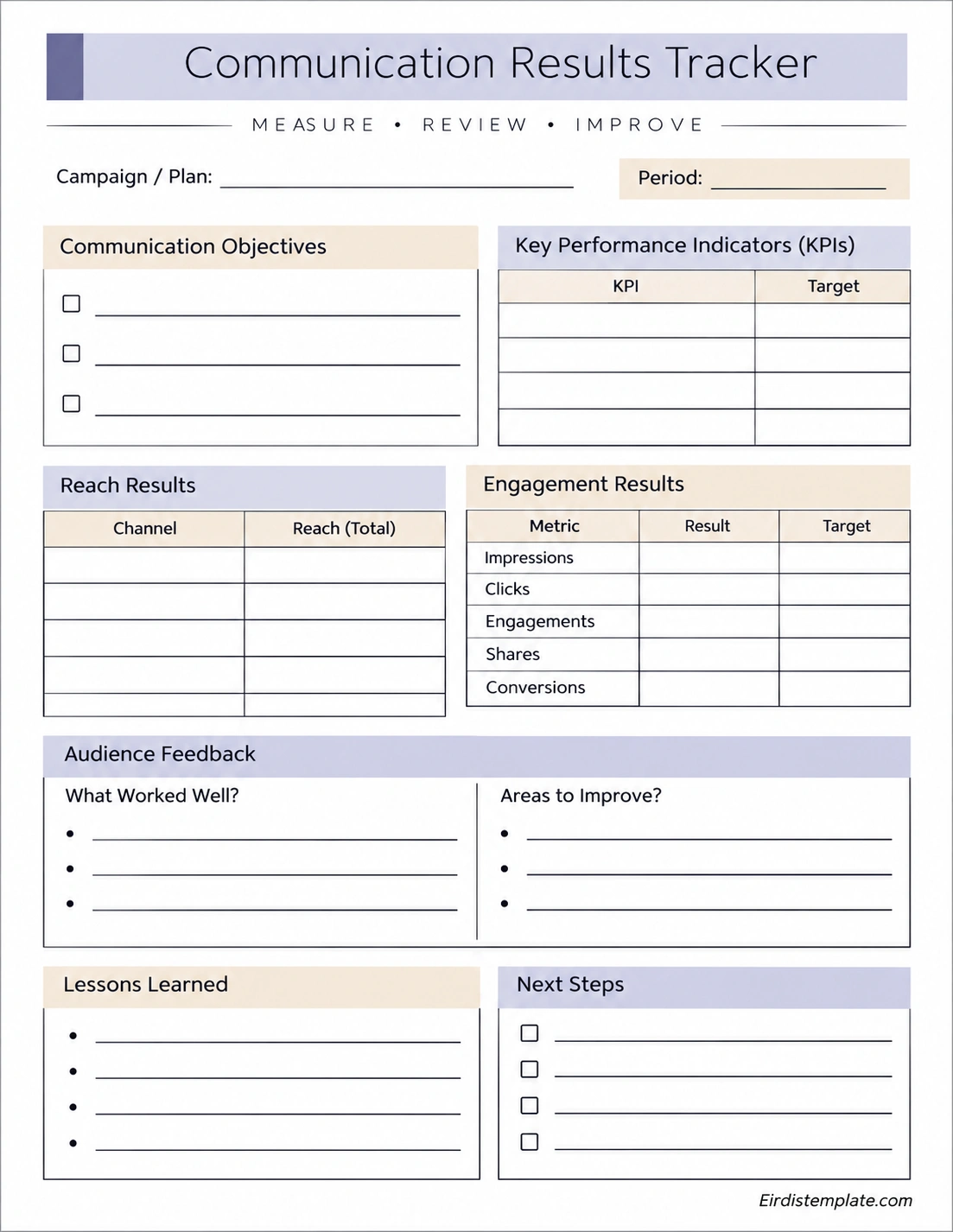
Finally, evaluate your communication activities using a results tracker. Record performance indicators, audience feedback, lessons learned, and recommended improvements.
Practical Tips for Better Organizational Communication
A communication plan is most effective when it is practical, flexible, and regularly updated. Use these tips to improve your planning process:
- Keep messages simple: Use clear language and avoid unnecessary technical terms.
- Match channels to audiences: Do not assume that one communication method works for everyone.
- Maintain consistent messaging: Make sure departments use approved information and communicate the same priorities.
- Plan for feedback: Give audiences opportunities to ask questions and share concerns.
- Prepare for unexpected changes: Leave room in your schedule for urgent announcements or changing priorities.
- Review the plan regularly: Update objectives, timelines, and responsibilities as organizational needs evolve.
- Measure meaningful results: Focus on whether communication achieves its purpose rather than simply counting the number of messages sent.
Frequently Asked Questions About Communication Planners
What is the main purpose of a communication planner?
The main purpose is to organize communication activities so that the right messages reach the right audiences at the right time. It provides a structured roadmap for setting objectives, selecting channels, assigning responsibilities, and measuring results.
What are the five key elements of a communication plan?
Five fundamental elements are communication objectives, target audiences, key messages, communication channels, and a schedule. More comprehensive plans also include responsibilities, resources, evaluation methods, and performance indicators.
Who should use a communication planner?
Business owners, marketing teams, project managers, human resource professionals, public relations specialists, nonprofit organizations, and corporate communication teams can all benefit from using a communication planner.
What is the difference between a communication plan and a communication planner?
A communication plan describes the overall strategy and approach for delivering information. A communication planner is the document or practical tool used to organize, record, and manage the activities required to implement that plan.
How often should a communication planner be updated?
It should be reviewed regularly, such as weekly or monthly, depending on the project. Update it whenever objectives, audiences, timelines, responsibilities, or communication priorities change.
Can I use a communication planner for internal communication?
Yes. It is particularly useful for internal communication because it helps coordinate employee announcements, policy updates, management messages, team meetings, and organizational changes.
Conclusion
A communication planner is a valuable tool for organizations that want to deliver clear, consistent, and effective messages. By defining objectives, identifying target audiences, developing key messages, selecting appropriate channels, and creating a realistic schedule, teams can manage communication activities with greater confidence.
It also provides a practical way to assign responsibilities, monitor performance, and improve future communication initiatives. Whether you are coordinating a small project or managing organization-wide communication, a structured planner can help keep everyone informed and aligned.
Use the printable communication planner templates in this guide to organize your next initiative and build a more strategic approach to organizational communication.
Download: Communication Planner Template
