A Chore Chart for Family is a practical way to organize household responsibilities, keep your home tidy, and help every family member contribute. When daily tasks are clearly assigned, everyone knows what needs to be done, which can reduce confusion and make household routines easier to manage.
Between work, school, meals, and family activities, keeping a home organized can feel overwhelming. A family chore chart turns a long list of household jobs into a simple schedule that everyone can follow. Parents can assign age-appropriate tasks to children, teenagers can practice independence, and adults can share recurring responsibilities more fairly.
In this guide, you will learn how to create a family chore schedule, which household tasks to include, and how to make the system work for different ages. You can also use the free printable template to track chores throughout the week and keep your family’s responsibilities in one place.
What Is a Chore Chart for Family?
A chore chart for family is a shared checklist that organizes household tasks and shows who is responsible for completing them. It may include daily cleaning routines, weekly chores, individual assignments, and spaces to track completed tasks.
Unlike a personal to-do list, a family chore chart helps coordinate responsibilities among several people. Each family member can see their assigned tasks and understand how their contribution supports the household.
A useful family chore chart usually includes:
- Household tasks: Cleaning, laundry, dishes, tidying, and other regular responsibilities.
- Family member columns: Spaces to assign chores to parents, children, teenagers, or other household members.
- Days of the week: A weekly schedule showing when each task should be completed.
- Check boxes: A simple way to mark finished chores.
- Notes and goals: Space for reminders, weekly priorities, and special responsibilities.
You can keep the chart simple or customize it to suit your household size, children’s ages, and weekly routine.
Free Printable Chore Chart for Family
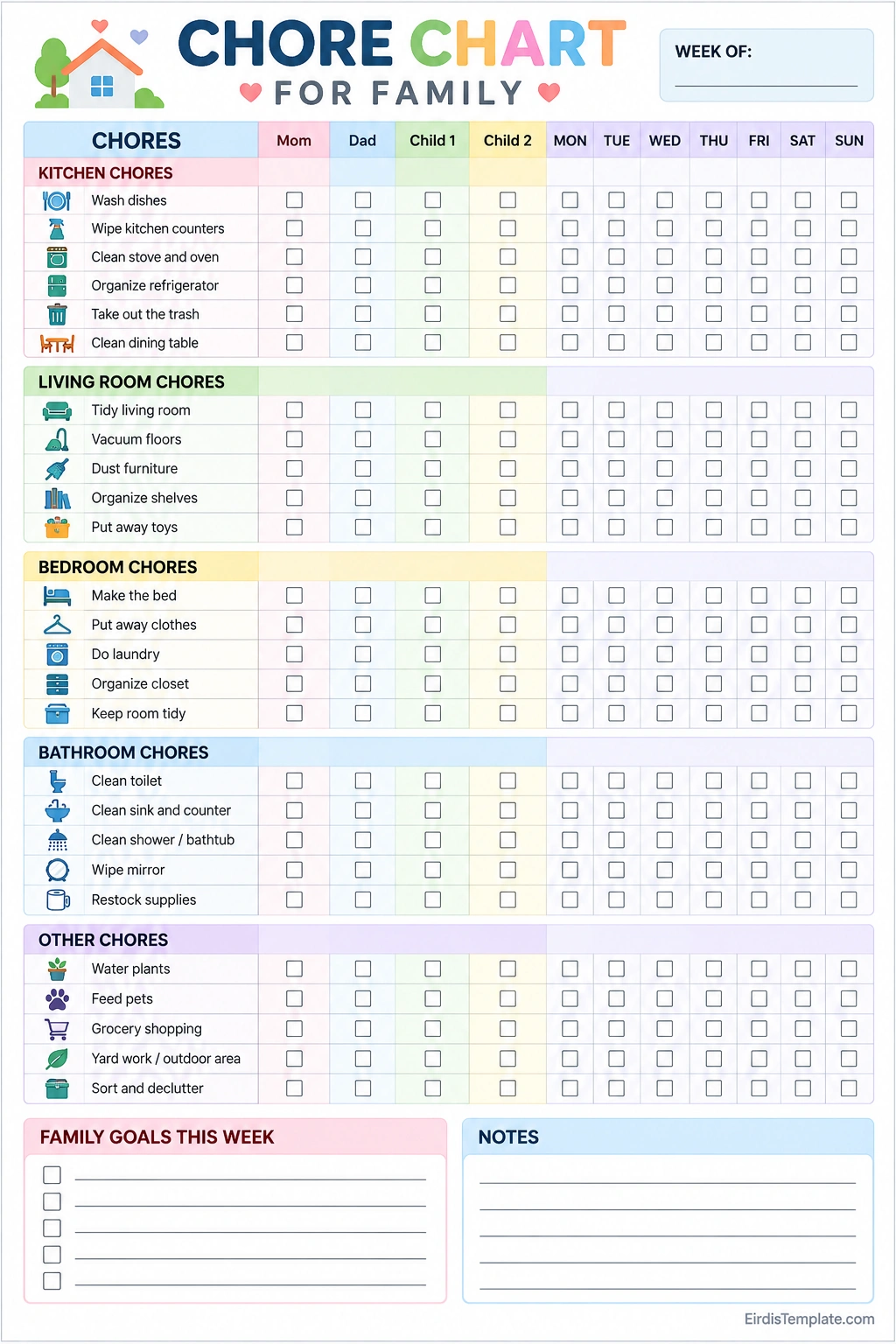
Use the printable Chore Chart for Family below to organize household responsibilities by room and family member. The template includes kitchen, living room, bedroom, bathroom, and other household chores, along with columns for family assignments and daily checkboxes.
The worksheet also provides space for weekly family goals and notes. You can write each person’s name, assign tasks, and mark the appropriate boxes as chores are completed.
Print the chart and place it somewhere visible, such as the kitchen noticeboard or family command center. Adjust the listed tasks to match your household instead of treating every item as mandatory.
Benefits of Using a Family Chore Chart
A family chore schedule does more than remind people to clean. It creates a shared system for managing everyday responsibilities and building helpful household habits.
1. Encourages Teamwork
When everyone contributes to household tasks, maintaining a home becomes a shared effort rather than one person’s responsibility. A chore chart helps family members see how their contributions support the entire household.
2. Makes Expectations Clear
Unclear instructions can lead to misunderstandings about who should complete a task. A written chore list identifies responsibilities and makes it easier for family members to understand what is expected of them.
3. Teaches Children Responsibility
Age-appropriate chores give children opportunities to practice useful everyday skills. Simple responsibilities, such as putting toys away or placing dirty clothes in a laundry basket, can help children learn to care for their belongings and shared spaces.
4. Helps Teenagers Build Independence
Teenagers can use a family chore chart to practice managing laundry, cleaning bathrooms, preparing simple meals, and organizing their rooms. These practical skills can help prepare them for greater independence as they grow older.
5. Reduces Repeated Reminders
A visible checklist provides a shared reference for household responsibilities. Instead of repeatedly asking whether a task has been completed, family members can check the schedule and update it as they work.
6. Creates More Consistent Routines
Scheduling chores throughout the week makes household maintenance more predictable. Regular cleaning can also help prevent clutter and dirt from accumulating until they require a much larger effort.
Family Chore Chart Ideas by Room
Organizing household chores by room makes it easier to identify responsibilities and avoid forgetting important tasks. Choose the jobs that fit your home and divide them among family members according to their abilities and availability.
Kitchen Chores
The kitchen often needs attention every day because it is used for preparing meals and cleaning dishes. Consider adding these responsibilities to your family cleaning chart:
- Wash dishes or load the dishwasher.
- Wipe kitchen counters and dining tables.
- Clean the stovetop after use.
- Put away groceries.
- Check the refrigerator for expired food.
- Take out the trash and recycling.
- Sweep and mop the kitchen floor.
Children can help with simple tasks, such as clearing the table, while adults or older teenagers can handle more demanding cleaning jobs and equipment.
Living Room Chores
Shared living areas can quickly become cluttered when several people use them. These chores help keep common spaces organized:
- Put toys, books, and personal items away.
- Arrange cushions and fold blankets.
- Dust furniture and shelves.
- Vacuum rugs and carpets.
- Organize books, games, and entertainment items.
- Return shared belongings to their proper places.
A quick daily tidy-up can keep the living room comfortable, while vacuuming and dusting can be scheduled once or more each week as needed.
Bedroom Chores
Bedrooms are easier to maintain when each person takes responsibility for their own space. Depending on age and ability, bedroom chores may include:
- Make the bed.
- Put dirty clothes in a laundry basket.
- Put away clean clothes.
- Pick up toys and personal belongings.
- Organize desks and bedside tables.
- Change bedsheets and pillowcases.
- Vacuum or sweep the floor.
Encourage children to complete simple tidying tasks independently before introducing more detailed cleaning responsibilities.
Bathroom Chores
Bathrooms require regular maintenance to stay clean and hygienic. Tasks may include:
- Wipe the sink and countertop.
- Clean the mirror.
- Replace used towels.
- Restock toilet paper and supplies.
- Empty the trash bin.
- Clean the toilet, shower, or bathtub.
- Sweep and mop the floor.
Assign cleaning products and tasks according to age and ability. Adults should supervise children when necessary, and everyone should follow product labels and safety instructions. Never mix household cleaning chemicals.
Age-Appropriate Chores for Every Family Member
A successful family chore chart considers the abilities and development of each person. Children should not be expected to complete the same tasks as adults, and assignments should be adjusted as their skills improve.
Chores for Young Children
Young children can begin with short, simple tasks that help them participate in family life. Examples include:
- Put toys in storage bins.
- Place books on a shelf.
- Put dirty clothes in the laundry basket.
- Help set the table with safe items.
- Put shoes in their designated place.
Demonstrate each task and give clear, simple instructions. Young children may need reminders and assistance while learning new routines.
Chores for School-Age Children
As children develop more independence, they can take on additional responsibilities, such as:
- Make their beds.
- Clear the dining table.
- Feed pets with appropriate supervision.
- Sort laundry by color with help when needed.
- Water plants.
- Help tidy shared spaces.
Choose tasks that match the child’s abilities and explain how to complete them safely.
Chores for Teenagers
Teenagers can usually handle more complex household responsibilities, depending on their maturity and experience. Possible assignments include:
- Wash, dry, fold, and put away laundry.
- Vacuum and mop floors.
- Clean the bathroom.
- Prepare simple meals.
- Help with grocery shopping.
- Organize shared storage areas.
- Take responsibility for regular bedroom cleaning.
Involving teenagers in planning their schedules can help them balance chores with schoolwork, extracurricular activities, and other commitments.
Chores for Adults
Adults can coordinate household planning, handle tasks that require additional supervision, and share routine responsibilities. Examples include meal planning, grocery shopping, appliance maintenance, and more demanding cleaning jobs.
The goal is to distribute work fairly according to the family’s circumstances, not to assign every responsibility to one person simply because they are an adult.
How to Create a Family Chore Schedule
Creating a family chore chart does not need to be complicated. A simple plan that everyone understands is usually easier to maintain than a long list of detailed rules.
1. List Your Household Responsibilities
Walk through your home and identify the tasks that need to be completed regularly. Separate daily chores, weekly cleaning, and occasional maintenance so the chart remains organized.
2. Assign Tasks Fairly
Consider each person’s age, abilities, work or school schedule, and other responsibilities. Fairness does not always mean assigning identical chores. Instead, aim for a reasonable distribution of effort.
3. Choose Specific Days
Use the weekday columns on your printable family chore chart to assign tasks to particular days. For example, laundry might be scheduled for Wednesday, while vacuuming and bathroom cleaning take place on Saturday.
4. Explain What Completion Means
Be specific about the expected result. For example, cleaning the kitchen might mean wiping counters, clearing the table, washing dishes, and putting away supplies. Clear standards help prevent confusion.
5. Keep the Chart Visible
Place the chore chart in a shared area where family members can easily check their responsibilities. Encourage everyone to mark tasks as completed so the chart stays useful throughout the week.
6. Review the Schedule Together
Set aside a few minutes each week to discuss which tasks worked well and which need adjusting. Update assignments when family schedules change, children develop new skills, or particular chores become unnecessary.
Tips for Making a Family Chore Chart Work
A printable chart is most effective when the entire family understands how to use it. These practical tips can help your household build a routine that lasts.
- Start with a short list: Begin with essential tasks rather than assigning every possible chore at once.
- Make instructions age-appropriate: Match tasks to each family member’s abilities and experience.
- Use consistent routines: Schedule recurring chores on the same days when practical.
- Involve everyone in planning: Let family members suggest reasonable assignments and schedules.
- Recognize contributions: Acknowledge effort, improvement, and reliable participation.
- Rotate selected chores: Share less popular responsibilities when appropriate.
- Stay flexible: Adjust the schedule during busy school weeks, holidays, or unexpected events.
- Keep supplies accessible and safe: Store cleaning products securely and teach family members how to use household tools properly.
If a task is repeatedly missed, discuss whether the instructions, timing, or assignment needs to change. A chore chart should support cooperation, not become a constant source of conflict.
Common Family Chore Chart Mistakes to Avoid
Even a well-designed chore chart can become ineffective if the system is too complicated or unrealistic. Avoid these common mistakes:
- Assigning too many tasks: An overloaded schedule can make everyone feel overwhelmed.
- Ignoring age and ability: Tasks should be appropriate for each person’s skills and maturity.
- Leaving responsibilities unclear: Identify who is responsible for each chore and when it should be completed.
- Expecting perfection immediately: Allow children and teenagers time to learn unfamiliar tasks.
- Making the chart difficult to update: Keep the design simple and easy to read.
- Never reviewing assignments: Family routines change, so responsibilities may need to change too.
A flexible system that encourages participation is more likely to work over time than a strict schedule that does not reflect the family’s needs.
Frequently Asked Questions About Family Chore Charts
What should be included in a chore chart for family?
A family chore chart can include kitchen cleaning, laundry, bedroom tidying, bathroom cleaning, pet care, trash removal, and other household responsibilities. Include family member assignments, a weekly schedule, checkboxes, and space for notes.
How do I divide chores fairly among family members?
Consider each person’s age, abilities, available time, and other responsibilities. Assign age-appropriate tasks and rotate selected chores when practical. The aim is to distribute the workload reasonably rather than give everyone exactly the same tasks.
At what age should children start doing chores?
Children can begin helping with simple tasks when they are ready, such as putting toys away or placing books on a shelf. Introduce new responsibilities gradually, demonstrate how to do them, and provide supervision when needed.
How many chores should each family member have?
There is no universal number. The appropriate amount depends on the household’s needs, the time available, and each person’s abilities. Start with a manageable list and adjust it after reviewing how well the routine works.
Should children get rewards for completing chores?
Families can choose whether to use rewards, allowances, or other forms of recognition. Some treat basic household contributions as shared family responsibilities, while others offer rewards for additional jobs. Clear and consistent expectations are important whichever approach you choose.
Can I use one chore chart for the entire family?
Yes. A shared chart can list household tasks, identify the responsible family member, and track completion throughout the week. If the chart becomes crowded, consider using separate sections for adults, children, and shared responsibilities.
How often should I update a family chore chart?
Review the chart weekly or whenever your household routine changes. Update assignments as children grow, schedules change, or new responsibilities arise.
What is the difference between a family chore chart and a cleaning schedule?
A family chore chart focuses on who is responsible for each task and whether it has been completed. A cleaning schedule focuses on when tasks should happen. A combined template can organize both responsibilities and timing in one place.
Conclusion
A Chore Chart for Family is a simple way to organize household responsibilities, encourage teamwork, and establish consistent cleaning habits. By assigning age-appropriate tasks and spreading chores across the week, families can make home maintenance more manageable and reduce confusion about who does what.
Start with a realistic list, involve everyone in planning, and adjust the schedule as your household changes. Use the free printable Chore Chart for Family Template to assign tasks, track completed chores, and record weekly goals in one convenient place.
With clear expectations and regular communication, a family chore chart can help everyone contribute to a cleaner, more organized, and more cooperative home.
Download: Chore Chart for Family

- Chore Chart for Family Template - October 28, 2026
- Printable Weekly Chore Chart Template - October 28, 2026
- Printable Teenage Chore Chart Template - October 28, 2026
