A background check authorization form is a document that gives an employer, landlord, educational institution, or other authorized organization permission to conduct a background check on an individual. It typically collects identifying information and records the applicant’s consent before relevant records are reviewed or obtained.
Background checks may be used for employment screening, rental applications, education, volunteering, licensing, or other legitimate purposes. Depending on the situation and applicable law, a screening may involve information such as employment history, education, criminal records, driving records, or other relevant information.
A clear authorization form helps create a documented record of consent and makes the screening process more organized. However, a form should be customized to the purpose of the screening and the laws that apply to the organization and individual.
What Is a Background Check Authorization Form?
A background check authorization form is a written document through which an individual authorizes an organization or its designated screening provider to obtain specified background information.
The form generally identifies the person being screened, explains the purpose of the check, identifies the types of information that may be requested, and provides a place for the individual to provide authorization and a signature.
Depending on the screening process, the form may also request additional identifying information needed to distinguish the applicant from other people with similar names.
Why Is a Background Check Authorization Form Important?
Background screening can involve sensitive personal information. A well-organized authorization process helps organizations document the individual’s permission and establish a clear record of the screening request.
Documents Applicant Authorization
The form creates a written record showing that the individual was asked to authorize a background check. This can help organizations maintain consistent screening procedures.
Organizes Applicant Information
A background check form can collect information needed to identify the correct applicant. Accurate identifying information can help reduce confusion when screening records.
Clarifies the Purpose of the Screening
The authorization document can explain whether the background check is being conducted for employment, tenancy, education, volunteering, licensing, or another lawful purpose.
Creates a Consistent Process
Using a standardized background check authorization form can help organizations follow the same basic procedure for each applicant. Consistent documentation can make administrative work easier and reduce missing information.
Background Check Authorization Form Template
A background check authorization form template provides a structured starting point for collecting applicant information and documenting consent. A practical template may include applicant details, additional identification information, authorization language, signature fields, and a section for organization use.
The exact information and authorization language should be reviewed and customized for the purpose of the screening and the applicable legal requirements.
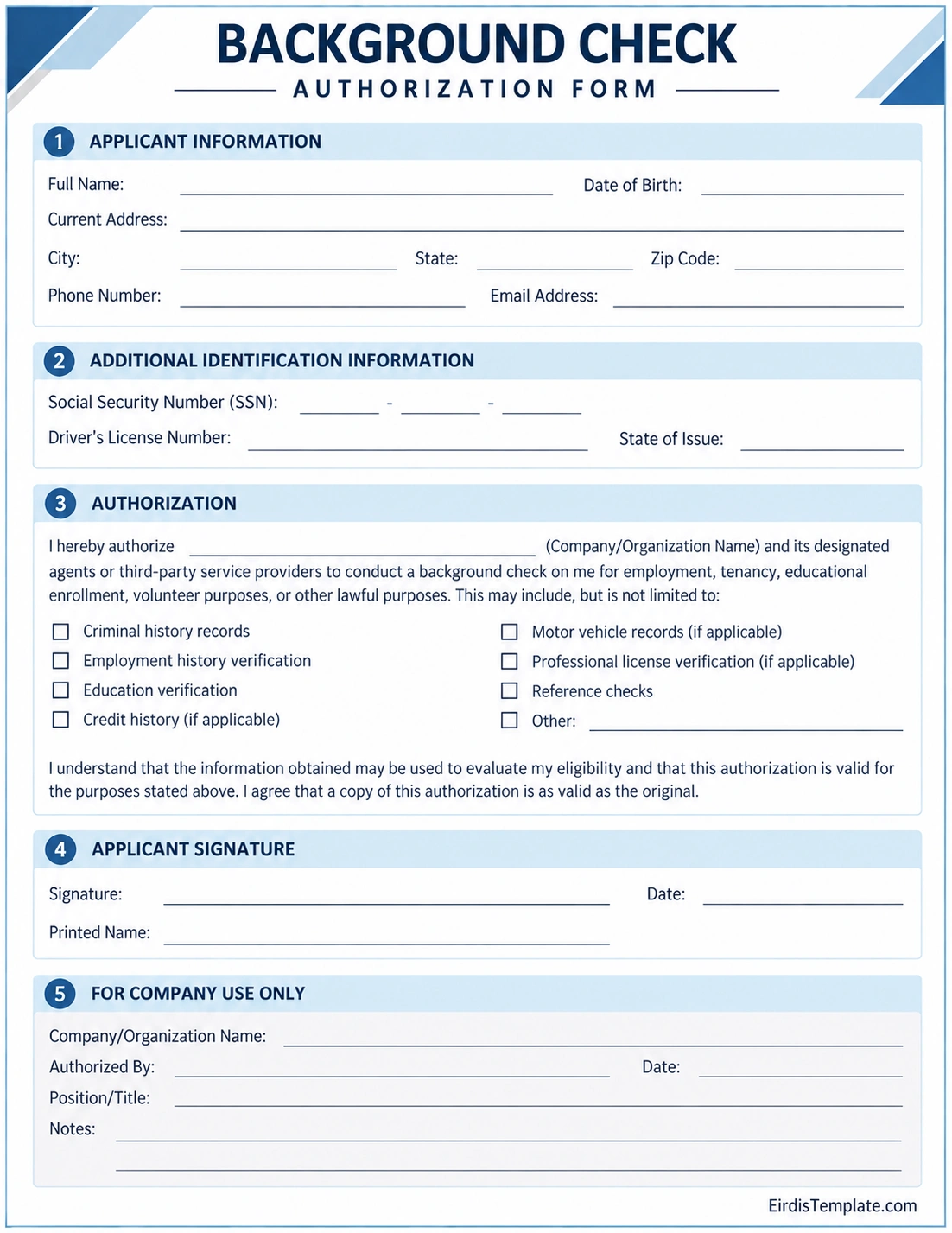
What Should a Background Check Authorization Form Include?
The contents of a background screening authorization form can vary depending on its purpose. However, several sections are commonly useful.
Applicant Information
Start with basic information needed to identify the person being screened. Common fields may include:
- Full legal name
- Previous or other names, when relevant
- Current address
- Previous address information when required
- Date of birth
- Phone number
- Email address
Additional Identification Information
Some screening processes require additional information to help identify the correct individual. Depending on the applicable process and legal requirements, this may include a driver’s license number, issuing state, or other identifying information.
Highly sensitive information should only be collected when necessary and should be handled using appropriate security procedures.
Purpose of the Background Check
The form should clearly state why the background check is being conducted. Examples include employment screening, tenant screening, educational enrollment, volunteer screening, or another legitimate purpose.
Types of Records Being Requested
Where appropriate, identify the categories of information that may be reviewed. Depending on the purpose and applicable law, these may include:
- Criminal history records
- Employment history verification
- Education verification
- Professional license verification
- Motor vehicle records
- Reference checks
- Other legally permitted screening information
Do not automatically include every possible category. The form should reflect the actual screening process and applicable requirements.
Authorization Statement
The authorization section should clearly explain what the applicant is consenting to and who is authorized to conduct or obtain the screening. The wording should be appropriate for the jurisdiction and purpose.
Signature and Date
Include a signature field and date field so the organization can document when the authorization was provided. If electronic signatures are used, make sure the process complies with applicable requirements.
Organization Use
A separate section can be used for internal recordkeeping. It may include the organization name, person responsible for processing the screening, date received, reference number, and administrative notes.
How to Use a Background Check Authorization Form
A consistent process can help organizations manage background screening efficiently while protecting applicant information.
1. Explain the Screening Process
Before requesting authorization, explain the general purpose of the background check and what categories of information may be reviewed. Applicants should have an opportunity to understand what they are being asked to authorize.
2. Provide the Appropriate Form
Give the applicant a form that matches the specific screening purpose. Avoid using a generic authorization document if the applicable law or screening process requires specific disclosures or notices.
3. Collect Accurate Information
Ask the applicant to provide accurate identifying information. Review the completed form for missing fields or obvious inconsistencies before sending information to a screening provider.
4. Obtain Authorization
Obtain the required signature or legally appropriate electronic authorization before proceeding with the background check.
5. Conduct the Screening
Use an appropriate background screening provider or authorized process to obtain the information. Only request information that is relevant and legally permissible for the stated purpose.
6. Store the Authorization Securely
Keep completed authorization records in a secure location. Access should be limited to individuals who need the information for legitimate business or administrative purposes.
Types of Background Checks
The appropriate background check depends on the purpose of the screening and applicable requirements.
Employment Background Check
Employers may conduct background screening as part of the hiring process. Depending on the position and applicable law, screening may involve employment history, education, criminal records, professional credentials, or driving records.
Tenant Background Check
Landlords and property managers may screen prospective tenants as part of a rental application process. Tenant screening can involve rental history, identity verification, credit-related information, or other legally permitted information.
Educational Background Check
Educational institutions or programs may require verification of identity, education history, credentials, or other information depending on the program and applicable rules.
Volunteer Background Check
Organizations working with children, vulnerable populations, or sensitive environments may conduct background screening for volunteers when appropriate.
Professional or Licensing Check
Certain professions may require verification of licenses, credentials, disciplinary history, or other qualifications before an individual can perform regulated work.
Background Check Authorization Form vs. Background Check Report
A background check authorization form and a background check report serve different purposes.
The authorization form documents the individual’s permission and provides information needed to initiate the screening. The background check report contains information obtained through the screening process.
In simple terms, the authorization form helps establish permission to conduct the screening, while the report contains the screening results or information obtained.
Tips for Creating a Better Background Check Form
A well-designed form should be clear, specific, and easy to complete. Consider these practical tips:
- Use clear section headings.
- Collect only information that is necessary for the screening.
- Explain the purpose of the background check clearly.
- Identify the organization requesting the screening.
- Use plain language where possible.
- Provide adequate space for signatures and dates.
- Clearly identify required fields.
- Use secure procedures for sensitive information.
- Keep completed forms accessible only to authorized personnel.
- Review the form periodically as laws and screening procedures change.
Privacy and Legal Considerations
Background checks can involve highly sensitive personal information, so organizations should take privacy and legal requirements seriously. The rules governing background screening vary by jurisdiction, purpose, industry, and the type of information being obtained.
For example, employers in the United States may have obligations under federal, state, and local laws when obtaining and using consumer reports or other background information. Tenant screening and other forms of screening can also be subject to specific requirements.
A general template should therefore not be treated as a universal legal form. Organizations should use the disclosures, notices, authorization language, consent procedures, and recordkeeping practices required for their specific situation.
For employment, housing, regulated professions, or other high-stakes screening, consider having the final form reviewed by an appropriately qualified legal professional or compliance specialist.
Common Mistakes to Avoid
Using the Same Form for Every Purpose
Employment screening, tenant screening, education screening, and volunteer checks may have different requirements. Customize the form for its intended use.
Collecting Unnecessary Information
More information is not always better. Avoid collecting sensitive personal information unless it is genuinely needed for the screening process and handled appropriately.
Using Unclear Authorization Language
The applicant should be able to understand what they are authorizing. Avoid vague wording that does not clearly explain the scope or purpose of the screening.
Forgetting the Signature or Date
A missing signature or date can make the record incomplete. Check every completed form before processing the background check.
Failing to Protect Completed Forms
Background screening documents can contain sensitive information. Store them securely and limit access to authorized personnel.
Frequently Asked Questions About Background Check Authorization Forms
What is a background check authorization form?
A background check authorization form is a document used to obtain an individual’s permission for an employer, landlord, educational institution, or other authorized organization to conduct a background screening for a specified purpose.
What information is needed for a background check?
The information required depends on the type of screening. It may include a person’s legal name, previous names, address, date of birth, and other identifying information. Additional information may be required by the screening provider or applicable law.
Does a background check require authorization?
Authorization requirements depend on the type of background check, jurisdiction, and applicable law. Certain screenings require specific written authorization or disclosures. Organizations should determine the requirements that apply to their particular process.
Can a background check authorization form be used for employment?
Yes, a background check authorization form can be part of an employment screening process. However, employers should use the disclosures and authorization procedures required by applicable employment and consumer reporting laws.
Can landlords use a background check authorization form?
Landlords and property managers may use an authorization form as part of a tenant screening process when appropriate. The form and screening procedure should comply with applicable housing, privacy, consumer reporting, and local requirements.
Should a Social Security number be included on the form?
Some screening processes may require a Social Security number or similar identifier, but it should only be collected when necessary and appropriate. Because such information is highly sensitive, organizations should use secure collection, storage, and access procedures.
How long should a background check authorization form be kept?
Retention requirements vary based on the purpose of the screening, applicable laws, company policies, and recordkeeping obligations. Organizations should establish a documented retention schedule rather than assuming that one period applies to every situation.
Can an authorization form be completed electronically?
Electronic authorization may be possible depending on the process and applicable law. Organizations using electronic forms should ensure that the method used properly records consent and satisfies any applicable signature, disclosure, and recordkeeping requirements.
Conclusion
A background check authorization form provides a structured way to document an individual’s consent before an organization conducts an appropriate background screening. It can help collect identifying information, clarify the purpose of the screening, establish authorization, and maintain consistent administrative records.
A useful form should be clear, specific, secure, and tailored to the type of screening being performed. Employers, landlords, educational institutions, and other organizations should avoid treating a generic template as a universal legal solution because background check requirements can vary significantly.
By combining a well-organized authorization form with appropriate screening procedures, privacy safeguards, and applicable legal requirements, organizations can create a more consistent and responsible background screening process.
Download: Background Check Authorization Form

- Bank Letter For Direct Deposit Template - October 6, 2026
- Background Check Authorization Form Template - October 6, 2026
- Free Autobiography Template (Word) - October 6, 2026
