A Weekly Chore Chart is a simple way to organize household tasks, divide responsibilities, and keep your home clean throughout the week. Instead of remembering every cleaning task or deciding what to do each day, you can use a weekly checklist to create a clear and manageable routine.
Whether you live alone, share a home with roommates, or manage a busy family household, a weekly chore schedule can help everyone understand their responsibilities. It also makes it easier to track completed tasks, avoid missed chores, and spread cleaning activities across several days.
In this guide, you will learn how to use a weekly chore chart, which household tasks to include, and how to build a realistic cleaning schedule. You can also use the free printable template to organize your daily and weekly responsibilities in one convenient place.
What Is a Weekly Chore Chart?
A weekly chore chart is a checklist or planner that organizes household responsibilities across seven days. It lists the tasks that need to be completed, provides spaces to mark progress, and helps people establish a consistent home cleaning routine.
Unlike a simple to-do list, a weekly household chore chart allows you to assign tasks to specific days. For example, you might schedule laundry for Wednesday, vacuuming for Friday, and bathroom cleaning for Saturday.
A typical weekly chore chart includes:
- Task list: A collection of cleaning and household responsibilities.
- Days of the week: Columns for Monday through Sunday.
- Check boxes: Spaces to mark completed tasks.
- Notes section: Room for reminders, special instructions, or unfinished chores.
- Weekly goals: Space to record priorities for the coming week.
You can customize the chart to suit your household, whether you need a simple cleaning checklist or a detailed schedule for sharing chores among several people.
Free Printable Weekly Chore Chart Template
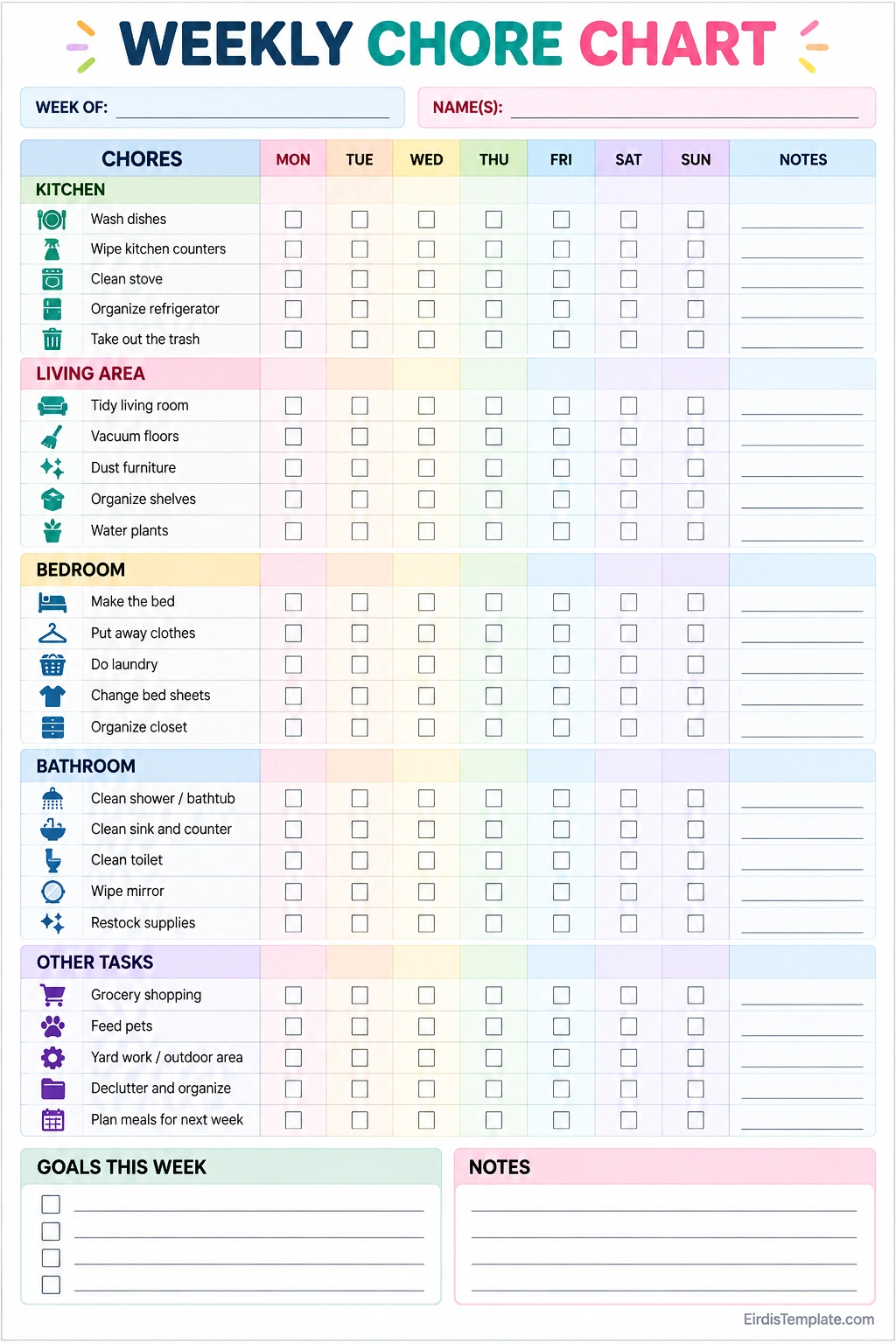
Use the printable Weekly Chore Chart below to plan your household responsibilities for the entire week. The template organizes tasks by area, including the kitchen, living room, bedroom, bathroom, and other household spaces.
Each day has a checkbox where you can track completed chores, while the notes column provides room for additional details. The weekly goals and notes sections also help you plan priorities and remember tasks that need extra attention.
Print the worksheet and fill it in by hand. You can also adjust the task list to match your home, cleaning preferences, and weekly schedule.
Benefits of Using a Weekly Household Chore Chart
A weekly chore schedule can make household management easier by turning a long list of responsibilities into a practical plan. It also helps establish habits that keep cleaning tasks from becoming overwhelming.
1. Keeps Household Tasks Organized
When chores are written down, it becomes easier to see what needs to be done and when. Instead of relying on memory, you can refer to the chart whenever you need to check your responsibilities.
2. Prevents Cleaning Tasks From Piling Up
Small, regular cleaning sessions can help prevent dirt, clutter, and laundry from accumulating. By spreading chores across the week, you can avoid having to complete every household task in one exhausting cleaning session.
3. Encourages Shared Responsibility
Families and roommates can use a shared chore chart to divide tasks more fairly. Assigning specific responsibilities helps everyone understand their role in maintaining a clean and comfortable home.
4. Saves Time and Reduces Stress
A planned schedule reduces the need to decide what to clean every day. You can focus on the tasks assigned to that day and leave other responsibilities for their scheduled times.
5. Builds Consistent Cleaning Habits
Repeating small tasks on a regular schedule helps turn cleaning into a routine. Over time, responsibilities such as wiping kitchen counters, making beds, and putting items away can become easier to manage.
Weekly Chore Chart Ideas for Every Room
The best weekly chore checklist includes tasks that reflect your household’s actual needs. Organizing chores by room can help you remember important responsibilities without making the schedule unnecessarily complicated.
Kitchen Chores
The kitchen often needs attention throughout the week because it is used for preparing meals and cleaning dishes. Consider adding these tasks to your weekly chore planner:
- Wash dishes or load the dishwasher.
- Wipe kitchen counters and dining surfaces.
- Clean the stovetop when needed.
- Wipe the refrigerator handles and exterior.
- Take out the trash and replace the liner.
- Check the refrigerator for expired food.
- Sweep and mop the kitchen floor.
Some tasks, such as washing dishes and wiping counters, may need to be completed daily. Deeper cleaning can be scheduled once or twice a week, depending on how frequently the kitchen is used.
Living Room Chores
Living rooms can quickly collect dust and clutter, especially in busy households. Add these responsibilities to keep shared spaces tidy:
- Put away books, toys, and other personal items.
- Dust tables, shelves, and furniture.
- Vacuum rugs and carpets.
- Clean accessible surfaces.
- Organize cushions and blankets.
- Wipe frequently touched surfaces as needed.
A quick daily tidy-up can help maintain the room, while vacuuming and dusting can be scheduled for a designated cleaning day.
Bedroom Chores
Keeping bedrooms organized can make it easier to find personal belongings and maintain a comfortable space. Your weekly bedroom cleaning checklist might include:
- Make the bed each morning.
- Put away clean clothes.
- Place dirty laundry in a basket.
- Change bedsheets and pillowcases.
- Dust desks, dressers, and shelves.
- Vacuum or sweep the floor.
- Organize drawers and closets when needed.
Daily tidying and weekly cleaning work well together. Regularly putting things away can reduce the amount of time needed for a more thorough bedroom cleanup.
Bathroom Chores
Bathrooms benefit from frequent cleaning because they are used every day. Depending on household size, some tasks may need to be completed more than once a week.
- Clean the sink and countertop.
- Wipe the mirror.
- Clean the toilet.
- Scrub the shower or bathtub.
- Replace used towels.
- Empty the bathroom trash bin.
- Restock toilet paper and other supplies.
- Sweep and mop the floor.
Follow product labels and safety instructions when using cleaning products. Never mix household cleaners, particularly bleach with ammonia or acidic products.
Other Household Chores
Some responsibilities do not belong to a specific room but are still important for maintaining an organized home. Depending on your household, these may include:
- Wash, dry, fold, and put away laundry.
- Water indoor plants.
- Feed pets and clean their designated areas.
- Organize shared storage spaces.
- Plan meals for the upcoming week.
- Prepare a grocery list.
- Declutter common areas.
- Clean entryways and other high-traffic spaces.
Choose the tasks that are relevant to your household rather than trying to include every possible chore.
Example of a Weekly Chore Schedule
If you are unsure how to distribute household chores, start with a simple weekly cleaning schedule. The example below spreads tasks across several days so that no single day becomes too demanding.
Monday: Kitchen and Meal Planning
Wipe kitchen counters, clean the stovetop, check refrigerator supplies, and plan meals for the week. These tasks can help establish an organized start to the week.
Tuesday: Bedroom and Laundry
Wash a load of laundry, put away clean clothes, change bedsheets if needed, and tidy bedroom surfaces.
Wednesday: Bathroom Cleaning
Clean the sink, toilet, mirror, and shower surfaces. Replace towels and check whether household supplies need replenishing.
Thursday: Living Room and Shared Spaces
Dust furniture, organize clutter, straighten cushions, and vacuum the living room or other shared spaces.
Friday: Floors and Final Touches
Vacuum or sweep high-traffic areas, mop appropriate floors, empty trash bins, and complete any small tasks that remain unfinished.
Saturday: Deeper Cleaning
Use part of the day for tasks that need extra attention, such as cleaning appliances, organizing storage, or washing windows. Choose only the tasks that are necessary that week.
Sunday: Review and Prepare
Check the completed chore chart, prepare school or work essentials, review the upcoming schedule, and identify the main household priorities for the next week.
This example is flexible. Move tasks to different days according to your work schedule, family commitments, and the amount of cleaning your home requires.
How to Create a Weekly Chore Chart That Works
A chore chart should make household responsibilities easier to manage, not create another complicated task. Follow these steps to build a practical weekly cleaning routine.
1. List All Necessary Chores
Walk through your home and identify the tasks that need to be completed regularly. Separate daily responsibilities from weekly and occasional tasks so that your list stays manageable.
2. Set a Realistic Frequency
Not every task needs to be completed every day. Dishes and kitchen counters may require daily attention, while cleaning windows or organizing storage can usually be done less frequently.
3. Assign Tasks to Specific Days
Use the Monday-to-Sunday columns to decide when each chore should be completed. Consider your busiest days and schedule longer cleaning tasks when you have more time available.
4. Divide Responsibilities Fairly
If you share your home with family members or roommates, assign chores according to availability, ability, and the needs of the household. Rotate less popular tasks when appropriate to keep the arrangement fair.
5. Keep the Chart Visible
Place your printed weekly chore chart somewhere convenient, such as a kitchen noticeboard, household command center, or another frequently used area. A visible checklist is easier to reference throughout the week.
6. Review and Adjust Every Week
At the end of the week, check which tasks were completed and identify any recurring problems. Remove unnecessary chores, change unrealistic deadlines, and update the schedule as your household routine changes.
Tips for Staying Consistent With Your Chore Chart
Consistency is more important than creating a perfect schedule. These practical tips can help you maintain your weekly household cleaning routine:
- Start small: Begin with the essential chores and add more only when the routine feels manageable.
- Use short cleaning sessions: Set aside 10 to 20 minutes for small tasks when possible.
- Check off completed tasks: Marking a chore as finished makes progress easy to see.
- Combine related chores: For example, dusting before vacuuming can make a cleaning session more efficient.
- Prepare supplies in advance: Keep appropriate cleaning tools and products accessible and stored safely.
- Allow flexibility: Move tasks when unexpected events or schedule changes occur.
- Celebrate progress: Recognize consistent effort rather than expecting every week to go perfectly.
If a task is repeatedly missed, consider whether the schedule is unrealistic or whether the chore needs to be broken into smaller steps. Adjusting the system is often more effective than abandoning it.
Frequently Asked Questions About Weekly Chore Charts
What should be included in a weekly chore chart?
A weekly chore chart can include kitchen cleaning, laundry, bathroom maintenance, bedroom organization, vacuuming, dusting, trash removal, and other household responsibilities. Add checkboxes for each day and a notes section for reminders or special tasks.
How do I make a weekly chore chart?
List the household tasks that need to be completed, decide how often each task is necessary, and assign them to specific days. Use a printable template with daily columns and checkboxes to make progress easy to track.
What is the difference between a chore chart and a cleaning schedule?
A chore chart focuses on listing responsibilities and tracking their completion. A cleaning schedule emphasizes when tasks should be done. Many printable weekly chore charts combine both features by listing chores alongside the days of the week.
How many chores should I schedule each day?
There is no universal number. Consider the size of your home, the number of people sharing responsibilities, and the time available each day. Choose a manageable workload that can be completed without disrupting essential activities.
Can I use a weekly chore chart for the whole family?
Yes. A family chore chart can list shared responsibilities and identify who is responsible for each task. You can add names, assign chores by day, and rotate selected responsibilities to help distribute household work fairly.
Should I print a new chore chart every week?
Printing a new chart each week is useful if your tasks or assignments change frequently. If your schedule stays the same, you can reuse a laminated copy with a dry-erase marker or keep a digital version for repeated use.
How can I make household chores less overwhelming?
Break large cleaning jobs into smaller tasks, spread them across the week, and prioritize essential responsibilities. A short daily tidy-up and a few scheduled cleaning sessions can be easier to maintain than leaving everything for one day.
Is a printable weekly chore chart suitable for roommates?
Yes. Roommates can use a shared weekly chore chart to organize cleaning tasks in common areas, such as the kitchen, bathroom, and living room. Agree on expectations in advance and review the arrangement if the division of work becomes unbalanced.
Conclusion
A Weekly Chore Chart is a practical tool for organizing household tasks, sharing responsibilities, and maintaining a consistent cleaning routine. By assigning chores to specific days, you can reduce clutter, avoid forgotten tasks, and make household management more predictable.
Start with a realistic list of daily and weekly responsibilities, customize the schedule to fit your household, and review it regularly. Use the free printable Weekly Chore Chart Template to track completed tasks, record reminders, and plan your household priorities for the week ahead.
With a clear plan and a little consistency, keeping your home organized can become a simpler and more manageable part of everyday life.
Download: Weekly Chore Chart Template

- Chore Chart for Family Template - October 28, 2026
- Printable Weekly Chore Chart Template - October 28, 2026
- Printable Teenage Chore Chart Template - October 28, 2026
