A wedding ceremony program is a thoughtful way to help guests follow the events of a wedding while providing useful information about the ceremony, wedding party, traditions, and special moments. It can be as simple as a one-page schedule or as detailed as a multi-page keepsake that includes the couple’s story, ceremony details, readings, music, and a personal thank-you message.
Beyond guiding guests through the celebration, a wedding program can explain unfamiliar traditions and religious customs, introduce members of the wedding party, and help everyone understand what to expect throughout the ceremony. A well-designed program can also become a meaningful reminder of the wedding day after the celebration is over.
What Is a Wedding Ceremony Program?
A wedding ceremony program is a printed or digital guide that outlines the order and important details of a wedding ceremony. It typically tells guests what will happen, introduces the people participating in the ceremony, and may provide additional information about readings, songs, rituals, or traditions.
The format can vary depending on the type of wedding. A small outdoor ceremony might need only a single page, while a formal religious ceremony may benefit from a more detailed program that explains the significance of different parts of the service.
A wedding ceremony program template can make the planning process easier by providing a ready-made structure that couples can customize with their names, wedding date, ceremony schedule, wedding party, and personal message.
Why Have a Wedding Ceremony Program?
Wedding programs serve several practical and sentimental purposes. They help guests follow the ceremony while giving the couple an opportunity to share meaningful information about the celebration.
- Guide guests: Explain the order of events so guests know what is happening next.
- Introduce the wedding party: Provide names and roles for members of the wedding party.
- Explain traditions: Give context to religious, cultural, or personal wedding rituals.
- Recognize special participants: Mention readers, musicians, officiants, parents, and other contributors.
- Share a personal message: Give the couple a place to thank their guests for attending.
- Create a keepsake: Guests can save the program as a reminder of the wedding day.
- Provide practical information: Include details such as ceremony location, reception information, or special instructions.
What to Include in a Wedding Ceremony Program
There is no single format that every couple needs to follow. Choose the information that is most useful and meaningful for your particular ceremony.
Couple’s Names
The couple’s names are usually featured prominently on the cover or opening section. You may include full names, first names, or the names you use throughout the celebration.
Wedding Date and Location
Include the wedding date and ceremony location so the program becomes a useful record of the occasion. You can also include the city, venue name, or a meaningful location description.
Order of Ceremony
The ceremony schedule is one of the most useful sections. It can list events in the order they occur, such as the processional, welcome, readings, vows, ring exchange, unity ceremony, pronouncement, and recessional.
Wedding Party
Introduce the people who play important roles in the ceremony. Depending on the wedding, this may include the maid of honor, best man, bridesmaids, groomsmen, flower girl, ring bearer, parents, officiant, readers, and musicians.
Readings and Music
If the ceremony includes special readings, poems, songs, or musical selections, consider listing their titles and the names of the people performing or presenting them.
Special Traditions
Religious, cultural, or family traditions may not be familiar to every guest. A short explanation can help everyone understand why a particular ritual is included and what it represents.
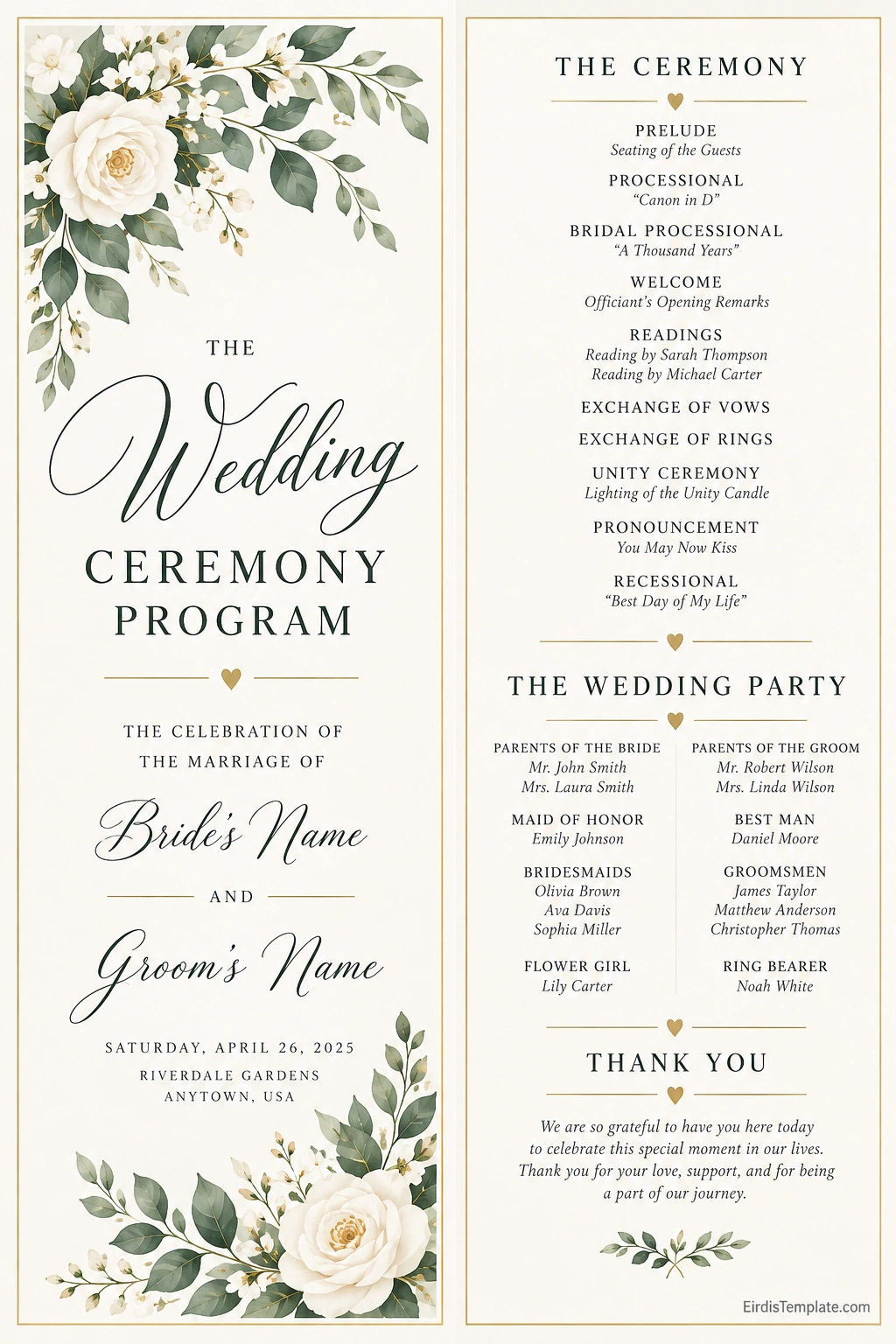
How to Create a Wedding Ceremony Program
Creating a wedding program is easier when you organize the information before working on the design. Start with the content, then choose a layout and visual style that complements the wedding.
1. Decide on the Format
First, determine how much information you want to include. A simple one-page program may be sufficient for a short ceremony. A folded program or booklet can provide additional space for wedding party details, explanations, readings, and personal messages.
Consider the number of guests and how the programs will be distributed. A compact design may be easier for guests to hold and take home.
2. List the Ceremony Events
Write down the ceremony events in their expected order. This creates the foundation of the program and helps you identify which details need to be included.
- Prelude or guest seating
- Processional
- Welcome or opening remarks
- Readings or prayers
- Exchange of vows
- Exchange of rings
- Special unity ceremony
- Pronouncement of marriage
- First kiss
- Recessional
The exact order should reflect the couple’s ceremony rather than following a generic schedule.
3. Add the Wedding Party
Create a clear list of everyone with an official role. Include their names and titles or relationships where appropriate. Keep the formatting consistent so guests can quickly scan the information.
4. Add Personal Details
Consider adding a short welcome message, the couple’s story, a favorite quote, a memorial acknowledgment, or a thank-you note. These details can make a standard ceremony program feel more personal.
5. Review Every Detail
Proofread all names, dates, titles, ceremony details, and readings before printing. Names in particular should be checked carefully because a spelling mistake can be difficult to correct after the programs have been printed.
Wedding Ceremony Program Wording
The wording of a wedding program should match the tone of the celebration. A formal wedding may use elegant and traditional language, while a casual ceremony may use a warmer and more conversational style.
A typical program can begin with a welcoming statement and then move into the ceremony schedule. The final section can include a short expression of gratitude to the guests.
For example, the program might explain that the couple is grateful for the presence of family and friends and appreciates everyone who traveled to celebrate with them. The wording should sound authentic to the couple rather than overly formal if that does not fit their personality.
Wedding Program Ideas for Different Ceremonies
Religious Wedding Ceremony
A religious wedding program may include prayers, scripture readings, hymns, religious rituals, and explanations of important traditions. Depending on the faith and ceremony, the program can help guests understand unfamiliar portions of the service.
Non-Traditional Wedding Ceremony
A non-traditional ceremony may have a unique sequence of events or personalized rituals. A program is particularly useful in this situation because it gives guests context for what they are about to experience.
Outdoor Wedding
For an outdoor ceremony, the program can serve an additional practical purpose. A lightweight printed program can provide guests with the ceremony schedule while also being designed as a fan for warm-weather celebrations.
Short and Simple Wedding
For a small ceremony, a one-page wedding program may be all that is needed. Focus on the essential information, such as the couple’s names, date, ceremony order, wedding party, and a brief thank-you message.
Wedding Ceremony Program Design Ideas
The design of the program can complement the overall wedding theme. Consider using the same colors, typography, floral elements, or decorative details found in the invitations and other wedding stationery.
- Classic: Use elegant typography, subtle borders, and neutral colors.
- Modern: Choose clean layouts, simple typography, and plenty of white space.
- Romantic: Add delicate florals, soft colors, and graceful decorative elements.
- Rustic: Consider natural textures, botanical illustrations, and warm neutral tones.
- Minimalist: Keep decoration limited and allow the ceremony information to remain the focus.
- Garden-inspired: Use botanical artwork, greenery, and floral accents.
How to Make a Wedding Program Useful for Guests
A beautiful design is helpful, but the program should also be easy to read. Avoid filling every available space with decorative elements or unnecessary information.
Use clear headings to separate the ceremony schedule, wedding party, and additional notes. Choose a readable font size and make sure there is enough contrast between the text and background.
If the program includes a detailed order of service, use short descriptions rather than long paragraphs. Guests should be able to glance at the program during the ceremony and quickly understand where they are in the schedule.
Practical Uses for Wedding Ceremony Programs
A wedding program can provide more value than simply listing the ceremony schedule. With thoughtful planning, it can serve several practical purposes during the celebration.
- Guest guide: Help guests follow the ceremony from beginning to end.
- Tradition guide: Explain cultural or religious practices.
- Fan: Folded or sturdy programs can help guests stay comfortable during a warm outdoor ceremony.
- Keepsake: Preserve names, dates, readings, and memories from the wedding day.
- Thank-you note: Include a personal message expressing appreciation to attendees.
- Memorial tribute: Remember loved ones who could not be present or who have passed away.
Common Wedding Ceremony Program Mistakes
Including Too Much Information
A program does not need to contain every detail about the wedding. Focus on information that helps guests understand or appreciate the ceremony.
Using Difficult-to-Read Fonts
Decorative script fonts can look beautiful, but they may be difficult to read when used for large amounts of text. Consider reserving decorative typography for names and headings while using a more readable font for the main content.
Forgetting to Proofread
Always check names, dates, song titles, readings, and ceremony details before sending the program to print. Ask someone else to proofread it as well because a second reader may notice errors that the original writer overlooks.
Not Matching the Actual Ceremony
The printed program should reflect what will actually happen. If the ceremony schedule changes, update the program before printing the final version.
Tips for Printing Wedding Ceremony Programs
Before printing a large quantity, print one sample and inspect it carefully. Check the text size, margins, colors, alignment, and overall appearance.
- Print a test copy before the final batch.
- Check that all names and dates are correct.
- Make sure text is readable at normal viewing distance.
- Choose paper that matches the style and format of the program.
- Consider the number of guests when deciding how many copies to print.
- Keep a few extra copies for photographs, keepsakes, or unexpected guests.
- Coordinate the program design with other wedding stationery when possible.
Wedding Ceremony Program Checklist
Before finalizing the program, review the following checklist:
- Couple’s names
- Wedding date
- Ceremony location
- Order of ceremony
- Officiant’s name
- Wedding party names and roles
- Readings and readers
- Musical selections and musicians
- Religious or cultural traditions
- Special acknowledgments
- Memorial tribute, if desired
- Thank-you message
- Contact or reception information, if useful
- Final proofreading
Conclusion
A wedding ceremony program is a practical and meaningful part of wedding stationery. It helps guests understand the order of service, introduces the people who make the ceremony special, and provides context for traditions, readings, music, and other important moments.
Whether you are planning a traditional religious service, a casual outdoor ceremony, or a completely personalized celebration, the right program can make the experience easier for guests to follow while creating a lasting keepsake. By organizing the ceremony details first and then choosing a design that reflects the wedding style, couples can create a program that is both beautiful and genuinely useful.
Most importantly, a wedding ceremony program gives couples another opportunity to welcome their guests and express gratitude for sharing one of the most meaningful days of their lives.
Download: Wedding Ceremony Program Template

- Free Roommate Agreement Template (Word) - September 28, 2026
- Free Printable Wedding Card Template - September 28, 2026
- Free Printable Wedding Schedule Template - September 28, 2026
