A successful coaching relationship begins with clear communication and shared expectations. Both the coach and the client need to understand their roles, responsibilities, and goals before the coaching process starts. A coaching contract agreement helps establish this foundation by documenting the services, fees, confidentiality expectations, and conditions of the professional relationship.
Whether you provide life coaching, business coaching, career coaching, or executive coaching, a written agreement can help prevent misunderstandings. It gives both parties a clear reference for managing sessions, setting objectives, and handling changes throughout the coaching engagement.
In this guide, you will learn what a coaching contract agreement is, why it matters, and what to include before working with a client. You will also find a free printable coaching agreement template that you can customize for your coaching practice.
What Is a Coaching Contract Agreement?
A coaching contract agreement is a written document between a coach and a client that defines the terms of their professional coaching relationship. It explains what the coach will provide, what the client is expected to do, and how the coaching engagement will operate.
The agreement typically covers coaching objectives, session formats, service fees, payment arrangements, confidentiality, scheduling, and termination conditions. It may also explain the limitations of coaching and clarify that the client remains responsible for personal decisions and actions.
Unlike an informal verbal understanding, a written coaching services agreement provides a shared reference that both parties can review whenever questions arise. It helps create a transparent and professional environment from the beginning.
Why Is a Coaching Contract Agreement Important?
A coaching agreement benefits both the coach and the client. It establishes professional boundaries while creating a structured process for working toward agreed objectives.
1. Establishes Clear Expectations
The agreement explains what the coaching service includes and what falls outside its scope. Clients understand what they can expect, while coaches can communicate their services and limitations clearly.
2. Defines Coaching Goals
Documenting the client’s objectives helps both parties understand the purpose of the engagement. Clear goals also provide a reference for reviewing progress during future sessions.
3. Clarifies Fees and Payment Terms
A written contract records the coaching fee, payment schedule, accepted methods, and any cancellation or refund conditions. This reduces confusion about financial responsibilities.
4. Protects Confidentiality
Coaching conversations may involve personal, professional, or business information. A confidentiality clause explains how shared information will be handled and identifies any applicable exceptions.
5. Defines Each Party’s Responsibilities
The coach and client have different roles in the coaching process. The agreement explains what the coach will provide and what the client is expected to contribute, including participation and agreed follow-up activities.
6. Provides a Framework for Resolving Issues
If scheduling problems, payment questions, or disagreements arise, both parties can refer to the agreed terms. This can make difficult conversations more constructive and help maintain professional boundaries.
What Should a Coaching Contract Agreement Include?
A useful coaching contract should explain the essential terms of the relationship without unnecessary complexity. The following sections can help create a clear and practical document.
1. Coach and Client Information
Start by identifying both parties. Include the coach’s name or business name, the client’s name, and relevant contact information such as email addresses and phone numbers.
If the coaching service is provided to an organization, identify the organization and the person authorized to enter into the agreement.
2. Purpose of the Coaching Engagement
Explain why the coaching relationship is being established. The purpose may involve personal development, career planning, leadership skills, business growth, or improved professional performance.
A clear purpose helps both parties understand the intended direction of the coaching process.
3. Coaching Goals and Objectives
List the main goals the client wants to work toward. Goals should be specific enough to guide the sessions while allowing room for adjustments as the client’s needs develop.
Examples include:
- Improve leadership and communication skills.
- Develop a clearer career direction.
- Build confidence in professional situations.
- Create a practical business development plan.
- Improve time management and productivity.
- Develop better decision-making habits.
Goals can be reviewed periodically to determine whether the coaching approach remains appropriate.
4. Scope of Coaching Services
This section describes the services included in the coaching package. It should explain what the coach agrees to provide and identify any additional services that require separate arrangements.
Coaching services may include:
- One-on-one coaching sessions.
- Goal setting and action planning.
- Progress reviews and accountability discussions.
- Personalized exercises and learning resources.
- Feedback related to agreed coaching objectives.
- Email or messaging support, if included.
- Follow-up sessions or progress assessments.
It is also helpful to clarify what coaching does not include. For example, coaching is not automatically a substitute for therapy, medical treatment, legal advice, financial advice, or other regulated professional services.
5. Session Details and Scheduling
Explain how coaching sessions will take place and how often they are scheduled. Include the following information:
- Session format, such as in-person, video call, or phone.
- Length of each session.
- Number of sessions included in the package.
- Session frequency, such as weekly or monthly.
- Scheduling and rescheduling procedures.
- Notice required for cancellations.
- Policy for missed or late sessions.
Clear scheduling terms help both parties manage their time and maintain a consistent coaching routine.
6. Coaching Fees and Payment Terms
State the agreed coaching fee and explain how payment will be collected. Coaches may charge per session, per package, or through a recurring arrangement.
The payment section should identify:
- Total coaching package price or individual session fee.
- Payment due dates.
- Accepted payment methods.
- Deposit requirements, if applicable.
- Installment arrangements, if offered.
- Refund and cancellation conditions.
- Additional charges for services outside the package.
Make sure the payment policy is explained before the client commits to the coaching program.
7. Confidentiality and Privacy
A confidentiality clause explains how information shared during coaching will be handled. It helps clients understand what they can expect regarding the privacy of their conversations and records.
The agreement should describe the coach’s confidentiality commitments and any applicable exceptions. These may include disclosures required by law, situations involving a serious safety concern, or circumstances the parties have specifically agreed to in writing.
Coaches should also explain how personal information, session notes, recordings, and electronic communications are stored and protected. Any recording of sessions should be addressed separately, with appropriate consent.
8. Coach and Client Responsibilities
Both parties contribute to the success of the coaching relationship. Their responsibilities should be described clearly.
Coach responsibilities may include:
- Provide a professional and supportive coaching environment.
- Use appropriate coaching methods and tools.
- Respect agreed confidentiality commitments.
- Prepare for scheduled sessions.
- Communicate clearly about the coaching process.
- Maintain appropriate professional boundaries.
Client responsibilities may include:
- Attend scheduled coaching sessions.
- Participate honestly and actively.
- Communicate goals, concerns, and expectations.
- Complete agreed exercises or action steps.
- Make independent decisions about personal actions.
- Follow the payment and scheduling terms.
9. Contract Duration and Termination
Specify the start date and expected duration of the coaching engagement. The agreement may cover a fixed number of sessions, a defined coaching package, or an ongoing arrangement.
Explain how either party can terminate the agreement, how much notice is required, and what happens to unused sessions or outstanding payments. Refunds and cancellations should follow the written policy and applicable law.
10. Signatures and Agreement Confirmation
Include signature lines for the coach and client, along with their printed names and signing dates. Signatures help document that both parties have reviewed and accepted the stated terms.
Free Printable Coaching Contract Agreement Template
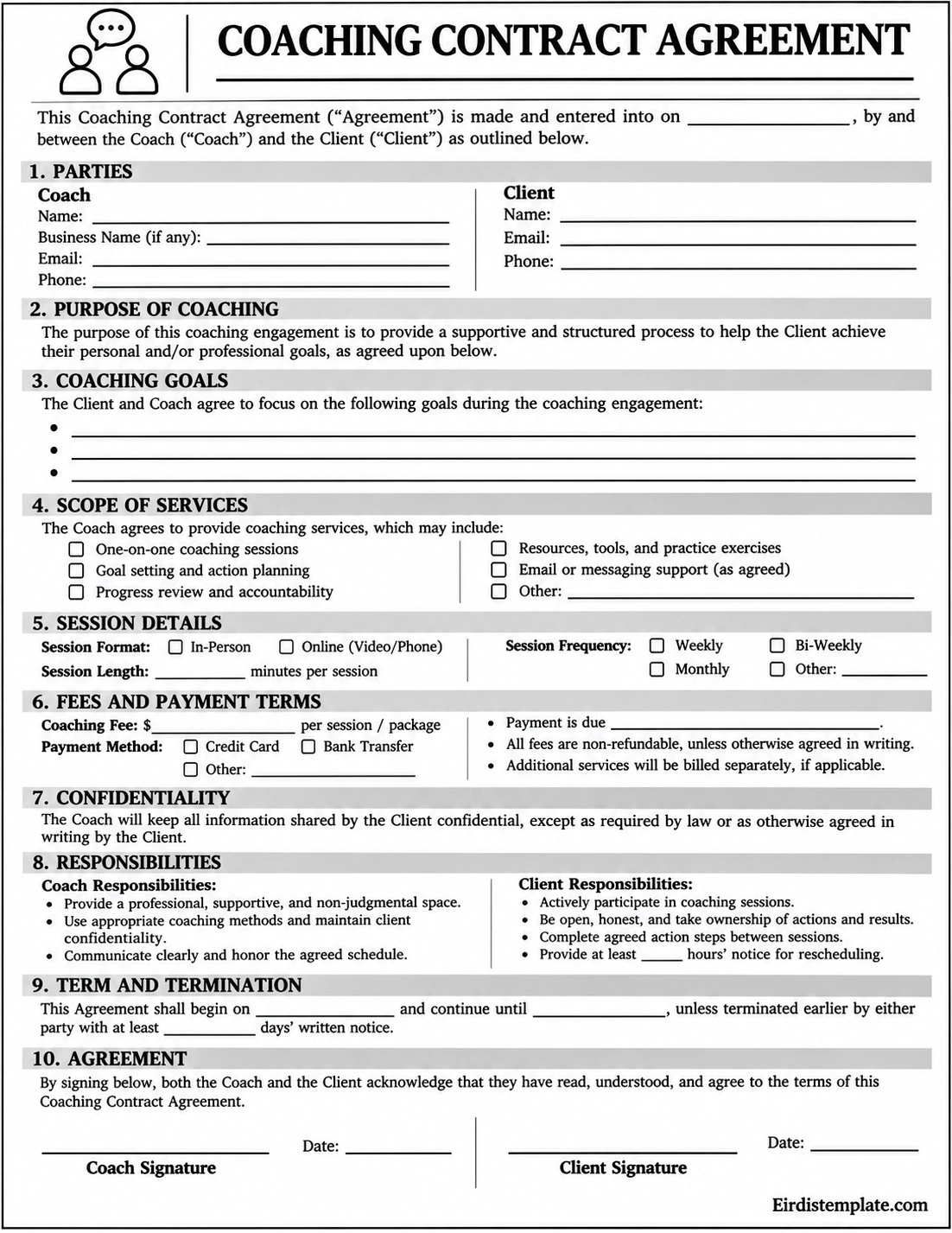
A printable coaching contract agreement template provides a convenient starting point for documenting a professional coaching relationship. It organizes important details in one place so that both parties can review the terms before beginning the engagement.
The template below includes sections for coach and client information, coaching purpose, goals, services, session details, fees, confidentiality, responsibilities, contract duration, and signatures.
You can print the form and complete the blank fields according to your coaching arrangement. Add any additional conditions needed to reflect your services, professional standards, and applicable requirements.
How to Create a Coaching Contract Agreement
Preparing a coaching contract is easier when both parties discuss their expectations before the first session. Follow these steps to create an agreement that reflects the actual coaching arrangement.
Step 1: Discuss the Client’s Goals
Begin by identifying what the client hopes to achieve. Discuss their priorities, expectations, and desired outcomes so the coaching service has a clear direction.
Step 2: Define the Coaching Services
Explain what the coaching package includes. Specify the session format, duration, frequency, resources, and any additional support available between sessions.
Step 3: Agree on Fees and Scheduling
Confirm the price, payment deadlines, and appointment schedule. Discuss cancellation, rescheduling, and refund conditions before including them in the contract.
Step 4: Establish Confidentiality and Boundaries
Explain how private information will be handled and identify the limits of confidentiality. Make sure the client understands the nature of coaching and any services that fall outside the coach’s professional scope.
Step 5: Document Responsibilities
Write down what the coach and client agree to contribute. Clear responsibilities encourage accountability and help both parties understand their roles.
Step 6: Review and Sign the Agreement
Read the completed contract together. Correct missing information, discuss unclear terms, and make sure both parties receive a signed copy before the coaching engagement begins.
Tips for Managing a Professional Coaching Relationship
A written agreement establishes the foundation, but consistent communication helps maintain a productive coaching relationship. Consider these practical tips:
- Set realistic goals: Choose objectives that are meaningful and appropriate for the client’s circumstances.
- Review progress regularly: Use scheduled reviews to discuss achievements, challenges, and changes in priorities.
- Maintain professional boundaries: Keep the relationship focused on the agreed coaching objectives.
- Communicate between sessions: Establish clear rules for email, messaging, response times, and additional support.
- Respect confidentiality: Protect client information and explain any limits before sensitive discussions take place.
- Document important changes: Record approved changes to fees, services, session schedules, or contract duration in writing.
- Encourage client ownership: Support the client’s decision-making rather than promising specific personal or professional results.
Common Mistakes to Avoid in a Coaching Contract
An incomplete agreement can create confusion even when both parties have good intentions. Avoid these common mistakes when preparing a coaching contract.
- Using vague coaching objectives: Define the general goals and review them as the engagement progresses.
- Failing to explain service limitations: Clearly identify what coaching includes and which services require another qualified professional.
- Leaving payment policies unclear: Document fees, due dates, cancellation charges, and refund conditions.
- Ignoring confidentiality limits: Explain the circumstances in which information may need to be disclosed.
- Not defining cancellation procedures: State the notice required for rescheduling or missing a session.
- Promising guaranteed results: Avoid guaranteeing outcomes that depend on the client’s decisions, circumstances, or external factors.
- Relying on verbal changes: Document important amendments and obtain agreement from both parties.
Frequently Asked Questions About Coaching Contract Agreements
What is the purpose of a coaching contract agreement?
A coaching contract agreement establishes the terms of the relationship between a coach and a client. It defines the services, goals, fees, session arrangements, confidentiality expectations, and responsibilities of both parties.
Is a coaching contract agreement legally binding?
A properly formed and signed coaching agreement may be legally binding. Its enforceability depends on applicable laws, the contract terms, and other legal requirements. Both parties should understand the document before signing, and professional legal review may be appropriate.
What is the difference between a coaching agreement and a coaching contract?
The terms are often used interchangeably. Both documents describe the expectations and conditions of a coaching relationship. Some coaches use the term coaching agreement to emphasize mutual understanding, while coaching contract may place more emphasis on formal contractual obligations.
Does a coaching contract need to include confidentiality?
Yes, confidentiality terms are strongly recommended. They explain how client information will be protected and identify any applicable exceptions. Coaches should also address data storage, session recordings, and information shared through electronic communication.
Should a coaching agreement include specific goals?
Yes. Including initial goals helps establish the purpose of the engagement and provides a reference for reviewing progress. Goals can be adjusted later if both parties agree that the coaching priorities have changed.
How long should a coaching contract last?
The duration depends on the coaching package and the needs of the client. Some agreements cover a few sessions, while others continue for several months. The contract should clearly state the start date, duration, renewal conditions, and termination procedure.
Can a coaching contract include cancellation and refund policies?
Yes. It should explain how much notice is required to cancel or reschedule sessions and whether missed appointments are charged. Refund conditions should also be stated clearly and comply with applicable law.
Can a coaching agreement be used for online coaching?
Yes. An online coaching agreement can cover video sessions, phone calls, email support, messaging, digital resources, and payment arrangements. It should also address communication privacy and any relevant technology requirements.
Can I customize a printable coaching contract agreement template?
Yes. You can customize a printable template by adding the coach’s information, client details, coaching goals, services, fees, confidentiality terms, and other conditions. Review the final document to ensure it accurately reflects the coaching arrangement.
Conclusion
A coaching contract agreement creates a clear and professional foundation for the relationship between a coach and a client. It documents the coaching objectives, services, fees, confidentiality expectations, and responsibilities that guide the engagement.
By discussing expectations and putting the agreed terms in writing, both parties can begin the coaching process with greater clarity and mutual understanding. Use a printable coaching contract agreement template as a starting point, customize it to your services, and review every section before signing.
Legal Notice: This template is provided for general informational purposes and is not legal advice. Contract requirements and enforceability vary by jurisdiction. Confidentiality obligations may also be subject to legal and professional exceptions. Consider having the completed agreement reviewed by a qualified legal professional before using it.
Download: Coaching Contract Agreement Template

- Coaching Contract Agreement Template - November 5, 2026
- Cleaning Service Agreement Template - November 5, 2026
- Commercial Cleaning Agreement Template - November 5, 2026
