A Chore Chart for Adults makes it easier to manage household responsibilities, maintain a clean home, and build consistent daily routines. Between work, errands, family commitments, and personal time, household chores can quickly become overwhelming. A simple printable chart helps you organize tasks, decide what needs attention first, and track your progress throughout the week.
Whether you live alone, share a home with a partner, or manage a household with roommates, an adult chore chart can help you divide responsibilities and avoid last-minute cleaning marathons. You can organize tasks by frequency, assign chores to specific people, and create a realistic schedule that fits your lifestyle.
In this guide, you will find practical daily, weekly, and monthly chore ideas, tips for building a manageable cleaning routine, and a printable chore chart template to help you get started.
What Is a Chore Chart for Adults?
A Chore Chart for Adults is a structured list of household tasks that helps individuals or households plan and track regular responsibilities. It usually includes task names, completion checkboxes, and a schedule organized by day, week, or month.
Unlike a general to-do list, an adult chore chart focuses on recurring household tasks. These may include washing dishes, vacuuming floors, doing laundry, cleaning bathrooms, organizing storage areas, and checking household supplies.
A printable household chore chart can be customized to suit different living arrangements. Someone living alone might use it to spread chores across the week, while couples and roommates can use it to divide tasks more fairly.
Benefits of Using an Adult Chore Chart
A household chore schedule can make cleaning more predictable and reduce the mental effort involved in managing a home.
1. Keeps Household Tasks Organized
A written chart puts household responsibilities in one place. Instead of trying to remember every task, you can review the list and see what needs to be completed today or later in the week.
2. Prevents Chores from Piling Up
Small, regular cleaning tasks can prevent dirt, clutter, and laundry from accumulating. A daily routine also reduces the need to spend an entire weekend catching up on neglected chores.
3. Encourages Fair Task Distribution
When multiple adults share a home, a chore chart makes responsibilities more visible. Each person can understand which tasks they are expected to complete, helping reduce confusion and repeated reminders.
4. Saves Time Through Better Planning
Grouping similar chores together can make household work more efficient. For example, you might complete all bathroom cleaning on one day or handle laundry while working through other tasks at home.
5. Creates a More Manageable Routine
A clear schedule helps you balance cleaning with work, rest, and personal commitments. You can choose a realistic number of chores for each day instead of trying to do everything at once.
Free Printable Chore Chart for Adults Template
A printable chore chart provides a simple way to organize household tasks and monitor progress. Look for a layout with separate sections for daily, weekly, and monthly chores, along with checkboxes and space for notes.
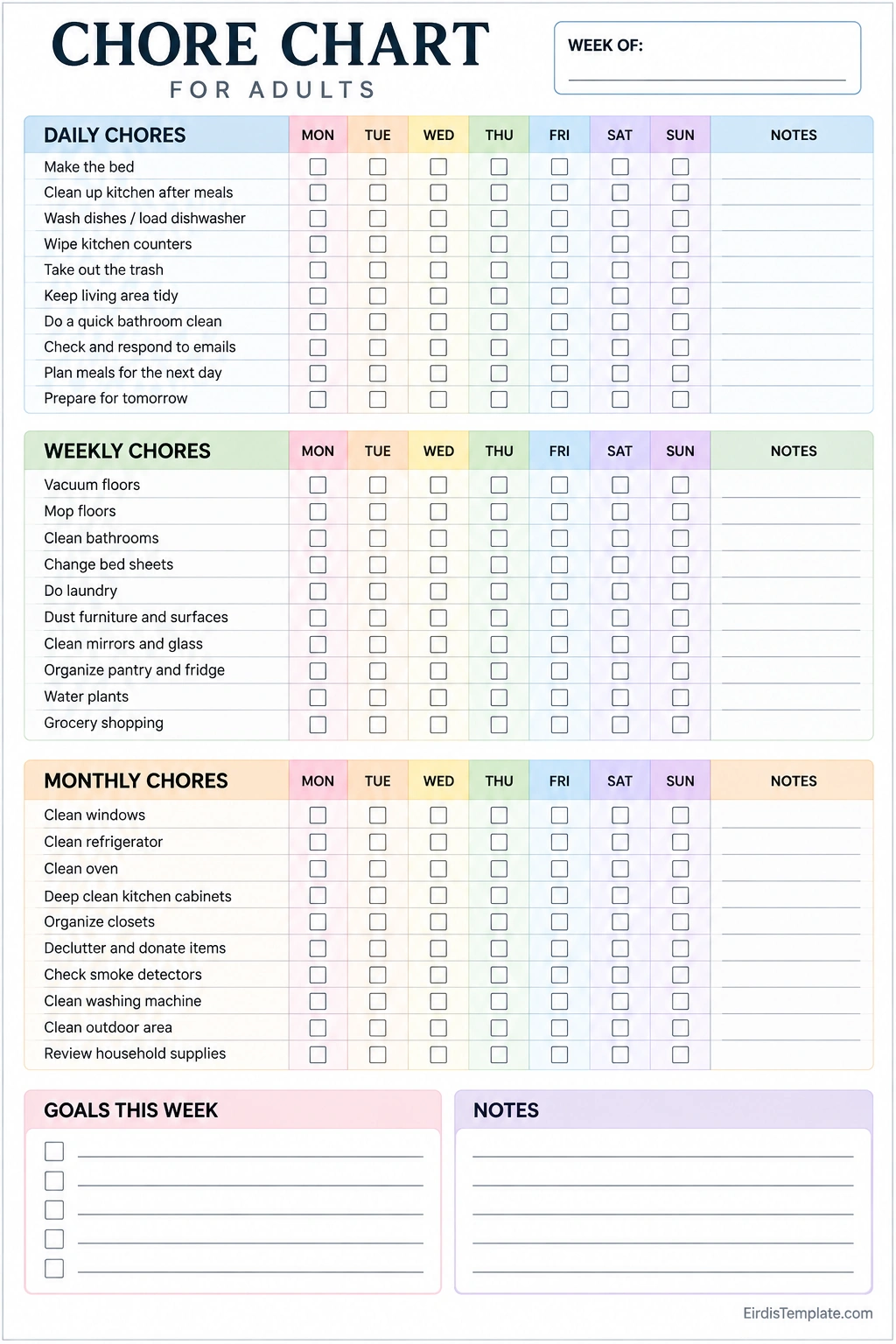
Use the template as a starting point and adjust the task list to match your home. Remove chores that do not apply, add recurring responsibilities, and assign tasks to household members if you share the work with others.
For best results, print the chart on standard US Letter paper and place it somewhere visible, such as a kitchen noticeboard, home office, or household command center.
Daily Chore Chart for Adults
Daily chores are small tasks that help maintain a tidy home. They generally take only a few minutes and can be incorporated into your morning or evening routine.
Kitchen Chores
- Wash dishes or load the dishwasher.
- Wipe kitchen counters and the dining table.
- Put away food and cooking supplies.
- Clean up spills as they happen.
- Check the trash and recycling bins.
Bedroom and Living Area Chores
- Make the bed.
- Put clothes in the laundry basket.
- Return personal items to their proper places.
- Tidy the living room and shared spaces.
- Clear clutter from desks and tables.
Daily Personal and Household Tasks
- Sort incoming mail and important paperwork.
- Feed pets according to their care schedule.
- Prepare items needed for the next day.
- Wipe frequently used surfaces when needed.
- Spend five to ten minutes tidying before bed.
Choose the tasks that matter most to your household. You do not need to include every possible chore on your daily checklist; a short, consistent routine is often easier to maintain.
Weekly Chore Chart for Adults
Weekly chores usually require more time than daily tidying. Scheduling them across different days helps distribute the workload and keeps your home clean without making every day feel like a major cleaning session.
Weekly Cleaning Tasks
- Vacuum carpets and rugs.
- Sweep and mop hard floors.
- Clean bathroom sinks, mirrors, and surfaces.
- Scrub the shower or bathtub as needed.
- Dust furniture, shelves, and accessible surfaces.
- Change bed sheets and pillowcases.
- Clean kitchen appliances and frequently touched surfaces.
Laundry and Organization
- Wash, dry, fold, and put away laundry.
- Organize clothing and closet areas.
- Clean out old food from the refrigerator.
- Restock essential household supplies.
- Water indoor plants according to their needs.
Planning Tasks
- Prepare a grocery list.
- Plan meals for the coming week.
- Review appointments and household commitments.
- Sort paperwork that needs attention.
- Check the chore chart and plan the next week.
You can assign one or two larger chores to each day. For example, clean the bathroom on Tuesday, handle laundry on Wednesday, and vacuum the house on Saturday. Choose a schedule that works with your availability rather than copying someone else’s routine.
Monthly Chore Chart for Adults
Monthly chores cover tasks that do not require attention every day or every week. Adding them to your household chore list helps prevent less frequent cleaning and maintenance from being forgotten.
- Clean windows and window tracks.
- Deep-clean the refrigerator shelves and drawers.
- Clean the oven according to the manufacturer’s instructions.
- Organize kitchen cabinets and pantry shelves.
- Declutter closets, drawers, and storage areas.
- Wash washable curtains or clean window coverings as appropriate.
- Clean accessible vents and fan covers where appropriate.
- Review household supplies and safely dispose of expired products.
- Check smoke detectors and carbon monoxide alarms according to manufacturer guidance.
- Review upcoming home maintenance needs.
Not every monthly chore needs to happen on the same day. Spread larger jobs throughout the month, and adjust the schedule based on the size of your home, the number of occupants, and your maintenance needs.
How to Create a Chore Schedule That Works
The best chore chart is one you can realistically follow. Use these steps to create a household cleaning routine that fits your lifestyle.
Step 1: List Your Household Responsibilities
Write down the chores that need regular attention. Include cleaning, laundry, meal preparation, organizing, pet care, and routine maintenance. Review each room so you do not overlook important tasks.
Step 2: Categorize Tasks by Frequency
Separate your list into daily, weekly, and monthly chores. Some tasks may need to happen more often depending on how frequently a space is used.
Step 3: Estimate the Time Required
Consider how long each chore takes. A quick kitchen cleanup may take five minutes, while changing bed sheets or cleaning a bathroom may require more time. Realistic estimates help prevent overloading your schedule.
Step 4: Assign Tasks Fairly
If you live with other adults, discuss how to divide the work. Consider work schedules, physical abilities, preferences, and the time required for each task. Rotate less popular chores when practical.
Step 5: Choose a Tracking Method
Use checkboxes, initials, or a completion column to record finished tasks. A printable chart is useful if you prefer a visible paper checklist, while a digital list may work better for people who manage household tasks on their phones.
Step 6: Review the Schedule Weekly
At the end of each week, review what worked and what did not. Move tasks to more suitable days, remove unnecessary items, and adjust the workload when your schedule changes.
Chore Chart Ideas for Couples and Roommates
Sharing a home means sharing responsibility for keeping it functional and comfortable. A chore chart can make that division more transparent.
- Assign clear ownership: Give each task a responsible person instead of assuming someone will do it.
- Divide work by effort: Consider the time and difficulty of chores, not just the number of tasks assigned.
- Rotate recurring tasks: Alternate chores such as bathroom cleaning or taking out the trash if everyone is comfortable doing them.
- Agree on standards: Discuss what “clean” means for shared spaces to avoid different expectations.
- Schedule a short check-in: Review the chart together once a week and resolve issues before they become ongoing frustrations.
The goal is not to make household work overly formal. It is to create a fair, practical system that reduces misunderstandings and helps everyone contribute.
Common Chore Chart Mistakes to Avoid
A chore chart can become difficult to maintain if it is too complicated or unrealistic. Avoid these common mistakes:
- Adding too many tasks: Start with essential chores and expand the list only when necessary.
- Planning every minute: Leave room for unexpected events and changes in your schedule.
- Ignoring task frequency: Not every chore needs to be done daily. Choose a sensible schedule for each task.
- Assigning an uneven workload: Compare the time and effort involved when dividing chores among adults.
- Using vague descriptions: Write specific tasks, such as “wipe bathroom counters,” rather than “clean bathroom.”
- Failing to update the chart: Remove tasks that no longer apply and add new responsibilities as needed.
- Expecting perfection: Focus on steady progress and a functional home rather than an unrealistic standard of cleanliness.
Frequently Asked Questions
What should a Chore Chart for Adults include?
An adult chore chart can include daily cleaning tasks, weekly household chores, monthly maintenance, completion checkboxes, notes, and assigned responsibilities. Customize the list to match your home and schedule.
How many chores should adults do each day?
There is no fixed number. Choose a manageable set of daily tasks based on your available time, household size, and cleaning needs. A few consistent tasks can be more effective than an ambitious list that is difficult to finish.
What is the difference between a daily and weekly chore chart?
A daily chore chart tracks routine tasks such as washing dishes and tidying shared areas. A weekly chore chart covers less frequent activities such as vacuuming, changing bed sheets, and cleaning bathrooms. One printable chart can combine both schedules.
How do couples divide household chores fairly?
Discuss each person’s schedule, preferences, and available time. Divide chores based on the effort required, assign clear responsibilities, and review the arrangement regularly. Rotating certain tasks can also help keep the workload balanced.
Can I use a chore chart if I live alone?
Yes. A chore chart is useful for people living alone because it helps spread cleaning and maintenance tasks across the week. It can also help you remember monthly chores that are easy to overlook.
How often should I update my chore chart?
Review your chart weekly and make larger adjustments whenever your work schedule, household needs, or living arrangements change. Keeping the list realistic makes it easier to follow consistently.
Should I use a printable or digital chore chart?
A printable chore chart works well when you want a visible checklist on a wall or noticeboard. A digital chart may be more convenient for shared access, reminders, and updates. Choose the format you are most likely to use.
Conclusion
A Chore Chart for Adults is a practical tool for organizing household cleaning, sharing responsibilities, and maintaining consistent routines. By dividing chores into daily, weekly, and monthly tasks, you can manage your home without leaving every job until the weekend.
Start with a realistic list, assign responsibilities clearly, and use a simple tracking method. Review the chart regularly and adjust it to fit your schedule. With a manageable routine, household chores can become easier to plan and less overwhelming to complete.
Download: Chore Chart for Adults

- Chore Chart for Family Template - October 28, 2026
- Printable Weekly Chore Chart Template - October 28, 2026
- Printable Teenage Chore Chart Template - October 28, 2026
