A car repair invoice is an important document that records the automotive repair services performed, replacement parts supplied, labor charges, and total amount owed by a customer. It provides a clear breakdown of repair costs, helps mechanics receive accurate payment, and gives vehicle owners a useful record of their vehicle’s maintenance history.
Whether you operate an auto repair shop, work as an independent mechanic, or manage a vehicle service business, a professional car repair invoice helps keep billing organized. It also improves transparency by showing customers what work was completed and how the final amount was calculated.
Using a car repair invoice template makes the process easier. You can record customer details, vehicle information, labor hours, parts, taxes, payment status, and repair recommendations in one consistent document. This guide explains what a car repair invoice should include, how to prepare one, and how to use it to improve customer communication and business recordkeeping.
What Is a Car Repair Invoice?
A car repair invoice is a billing document issued by an auto repair shop, mechanic, or automotive service provider. It lists the services performed on a vehicle and the charges associated with the work. Depending on the business, it may also include diagnostic findings, parts information, warranty details, maintenance recommendations, and payment records.
The invoice helps customers understand what they are paying for while giving the repair business a documented record of the transaction. It can also support bookkeeping, warranty inquiries, insurance documentation, and future maintenance planning.
A typical car repair invoice may cover services such as:
- Routine maintenance: Oil changes, filter replacements, fluid checks, and scheduled servicing.
- Mechanical repairs: Engine work, transmission service, suspension repairs, and cooling system maintenance.
- Brake services: Brake pad replacement, rotor work, and brake system inspections.
- Electrical repairs: Battery replacement, alternator repairs, and electrical diagnostics.
- Tire and wheel services: Tire replacement, balancing, alignment, and related work.
- Diagnostic services: Fault-code checks, inspections, and troubleshooting.
A car repair invoice is not always the same as a repair estimate or work authorization. An estimate describes expected charges before the work is completed, while a work authorization records permission to proceed with specified repairs. The invoice documents the work billed and the amount charged.
Why Is a Car Repair Invoice Important?
A clear invoice benefits both the customer and the repair business. It creates a written record of the transaction and makes it easier to understand the relationship between the work performed and the amount charged.
Provides Transparent Repair Costs
Customers can see the labor charges, replacement parts, additional services, taxes, and final total. Itemized billing reduces confusion and gives customers a better opportunity to ask questions about individual charges.
Supports Accurate Payment and Bookkeeping
For repair shops, invoices help track revenue, outstanding balances, payment dates, and completed jobs. Consistent invoice numbering also makes it easier to locate transaction records and reconcile payments.
Documents Vehicle Maintenance History
Keeping repair invoices creates a useful history of work performed on a vehicle. Owners can refer to previous services, parts replaced, and maintenance dates when planning future work or discussing recurring problems with a mechanic.
Helps With Warranty and Insurance Records
An invoice may help document repairs when a customer asks about a parts warranty, service guarantee, or insurance claim. Supporting evidence may also include diagnostic reports, receipts, photographs, or other documents. An invoice alone does not guarantee warranty coverage or insurance reimbursement.
Builds Customer Confidence
Professional, accurate billing demonstrates that the repair business takes documentation seriously. Clear descriptions and consistent communication can help customers understand the work and build confidence in the service relationship.
What Should a Car Repair Invoice Include?
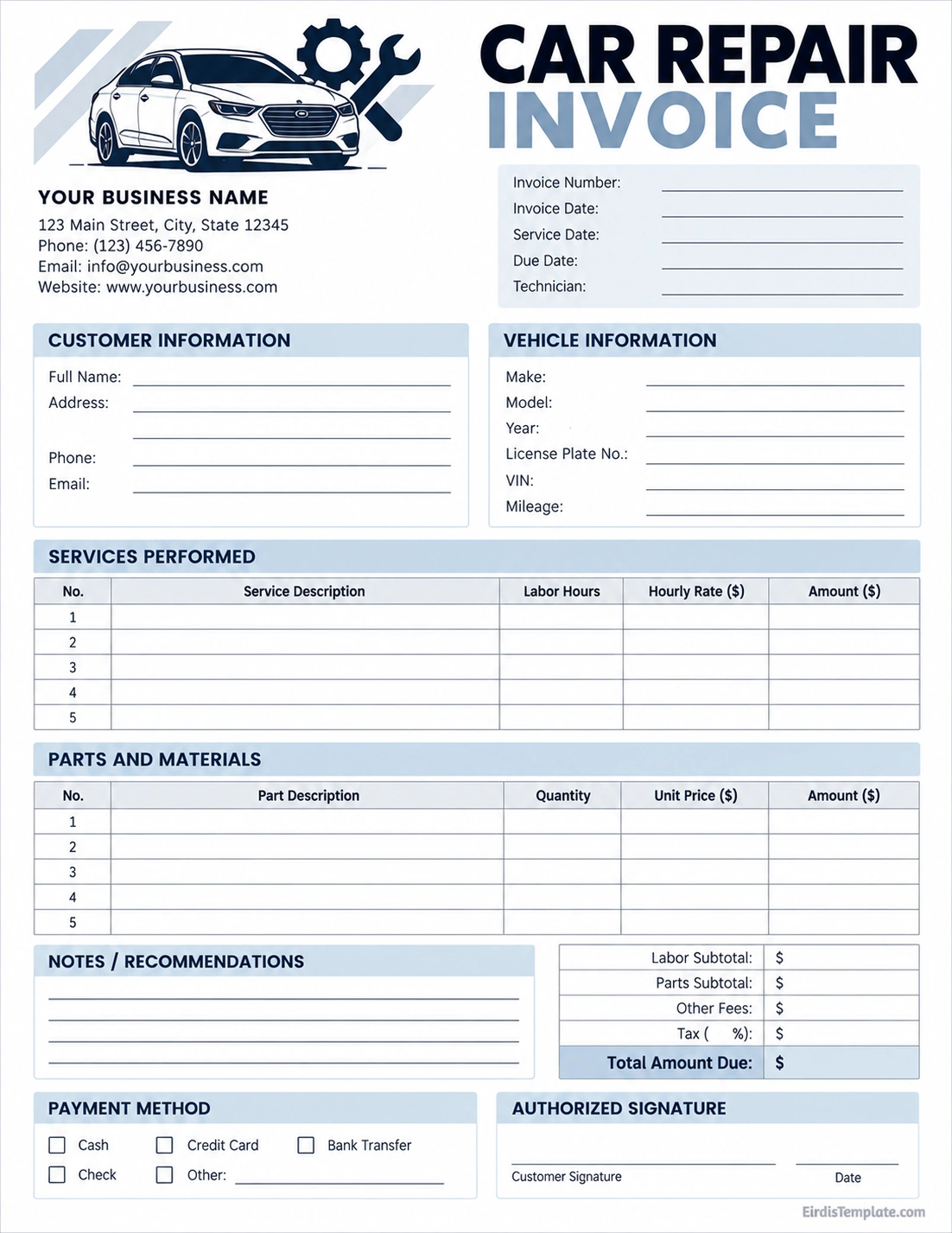
A complete automotive repair invoice should identify the customer, vehicle, services, charges, and payment information. The specific fields may vary depending on the size of the repair shop and applicable local requirements.
Repair Shop Information
Include the business name, address, phone number, email address, and other relevant contact details. You may also include a business registration or tax identification number when required. Consistent branding helps customers identify the invoice and contact the shop with questions.
Customer and Vehicle Details
Record the customer’s name and appropriate contact information. Identify the vehicle using relevant details, such as:
- Make and model.
- Model year.
- License plate number.
- Vehicle identification number (VIN), when appropriate.
- Odometer reading at service.
These details help distinguish the repair from other jobs, especially when a customer owns multiple vehicles or returns to the shop regularly.
Invoice and Service Dates
Include a unique invoice number, invoice date, service date, and payment due date if applicable. You may also record the repair order number or the name of the technician responsible for the work.
Itemized Labor Charges
Describe the repair tasks completed and show how labor was charged. Depending on the shop’s billing method, the invoice may list labor hours, an hourly rate, a flat-rate service price, or a separate charge for diagnostic work.
Use specific descriptions rather than vague entries such as “general repairs.” For example, “replace front brake pads” gives the customer a clearer explanation of the work than a generic service label.
Replacement Parts and Materials
List the parts and materials supplied for the repair. Include descriptions, quantities, unit prices, and line totals where appropriate. If relevant, identify part numbers or distinguish between original equipment, aftermarket, and customer-supplied parts.
Subtotal, Taxes, and Total Amount Due
Show the labor subtotal, parts subtotal, additional fees, applicable taxes, discounts, and final amount due. If the customer has already paid a deposit or partial payment, record it and calculate the remaining balance clearly.
Tax treatment varies by jurisdiction and may depend on the type of part, labor, or service. Apply the rules that govern your business rather than assuming the same tax treatment applies to every repair.
Payment Details and Warranty Information
State the accepted payment methods and record the payment status. If a parts or labor warranty applies, include a concise summary or reference the relevant warranty document. Explain any applicable conditions without suggesting that coverage is broader than the actual terms.
Notes and Recommendations
Use a notes section for relevant findings, completed inspections, recommended future maintenance, or repairs that may require attention later. Distinguish work that was completed from recommendations that the customer has not yet approved.
For appropriate jobs, include a customer acknowledgment or signature field if the business uses one. Follow applicable rules for repair authorization, customer consent, and record retention.
How to Create a Car Repair Invoice Step by Step
Preparing a car repair invoice becomes easier when your shop follows a consistent billing process. A structured approach also helps reduce errors and makes customer communication more reliable.
Record the Repair Order
Start with the customer and vehicle information, then link the invoice to the relevant repair order. Confirm the service date, odometer reading, and work authorized by the customer. This helps ensure the invoice reflects the correct vehicle and repair job.
List Completed Repairs
Review the technician’s work record and describe each completed service. Separate diagnostic work, labor, replacement parts, and other charges when appropriate. Do not list proposed repairs as completed work.
Calculate the Charges
Enter the relevant quantities, labor rates, part prices, and additional fees. Calculate each line total, add the subtotals, apply applicable taxes, and subtract any payments already received. Check the calculations before issuing the invoice.
Review the Invoice With the Customer
Make sure the invoice descriptions are understandable and the final amount matches the documented work. Explain any unexpected charges and answer questions about parts, labor, or recommendations. Clear communication can prevent misunderstandings after payment.
Send the Invoice and Keep a Copy
Provide the customer with a printed or digital copy. Record the invoice number, payment status, and any outstanding balance in your bookkeeping system. Store related repair orders and supporting documents according to your business’s recordkeeping procedures.
Car Repair Invoice vs. Repair Estimate and Receipt
These documents serve different purposes during an automotive service transaction.
- Car repair estimate: Forecasts the expected cost of proposed repairs before the work is completed. The final charges may differ if additional work is authorized or circumstances change.
- Repair authorization: Records the customer’s approval for specified diagnostic work or repairs, as required by the applicable process.
- Car repair invoice: Documents the charges for completed work and any other items being billed.
- Payment receipt: Confirms that the business received a payment.
For example, a repair shop may first provide an estimate for replacing brake pads and rotors. After the customer approves the work, the shop completes the repair and issues an invoice. Once payment is received, the shop can provide a receipt if appropriate.
Tips for Using a Car Repair Invoice Template
A car repair invoice template can help standardize billing across different technicians and service jobs. Use these practices to make the template more effective:
- Use unique invoice numbers: Maintain a consistent numbering system so every transaction is easy to find.
- Be specific about services: Describe the repairs in language customers can understand.
- Separate labor and parts: Show the charges clearly so customers can review the cost breakdown.
- Verify vehicle information: Check the plate number, VIN, and odometer reading when relevant.
- Document additional work: Keep appropriate records of customer authorization for extra repairs.
- Record warranty terms accurately: Reference the actual coverage and applicable conditions.
- Track payment status: Distinguish paid invoices from unpaid balances and partial payments.
- Protect customer information: Store invoices and vehicle records securely.
- Review local requirements: Check rules for repair estimates, authorizations, taxes, invoices, and consumer disclosures.
For a small repair business, a printable invoice may be sufficient. Shops handling many vehicles may benefit from automotive shop management software that connects repair orders, parts inventory, labor records, invoices, and customer histories.
Common Car Repair Invoicing Mistakes to Avoid
Even a well-designed template can cause problems when information is missing or inaccurate. Review these common mistakes before issuing an invoice:
- Vague repair descriptions: Customers may not understand what the shop actually performed.
- Incorrect parts or labor totals: Calculation errors can lead to disputes and accounting problems.
- Missing vehicle identifiers: Incomplete details can make records difficult to match to the correct vehicle.
- Unclear additional charges: Fees should be explained and supported by the applicable agreement or authorization.
- Mixing completed and recommended work: Separate repairs already performed from services suggested for a later visit.
- Incorrect payment status: Record deposits, partial payments, and outstanding balances accurately.
- Missing supporting records: Keep relevant repair orders, authorizations, and parts documentation where appropriate.
A short review before issuing each invoice can help prevent these problems and support a more professional customer experience.
Frequently Asked Questions About Car Repair Invoices
What is the purpose of a car repair invoice?
A car repair invoice documents the automotive services performed, parts supplied, labor charges, and amount owed. It supports payment processing, bookkeeping, customer transparency, and vehicle maintenance records.
What should a car repair invoice include?
A car repair invoice should generally include the repair shop’s information, customer details, vehicle identifiers, invoice number, service date, itemized labor and parts, applicable taxes, total due, payment status, and relevant notes or warranty information.
Is a car repair invoice proof of payment?
An invoice primarily documents charges and requests payment. It can show that an invoice has been paid if the business records the payment status, but a separate receipt or payment confirmation may provide clearer evidence that payment was received.
Can I use a car repair invoice template for my auto repair shop?
Yes. A car repair invoice template can be customized for general maintenance, mechanical repairs, tire services, electrical work, and other automotive services. Add the fields your business needs and ensure the document meets applicable requirements.
Why should labor and parts be listed separately?
Separating labor and parts makes the bill easier to understand and review. Customers can see how much was charged for the technician’s work and how much was charged for replacement components or materials.
Can a car repair invoice help with warranty claims?
Yes. The invoice can document the date of service, work performed, and parts supplied, which may help when reviewing a warranty claim. Coverage depends on the relevant warranty terms, and additional supporting documents may be required.
How long should a repair shop keep invoices?
Retention periods depend on local laws, tax requirements, warranty obligations, and business policies. Repair shops should establish a recordkeeping procedure that meets the rules applicable to their location and business activities.
Should a car repair invoice include recommended future repairs?
It can include recommendations, but they should be clearly separated from completed and billed work. This helps customers understand which services they are paying for now and which items may require attention in the future.
Conclusion
A car repair invoice is an essential tool for documenting automotive services, explaining repair costs, and maintaining accurate business records. By itemizing labor and parts, identifying the vehicle, and clearly showing taxes and payment status, repair shops can make billing easier for customers to understand.
A car repair invoice template helps standardize this process and supports better recordkeeping for both the repair business and the vehicle owner. Customize the template to fit your services, verify every charge, and keep appropriate supporting documents. Consistent, transparent invoicing can strengthen customer trust and create a more organized repair workflow.
Download: Car Repair Invoice Template

- Car-Buying Agreement Template - October 13, 2026
- Car Sale Agreement Template - October 13, 2026
- Car Repair Invoice Template - October 13, 2026
