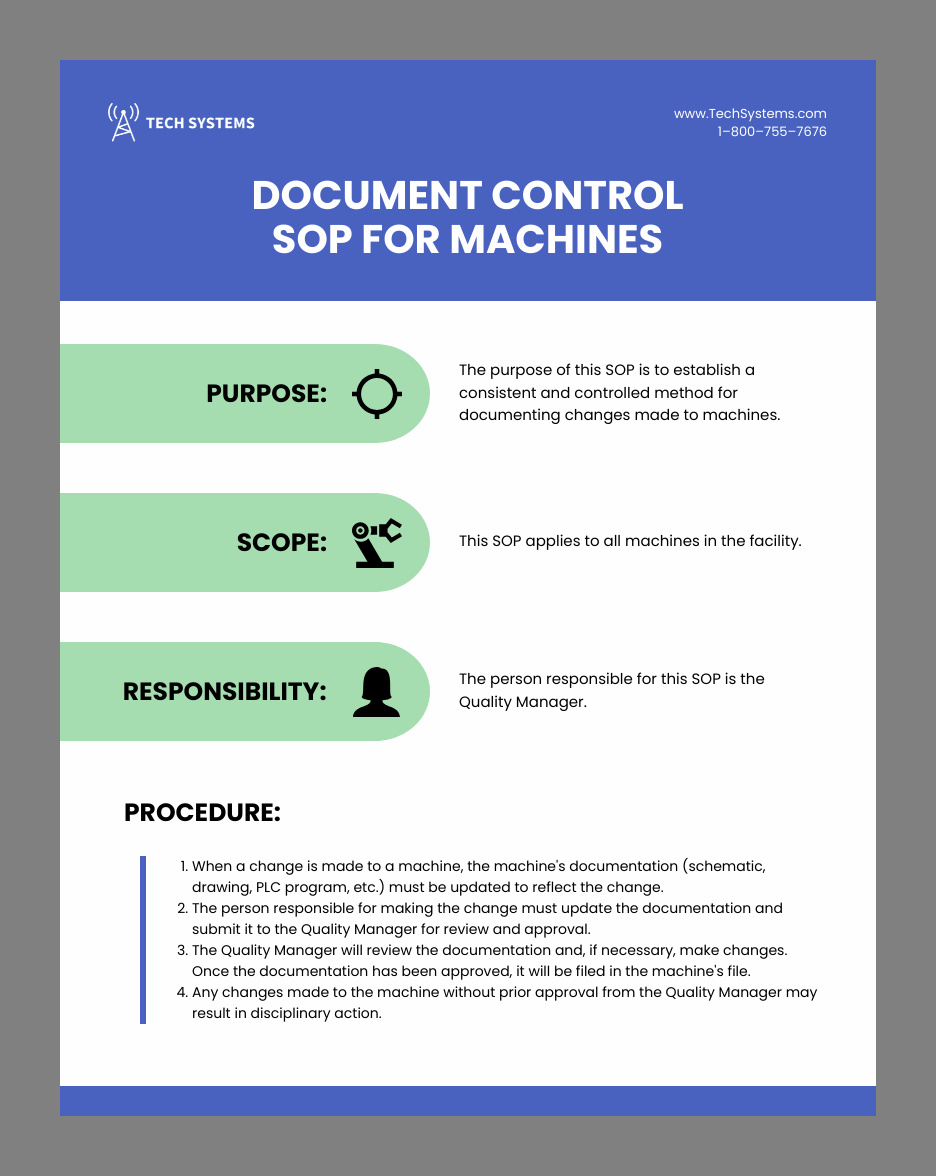
In the world of business and organizations, Standard Operating Procedure (SOP) plays a crucial role in ensuring consistency, efficiency, and safety. Whether you are a small business owner or part of a large corporation, having well-defined SOPs can make a significant difference in the way operations are carried out. In this comprehensive guide, we will delve into the what, why, key elements, how to, and tips for creating effective SOPs.
What is Standard Operating Procedure?
Standard Operating Procedure, commonly referred to as SOP, is a set of step-by-step instructions that outline how tasks within an organization are to be performed. These procedures are designed to ensure that activities are carried out in a consistent and efficient manner, with a focus on quality and compliance. SOPs are essential for maintaining operational efficiency, reducing errors, and ensuring the safety of employees and customers.
Why are SOPs Important?
The importance of SOPs cannot be overstated. Here are some key reasons why SOPs are crucial for any organization:
- Consistency: SOPs help ensure that tasks are carried out in the same way every time, leading to consistent results.
- Efficiency: By providing clear guidelines and procedures, SOPs help streamline operations and reduce wasted time and resources.
- Compliance: SOPs help organizations comply with industry regulations and standards, reducing the risk of legal issues.
- Training: SOPs serve as valuable training tools for new employees, helping them understand the best practices for performing tasks.
- Safety: SOPs outline safety procedures and protocols, ensuring the well-being of employees and customers.
Key Elements of an Effective SOP
Creating an effective SOP requires attention to detail and a thorough understanding of the processes involved. Here are some key elements to consider when developing SOPs:
- Clear Objectives: Clearly define the purpose and objectives of the SOP to ensure that all stakeholders understand its importance.
- Step-by-Step Instructions: Provide detailed, step-by-step instructions for performing each task or process outlined in the SOP.
- Roles and Responsibilities: Clearly define the roles and responsibilities of each individual involved in carrying out the procedures.
- Quality Control Measures: Include quality control measures to ensure that tasks are performed accurately and efficiently.
- Review and Approval Process: Establish a review and approval process to ensure that SOPs are up-to-date and in compliance with regulations.
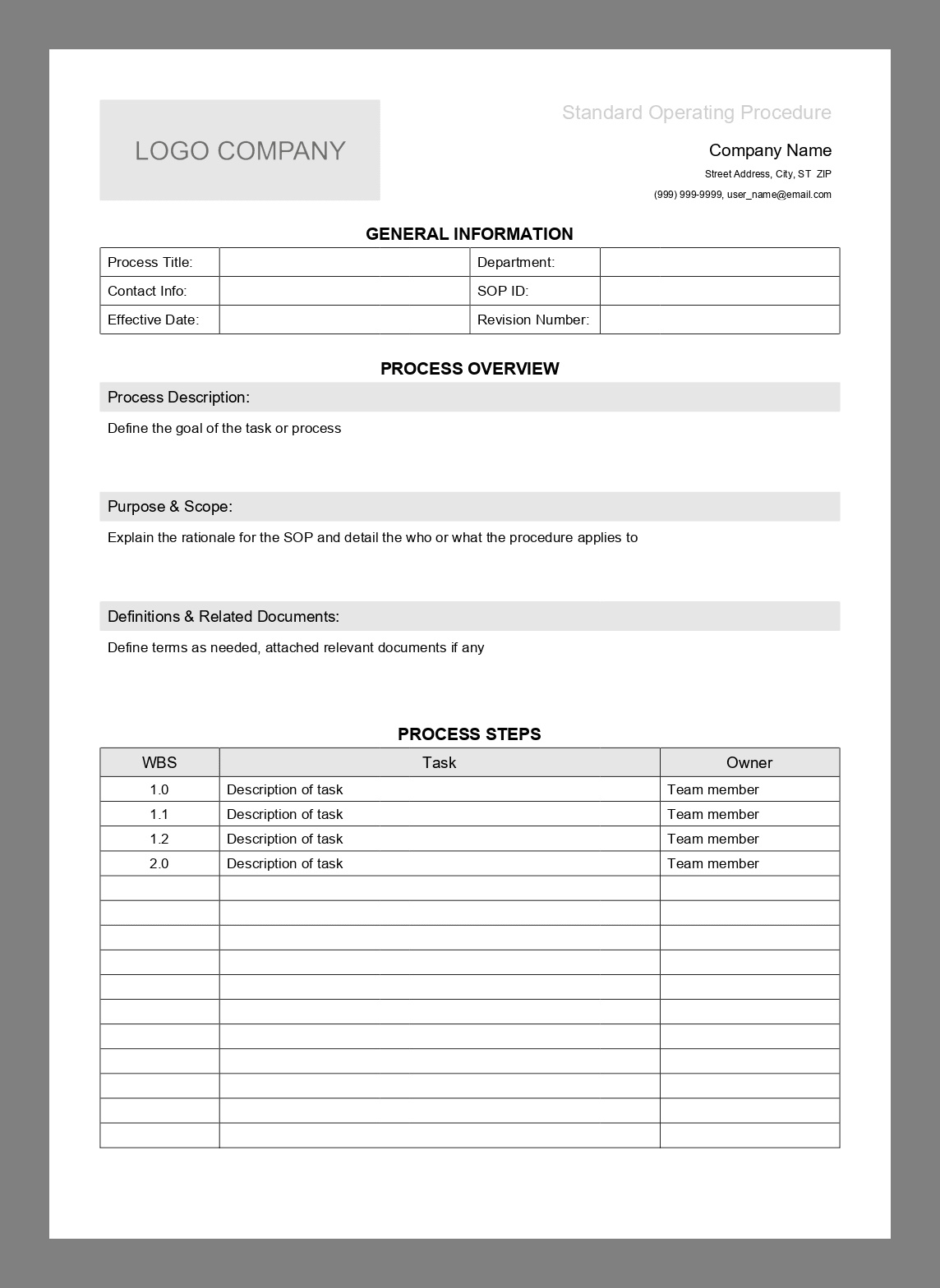
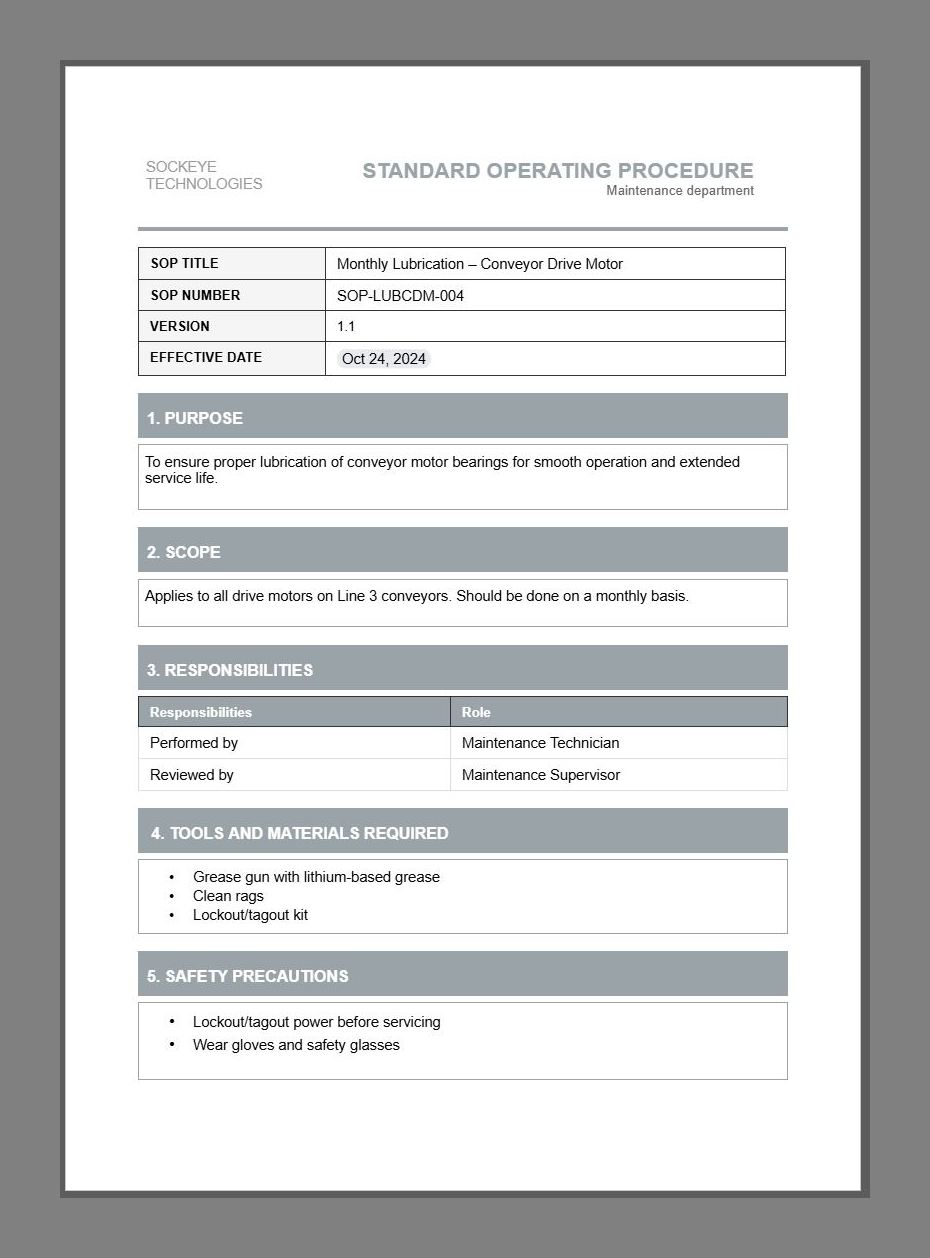
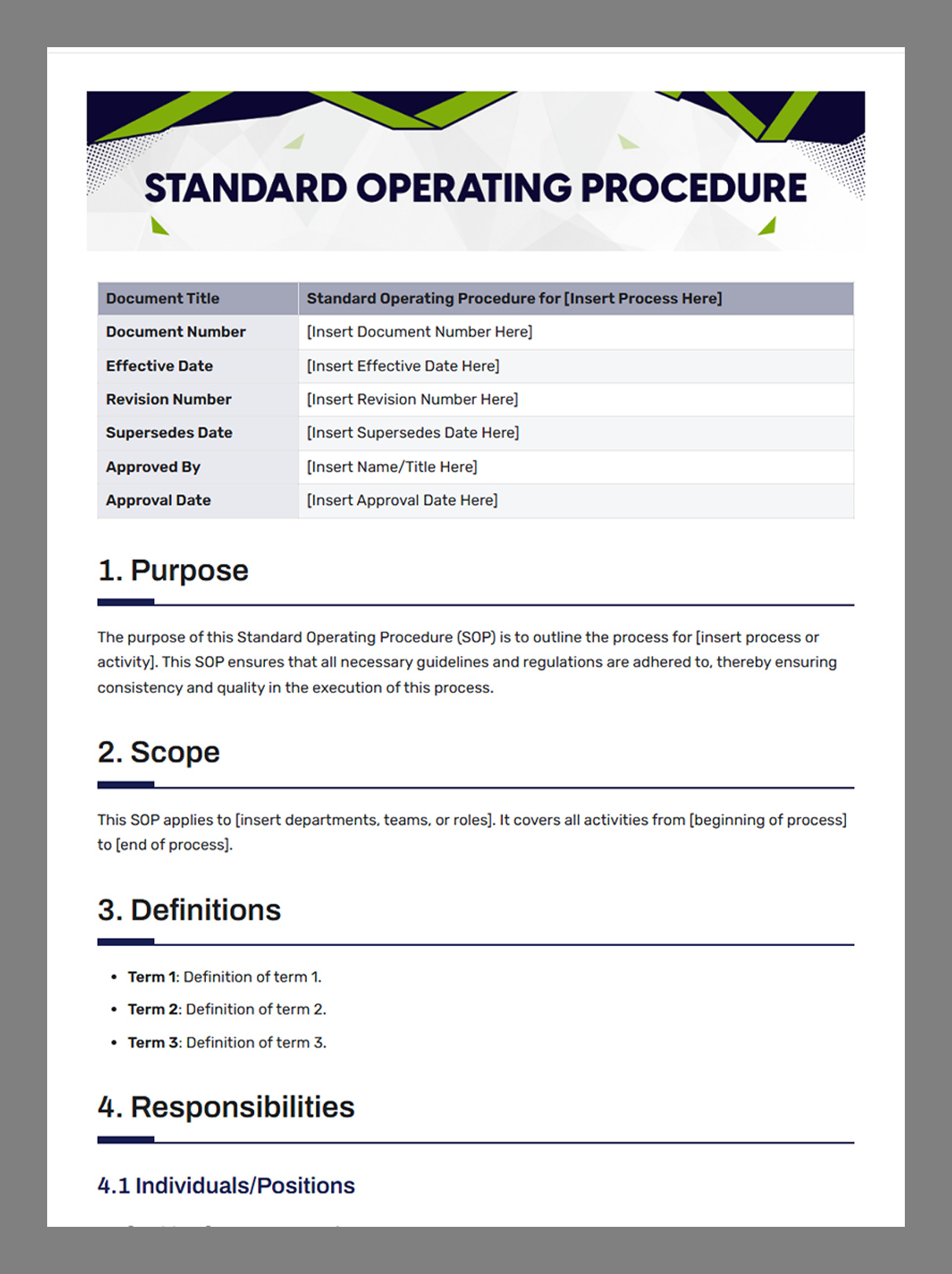
Examples
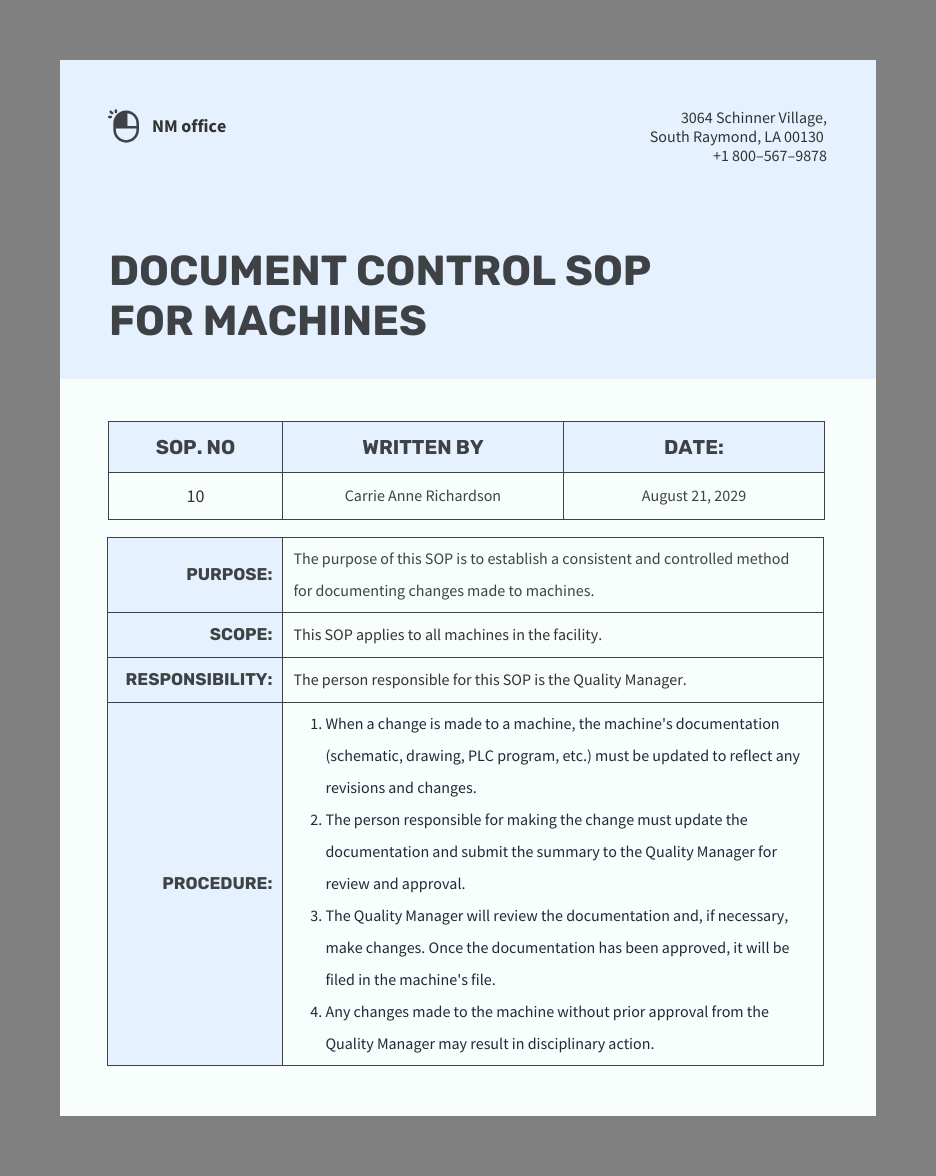
How to Create an SOP
Creating an SOP requires careful planning and collaboration with key stakeholders. Here are some steps to follow when developing an SOP:
1. Identify the Process: Determine which process or task needs to be documented in the SOP.
2. Gather Information: Collect all relevant information, including input from subject matter experts.
3. Write the SOP: Clearly outline the steps, procedures, and guidelines for performing the task.
4. Review and Revise: Have the SOP reviewed by stakeholders and make any necessary revisions.
5. Implement and Train: Introduce the SOP to employees and provide training on how to follow the procedures.
6. Monitor and Update: Continuously monitor the effectiveness of the SOP and update it as needed.
Tips for Effective SOPs
To ensure that your SOPs are effective and practical, consider the following tips:
- Keep it Simple: Use clear and concise language to avoid confusion and misinterpretation.
- Involve Stakeholders: Collaborate with key stakeholders to gather input and ensure buy-in.
- Regularly Review and Update: Review your SOPs regularly to ensure they are up-to-date and relevant.
- Provide Training: Ensure that employees are properly trained on how to follow the SOPs.
- Seek Feedback: Encourage feedback from employees to identify areas for improvement.
In conclusion, Standard Operating Procedures are essential for ensuring consistency, efficiency, and safety in organizations. By following the guidelines outlined in this guide, you can create effective SOPs that will help your business or organization operate smoothly and successfully. Remember to regularly review and update your SOPs to keep them relevant and aligned with your goals.
Standard Operating Procedure Template – Download

- Cash Flow Statement Template - October 15, 2026
- Cash Flow Forecast Template - October 15, 2026
- Free Printable Caregiver Schedule Template - October 15, 2026
