A collective bargaining agreement is an important document that establishes the terms and conditions of employment between an employer and a labor union. It helps protect employee rights, promote fair treatment, and create clear expectations for both parties. By putting workplace agreements in writing, employers and employees can reduce misunderstandings and build a more productive working relationship.
Whether you are an employer, union representative, human resources professional, or employee, understanding how a collective bargaining agreement works is essential. This guide explains its purpose, key components, negotiation process, and benefits. You will also find a simple collective bargaining agreement template that can help organize the terms of an employment agreement.
What Is a Collective Bargaining Agreement?
A collective bargaining agreement (CBA) is a legally binding written contract between an employer and a labor union representing a group of employees. It outlines the terms and conditions of employment that both parties have negotiated and accepted.
These agreements typically cover important workplace matters, including wages, employee benefits, working hours, overtime, job security, workplace safety, and procedures for resolving disputes.
Unlike an individual employment contract, a collective bargaining agreement generally applies to an entire bargaining unit or a defined group of employees represented by a union. Its purpose is to ensure consistent employment standards and establish a formal framework for managing workplace relationships.
Once properly negotiated and executed, the agreement creates obligations for both the employer and the union. Both parties are expected to follow its provisions throughout the agreement period, subject to applicable labor laws.
What Is the Purpose of a Collective Bargaining Agreement?
The primary purpose of a collective bargaining agreement is to establish clear and mutually accepted employment conditions. It provides employees with a collective voice while helping employers manage workplace expectations more consistently.
Here are some important objectives of a CBA:
- Protect employee rights: Establishes agreed-upon workplace protections and employment standards.
- Ensure fair compensation: Defines wages, salary increases, overtime rates, and other compensation arrangements.
- Improve working conditions: Addresses workplace safety, schedules, leave policies, and other employment conditions.
- Prevent workplace disputes: Provides procedures for handling complaints and resolving disagreements.
- Promote transparency: Documents the responsibilities and expectations of both employers and employees.
- Maintain labor relations: Encourages cooperation and communication between management and union representatives.
By addressing these matters in advance, both parties have a clearer understanding of their responsibilities and can avoid unnecessary workplace conflicts.
Key Components of a Collective Bargaining Agreement
A well-written collective bargaining agreement should contain several essential sections. Although the exact provisions vary depending on the industry, organization, and applicable labor laws, most agreements include the following components.
1. Names of the Parties
The agreement should identify the employer and the labor union involved in the negotiations. Include their official names, addresses, and other relevant identification details.
This section establishes which organizations are legally entering into the agreement.
2. Recognition and Scope
This section explains which employees are represented by the union and covered by the agreement. It may also describe the bargaining unit, job classifications, and any applicable exclusions.
Clearly defining the scope helps prevent confusion about which employees are entitled to the agreement’s protections and benefits.
3. Wages and Compensation
Compensation is one of the most important subjects in collective bargaining. This section explains how employees will be paid and what financial benefits they may receive.
Common provisions include:
- Base wages and salary rates.
- Annual or scheduled pay increases.
- Overtime compensation.
- Shift differentials and special allowances.
- Performance-related payments, where applicable.
4. Employee Benefits
Employee benefits describe additional compensation and support provided beyond regular wages. Depending on the organization and applicable laws, these may include health insurance, retirement contributions, paid leave, vacation benefits, and other employee assistance programs.
The agreement should explain eligibility requirements, benefit amounts, and how employees can access these benefits.
5. Working Hours and Overtime
This section establishes standard working schedules and rules for additional working hours. It may cover daily and weekly schedules, rest periods, meal breaks, overtime approval, and overtime payment rates.
Clear scheduling provisions help employees understand their working obligations and allow employers to plan staffing requirements effectively.
6. Working Conditions and Workplace Safety
A collective bargaining agreement may establish workplace safety standards, protective equipment requirements, health policies, and procedures for reporting unsafe conditions.
These provisions help create a safer working environment and clarify the responsibilities of employers and employees.
7. Grievance and Dispute Resolution Procedures
Even with a written agreement, disagreements may occur. A grievance procedure provides a structured process for addressing complaints about the interpretation or application of the agreement.
Typical steps include:
- Submitting a formal complaint.
- Reviewing the issue with a supervisor or management representative.
- Escalating unresolved matters to union representatives and higher management.
- Using mediation or arbitration when required or agreed upon.
8. Agreement Duration and Renewal
This section specifies when the agreement becomes effective and when it expires. It may also explain how either party can request amendments, begin renewal negotiations, or provide notice of termination, subject to applicable laws.
9. Signatures and Authorization
The final section identifies the authorized representatives who approve and sign the agreement. It typically includes their names, positions, signatures, and signing dates.
Signatures demonstrate that the parties have accepted the negotiated terms and intend to be bound by the agreement.
Collective Bargaining Agreement Template
Creating a collective bargaining agreement from scratch can be time-consuming, especially when several employment matters need to be addressed. Using a structured template can make the process easier by providing an organized format for recording negotiated terms.
A collective bargaining agreement template can help employers and union representatives document important information, including:
- Employer and labor union information.
- Purpose and scope of the agreement.
- Wages and compensation arrangements.
- Employee benefits and working conditions.
- Working hours and overtime provisions.
- Grievance and dispute resolution procedures.
- Agreement duration and renewal conditions.
- Authorized signatures and approval dates.
The following printable template provides a simple starting point for organizing these details.
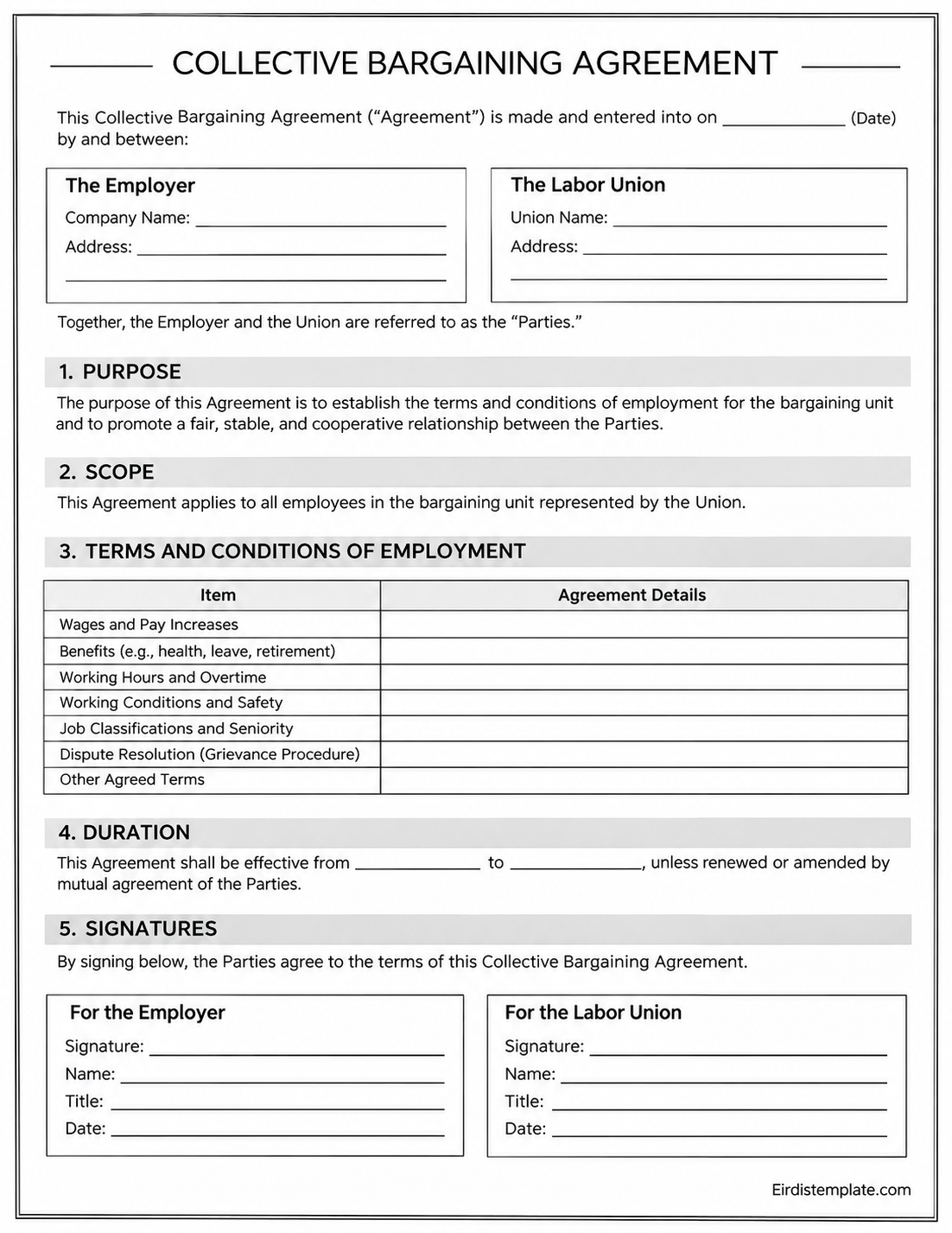
Before using the template, both parties should review each section and add the specific terms they have negotiated. Additional provisions can be included when necessary to address the organization’s industry, workforce, and legal requirements.
Keep in mind that a basic template is a starting point rather than a substitute for a complete legal agreement. Have the final document reviewed by a qualified labor relations professional or attorney before signing.
How Does the Collective Bargaining Process Work?
Collective bargaining is the negotiation process through which an employer and a labor union reach an agreement on employment conditions. Although the process varies by country and industry, it generally follows several stages.
Step 1: Preparation and Research
Both parties prepare for negotiations by identifying their priorities, reviewing existing employment conditions, and gathering relevant information. Employers may review operating costs and staffing needs, while union representatives may collect employee feedback about wages, benefits, and workplace concerns.
Step 2: Negotiation Meetings
Representatives from both sides meet to discuss proposed terms and identify areas of agreement or disagreement. They may negotiate compensation, working hours, benefits, job security, and workplace policies.
Step 3: Reaching an Agreement
After discussing the proposals, both parties work toward mutually acceptable terms. Some provisions may require revisions or additional meetings before a final agreement can be reached.
Step 4: Reviewing and Signing
Once the terms are finalized, the complete agreement should be reviewed carefully. Authorized representatives then sign the document according to applicable legal requirements and the parties’ approval procedures.
Step 5: Implementing the Agreement
After signing, the employer and union are responsible for implementing the agreed-upon provisions. Both parties should communicate the relevant terms to employees and establish procedures for monitoring compliance.
Benefits of a Collective Bargaining Agreement
A collective bargaining agreement can provide significant benefits for employees, employers, and labor unions. When negotiated fairly, it can support a more stable and cooperative workplace.
Benefits for Employees
- Provides a collective voice during employment negotiations.
- Establishes agreed-upon wages and employee benefits.
- Creates clearer workplace rules and expectations.
- Provides formal procedures for addressing grievances.
- Supports consistent treatment across the bargaining unit.
Benefits for Employers
- Creates a clear framework for managing employee relations.
- Establishes consistent workplace policies.
- Helps reduce misunderstandings and unnecessary disputes.
- Supports workforce planning and operational stability.
- Encourages communication with union representatives.
Benefits for Labor Unions
- Strengthens the union’s role in representing employees.
- Provides a formal basis for negotiating employment conditions.
- Helps monitor employer compliance with agreed terms.
- Creates a structured process for addressing employee concerns.
Tips for Creating an Effective Collective Bargaining Agreement
A useful collective bargaining agreement should be clear, practical, and consistent with applicable employment laws. Consider these tips when preparing the document.
- Use clear language: Write provisions in straightforward language so employees and management can understand their responsibilities.
- Be specific: Avoid vague statements about wages, working hours, benefits, and other important employment terms.
- Check legal requirements: Ensure that every provision complies with applicable labor and employment regulations.
- Include dispute procedures: Establish clear steps for handling grievances and disagreements.
- Define the agreement period: Specify effective dates, expiration dates, and renewal procedures.
- Review every provision: Check the final document carefully before obtaining signatures from authorized representatives.
- Keep accessible records: Provide appropriate copies to the parties and maintain an official version for future reference.
Frequently Asked Questions (FAQ)
1. What is the main purpose of a collective bargaining agreement?
The main purpose of a collective bargaining agreement is to establish mutually negotiated employment terms between an employer and a labor union. It helps protect employee rights, define workplace responsibilities, and create a consistent framework for managing labor relations.
2. Who signs a collective bargaining agreement?
A collective bargaining agreement is generally signed by authorized representatives of the employer and the labor union. The representatives must have the appropriate authority to approve and execute the agreement on behalf of their respective organizations.
3. What should be included in a collective bargaining agreement?
A typical agreement includes the names of the parties, bargaining unit information, wages, employee benefits, working hours, overtime rules, workplace safety provisions, grievance procedures, agreement duration, and authorized signatures.
4. Is a collective bargaining agreement legally binding?
Generally, yes. A properly negotiated and executed collective bargaining agreement is legally binding on the parties, subject to applicable labor laws and legal requirements. Its enforceability depends on the jurisdiction and the circumstances surrounding the agreement.
5. How long does a collective bargaining agreement last?
The duration depends on the terms negotiated by the employer and the labor union, as well as applicable legal requirements. Some agreements last one year, while others may remain effective for several years. The agreement should clearly state its effective and expiration dates.
6. Can a collective bargaining agreement be changed?
Yes. A collective bargaining agreement may be amended when both parties follow the modification procedures established in the agreement and comply with applicable labor laws. Changes should be properly documented and approved by authorized representatives.
7. What happens if an employer violates a collective bargaining agreement?
If an employer fails to follow the agreement, the union or affected employees may use the established grievance and dispute resolution procedures. Depending on the circumstances, the matter may proceed to arbitration, administrative proceedings, or legal action.
8. Is a collective bargaining agreement the same as an employment contract?
No. An individual employment contract generally establishes terms between an employer and one employee. A collective bargaining agreement establishes negotiated employment terms between an employer and a labor union for the employees covered by the bargaining unit.
Conclusion
A collective bargaining agreement is an essential document for establishing fair and consistent employment conditions between an employer and a labor union. By clearly defining wages, benefits, working hours, workplace policies, and dispute resolution procedures, it helps protect employee rights and supports a more stable working relationship.
Whether you are preparing a new agreement or reviewing an existing one, a well-organized template can simplify the documentation process. Make sure every provision reflects the terms negotiated by both parties and complies with applicable labor laws. A carefully prepared agreement can provide a reliable foundation for effective communication, fair treatment, and long-term workplace cooperation.
Download: Collective Bargaining Agreement Template
