A biography is a written introduction that helps readers understand who a person is, what they do, and what makes their background meaningful. Whether you are applying for a job, building a professional brand, introducing yourself to potential clients, or contributing to an organization, a well-written biography can help you communicate your experience and personality clearly.
A professional biography goes beyond listing job titles or educational qualifications. It tells readers about your career progression, important achievements, key skills, and interests. With the right balance of personal and professional information, your biography can build credibility and create opportunities for networking and collaboration.
Using a biography template can make the writing process easier by organizing your information into clear sections. In this guide, you will learn what a biography should include, how to write one step by step, and how to adapt your biography for a resume, company website, professional profile, or personal introduction.
What Is a Biography?
A biography is a written account of a person’s life, background, experiences, achievements, and significant interests. It can cover an entire life or focus on the experiences most relevant to a particular audience or purpose.
In professional settings, a biography often highlights a person’s career history, education, expertise, accomplishments, and professional goals. It may appear on a company website, conference program, portfolio, personal website, or networking platform.
For example, a marketing professional’s biography might describe their experience developing brand strategies, managing campaigns, and helping businesses connect with customers. A student biography might focus on education, academic interests, volunteer activities, and future aspirations.
The most effective biography provides accurate information in a clear, engaging format. Its length and tone depend on where it will be published and who will read it.
What Is a Biography Template?
A biography template is a structured writing guide that helps you organize personal and professional information into a coherent introduction. It provides a starting point for describing your background, career development, achievements, skills, and interests.
A professional biography template can save time because you do not need to decide on the entire structure from scratch. You can use the same core information to create different versions for a resume, business website, portfolio, speaking engagement, or professional networking profile.
Although a template provides structure, the final biography should reflect your actual experience and voice. Replace example text with accurate details, choose information that supports your purpose, and remove sections that are not relevant to your audience.
Why Is a Well-Written Biography Important?
A biography helps people understand your background without requiring them to review a long resume or ask for basic information. It can support professional communication, personal branding, and relationship building.
1. Builds Professional Credibility
A clear biography presents your relevant experience, qualifications, and achievements in one place. When the information is accurate and specific, readers can better understand your expertise and professional contributions.
2. Supports Personal Branding
Your biography can communicate what you do, whom you help, and what distinguishes your approach. This is especially useful for freelancers, entrepreneurs, consultants, creators, and professionals who want to establish a recognizable personal brand.
3. Creates Networking Opportunities
A well-written professional introduction helps potential colleagues, clients, employers, and collaborators identify shared interests or relevant experience. Including a clear professional focus can make it easier for people to understand how they might work with you.
4. Introduces You to New Audiences
Biographies appear in many settings, including conferences, company websites, newsletters, professional directories, and organizational publications. A concise introduction allows readers to understand your background quickly.
5. Highlights Career Development
A biography can explain how your education, previous roles, and achievements have shaped your current expertise. This narrative approach can make your professional journey more understandable than a simple list of positions.
What Should a Professional Biography Include?
The content of a biography depends on its purpose, but several elements are useful for most professional introductions.
Personal Introduction
Begin with your name and current professional role or area of focus. In one or two sentences, explain what you do and the type of work, industry, or audience you serve.
For example, a freelance writer might introduce themselves as a content specialist who helps small businesses communicate complex ideas through clear, engaging articles.
Professional Background
Describe relevant work experience, career progression, and areas of expertise. Focus on roles or experiences that help readers understand your current work rather than listing every position you have held.
Include specific responsibilities, projects, or contributions when they demonstrate relevant experience.
Education and Qualifications
Mention degrees, certifications, training, or other qualifications that support your professional goals. Include the institution or awarding organization when appropriate.
Not every biography needs a detailed education section. For experienced professionals, relevant accomplishments and current expertise may be more important than early academic history.
Achievements and Skills
Highlight a few meaningful achievements or capabilities. Whenever possible, use concrete examples rather than broad claims.
- Describe a project you completed or helped lead.
- Mention an award, certification, or relevant professional recognition.
- Explain a measurable result when reliable figures are available.
- Identify specialized skills that relate to your current role.
Choose achievements that support the impression you want to create, and make sure every statement is accurate.
Personal Interests
Relevant personal interests can make a biography feel more approachable. You might mention reading, volunteering, creative activities, outdoor pursuits, or interests connected to your field.
Keep this section brief and appropriate for the audience. Personal details should complement your introduction rather than distract from its main purpose.
Current Focus and Future Goals
Explain what you are working on now or what you hope to contribute in the future. This gives readers a sense of your direction and may encourage relevant conversations or opportunities.
Contact or Professional Links
When appropriate, include a professional email address, portfolio, company profile, or networking link. Only share contact information that you are comfortable making public.
How to Write a Biography Step by Step
Writing a biography becomes easier when you gather the essential details first and then turn them into a focused narrative.
Step 1: Identify Your Audience and Purpose
Decide who will read your biography and what you want them to understand. A job application, company website, conference introduction, and personal blog may require different details and writing styles.
For example, an employer may want to see relevant experience and qualifications, while a conference audience may be more interested in your expertise and the topic you will present.
Step 2: Gather Relevant Information
Make a list of your current role, previous experience, education, skills, achievements, and interests. Review your resume, portfolio, or professional profile to confirm dates, titles, and qualifications.
Choose only the information that supports your intended purpose. A biography is not a complete archive of everything you have done.
Step 3: Start With a Strong Introduction
Open with your name, current role, and main area of expertise. The first sentence should help readers understand who you are without requiring them to read the entire biography.
Avoid generic openings that could describe almost anyone. A specific introduction provides a clearer picture of your professional identity.
Step 4: Explain Your Background and Achievements
Arrange your experience in a logical order. You can describe your career chronologically or begin with your current role and explain the experiences that led you there.
Use concrete examples to show your capabilities. Instead of simply saying you are an experienced project manager, mention the types of projects you manage or the teams you coordinate.
Step 5: Add a Personal Touch
Include one or two relevant interests or details that help readers connect with you. Choose information that feels natural and appropriate for the setting.
Step 6: End With Your Current Focus
Conclude by explaining your current priorities, professional interests, or future direction. For a business biography, you might mention the services you provide. For an academic profile, you could identify your research interests.
Step 7: Edit and Proofread
Review your biography for clarity, grammar, factual accuracy, and unnecessary repetition. Remove details that do not support your purpose, and make sure the length fits the intended platform.
Read the final version aloud to identify awkward sentences. If possible, ask someone familiar with your work to review it before publication.
Biography Examples for Different Purposes
The best biography format depends on where it will appear. The following examples illustrate how the emphasis can change for different audiences.
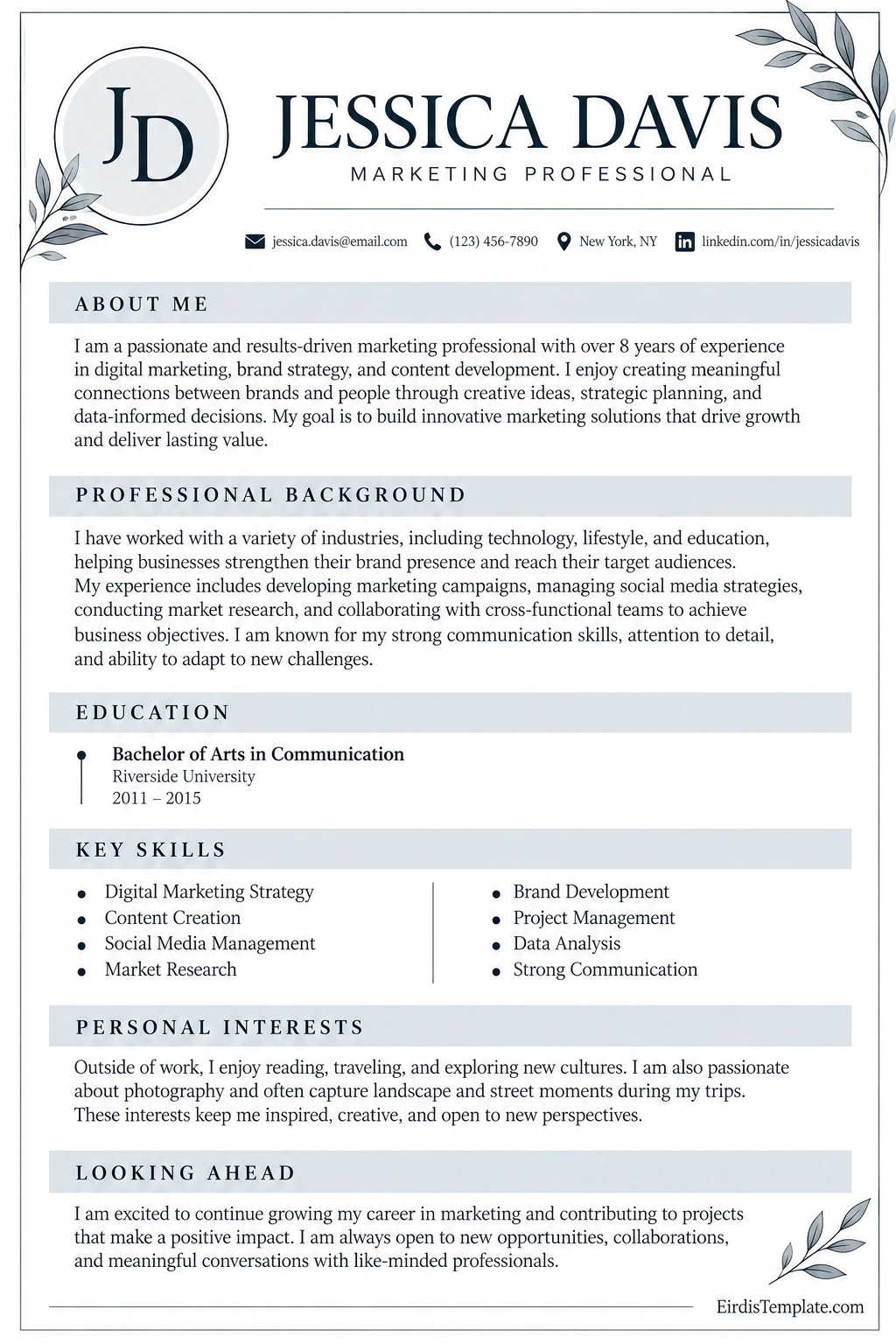
Professional Biography Example
Jessica Davis is a marketing professional specializing in content strategy, brand development, and digital campaigns. She works with businesses to create clear messaging and meaningful customer experiences. Her professional interests include audience research, creative problem-solving, and data-informed marketing. She enjoys collaborating with multidisciplinary teams and exploring new approaches to communication.
This example emphasizes professional expertise, work interests, and collaboration. Replace the sample name and details with verified information about the actual person.
Short Biography Example
Michael Turner is a freelance graphic designer who creates visual identities and marketing materials for small businesses. He enjoys combining thoughtful design with practical communication to help brands present themselves consistently.
A short biography works well for social profiles, event introductions, contributor pages, and other spaces with limited room.
Student Biography Example
Alex Morgan is a university student studying environmental science, with interests in conservation, sustainable development, and community education. Through coursework and volunteer activities, Alex is building practical research and communication skills while exploring future opportunities in environmental work.
A student biography can focus on education, projects, volunteer experience, and career interests, even when professional experience is limited.
Company Website Biography Example
Sarah Bennett is an operations consultant who helps growing businesses improve workflows and coordinate projects. Her work focuses on practical process improvements, team communication, and sustainable organizational growth. She values clear planning and collaborative problem-solving.
A company website biography should explain the person’s role, expertise, and contribution to the organization. It should also match the tone and style of the wider website.
Tips for Making Your Biography More Effective
A strong biography is informative without being overloaded with details. Use these practical tips to improve readability and make your introduction more memorable.
- Be specific: Describe your role, expertise, or contributions instead of relying on vague claims.
- Write for your audience: Emphasize the experience and information that readers are most likely to value.
- Use a natural tone: Keep the language professional but readable.
- Prioritize relevant details: Focus on information that supports your purpose.
- Keep it concise: Remove repeated ideas and unnecessary background information.
- Use accurate facts: Verify job titles, dates, qualifications, awards, and other claims.
- Choose the right point of view: Use first person for a personal introduction or third person for many formal professional profiles.
- Update it regularly: Revise your biography when your role, achievements, or professional goals change.
Common Biography Writing Mistakes to Avoid
Even a well-structured biography can become less effective if the content is too broad, too long, or poorly matched to its audience.
- Including too much information: A long list of unrelated facts can obscure your main message.
- Using generic language: Statements such as “hardworking professional” are more useful when supported by concrete examples.
- Overstating achievements: Keep claims accurate and avoid exaggerating qualifications or results.
- Ignoring the audience: A biography for a job application may need different details from one written for a personal website.
- Using an inconsistent tone: Make sure the writing style fits the publication or professional setting.
- Forgetting to proofread: Errors in names, dates, or grammar can undermine credibility.
- Leaving outdated information online: Review published biographies periodically to keep them current.
Frequently Asked Questions About Biographies
What is the main purpose of a biography?
The main purpose of a biography is to help readers understand a person’s background, experiences, achievements, and relevant interests. A professional biography also communicates expertise and helps establish a person’s professional identity.
What should be included in a short biography?
A short biography usually includes your name, current role, main area of expertise, one or two relevant achievements or experiences, and a brief personal or professional interest. The details should match the audience and purpose.
What is the difference between a biography and an autobiography?
A biography is generally written by someone other than the person whose life is being described. An autobiography is written by the person about their own life. Professional bios are often much shorter than full-length biographies or autobiographies.
Should a professional biography be written in first person or third person?
Both styles can work. First person uses words such as “I” and “my” and often feels personal and conversational. Third person uses the person’s name and pronouns and is common for company websites, conference programs, and formal introductions. Follow the expectations of the intended platform.
How long should a professional biography be?
The ideal length depends on its purpose. A short profile may need only a few sentences, while a company website biography can be several paragraphs. Longer biographies may be appropriate for speakers, academics, authors, or people whose work requires more background.
Can I use a biography template for a resume or job application?
Yes. A biography template can help you create a professional summary or personal introduction for a job application. However, follow the employer’s instructions and keep the information relevant to the position. A traditional resume and a narrative biography serve different purposes.
How often should I update my biography?
Review your biography whenever you change roles, complete an important project, gain a qualification, or shift your professional focus. A periodic review also helps ensure that contact information and published details remain accurate.
Conclusion
A well-written biography gives readers a clear understanding of who you are, what you do, and which experiences or interests define your professional identity. By focusing on relevant background, meaningful achievements, and a natural writing style, you can create an introduction that supports credibility and connection.
A biography template provides a practical starting point for organizing these details. Choose a structure that fits your purpose, tailor the content to your audience, and review the final draft for accuracy and readability.
Whether you need a short professional bio, a company website introduction, or a more detailed personal profile, the key is to present an authentic and focused account of your experience. Update it as your career develops so your biography continues to represent you accurately.
Download: Biography Template Word

- Free Printable Blank Check Template - October 9, 2026
- Birth Certificate Template - October 9, 2026
- Free Customizable Biography Template - October 9, 2026
