A well-planned wedding day timeline helps turn a busy wedding day into an organized and enjoyable experience. With so many activities happening within a limited amount of time, having a detailed schedule gives the couple, wedding party, family members, and vendors a clear understanding of what should happen and when.
A wedding day timeline can include everything from getting ready and hair and makeup appointments to photography, transportation, the ceremony, cocktail hour, reception, first dance, dinner, speeches, cake cutting, and the final send-off. It also provides space to account for travel time, setup, transitions, and unexpected delays.
Creating the timeline in advance allows everyone involved to understand their responsibilities and reduces the need for last-minute decisions. Instead of wondering what happens next, the couple and their vendors can follow a shared schedule and focus on enjoying the celebration.
What Is a Wedding Day Timeline?
A wedding day timeline is a detailed schedule that organizes the events, activities, locations, and responsibilities taking place on the wedding day. It acts as a central planning document that helps coordinate the couple, wedding party, family, photographer, videographer, caterer, DJ, venue staff, transportation providers, and other vendors.
A typical wedding timeline begins several hours before the ceremony and continues through the reception and final departure. The exact schedule depends on the wedding ceremony time, venue, photography plan, reception format, travel distances, and personal preferences.
Unlike a simple wedding itinerary that may only list major events, a detailed timeline can include smaller activities and transition periods. This makes it easier to identify scheduling conflicts before the wedding day arrives.
Why Is a Wedding Day Timeline Important?
A wedding day involves many moving parts. Vendors may arrive at different times, photographs need to be completed before certain events, transportation must be coordinated, and the reception usually follows a specific sequence.
A wedding day timeline helps bring these details together in one place.
- Provides a clear schedule for the wedding day.
- Helps vendors understand arrival and setup times.
- Keeps the wedding party aware of important activities.
- Allows enough time for photography.
- Helps coordinate transportation between locations.
- Reduces confusion about ceremony and reception transitions.
- Creates a reference for the wedding coordinator or designated point person.
- Helps identify potential scheduling conflicts before the event.
- Ensures important moments are included in the schedule.
The timeline is not designed to make the wedding feel rigid. Instead, it provides enough structure so everyone knows where they need to be and what needs to happen next.
What Should a Wedding Day Timeline Include?
The exact contents of a wedding timeline will vary, but several categories are useful for most weddings.
Getting Ready
Include the start time for hair and makeup, dressing, personal preparation, and any planned getting-ready photographs. If several members of the wedding party are receiving services, allow enough time for each person rather than scheduling everything too closely together.
First Look
If the couple plans to have a first look, include the location and scheduled time. Additional private moments, family members, or wedding party participants can also be included if they are part of the plan.
Wedding Photography
Photography often requires several dedicated time blocks. These may include detail photos, getting-ready photos, first-look photographs, wedding party portraits, family portraits, couple portraits, and reception details.
Transportation
Include transportation departure and arrival times when the ceremony, photo location, and reception venue are in different places. Allow additional time for loading, parking, traffic, and unexpected delays.
Ceremony
The ceremony section should include the scheduled start and expected end times. If there is a processional, special reading, unity ceremony, cultural tradition, or other planned activity, note it in the timeline.
Cocktail Hour
If the reception includes a cocktail hour, identify its start and end times. This period may also be used for additional photographs while guests enjoy refreshments.
Reception
Reception activities may include the grand entrance, welcome remarks, dinner, speeches, first dance, parent dances, cake cutting, bouquet traditions, open dancing, and the final send-off.
How to Create a Wedding Day Timeline
Creating a wedding day timeline becomes easier when you work backward and forward from the most important fixed events.
Step 1: Start With the Ceremony Time
Begin with the scheduled ceremony time because many other events depend on it. Once you know when the ceremony begins, you can determine when the couple needs to finish getting ready, when transportation should depart, and when portraits should take place.
Step 2: Add the Reception Schedule
Next, determine the major reception events. Consider when guests arrive, when dinner begins, when speeches take place, and when dancing and other activities start.
Step 3: Schedule Photography
Talk with your photographer about the photographs you want and how much time each group of photos may require. Family portraits can take longer than expected, particularly when many people are involved.
Creating a specific portrait list can help keep this portion of the day organized.
Step 4: Add Travel and Transition Time
Do not schedule events as though everyone can move instantly from one location to another. Include realistic travel and transition time between activities.
Consider parking, elevators, walking distances, loading equipment, gathering the wedding party, and other practical details that can affect the schedule.
Step 5: Add Vendor Arrival Times
List when each important vendor should arrive. This may include the photographer, videographer, florist, caterer, DJ, band, hair and makeup team, transportation provider, rental company, and venue staff.
Step 6: Add Buffer Time
A wedding timeline should include some flexibility. If every minute is scheduled without any buffer, a small delay early in the day can affect everything that follows.
Adding reasonable buffer periods can make the schedule more resilient and give the couple breathing room.
Sample Wedding Day Timeline
A sample timeline can help demonstrate how the different parts of the day fit together. The exact times should be adjusted according to the wedding’s ceremony time, venue, vendors, and preferences.
- 9:00 AM: Hair and makeup begins.
- 11:30 AM: Photographer arrives and begins detail photographs.
- 12:30 PM: Wedding party gets dressed.
- 1:00 PM: First look.
- 1:15 PM: Couple portraits.
- 1:45 PM: Wedding party photographs.
- 2:15 PM: Family portraits.
- 3:00 PM: Wedding party prepares for the ceremony.
- 3:30 PM: Guests begin arriving.
- 4:00 PM: Wedding ceremony begins.
- 4:30 PM: Ceremony concludes and cocktail hour begins.
- 5:30 PM: Reception entrance.
- 5:45 PM: Welcome remarks and dinner.
- 6:45 PM: Toasts and speeches.
- 7:15 PM: First dance and other special dances.
- 7:30 PM: Open dancing.
- 8:30 PM: Cake cutting or dessert.
- 9:30 PM: Final reception activities.
- 10:00 PM: Wedding send-off.
This example is only a starting point. Every wedding has different requirements, so the timeline should be customized rather than copied exactly.
Wedding Day Timeline for Different Types of Weddings
Traditional Ceremony and Reception
A traditional wedding may include separate preparation, ceremony, cocktail hour, dinner, speeches, dances, dessert, and dancing periods. These events can be arranged into clearly defined blocks to help vendors and guests understand the overall flow.
First Look Wedding
When the couple chooses a first look, many portraits can be completed before the ceremony. This may reduce the amount of photography required between the ceremony and reception.
Church or Off-Site Ceremony
When the ceremony and reception take place at different locations, transportation should be incorporated into the timeline. Include departure times, estimated travel duration, parking considerations, and arrival buffers.
Small or Intimate Wedding
An intimate wedding may have fewer formal events and fewer vendors, but a timeline can still be useful. It can organize the ceremony, portraits, meal, speeches, and other special moments without making the celebration feel overly formal.
Who Should Receive the Wedding Timeline?
The complete timeline does not necessarily need to be distributed to every guest. Instead, provide the detailed version to people who have responsibilities during the wedding.
- Wedding coordinator or planner
- Photographer
- Videographer
- Caterer or venue coordinator
- DJ or band
- Florist
- Hair and makeup team
- Transportation provider
- Wedding party
- Immediate family members with assigned responsibilities
A simplified itinerary can be created for guests if they need information about ceremony, reception, transportation, or other guest-facing activities.
Common Wedding Day Timeline Mistakes
Even a carefully planned wedding schedule can become difficult to follow if important practical details are overlooked.
- Scheduling too tightly: Avoid filling every minute without allowing time for delays.
- Forgetting travel time: Include realistic transportation and walking time.
- Underestimating photography: Allow sufficient time for family and wedding party portraits.
- Not confirming vendor arrival times: Make sure vendors know when and where they are expected.
- Leaving responsibilities unclear: Identify who is responsible for important tasks.
- Forgetting meals: Schedule meals for the couple and vendors who require them.
- Ignoring setup and cleanup: Include enough time for venue setup and post-event responsibilities.
- Failing to share the final version: Make sure key people have the most current timeline.
Tips for Making Your Wedding Timeline Work
The best wedding timeline is detailed enough to be useful but flexible enough to accommodate real-life circumstances.
- Start planning the timeline several weeks before the wedding.
- Confirm vendor schedules before finalizing the document.
- Ask your photographer about the required portrait time.
- Build realistic transition periods between activities.
- Include contact information for key vendors when appropriate.
- Assign a trusted person to manage timeline questions on the wedding day.
- Keep the couple’s schedule manageable and avoid unnecessary tasks.
- Include buffer time before major events.
- Send the final version to key vendors and wedding party members.
- Keep a printed copy available on the wedding day.
Using a Wedding Day Timeline Template
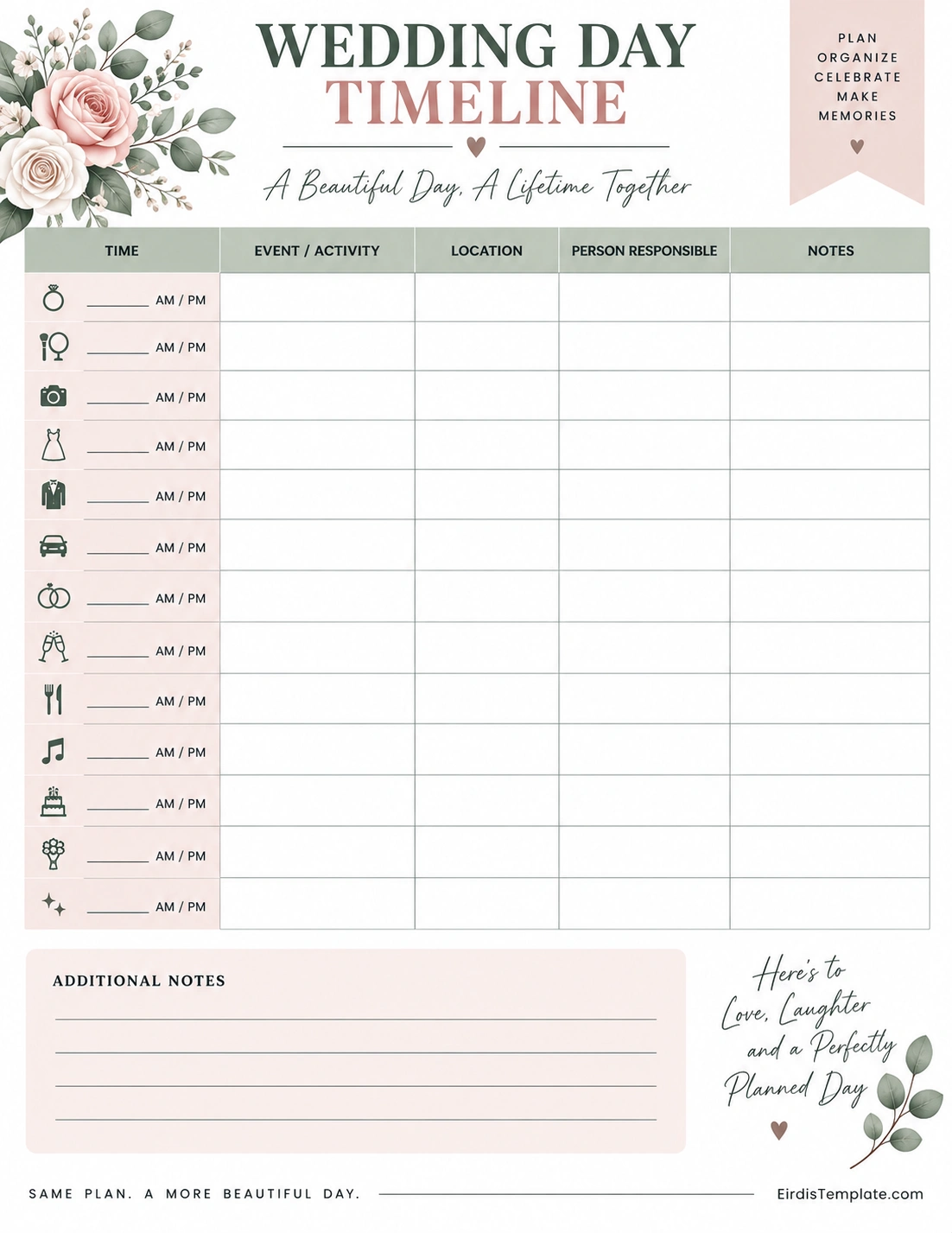
A wedding day timeline template can make wedding planning easier by providing a ready-made structure for organizing the day’s activities. Instead of starting with a blank page, couples can enter the time, event, location, responsible person, and notes for each activity.
A useful template can also provide space for additional notes. This area can be used for vendor instructions, special reminders, transportation details, photography requests, emergency contacts, or other information that needs to remain accessible during the day.
When completing a template, customize it to match the actual wedding schedule. Remove sections that do not apply and add activities that are unique to your celebration.
Wedding Day Timeline Checklist
Before finalizing your schedule, make sure it covers the major details of the day.
- Getting-ready schedule
- Hair and makeup appointments
- Photographer and videographer arrival
- First look, if applicable
- Couple portraits
- Wedding party portraits
- Family portraits
- Transportation schedule
- Guest arrival
- Ceremony start and end
- Cocktail hour
- Reception entrance
- Welcome remarks
- Dinner service
- Toasts and speeches
- First dance
- Parent or special dances
- Cake cutting
- Open dancing
- Final reception activities
- Wedding send-off
- Vendor departure and cleanup
Conclusion
A wedding day timeline is one of the most useful planning tools for keeping a wedding organized from beginning to end. By documenting activities, times, locations, responsibilities, and important notes, it gives everyone involved a shared understanding of how the day should unfold.
The most effective timeline combines structure with flexibility. Start with the ceremony and reception times, add photography and vendor schedules, account for transportation and transitions, and include reasonable buffer time for unexpected delays.
Whether you are planning a large formal wedding or a small intimate celebration, a thoughtfully prepared wedding day timeline can reduce confusion, protect important moments, and help the couple spend less time worrying about logistics and more time enjoying the day.
Download: Wedding Day Timeline Template

- Free Printable Weekly Lesson Planner Template - September 23, 2026
- Free Printable Wedding Day Timeline Template - September 23, 2026
- Free Printable Stakeholder Analysis Template - September 23, 2026
