An acknowledgement letter is a formal written message used to confirm that a person, business, organization, or institution has received something. It may acknowledge the receipt of documents, payments, donations, applications, packages, information, or other materials.
Sending an acknowledgement letter is a simple but important professional practice. It gives the sender confirmation that an item has been received and provides the recipient with a written record of the transaction or communication. A well-written letter can also clarify what was received, when it was received, and what happens next.
Whether you are acknowledging a business document, charitable donation, payment, job application, or important correspondence, using a clear structure can make the letter more professional and useful. This guide explains what an acknowledgement letter is, what it should include, how to write one, and how to use an acknowledgement letter template.
What Is an Acknowledgement Letter?
An acknowledgement letter is a formal letter that confirms receipt of an item, document, payment, request, contribution, or other communication. Its primary purpose is to create a clear written record that something has been received.
The letter can be used in many professional and personal situations. For example, a business may send an acknowledgement letter after receiving documents from a client, while a nonprofit organization may send one to confirm receipt of a donation.
A typical acknowledgement letter may state:
- What was received
- Who sent it
- When it was received
- The reference or transaction number, when applicable
- The current status of the item
- Any next steps
- Contact information for questions
Why Is an Acknowledgement Letter Important?
A written acknowledgement provides clarity for both parties. Instead of relying on a verbal confirmation or an informal message, the sender and recipient have a documented record of the receipt.
- Confirms receipt: It clearly communicates that an item or communication has arrived.
- Creates a record: The letter can be retained with other relevant documents.
- Reduces uncertainty: The sender does not have to wonder whether the item was received.
- Clarifies status: The letter can explain whether an item is being reviewed, processed, or forwarded.
- Demonstrates professionalism: Prompt communication shows attention to detail and respect for the sender.
- Supports relationships: A thoughtful acknowledgement can help maintain positive professional relationships.
When Should You Use an Acknowledgement Letter?
An acknowledgement letter can be appropriate whenever confirmation of receipt is useful or expected. The exact wording should be adapted to the situation.
Acknowledgement Letter for Documents
Organizations may send an acknowledgement letter after receiving contracts, applications, forms, reports, certificates, records, or other important documents.
The letter can identify the documents received and explain whether they will be reviewed or processed further.
Acknowledgement Letter for Payment
A business may use an acknowledgement letter to confirm receipt of a payment. The letter can include the payment date, amount, invoice number, payment reference, and remaining balance when applicable.
Acknowledgement Letter for Donations
Nonprofit organizations, schools, community groups, and other organizations may send acknowledgement letters to confirm receipt of donations or contributions.
The message can thank the donor while clearly documenting what was received. If the letter relates to tax or legal documentation, the organization should use wording and information appropriate to the applicable requirements.
Acknowledgement Letter for Applications
An organization may acknowledge receipt of a job application, membership application, grant application, proposal, or other submission. The letter can confirm that the application was received without necessarily indicating that it has been approved.
Acknowledgement Letter for Business Correspondence
Businesses can use acknowledgement letters to confirm receipt of important correspondence, requests, proposals, complaints, or other communications.
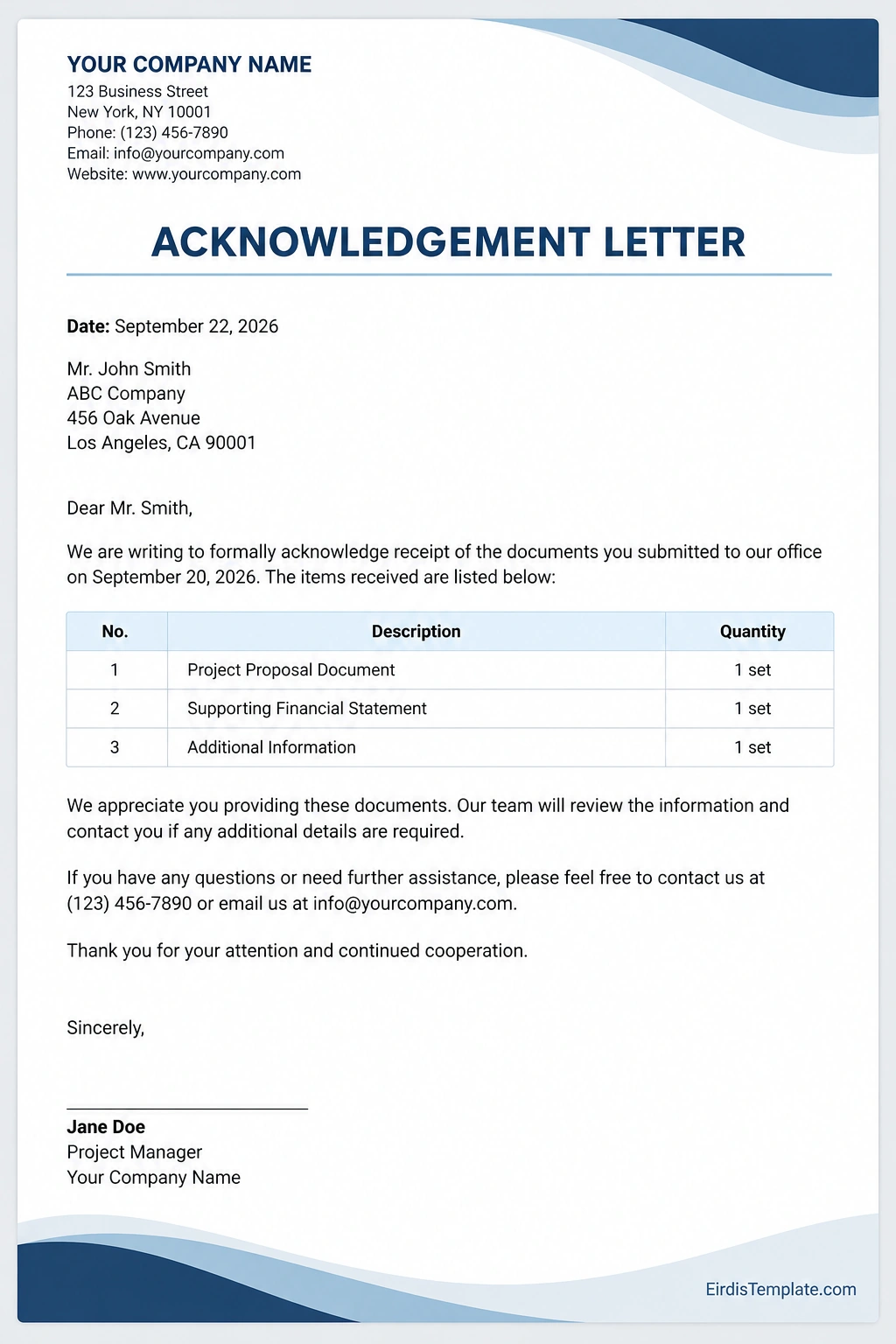
What Should an Acknowledgement Letter Include?
A professional acknowledgement letter should be clear, specific, and appropriate for the situation. While the format can vary, several elements are commonly useful.
Sender Information
Include the name of the person, company, or organization issuing the acknowledgement. Business letters may also include an address, phone number, email address, or other contact information.
Date
The date helps establish when the acknowledgement was issued. When relevant, it can be useful to distinguish the date the item was received from the date the acknowledgement was written.
Recipient Information
Identify the person or organization receiving the letter. Use the recipient’s correct name and contact information when appropriate.
Subject or Reference
A short subject line or reference number can make the letter easier to identify and organize. For example, you might reference an invoice number, application number, document title, or donation reference.
Confirmation of Receipt
The main purpose of the letter should be stated clearly. Tell the recipient what was received and, when relevant, when it was received.
Additional Information
If the item will be reviewed, processed, or followed up on, explain the next step when appropriate. Avoid making promises or commitments that have not been confirmed.
Closing and Signature
End the letter with a professional closing and the name and position of the person responsible for the acknowledgement.
How to Write an Acknowledgement Letter
1. Identify the Purpose
Before writing, determine exactly what you are acknowledging. The purpose may be receipt of a document, payment, donation, application, package, request, or another item.
2. Confirm the Details
Check the relevant information before preparing the letter. Verify names, dates, document titles, reference numbers, and other important details.
3. State the Receipt Clearly
Use direct language to confirm what was received. A clear statement prevents confusion and makes the letter useful as a record.
4. Add Relevant Details
Include information that helps the recipient understand the status of the item. For example, you might explain that documents have been received and are now under review.
5. Explain the Next Step
If there is a known next step, include it briefly. This may be especially useful for applications, requests, proposals, and documents that require further processing.
6. Close Professionally
Thank the sender when appropriate and provide a contact method if additional communication may be necessary.
Acknowledgement Letter Format
A simple acknowledgement letter format can make the writing process easier and ensure that important information is not overlooked.
- Sender name and contact information
- Date
- Recipient name and contact information
- Subject or reference number
- Greeting
- Confirmation of receipt
- Description of the item received
- Relevant status or next steps
- Professional closing
- Signature and sender name
The format can be adjusted depending on whether the letter is being used by a business, nonprofit organization, school, government office, or individual.
Tips for Writing a Professional Acknowledgement Letter
- Be prompt: Send the acknowledgement within a reasonable timeframe after receiving the item.
- Be specific: Clearly identify what was received.
- Use a professional tone: Keep the language courteous and appropriate for the relationship.
- Keep it concise: Include useful information without unnecessary detail.
- Verify names and references: Small identification errors can make a letter confusing.
- Distinguish receipt from approval: Receiving an application or document does not necessarily mean it has been accepted or approved.
- Include next steps when known: This can help the recipient understand what to expect.
- Keep a copy: Retain the acknowledgement according to your organization’s recordkeeping practices.
Common Acknowledgement Letter Mistakes to Avoid
Acknowledgement letters are usually straightforward, but several common mistakes can reduce their usefulness.
- Failing to clearly state what was received
- Using the wrong recipient name
- Leaving out an important reference number
- Confusing receipt with acceptance or approval
- Including inaccurate dates or transaction details
- Using overly complicated language
- Failing to explain the next step when one is already known
- Sending the acknowledgement long after receipt without explanation
- Forgetting to keep an appropriate record of the correspondence
Acknowledgement Letter vs. Thank You Letter
An acknowledgement letter and a thank you letter can overlap, but their primary purposes are different.
An acknowledgement letter primarily confirms that something has been received. A thank you letter primarily expresses appreciation.
In some situations, both purposes can be combined. For example, a nonprofit may acknowledge receipt of a donation while also thanking the donor. However, the wording should make the purpose of the communication clear.
Acknowledgement Letter vs. Receipt
A receipt generally serves as evidence that a payment or purchase has been completed. An acknowledgement letter is broader and can confirm receipt of documents, correspondence, applications, donations, payments, or other items.
For financial transactions, businesses should use appropriate receipts, invoices, or other financial records when those documents are required or useful. An acknowledgement letter may supplement those records rather than replace them.
Using an Acknowledgement Letter Template
An acknowledgement letter template provides a reusable structure for creating consistent confirmation letters. It can save time while helping ensure that essential information is included.
A basic template can contain placeholders for the sender, recipient, date, subject, item received, receipt date, reference number, status, next steps, and signature.
Templates are especially useful for organizations that regularly acknowledge documents, payments, donations, applications, or other submissions. Before sending a completed letter, review every field and customize the wording to match the specific situation.
Frequently Asked Questions About Acknowledgement Letters
What is an acknowledgement letter?
An acknowledgement letter is a formal written communication that confirms receipt of a document, payment, donation, application, package, request, or other item.
What is the purpose of an acknowledgement letter?
The purpose is to provide clear confirmation that something has been received, create a written record, clarify its status, and maintain professional communication between the parties.
When should an acknowledgement letter be sent?
An acknowledgement letter should generally be sent promptly after receiving the item or communication. The appropriate timing depends on the type of item, organization, and circumstances.
What should an acknowledgement letter include?
A professional acknowledgement letter can include the sender’s information, date, recipient information, subject or reference number, description of what was received, receipt date, relevant status or next steps, and a professional signature.
Is an acknowledgement letter the same as a receipt?
No. A receipt usually documents a completed payment or purchase, while an acknowledgement letter can confirm receipt of many different types of items, including documents, applications, donations, correspondence, and payments.
Can an acknowledgement letter confirm a donation?
Yes. Organizations can use an acknowledgement letter to confirm receipt of a donation and express appreciation. If the acknowledgement is intended to serve a tax or regulatory purpose, the organization should ensure that the wording and required information are appropriate for the applicable rules.
Can an acknowledgement letter confirm an application?
Yes. An organization can use an acknowledgement letter to confirm that an application has been received. The letter should distinguish receipt from acceptance, approval, or a final decision.
Can I use an acknowledgement letter template?
Yes. An acknowledgement letter template can provide a consistent structure and save time. It should be customized for the specific item received, recipient, organization, and purpose of the letter.
Conclusion
An acknowledgement letter is a simple and effective way to confirm receipt of documents, payments, donations, applications, correspondence, and other important items. By clearly identifying what was received and providing relevant details, the letter creates a useful record for both the sender and recipient.
A professional acknowledgement letter should be accurate, concise, courteous, and appropriate for its purpose. Whether you create each letter individually or use an acknowledgement letter template, a consistent approach can improve communication, reduce uncertainty, and help maintain organized records.
Download: Acknowledgement Letter Template

- Printable Acknowledgement Receipt Template - October 1, 2026
- Free Acknowledgement Letter Template (Word) - October 1, 2026
- Free Printable Accounting Ledger Template - October 1, 2026
