Are you tired of living paycheck to paycheck and want to take control of your finances? If so, paycheck budgeting may be the solution for you. Understanding how to manage your money effectively can help you achieve your financial goals and reduce the stress that comes with financial uncertainty.
In this comprehensive guide, we will delve into the What, Why, What to Include, How to, and Tips of paycheck budgeting to help you get started on the path to financial stability.
What is Paycheck Budgeting?
Paycheck budgeting is a method of managing your money by allocating your income towards different expenses and financial goals each time you receive a paycheck. This approach helps you stay organized, prioritize your spending, and track where your money is going. By creating a budget that aligns with your income and financial objectives, you can make informed decisions about your spending habits and save for the future.
Why You Should Paycheck Budget
There are several reasons why paycheck budgeting is beneficial for your financial well-being:
- Financial Awareness. By creating a budget, you gain a better understanding of your income and expenses, allowing you to identify opportunities for saving and reducing unnecessary spending.
- Goal Setting. Budgeting helps you set financial goals and track your progress towards achieving them, whether it’s saving for a vacation, paying off debt, or building an emergency fund.
- Reduced Stress. Knowing where your money is going and having a plan in place can alleviate financial stress and provide peace of mind about your financial future.
- Improved Financial Discipline. Budgeting encourages disciplined spending habits and discourages impulse purchases, helping you stay on track with your financial goals.
What to Include in Your Paycheck Budget
When creating a paycheck budget, it’s essential to include the following components:
- Income. List all sources of income, including your primary job, side hustle, or any additional sources of revenue.
- Expenses. Itemize your fixed expenses (rent, utilities, insurance) and variable expenses (groceries, dining out, entertainment) to determine your total monthly spending.
- Savings Goals. Allocate a portion of your income towards savings goals, such as an emergency fund, retirement savings, or a specific financial objective.
- Debt Repayment. Include any debt obligations, such as student loans, credit card debt, or personal loans, to prioritize paying off high-interest debt.
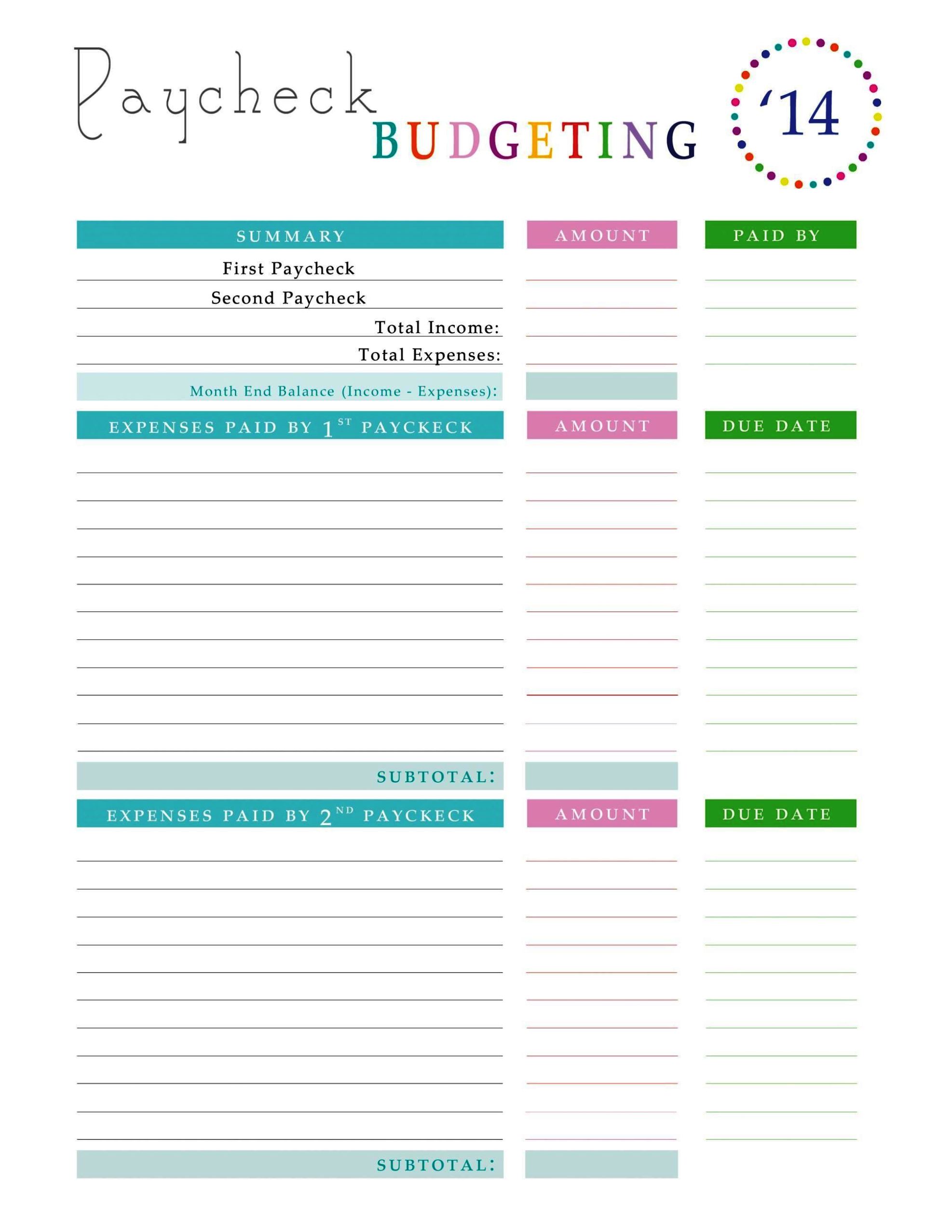
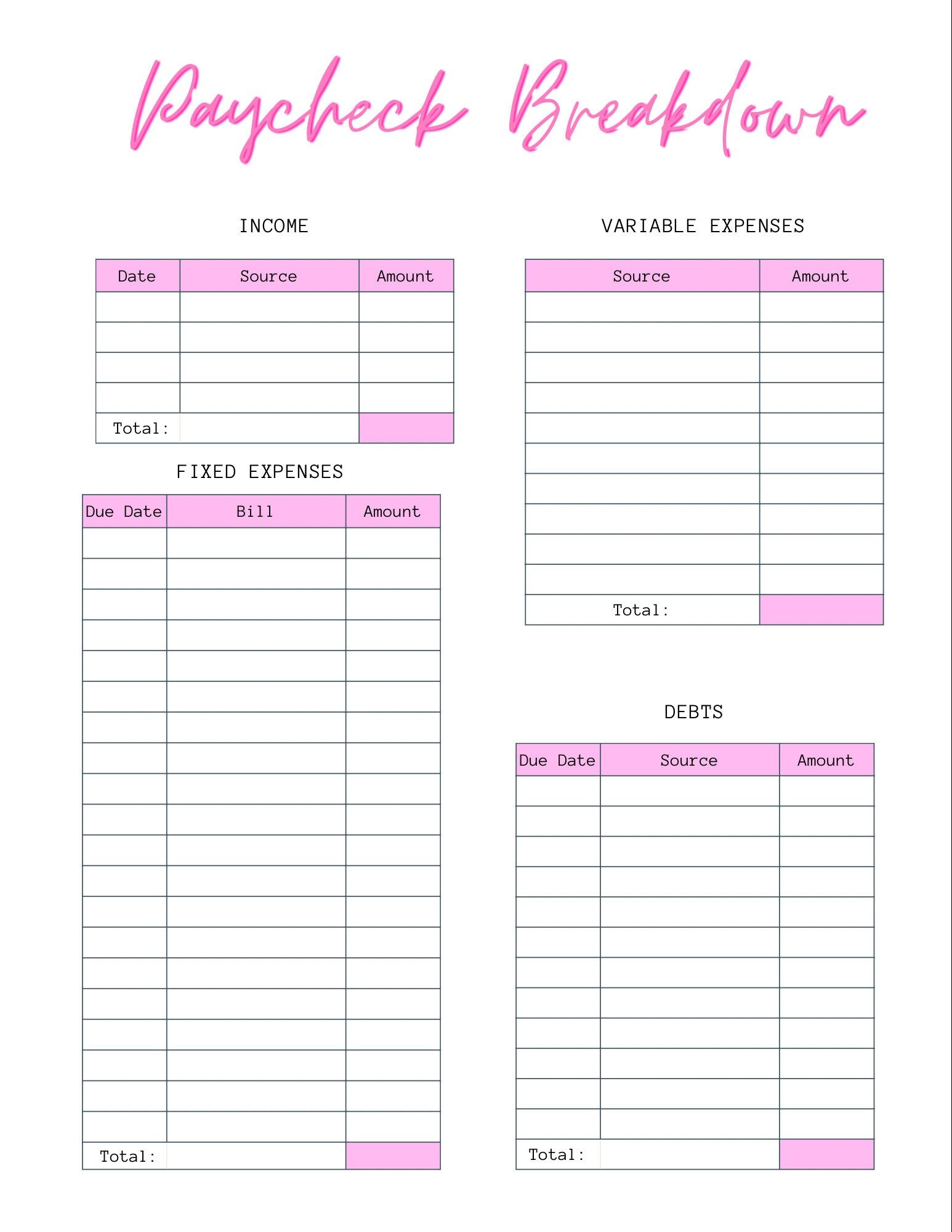
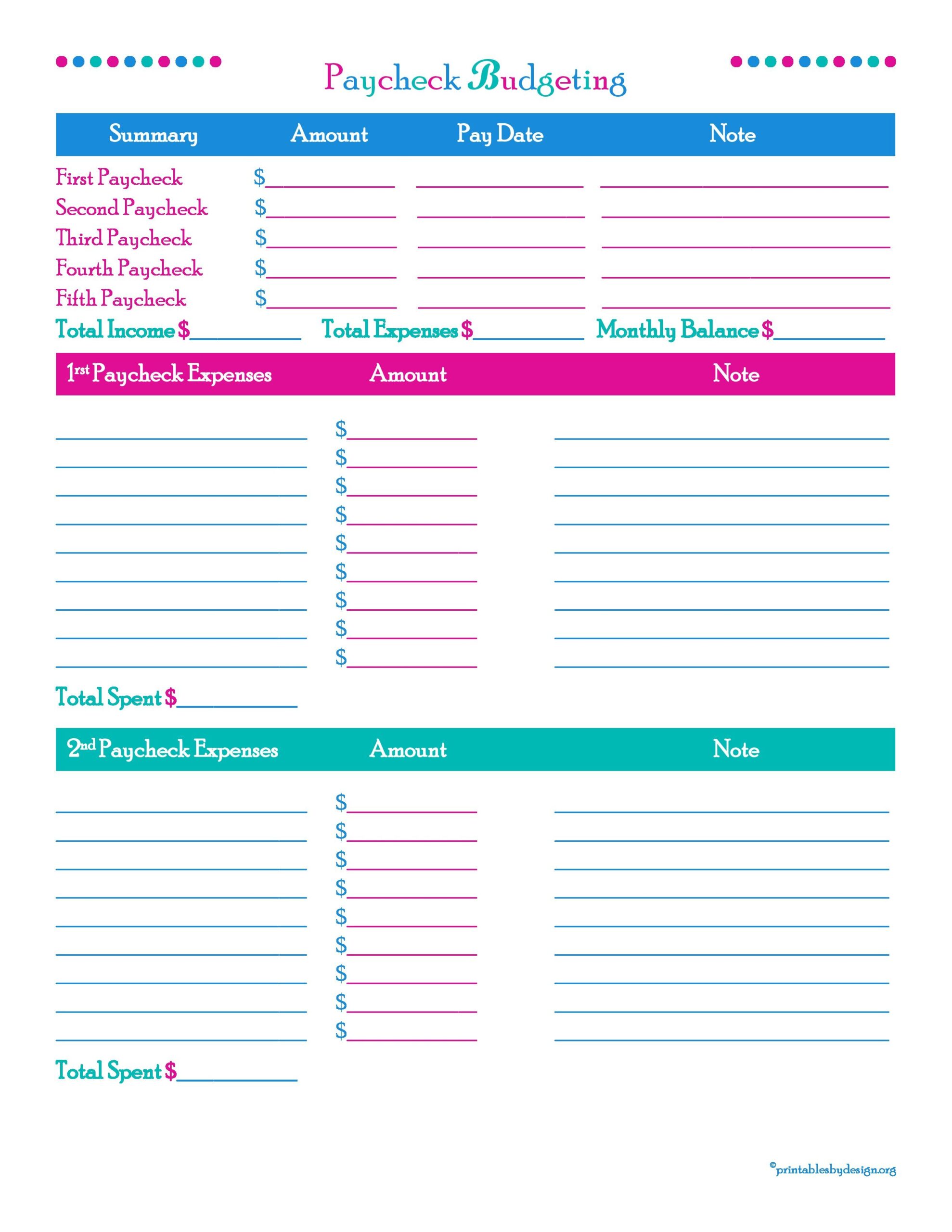
Examples
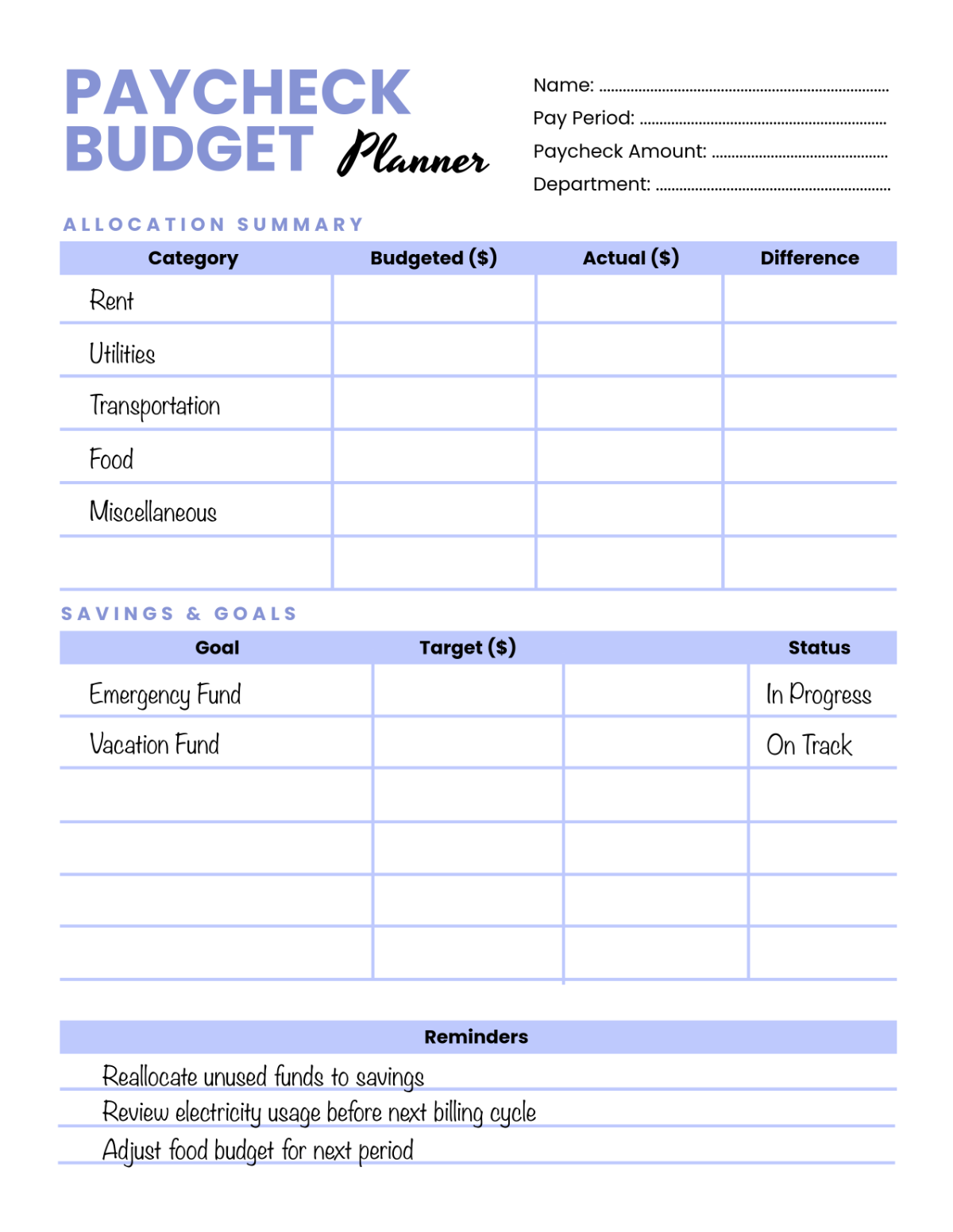
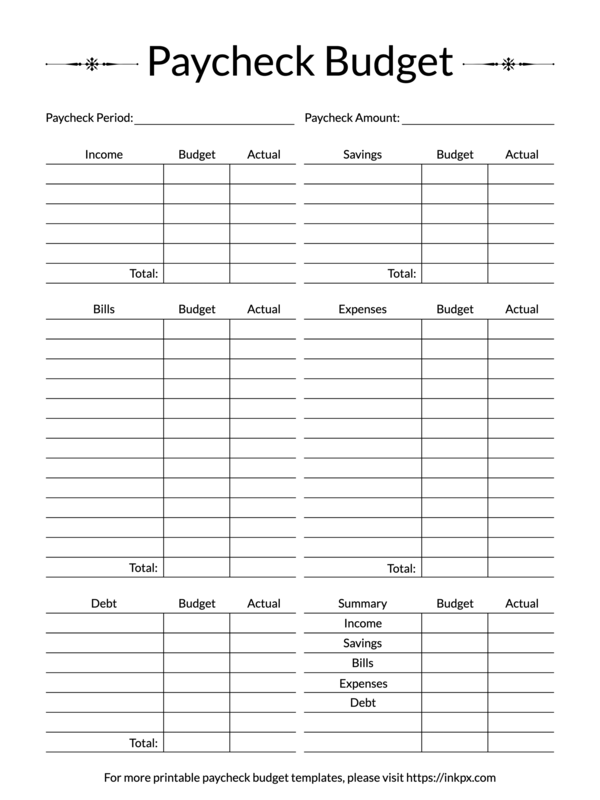
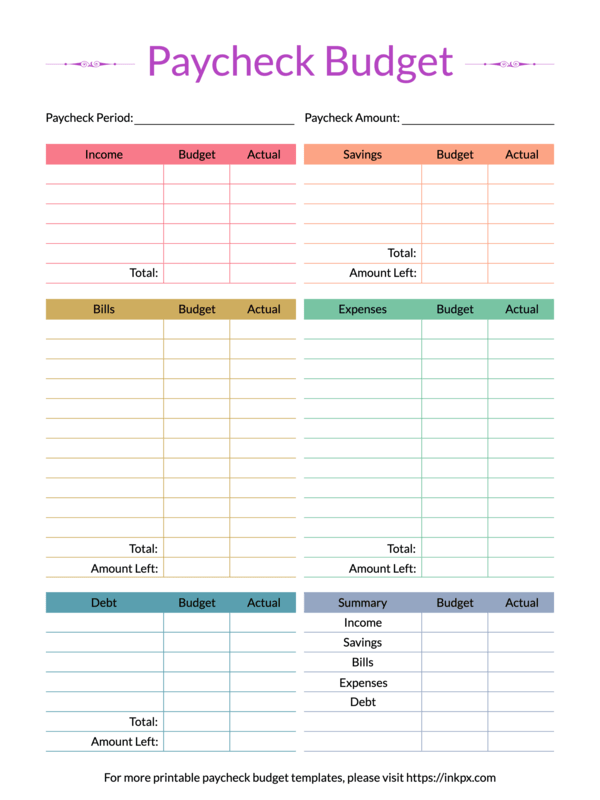
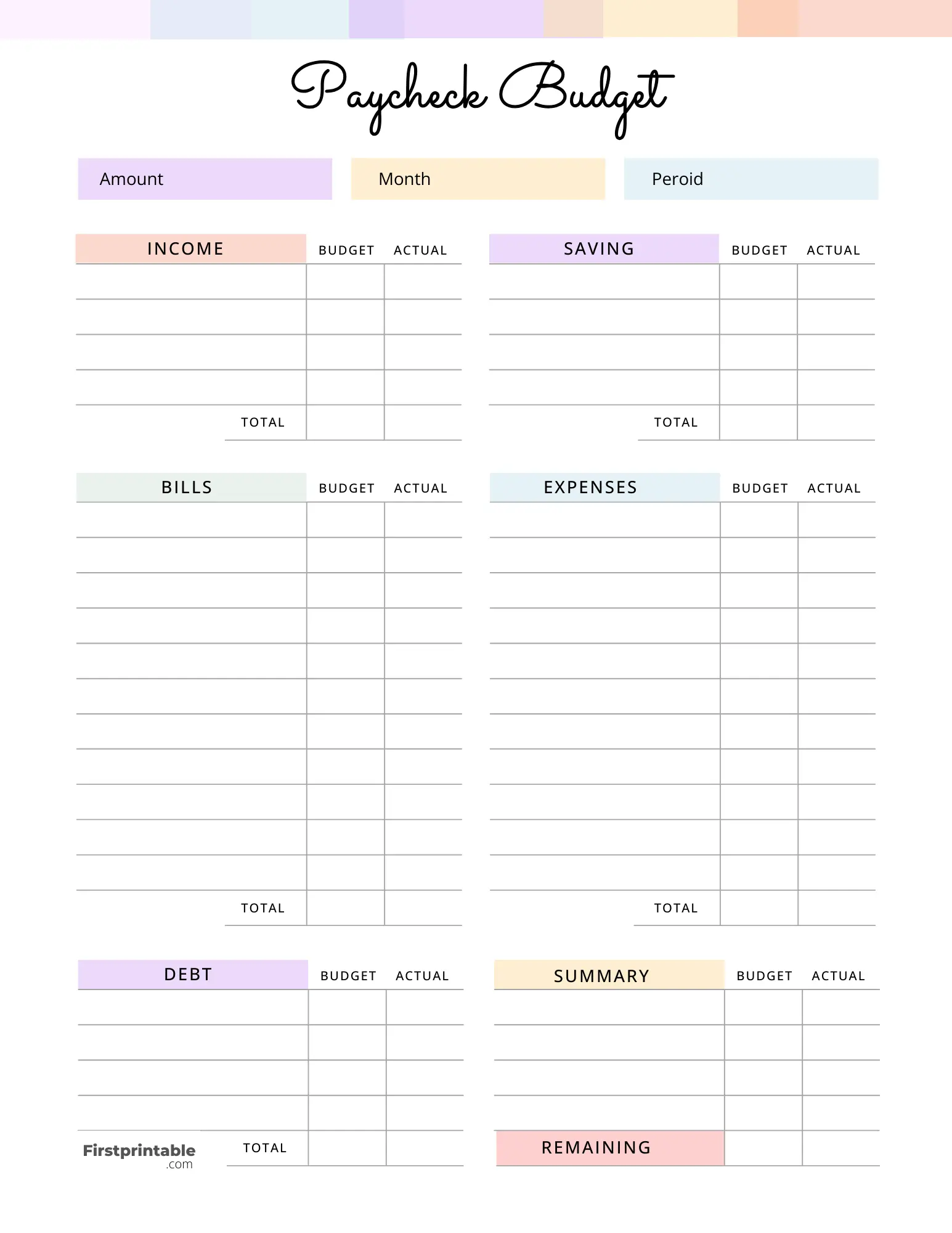
How to Create a Paycheck Budget
Creating a paycheck budget involves the following steps:
- Calculate Your Monthly Income. Determine your total monthly income by adding up all sources of revenue.
- List Your Expenses. Identify your fixed and variable expenses to understand where your money is going each month.
- Set Financial Goals. Establish short-term and long-term financial goals to guide your budgeting decisions and prioritize your spending.
- Allocate Your Income. Divide your income into categories such as expenses, savings, and debt repayment to create a balanced budget.
- Track Your Spending. Monitor your expenses regularly to ensure you are staying within your budget and make adjustments as needed.
Tips for Effective Paycheck Budgeting
Here are some tips to help you optimize your paycheck budgeting strategy:
- Automate Your Savings. Set up automatic transfers to your savings account to ensure you prioritize saving each time you receive a paycheck.
- Avoid Lifestyle Inflation. As your income increases, resist the temptation to increase your spending and instead allocate the extra money towards savings or debt repayment.
- Emergency Fund. Build an emergency fund to cover unexpected expenses and avoid dipping into your savings or going into debt.
- Review Your Budget Regularly. Regularly review your budget to track your progress towards financial goals and make adjustments as needed based on changing circumstances.
Conclusion
Paycheck budgeting is a powerful tool for taking control of your finances and achieving your financial goals. By creating a budget that aligns with your income, expenses, and financial objectives, you can make informed decisions about your spending habits and save for the future. With the right approach and discipline, paycheck budgeting can help you build a solid financial foundation and secure your financial future.
Paycheck Budget Template – Download

- Used Car Bill of Sale Template (Word) - August 24, 2026
- Wedding Reception Program Template - August 24, 2026
- Free Tenant Agreement Template (Word) - August 24, 2026
