An organizational chart is one of the simplest ways to understand how a company or team is structured. It provides a visual overview of job positions, departments, management levels, and reporting relationships. Instead of reading a long list of employees and responsibilities, anyone can quickly see who leads each team and how different roles connect.
Whether you manage a small business, lead a growing company, or organize a project team, an organizational chart can make communication and responsibilities clearer. It is also a useful resource for employee onboarding, workforce planning, and organizational development.
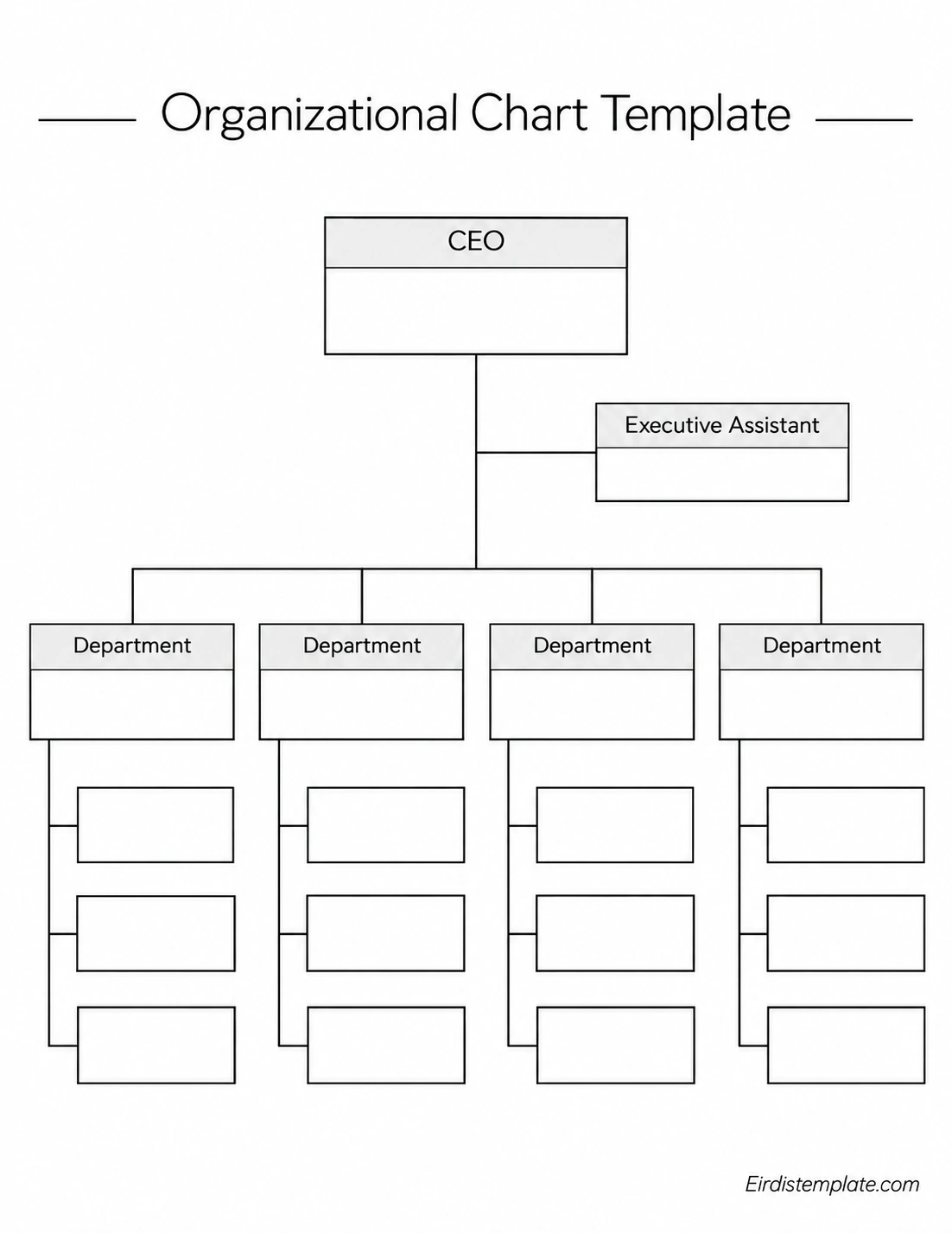
In this guide, you will learn what an organizational chart is, explore its main types, understand its benefits, and discover practical ways to create one. You can also use the organizational chart templates to plan and document your own company structure.
What Is an Organizational Chart?
An organizational chart, also called an org chart, organigram, or organogram, is a diagram that illustrates the structure of an organization. It shows how positions, employees, departments, and management levels relate to one another.
Most organizational charts use boxes or shapes to represent individual employees, job titles, or departments. Connecting lines illustrate reporting relationships and the chain of command. The person or position at the highest level usually appears at the top, with managers and employees arranged underneath.
For example, a traditional company organizational chart might place the Chief Executive Officer (CEO) at the top. Below the CEO, separate branches represent departments such as Human Resources, Marketing, Finance, and Operations. Each department can then include managers, supervisors, and team members.
An organizational structure diagram can represent an entire company or focus on a smaller department, business unit, or project team.
Common Names for an Organizational Chart
Several terms describe the same or similar type of diagram, including:
- Org chart: A common abbreviation for organizational chart.
- Organigram: Another name for a visual representation of organizational structure.
- Organogram: An alternative spelling commonly used in some countries.
- Hierarchy chart: A diagram that emphasizes management levels and authority.
- Organizational breakdown structure: A structured breakdown of an organization into smaller units or responsibility groups.
What Is the Purpose of an Organizational Chart?
The main purpose of an organizational chart is to make an organization’s structure easier to understand. It helps employees, managers, and external stakeholders identify positions, reporting relationships, and departmental responsibilities.
Here are some practical ways businesses use organizational charts.
1. Employee Onboarding and Company Directories
New employees often need time to understand who manages each department and whom they should contact for specific questions. An organizational chart provides a simple reference for learning job titles, team structures, and reporting relationships.
2. Workforce and Resource Planning
Managers can use an org chart to review staffing levels, identify vacant positions, and recognize areas where additional resources may be necessary. It can also support succession planning by showing leadership positions and potential management responsibilities.
3. Organizational Restructuring
When a business changes its management structure, an organizational chart helps decision-makers compare existing and proposed arrangements. They can identify duplicated responsibilities, unnecessary management layers, and opportunities to improve efficiency.
4. Department and Project Management
Project managers can create organizational charts to clarify team roles and responsibilities. These diagrams help everyone understand who coordinates each activity and how different departments contribute to a shared objective.
Main Types of Organizational Charts
Different businesses require different organizational structures. The best chart depends on company size, management style, operational needs, and the way employees collaborate.
1. Hierarchical Organizational Chart
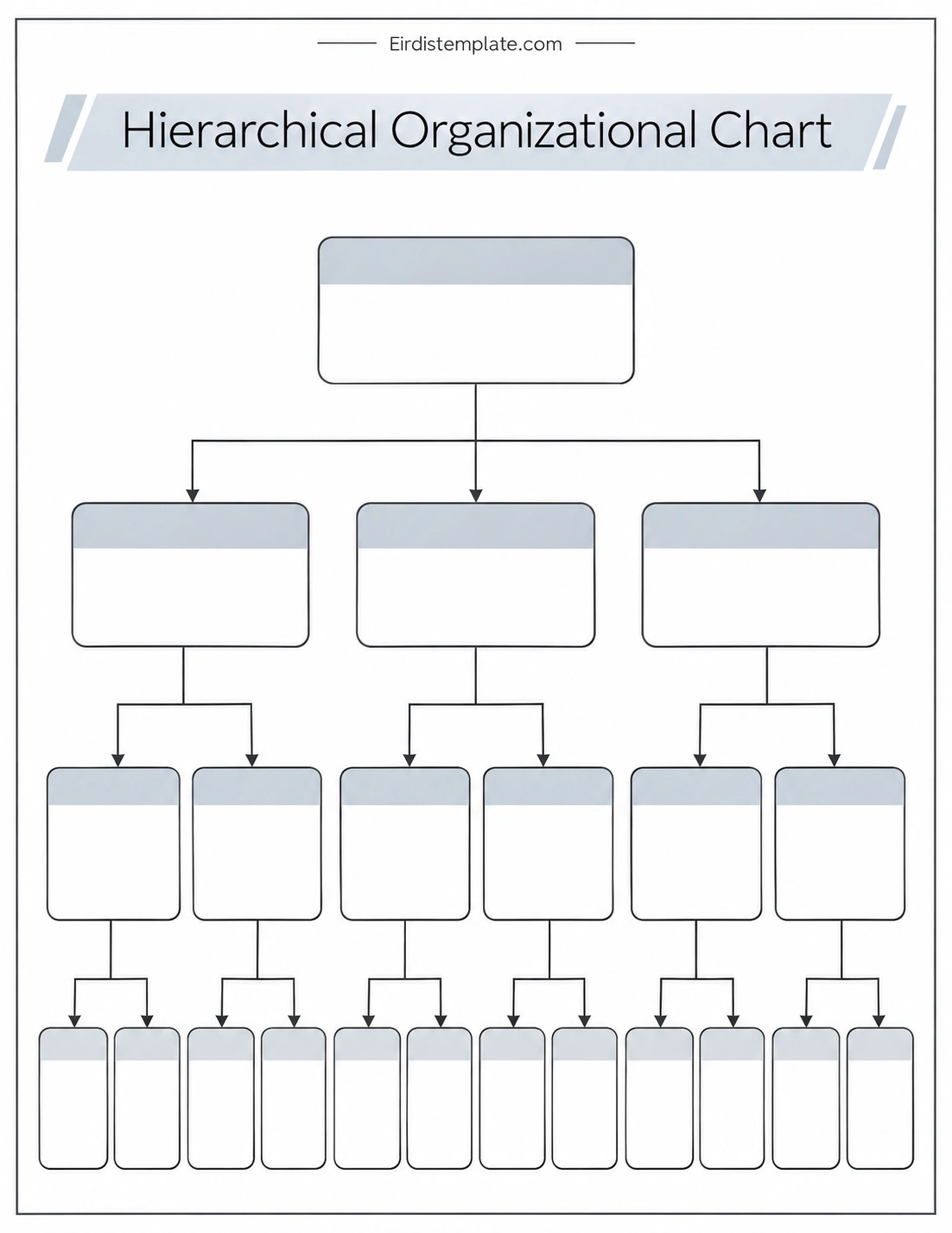
A hierarchical organizational chart is a traditional structure that displays authority from the highest management level to lower-level positions. It typically resembles a pyramid, with executives at the top, department managers in the middle, and employees at the bottom.
This structure works well for organizations with clearly defined leadership roles and reporting relationships.
Common characteristics include:
- A clear chain of command.
- Well-defined management levels.
- Direct reporting relationships.
- Clearly assigned authority and responsibilities.
It is commonly used by corporations, government organizations, manufacturing businesses, and institutions with multiple management levels.
2. Flat Organizational Chart
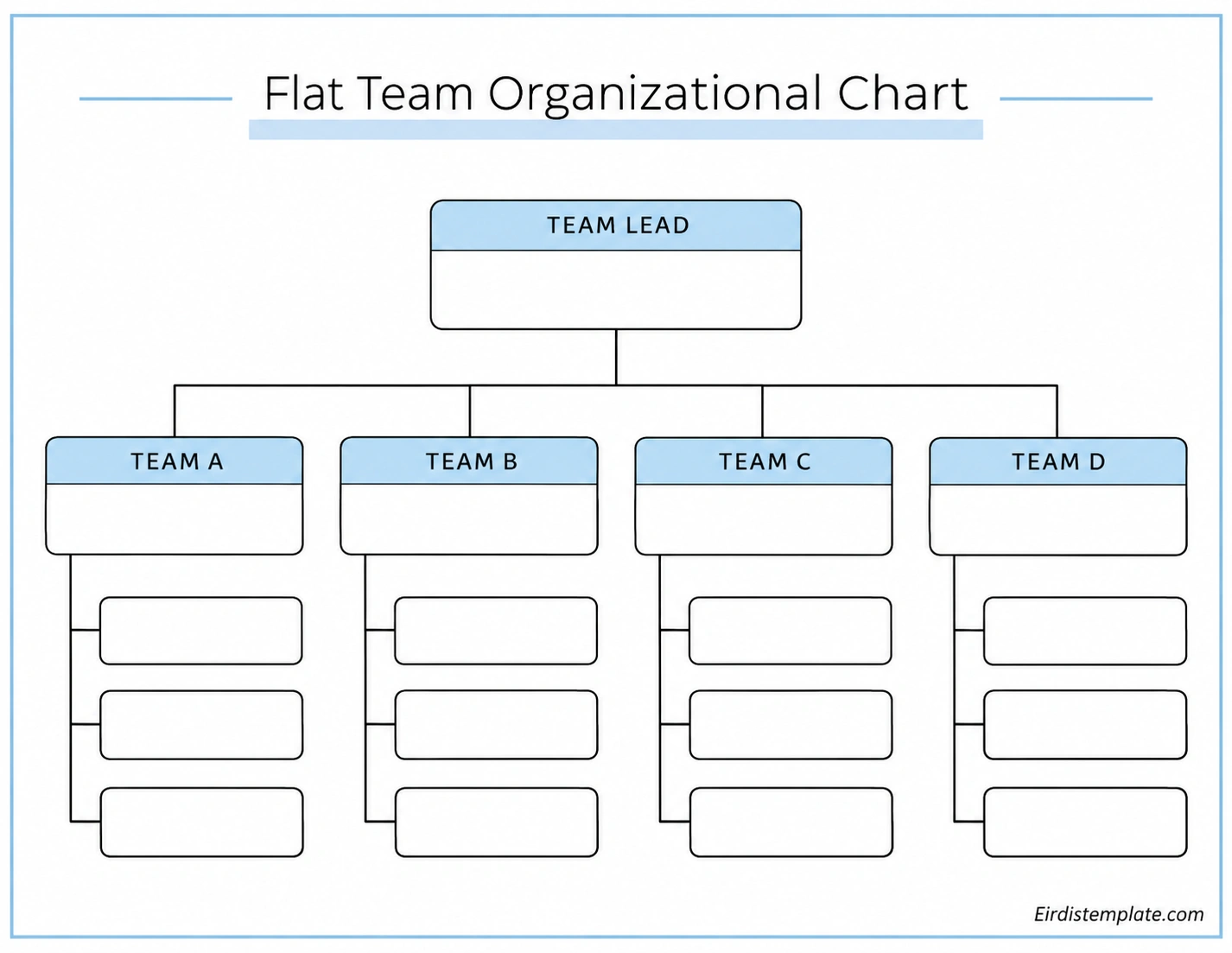
A flat organizational chart represents a company with fewer management layers. Instead of several levels of supervisors and managers, employees may report directly to a team leader or business owner.
This organizational model is often found in startups, small businesses, and companies that encourage collaboration and employee independence.
Its main characteristics include:
- Fewer management levels.
- More direct communication.
- Greater employee autonomy.
- Faster decision-making in suitable teams.
However, a flat structure can become difficult to manage as the organization grows and the number of employees increases.
3. Matrix Organizational Chart
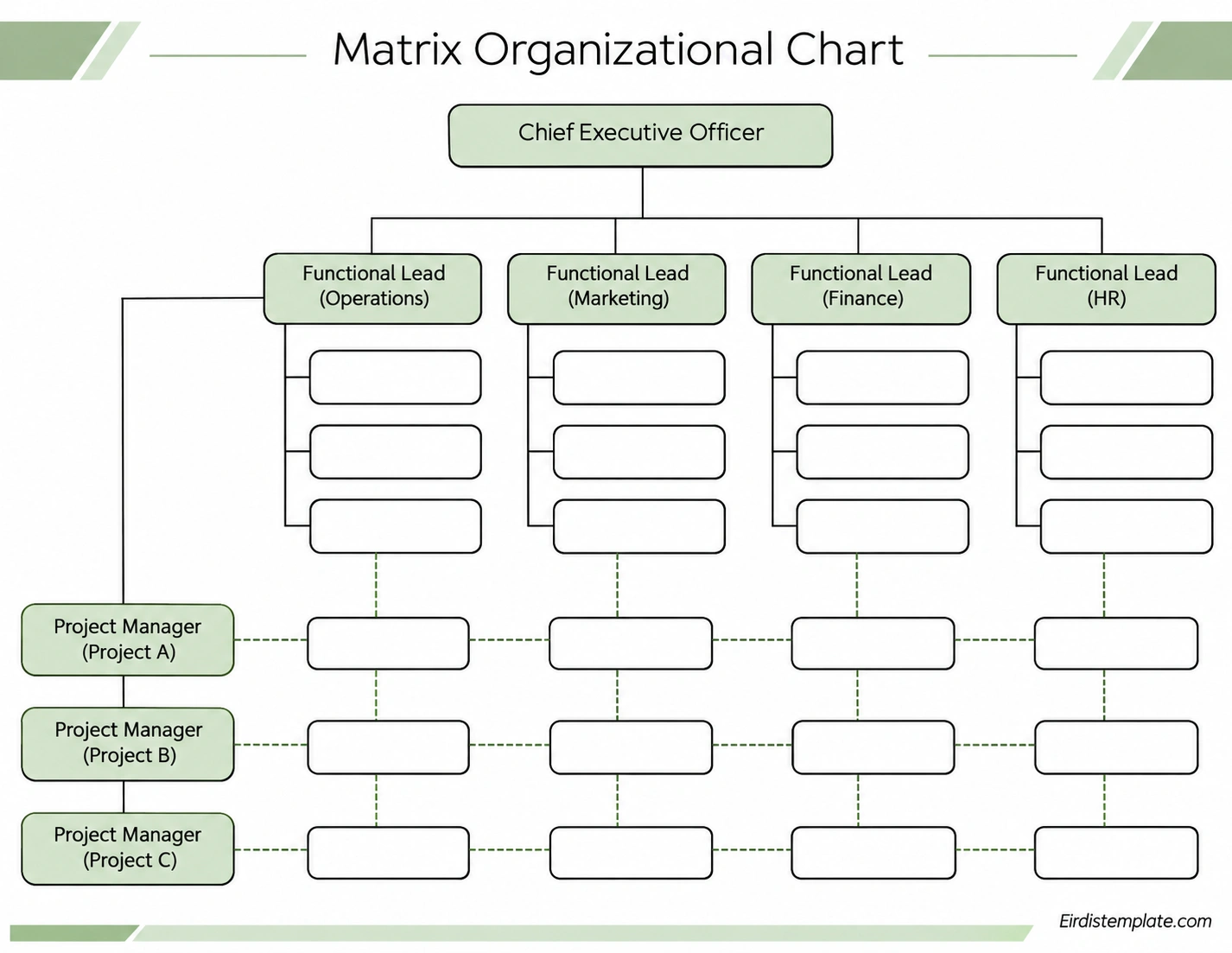
A matrix organizational chart illustrates a structure in which employees may report to more than one manager. For example, an employee might report to a functional department manager while also working under a project manager.
This structure allows businesses to share expertise and resources across different projects without creating completely separate departments for every initiative.
Typical characteristics include:
- Multiple reporting relationships.
- Collaboration across departments.
- Shared employees and resources.
- Greater flexibility for project-based work.
Matrix structures are common in consulting firms, technology companies, engineering organizations, and businesses that manage several projects simultaneously.
One potential challenge is conflicting priorities when employees receive instructions from multiple managers. Clearly defined responsibilities can help prevent confusion.
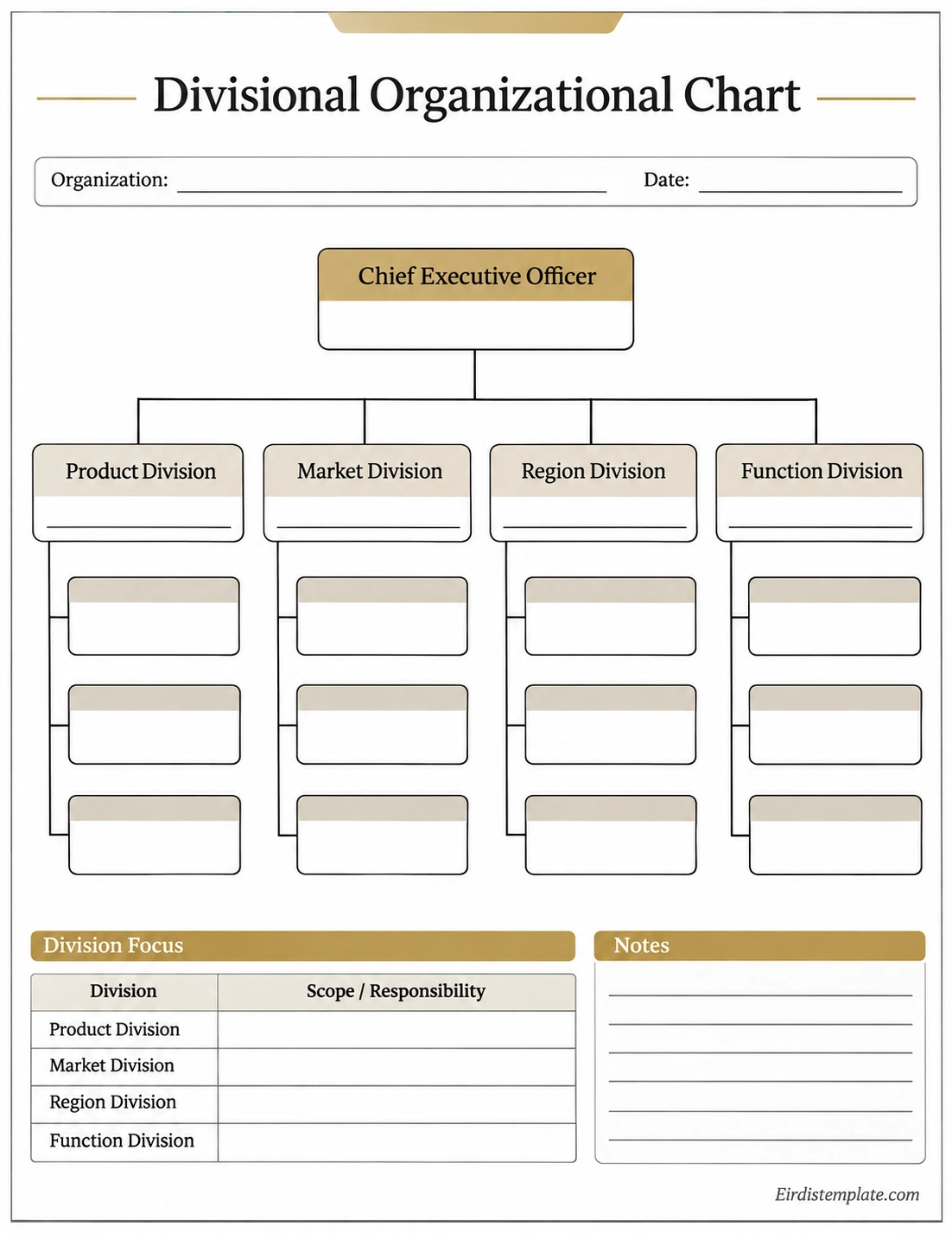
4. Divisional Organizational Chart
A divisional organizational chart groups teams according to products, markets, geographic regions, or business functions. Each division typically has its own management structure and operational responsibilities.
For example, a large company might organize its operations into four divisions:
- Product Division: Manages specific product lines and related activities.
- Market Division: Focuses on particular customer groups or market segments.
- Regional Division: Oversees operations in different geographic locations.
- Functional Division: Organizes work around specialized business functions.
This structure is particularly useful for large companies with diverse products, customers, or geographical operations.
What Should an Organizational Chart Include?
A useful organizational chart should contain enough information to explain how an organization operates without making the diagram unnecessarily complicated.
Most company org charts include the following elements:
- Organization name: Identifies the company, department, or project represented.
- Job titles: Clearly identifies each position within the organization.
- Employee names: Shows the individuals currently occupying each position, when appropriate.
- Departments: Groups employees according to their business functions.
- Management levels: Illustrates the different levels of leadership and authority.
- Connecting lines: Demonstrates reporting relationships between positions.
- Contact information: May include employee contact details in an internal company directory.
Not every organizational chart needs all these details. A simple department chart might only display job titles and reporting relationships, while a company directory could include employee names and contact information.
How to Create an Organizational Chart
Creating an organizational chart does not have to be complicated. With the right information and a clear layout, you can build a professional diagram that accurately represents your organization.
Step 1: Define the Purpose
Start by deciding why you need the chart. Determine whether it will represent the entire company, a specific department, or a temporary project team. Your purpose will help determine the appropriate organizational structure and level of detail.
Step 2: Gather Employee and Department Information
Collect the information needed to build the diagram. This may include employee names, job titles, department names, management positions, and reporting relationships.
Check that the information is accurate and reflects the organization’s current structure.
Step 3: Choose the Right Organizational Structure
Select a hierarchical, flat, matrix, or divisional layout based on how your organization operates. Avoid forcing your company into a structure that does not reflect its actual management relationships.
Step 4: Arrange Positions and Reporting Lines
Place senior leadership positions at the top when using a traditional hierarchy. Organize managers, supervisors, and employees underneath their respective reporting relationships.
Use consistent box sizes and connecting lines to make the diagram easy to follow.
Step 5: Review and Update the Chart
Before sharing the diagram, verify employee names, job titles, and reporting relationships. Update the organizational chart whenever employees change positions, departments are reorganized, or new management roles are introduced.
Tips for Designing a Clear Organizational Chart
A professional organizational chart should be easy to read, logically organized, and simple to maintain. Consider these practical design tips:
- Keep the layout simple: Avoid unnecessary decorative elements that make the diagram difficult to understand.
- Use consistent shapes: Maintain similar box sizes and formatting for equivalent positions.
- Make reporting lines clear: Use straight connecting lines and avoid confusing intersections.
- Organize departments logically: Group related positions together to improve readability.
- Choose readable fonts: Use clean typography and sufficient spacing.
- Avoid overcrowding: Divide very large organizational structures into separate departmental charts when necessary.
- Update regularly: Review the diagram whenever important staffing or reporting changes occur.
Free Organizational Chart Templates
If you do not want to create an organizational chart from scratch, using a printable template can make the process easier. A ready-made layout provides a structured starting point for organizing job positions, departments, and reporting relationships.
Choose a template based on your organization’s needs. A hierarchical chart works well for traditional management structures, while a matrix template is more appropriate for teams that collaborate across departments.
You can fill in the blank boxes with employee names, job titles, department information, and other relevant details. Printable templates are also useful for planning proposed organizational changes before implementing them.
Frequently Asked Questions About Organizational Charts
1. What is the main purpose of an organizational chart?
The main purpose of an organizational chart is to visually explain how an organization is structured. It identifies job positions, departments, management levels, and reporting relationships so employees and managers can understand the chain of command.
2. What are the four main types of organizational charts?
The four commonly recognized organizational chart structures are hierarchical, flat, matrix, and divisional. Each represents a different way of organizing employees, departments, authority, and reporting relationships.
3. What is the difference between an organizational chart and an organizational structure?
An organizational structure describes how a company organizes its roles, responsibilities, departments, and authority. An organizational chart is the visual diagram used to represent that structure.
4. What information should be included in an organizational chart?
An organizational chart typically includes employee names, job titles, departments, management positions, and reporting relationships. Additional details, such as contact information, may be included depending on its intended purpose.
5. What is a hierarchical organizational chart?
A hierarchical organizational chart is a top-down diagram that displays different levels of authority. Senior executives appear at the top, followed by department managers, supervisors, and other employees.
6. Can a small business use an organizational chart?
Yes. Small businesses can use organizational charts to clarify responsibilities, identify reporting relationships, and help employees understand their roles. Even a simple diagram with an owner, several department leads, and team members can be useful.
7. How often should an organizational chart be updated?
An organizational chart should be updated whenever significant changes occur, such as employee promotions, new hires, departures, departmental changes, or management restructuring. Regular reviews help ensure the information remains accurate.
8. What is the difference between a flat and hierarchical organizational chart?
A flat organizational chart has fewer management layers and generally encourages more direct communication. A hierarchical organizational chart has multiple levels of authority, with employees reporting through a more traditional chain of command.
Conclusion
An organizational chart is a practical tool for understanding how a company, department, or project team operates. By displaying job positions, departments, management levels, and reporting relationships, it makes organizational information easier to communicate and manage.
Whether you choose a hierarchical, flat, matrix, or divisional structure, the most effective organizational chart is one that accurately reflects your organization’s needs and remains easy to understand.
Start with a clear layout, include the essential information, and review it regularly. Using a printable organizational chart template can also help you organize your team structure more efficiently and create a professional reference for employees and management.
Organizational Chart Template – Download
