An autobiography is a first-person account of a person’s life written from their own perspective. It allows the author to share personal experiences, important memories, challenges, achievements, relationships, and lessons learned. Unlike a simple biography, an autobiography gives readers direct insight into how the author understands and reflects on their own life.
Writing an autobiography can be meaningful for students, professionals, families, and anyone who wants to preserve their personal story. It can also be used for school assignments, personal projects, applications, memoir-style writing, or family history.
A good autobiography does more than list events in chronological order. It connects important experiences with personal reflections and explains how those experiences influenced the author’s identity, values, goals, and personal growth.
What Is an Autobiography?
An autobiography is a written account of a person’s life told by that person. Because the author is writing about their own experiences, autobiographies are generally written in the first person using words such as “I,” “me,” and “my.”
An autobiography may cover an entire life or focus on a particular period or theme. A short school autobiography might describe childhood, education, family, interests, and goals, while a longer personal autobiography may explore decades of experiences in greater detail.
Common topics in an autobiography include:
- Birth and family background
- Childhood experiences
- Education and important teachers
- Friendships and relationships
- Career and professional experiences
- Major challenges or turning points
- Personal achievements
- Important life lessons
- Values, beliefs, and interests
- Future goals and aspirations
Why Write an Autobiography?
Writing your life story can serve purposes beyond simply recording personal events. The process encourages reflection and can help organize memories into a meaningful narrative.
Preserve Personal Memories
An autobiography provides a written record of experiences that might otherwise be forgotten. Important childhood memories, family stories, educational experiences, and personal milestones can be preserved for future reference.
Reflect on Personal Growth
Looking back at important experiences can reveal how your thoughts, priorities, and goals have changed over time. Writing about challenges can also help you recognize the skills and resilience developed through difficult situations.
Share Your Perspective
Two people can experience similar events but interpret them very differently. An autobiography allows the author to explain what events meant personally and how they influenced later decisions.
Connect With Readers
A personal story can help readers understand experiences that may be unfamiliar to them. Honest reflections about challenges, successes, mistakes, and lessons can create a deeper connection between the writer and the audience.
Complete a School or Personal Project
Students are sometimes asked to write an autobiography as a classroom assignment. A structured autobiography template can make it easier to organize information before turning personal memories into a complete narrative.
Autobiography Template
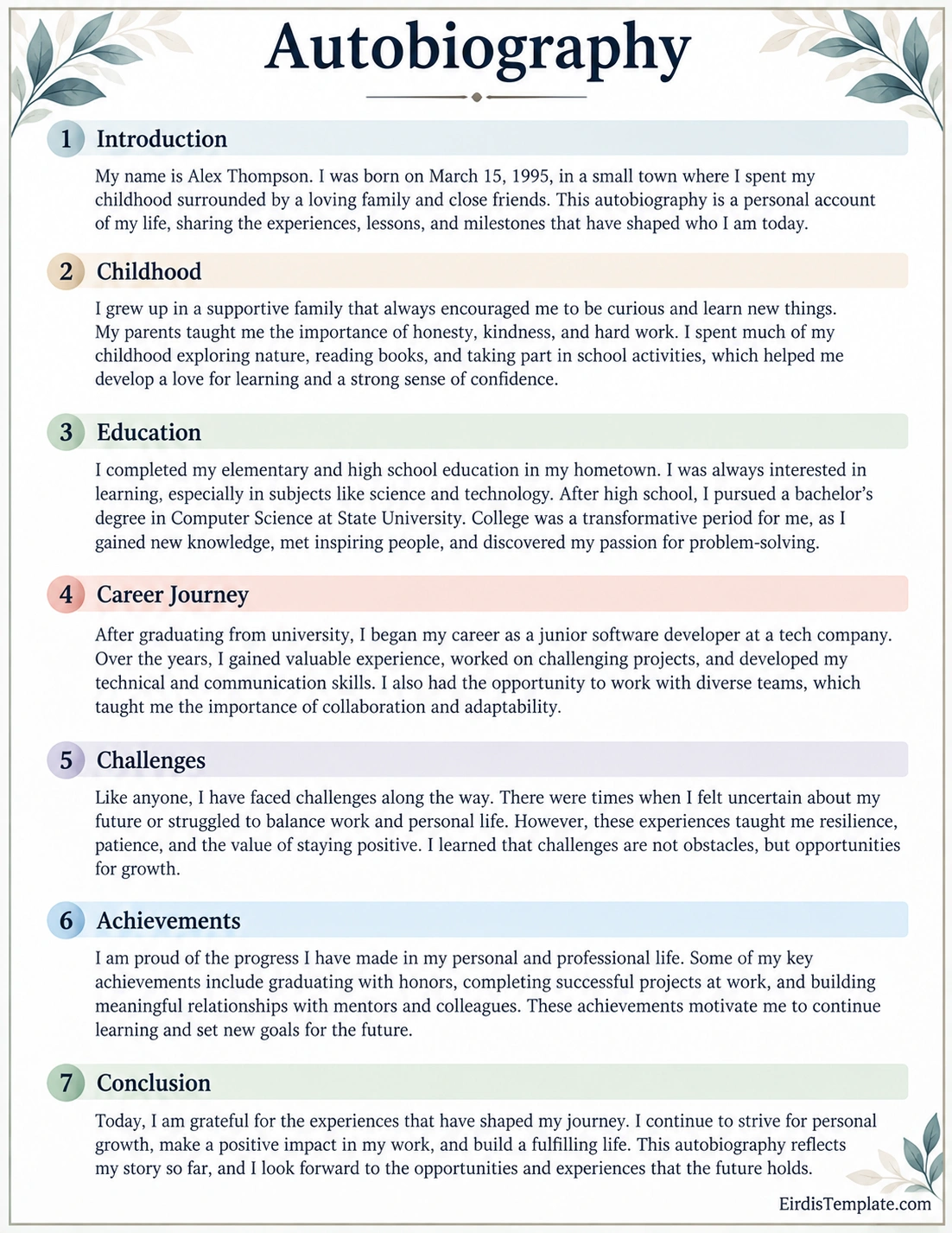
An autobiography template provides a simple framework for organizing the major parts of a personal life story. Instead of trying to remember and write everything at once, the author can work through individual sections and gradually build a complete narrative.
A useful autobiography outline may include an introduction, childhood, education, career, challenges, achievements, personal lessons, and conclusion. The structure can be adjusted depending on the writer’s age, purpose, and desired length.
What Should an Autobiography Include?
There is no single structure that every autobiography must follow. However, several sections can help create a complete and engaging personal story.
Introduction
The introduction should briefly introduce who you are and provide context for the story. You can mention your name, where you were born, your background, or the main purpose of writing your autobiography.
A strong introduction should give readers a reason to continue reading. Instead of listing basic facts only, consider starting with an experience, memory, personal value, or moment that represents an important part of your life.
Childhood and Family Background
Describe where you grew up, your family environment, and experiences that influenced your early development. You do not need to include every childhood memory. Focus on events that shaped your personality, interests, relationships, or values.
Education
Discuss important stages of your education and explain how they influenced your development. You can mention schools, subjects you enjoyed, teachers who influenced you, academic accomplishments, challenges, or experiences that changed your goals.
Career and Life Experiences
If your autobiography covers your professional life, describe important career decisions, jobs, projects, or experiences. Explain what you learned rather than simply listing positions and responsibilities.
Challenges and Turning Points
Challenges often make a personal story more meaningful. Discuss important obstacles, setbacks, changes, or difficult decisions and explain how you responded to them.
You do not need to reveal private information that you are uncomfortable sharing. Choose experiences that are appropriate for your intended audience and purpose.
Achievements
Describe accomplishments that are meaningful to you. These may include academic achievements, career milestones, personal goals, community contributions, creative projects, or other experiences that represent progress.
Lessons and Personal Growth
Reflection is one of the most important elements of an autobiography. Explain what you learned from significant experiences and how those lessons influenced your attitudes, decisions, relationships, or future plans.
Conclusion
The conclusion should bring the story together and provide a sense of where you are now. You can discuss current goals, future aspirations, values, or the lessons you want readers to remember from your story.
How to Write an Autobiography
Writing a personal life story can seem difficult at first because there may be too many memories to choose from. A step-by-step process can make the task more manageable.
1. Determine Your Purpose
First, decide why you are writing. Your purpose could be a school assignment, family history, personal reflection, professional introduction, or long-form memoir.
Your purpose will influence the length, tone, level of detail, and types of experiences you include.
2. Create a Timeline
Make a basic timeline of important events in your life. Include your childhood, education, major transitions, career milestones, relationships, achievements, challenges, and other meaningful experiences.
A timeline helps you identify connections between events and prevents important milestones from being overlooked.
3. Choose the Most Meaningful Events
You do not need to describe every year of your life. Select experiences that reveal something important about you or contributed to your personal development.
- Important family experiences
- Major educational milestones
- Significant career decisions
- Important relationships
- Major successes or failures
- Challenges that changed your perspective
- Experiences that influenced your future goals
4. Add Personal Reflection
After describing an important event, explain why it mattered. Ask yourself what you learned, how you felt, what changed afterward, or how the experience influenced your later decisions.
This reflection transforms a chronological list of events into a meaningful personal narrative.
5. Write in the First Person
An autobiography is normally written from the author’s perspective. Use first-person language naturally to communicate your experiences, thoughts, observations, and feelings.
6. Organize the Story
Arrange your experiences in a logical order. A chronological structure is often easiest to follow, but a thematic structure can also work when the autobiography focuses on a particular subject or period.
7. Revise and Proofread
After completing your first draft, review the story for clarity, organization, grammar, spelling, and repetition. Remove details that do not contribute to the main story and expand important experiences that need more explanation.
Tips for Writing a Strong Autobiography
A good autobiography should feel personal rather than like a simple list of accomplishments. The following tips can make your writing more engaging.
- Be honest: Share your experiences accurately and authentically.
- Use specific details: Small details can make memories easier for readers to understand.
- Show personal growth: Explain how experiences changed or shaped you.
- Focus on meaningful events: Avoid filling the story with unnecessary facts.
- Use a natural voice: Write in a style that sounds like you.
- Balance successes and challenges: A realistic story can include both.
- Reflect on important moments: Explain why particular experiences mattered.
- Consider your audience: Adjust the level of personal detail to suit your readers.
Autobiography vs. Biography
An autobiography and a biography both describe a person’s life, but the main difference is who writes the story.
An autobiography is written by the person whose life is being described. A biography is written by someone else about another person’s life.
For example, if you write about your own childhood, education, career, and personal experiences, you are writing an autobiography. If another writer researches your life and writes about your experiences, the result is a biography.
Autobiography vs. Memoir
An autobiography generally aims to provide a broader account of the author’s life, although the exact scope can vary. A memoir usually focuses more narrowly on particular experiences, periods, relationships, or themes.
For example, an autobiography might cover a person’s childhood through adulthood, while a memoir might focus primarily on one career, relationship, major life transition, or defining period.
Common Autobiography Topics
The best topics depend on the author’s purpose and audience. Some useful autobiography topics include:
- My childhood and family
- My educational journey
- The person who influenced me most
- A major challenge I overcame
- My career journey
- An experience that changed my life
- My greatest achievement
- A mistake that taught me an important lesson
- My personal values
- My goals for the future
Common Mistakes to Avoid
Listing Facts Without Reflection
An autobiography should explain more than what happened. Include your thoughts, reactions, and lessons whenever they add value to the story.
Including Every Detail
Trying to document every event can make a personal narrative long and difficult to follow. Select experiences that support the central story.
Making the Story Entirely About Achievements
Achievements are important, but challenges, mistakes, relationships, and lessons can make an autobiography more relatable and authentic.
Using an Inconsistent Timeline
Jumping randomly between childhood, adulthood, and the present can confuse readers. If you use a chronological structure, make transitions between periods clear.
Ignoring the Intended Audience
A school autobiography, family history, professional autobiography, and published memoir may require very different levels of detail. Decide what information is appropriate before writing.
Frequently Asked Questions About Autobiography
What is an autobiography?
An autobiography is a first-person account of a person’s own life. It describes experiences, memories, relationships, challenges, achievements, and reflections from the author’s personal perspective.
How do you start an autobiography?
Start by introducing yourself and providing context for your story. You can begin with basic background information or open with a meaningful experience that immediately gives readers insight into who you are.
What are the main parts of an autobiography?
Common parts include an introduction, childhood and family background, education, career or life experiences, challenges, achievements, personal growth, and a conclusion. The structure can be adjusted based on the purpose of the autobiography.
Should an autobiography be written in first person?
Yes. Because an autobiography tells the author’s own story, it is normally written in the first person using words such as “I,” “me,” and “my.”
How long should an autobiography be?
The length depends on its purpose. A school autobiography may be only a few pages, while a detailed life story or memoir can be much longer. Focus on meaningful experiences rather than trying to reach a specific word count.
What should I include in a student autobiography?
A student autobiography can include family background, childhood memories, education, hobbies, important friendships, accomplishments, challenges, interests, personal values, and future goals.
Can an autobiography include difficult experiences?
Yes. Challenges and difficult experiences can make an autobiography more meaningful when they are appropriate for the intended audience. Explain what happened, how you responded, and what you learned from the experience.
What is the difference between an autobiography and a biography?
An autobiography is written by the person whose life is being described. A biography is written by another person who researches and documents someone else’s life.
Conclusion
An autobiography provides an opportunity to tell your life story in your own voice. By combining important events with personal reflections, you can create a narrative that explains not only what happened but also how those experiences shaped your identity, values, goals, and personal growth.
Whether you are writing a student autobiography, personal life story, family history, or longer memoir, a clear structure can make the process much easier. Start with a timeline, select meaningful experiences, add thoughtful reflections, and organize the story into sections that are easy for readers to follow.
Most importantly, write with honesty and purpose. Your experiences, perspectives, challenges, achievements, and lessons are what make your autobiography uniquely yours.
Download: Autobiography Template

- Bank Letter For Direct Deposit Template - October 6, 2026
- Background Check Authorization Form Template - October 6, 2026
- Free Autobiography Template (Word) - October 6, 2026
