An affirmative action plan is a structured document used by an organization to review employment practices, identify areas that may limit equal opportunity, establish measurable objectives, and outline steps for improving recruitment, hiring, development, and advancement practices.
Affirmative action plans have historically been associated with efforts to address barriers affecting underrepresented groups and promote equal employment opportunity. Depending on the organization, industry, location, and applicable law, an affirmative action plan may include workforce analysis, recruitment strategies, training initiatives, monitoring procedures, and measurable goals.
Because employment and education laws can change, organizations should distinguish between voluntary diversity and inclusion initiatives and legally required compliance programs. In the United States, the federal contractor rules associated with Executive Order 11246 changed substantially in 2025, so organizations should verify current requirements before relying on an older affirmative action plan or template.
What Is an Affirmative Action Plan?
An affirmative action plan is a written strategy that helps an organization evaluate whether its employment or educational opportunity practices provide fair access to qualified individuals. It can document current conditions, identify potential barriers, establish objectives, assign responsibilities, and track progress.
A well-designed plan should focus on lawful employment and educational practices, objective qualifications, equal opportunity, and measurable organizational improvements. It should not be treated as a substitute for applicable civil rights laws or professional legal advice.
Depending on the context, an affirmative action plan may address areas such as:
- Recruitment and outreach
- Hiring and selection procedures
- Employee development
- Promotion and advancement
- Training and professional development
- Workforce data analysis
- Accessibility and accommodation practices
- Retention and workplace support
- Policy review and monitoring
- Corrective action and continuous improvement
Why Is an Affirmative Action Plan Important?
An effective plan can help an organization examine its practices systematically rather than relying on assumptions. It creates a framework for reviewing recruitment, hiring, promotion, training, and other processes.
Promotes Equal Opportunity
A plan can help organizations identify unnecessary barriers and improve processes so qualified individuals have meaningful access to employment or educational opportunities.
Identifies Potential Barriers
Workforce data and process reviews may reveal areas where qualified applicants or employees are not progressing as expected. Identifying these patterns can help an organization determine whether further review is appropriate.
Creates Measurable Objectives
A written plan can turn broad organizational goals into specific action steps, responsible parties, target dates, and evaluation measures.
Improves Accountability
Assigning responsibility to specific departments or individuals makes it easier to monitor whether planned actions are actually being implemented.
Supports Consistent Policies
A structured plan can help connect recruitment, hiring, training, advancement, and workplace policies to broader equal opportunity objectives.
Affirmative Action Plan Template
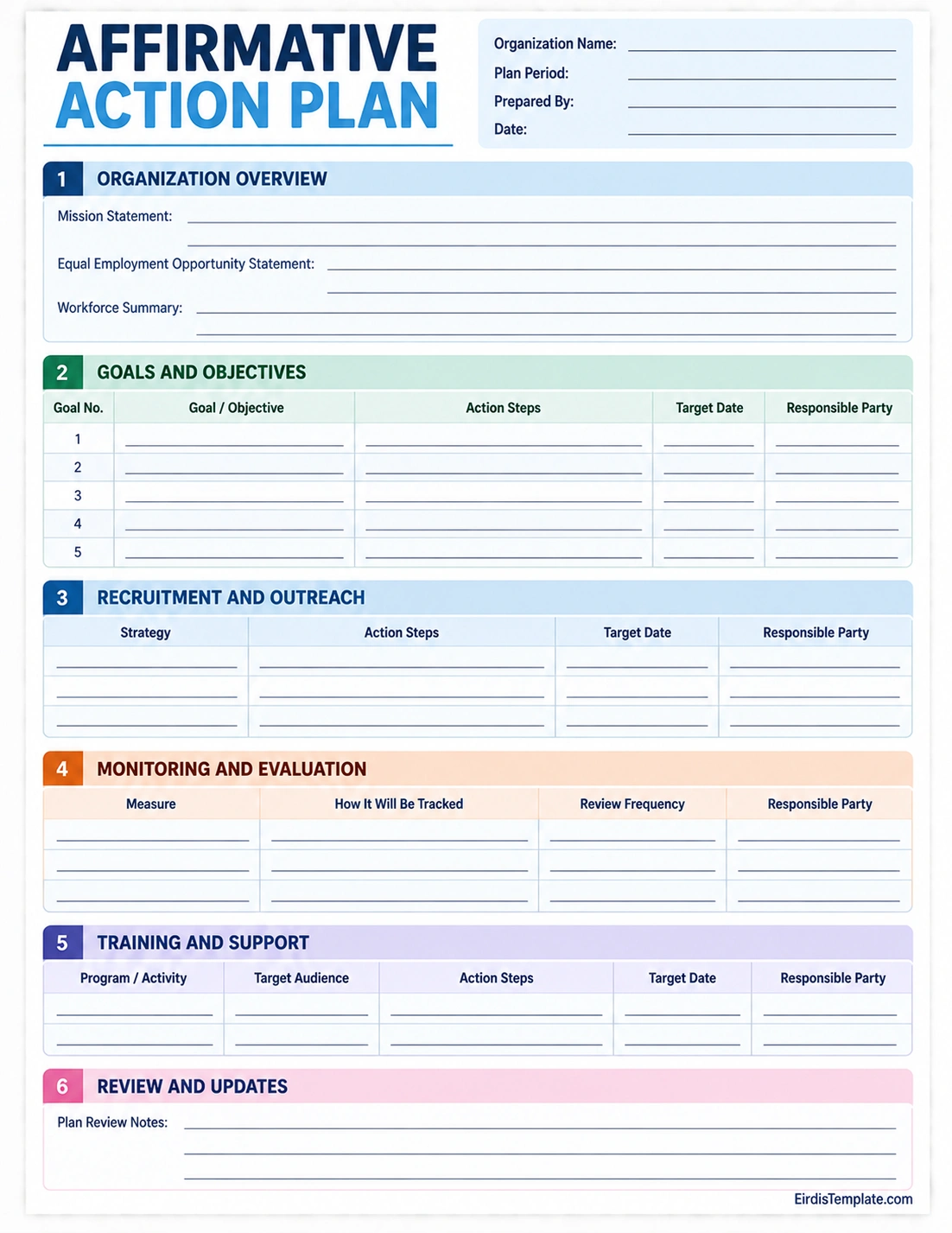
An affirmative action plan template can provide a practical framework for organizing an organization’s goals, action steps, outreach strategies, monitoring procedures, and review notes.
What Should an Affirmative Action Plan Include?
The contents of an affirmative action plan depend on its purpose and the legal requirements that apply to the organization. A practical plan commonly contains several core sections.
1. Organization Overview
Begin with basic information about the organization, plan period, responsible personnel, and the purpose of the plan. A brief organizational overview helps establish the context for the objectives that follow.
2. Equal Opportunity Statement
Include a clear statement describing the organization’s commitment to lawful equal opportunity and nondiscrimination. The wording should be consistent with the organization’s policies and applicable law.
3. Workforce or Population Analysis
Depending on the context, the organization may review relevant workforce or participation data. The purpose is to understand current conditions and identify areas that may require further attention.
4. Goals and Objectives
Define practical objectives that can be evaluated. Good objectives should identify what the organization wants to improve, how progress will be measured, who is responsible, and when the objective will be reviewed.
5. Recruitment and Outreach
Describe lawful strategies for reaching qualified candidates and expanding access to recruitment opportunities. This may include reviewing job advertising, recruitment channels, partnerships, application processes, and outreach activities.
6. Training and Support
Identify training or support initiatives that can help employees, managers, recruiters, or other participants understand organizational policies and responsibilities.
7. Monitoring and Evaluation
Explain how progress will be measured and how frequently the plan will be reviewed. Regular monitoring helps an organization determine whether its actions are producing the intended results.
8. Review and Updates
Include a section for documenting findings, changes, completed actions, unresolved issues, and future priorities. An affirmative action plan should be reviewed and updated when circumstances or applicable requirements change.
How to Create an Affirmative Action Plan
Step 1: Define the Purpose
Start by identifying why the organization is creating the plan. The purpose might involve reviewing employment practices, improving recruitment processes, addressing identified barriers, or meeting a specific legal or contractual requirement.
Step 2: Review Applicable Requirements
Determine which federal, state, local, industry, contractual, or educational requirements apply. This step is particularly important because affirmative action requirements can differ significantly by jurisdiction and have changed over time.
Step 3: Collect Relevant Information
Gather appropriate information about recruitment, hiring, promotion, retention, training, and other processes. Use accurate and appropriately protected data when conducting the analysis.
Step 4: Identify Areas for Improvement
Review the information to identify patterns, process gaps, unnecessary barriers, or areas where additional outreach or process improvements may be appropriate.
Step 5: Establish Objectives
Create practical objectives that are specific enough to evaluate. Each objective should ideally have an action step, responsible party, target date, and measurement method.
Step 6: Assign Responsibility
Identify the people or departments responsible for implementing each action. Clear ownership makes the plan easier to manage.
Step 7: Establish Monitoring Procedures
Decide how progress will be tracked and how often results will be reviewed. Consistent monitoring allows the organization to make adjustments when an action is not producing the expected result.
Step 8: Document Results
Keep records of completed actions, findings, changes, and follow-up decisions. Documentation can help demonstrate that the organization is actively reviewing and managing its plan.
Key Areas to Review in an Affirmative Action Plan
Recruitment
Review where candidates are recruited, how job opportunities are advertised, and whether qualified candidates have reasonable access to available positions.
Hiring and Selection
Examine job requirements, application procedures, interview processes, selection criteria, and documentation practices to identify unnecessary barriers or inconsistencies.
Promotion
Review advancement opportunities and determine whether promotion criteria are clearly communicated and consistently applied.
Training and Development
Evaluate whether employees have reasonable access to relevant training, professional development, mentoring, or other career-support opportunities.
Retention
Review turnover patterns and workplace practices that may affect employee retention. If differences appear in the data, further analysis may help determine whether organizational changes are appropriate.
Accessibility
Organizations should consider applicable accessibility and accommodation requirements when reviewing employment and educational processes. The specific obligations depend on the organization and jurisdiction.
How to Set Effective Goals
Goals are an important part of an affirmative action plan because they turn broad intentions into measurable activities.
- Make goals specific: Clearly describe the intended improvement.
- Use measurable indicators: Identify information that can be used to evaluate progress.
- Assign responsibility: Identify who will implement or oversee each action.
- Set realistic timelines: Give each action an appropriate target date.
- Review regularly: Evaluate progress instead of waiting until the end of the plan period.
- Document results: Record completed actions, findings, and follow-up decisions.
Affirmative Action Plan Monitoring and Evaluation
Monitoring is essential because creating a plan is only the beginning. Organizations should establish a process for checking whether planned actions have been implemented and whether they are achieving their intended objectives.
Useful monitoring activities may include:
- Reviewing recruitment activity
- Analyzing applicant and hiring data where appropriate
- Reviewing promotion and advancement patterns
- Evaluating training participation
- Checking completion of action items
- Reviewing relevant policies and procedures
- Documenting progress toward objectives
- Identifying areas that require additional review
Data should be handled carefully and consistently with applicable privacy, employment, and recordkeeping requirements.
Affirmative Action Plan for Employers
For employers, an affirmative action plan may involve reviewing recruitment, hiring, promotion, training, compensation-related processes, retention, and accessibility. The exact requirements depend on the employer’s circumstances and applicable law.
Employers should avoid treating an affirmative action plan as permission to make employment decisions based unlawfully on protected characteristics. Selection decisions should comply with applicable nondiscrimination laws and be based on lawful, job-related criteria.
Affirmative Action Plan for Federal Contractors
The legal landscape for federal contractors has changed significantly. In January 2025, Executive Order 14173 revoked Executive Order 11246, which had established affirmative action requirements for federal contractors. The U.S. Department of Labor states that OFCCP no longer holds federal contractors responsible for affirmative action under EO 11246 and that contractors were directed to wind down compliance with that regulatory scheme by April 21, 2025.
At the same time, the Department of Labor states that obligations under Section 503 of the Rehabilitation Act and VEVRAA remain in effect. Federal contractors should therefore determine which current requirements apply to their specific contracts and circumstances rather than relying on an older generic affirmative action plan.
Organizations with federal contracts should consult current official guidance and qualified legal counsel when determining their compliance obligations.
Common Mistakes When Creating an Affirmative Action Plan
Using an Outdated Template
Legal requirements can change. An old template may contain obligations, terminology, or procedures that no longer accurately describe current requirements.
Creating Goals Without Action Steps
A goal without a defined action plan can be difficult to implement. Connect each objective with practical steps, responsible parties, and target dates.
Failing to Monitor Progress
A plan that is created once and never reviewed provides limited practical value. Establish a regular review process.
Using Unclear Selection Criteria
Hiring and advancement decisions should use clear, lawful, job-related criteria. Unclear criteria can create inconsistency and increase compliance risk.
Ignoring Changes in Applicable Law
Organizations should periodically confirm that their policies and plans remain consistent with current federal, state, local, contractual, and industry requirements.
Tips for Using an Affirmative Action Plan Template
- Customize the template: Adapt each section to your organization’s actual needs.
- Use accurate information: Base analysis and objectives on reliable organizational data.
- Define responsibilities: Assign each action to an appropriate person or department.
- Set review dates: Schedule periodic evaluations of progress.
- Keep supporting documentation: Maintain relevant records according to applicable requirements.
- Update the plan: Revise the document when organizational circumstances or legal requirements change.
- Obtain professional advice: Consult qualified employment counsel when the plan involves significant legal or compliance obligations.
Frequently Asked Questions About Affirmative Action Plans
What is an affirmative action plan?
An affirmative action plan is a structured document used to evaluate opportunity-related practices, identify potential barriers, establish objectives, implement action steps, and monitor progress. Its exact purpose and requirements depend on the organization and applicable law.
What is the purpose of an affirmative action plan?
The purpose may include improving equal opportunity practices, reviewing recruitment and employment processes, identifying potential barriers, establishing measurable objectives, and documenting organizational actions.
What should an affirmative action plan include?
A plan may include an organization overview, equal opportunity statement, workforce analysis, goals, recruitment strategies, training initiatives, monitoring procedures, responsible parties, target dates, and review notes.
Are affirmative action plans still required for federal contractors?
The answer depends on the specific requirement involved. Executive Order 11246 was revoked in January 2025, ending the EO 11246-based affirmative action requirements for federal contractors. However, the Department of Labor states that Section 503 and VEVRAA obligations remain in effect. Contractors should verify current requirements that apply to their contracts.
Can an affirmative action plan use protected characteristics?
Some compliance programs may require or permit analysis of demographic information, but employment decisions must comply with applicable nondiscrimination laws. Organizations should obtain qualified legal advice before using protected characteristics in employment or educational decisions.
Can a small business use an affirmative action plan template?
Yes. A template can help a small business organize objectives, recruitment activities, monitoring procedures, and review notes. However, the business should customize the document and determine whether any specific legal or contractual requirements apply.
How often should an affirmative action plan be reviewed?
The appropriate review schedule depends on the organization’s purpose and applicable requirements. Regular reviews can help identify changes, measure progress, and keep the plan aligned with current organizational and legal conditions.
Is an affirmative action plan legally binding?
A plan may document organizational commitments or compliance activities, but its legal significance depends on how it was created, the requirements it addresses, and applicable law. A template should not be assumed to create or satisfy a legal obligation by itself.
Can an affirmative action plan be used for education?
Educational institutions may use various plans and policies designed to promote equal opportunity and address participation or access issues. However, the legal rules governing race-conscious or other protected-characteristic-based practices can be complex and vary by context.
Where can I get legal advice about an affirmative action plan?
Organizations with significant compliance obligations should consult a qualified employment or education attorney who understands the applicable jurisdiction and regulatory requirements.
Conclusion
An affirmative action plan can provide a structured framework for reviewing organizational practices, setting measurable objectives, improving recruitment and development processes, and monitoring progress toward equal opportunity goals.
The most useful plan is specific, measurable, practical, and regularly reviewed. It should clearly identify objectives, action steps, responsible parties, timelines, and evaluation methods.
Because affirmative action laws and regulatory requirements can change, organizations should avoid relying on outdated templates or assuming that historical federal requirements remain unchanged. A printable affirmative action plan template can be a useful organizational tool, but it should be customized to the organization’s circumstances and reviewed against current legal requirements.
Disclaimer: This article provides general educational information and is not legal advice. Employment and education requirements vary by jurisdiction, organization, contract, and circumstances. Consult qualified legal counsel or the appropriate government agency for advice about a specific affirmative action or equal opportunity program.
Download: Affirmative Action Plan Template

- Free Printable Attendance Sheet Template - October 5, 2026
- Asset Purchase Agreement Template (Word) - October 5, 2026
- Free Annual Budget Template (Excel) - October 5, 2026
