A wedding card is more than a piece of stationery. It is often the first formal announcement guests receive about a wedding and provides the essential information they need to know about the celebration. From the names of the couple and wedding date to the ceremony location, reception details, dress code, and RSVP instructions, a well-designed wedding card helps guests understand the important details while introducing the style and atmosphere of the event.
Because it is often the first impression of the wedding, the design and wording should reflect the couple’s personality and the overall theme of the celebration. Whether the wedding is formal, casual, traditional, modern, rustic, or destination-based, the right wedding card can communicate the tone clearly while becoming a meaningful keepsake for the people invited.
What Is a Wedding Card?
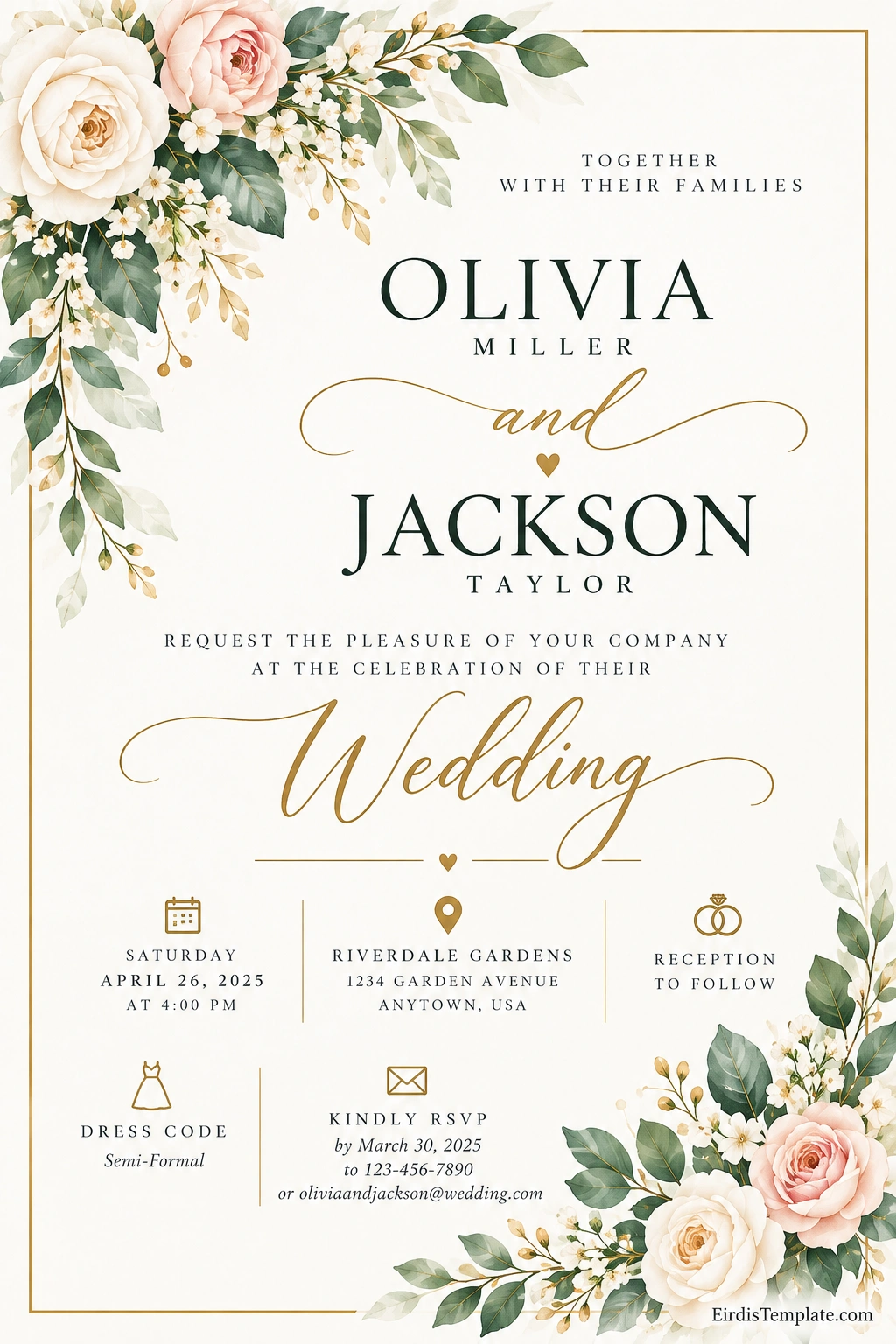
A wedding card is a printed or digital piece of stationery used to formally invite guests to a wedding celebration. It typically includes essential information about the couple, ceremony, reception, date, time, location, and RSVP process.
The term can refer to a traditional wedding invitation as well as related stationery used to communicate additional wedding information. Depending on the event, a wedding card may be a single flat card, a folded invitation, or part of a larger invitation suite.
A wedding card template can simplify the design process by providing a structured layout that couples can customize with their own names, wedding details, wording, colors, and decorative elements.
Why Is a Wedding Card Important?
A wedding card serves both a practical and emotional purpose. It gives guests the information they need while establishing the visual and formal tone of the wedding.
- Announces the wedding: Officially informs guests about the upcoming celebration.
- Provides essential details: Communicates the date, time, venue, and other important information.
- Sets the tone: The design and wording can suggest whether the wedding will be formal, casual, traditional, or modern.
- Communicates logistics: Guests can learn about dress code, reception information, accommodation, and RSVP instructions.
- Creates anticipation: Attractive stationery gives guests an early impression of the celebration.
- Becomes a keepsake: Many guests and couples preserve wedding invitations as reminders of the occasion.
What Information Should Be on a Wedding Card?
The information included in a wedding card should make it easy for guests to understand exactly what is being invited and where they need to go. Avoid leaving out details that guests need to plan their attendance.
Names of the Couple
The names of the people getting married are usually the most prominent text on the invitation. Depending on the style, you can use full names, first names, or a combination that matches the formality of the wedding.
Wedding Date
Clearly state the day, date, month, and year of the wedding. Spell out the date in formal invitations if it fits the design, or use a more compact format for a modern invitation.
Wedding Time
Include the ceremony start time and, when appropriate, the reception time. If guests need to arrive before the ceremony begins, consider communicating an arrival or seating time as well.
Venue and Location
Provide the name and address of the ceremony venue. If the reception takes place somewhere else, include the reception location separately.
RSVP Instructions
Tell guests how and when to respond. Depending on your invitation system, this could include a response card, wedding website, online RSVP form, email address, or other method.
Dress Code
If the wedding has a specific dress code, include it in a clear location. Examples may include black tie, formal attire, cocktail attire, semi-formal, or casual attire.
Reception Information
If the reception follows the ceremony at the same location, a simple statement may be enough. If it takes place at another venue, provide the necessary location and timing information.
How to Create a Wedding Card
Creating a wedding card becomes easier when you separate the information from the design process. Start by gathering all the details guests need, then arrange the content in a clear and attractive layout.
1. Gather the Wedding Details
Before designing the card, confirm the couple’s names, wedding date, ceremony time, venue, reception details, RSVP deadline, and dress code. Double-check all addresses and times before adding them to the final design.
2. Choose the Invitation Style
Think about the overall wedding theme. A formal ballroom wedding may call for elegant typography and refined details, while an outdoor garden wedding might use botanical elements and softer colors.
The invitation does not need to match every decoration exactly, but using complementary colors and visual elements can create a consistent wedding identity.
3. Organize the Information
Arrange the most important information so it can be read easily. The couple’s names and wedding date should usually receive visual emphasis, while supporting information can be placed in smaller sections.
4. Add Supporting Details
Depending on the available space, include information such as the reception, dress code, RSVP deadline, wedding website, or accommodation instructions.
5. Proofread Before Printing
Carefully check every name, date, time, address, and URL before producing the final cards. It is particularly useful to ask another person to proofread the invitation because they may notice errors that are easy to overlook.
Wedding Card Wording Ideas
The wording of a wedding card should match the formality and personality of the celebration. Traditional invitations often use formal language, while modern invitations can be warmer and more conversational.
Formal Wedding Card
A formal invitation can use elegant wording that emphasizes the significance of the occasion. The language can be concise and respectful, with the ceremony details presented in a traditional order.
Casual Wedding Card
A casual wedding invitation can use friendly wording and a more relaxed tone. This approach works well for backyard weddings, informal celebrations, and intimate gatherings.
Modern Wedding Card
Modern invitations often use minimal wording, clean typography, and a straightforward presentation of the essential details. The design can provide personality without requiring a large amount of text.
Wedding Card Design Ideas
The visual design of a wedding card can communicate the atmosphere of the celebration before guests arrive. Consider the wedding venue, season, color palette, and overall aesthetic when choosing the design.
- Classic: Elegant typography, neutral colors, and refined borders.
- Minimalist: Clean layouts, generous white space, and simple typography.
- Romantic: Soft colors, delicate floral details, and graceful typography.
- Rustic: Natural tones, botanical illustrations, and warm decorative elements.
- Modern: Bold typography, geometric elements, and contemporary layouts.
- Garden: Floral illustrations, greenery, and nature-inspired details.
- Vintage: Classic typography, decorative borders, and nostalgic visual elements.
- Destination: Location-inspired artwork, travel details, or illustrations connected to the venue.
Wedding Card vs. Save-the-Date Card
A wedding card and a save-the-date card serve different purposes. A save-the-date is generally sent earlier to let guests know when the wedding will take place so they can reserve the date on their calendars.
The formal wedding invitation provides the detailed information guests need to attend, including the ceremony location, time, RSVP instructions, and other event details.
For this reason, a save-the-date typically contains less information than a formal wedding invitation.
Wedding Invitation Card and RSVP Information
RSVP information should be easy for guests to find. Clearly state the response deadline and explain how guests should confirm their attendance.
If an online RSVP system is being used, include the wedding website or RSVP address in a readable format. If a response card is included, explain whether guests should mail it back and whether they need to indicate meal preferences.
For weddings with limited seating, guest counts, or meal selections, an accurate RSVP process can make planning significantly easier.
Additional Information to Include
Not every wedding card needs to contain every possible detail. Information that is too extensive can make the invitation difficult to read. Consider placing longer logistical information on a separate enclosure card or wedding website.
- Wedding website
- RSVP deadline
- Dress code
- Reception details
- Meal selection instructions
- Accommodation information
- Transportation information
- Parking instructions
- Adults-only or children information, when appropriate
- Directions or venue information
How to Make a Wedding Card Easy to Read
A beautiful wedding card should still be practical. Guests should not have to struggle to find the date, location, or RSVP instructions.
Use visual hierarchy to distinguish important information from supporting details. Larger or more prominent typography can be used for names and dates, while smaller text can communicate secondary information.
Leave enough white space between sections and avoid using too many decorative fonts. If a script typeface is difficult to read, reserve it for names or short headings rather than long paragraphs.
Common Wedding Card Mistakes
Leaving Out Important Information
Guests need enough information to understand where and when the wedding is taking place and how to respond. Review the invitation carefully to make sure all essential details are included.
Using Unclear Wording
Creative wording can be beautiful, but it should not make the practical details confusing. Keep important information straightforward.
Overloading the Design
Too many decorative elements, fonts, colors, or large blocks of text can make the card difficult to read. Choose a few design elements and use them consistently.
Not Checking the Address
Venue addresses should be verified before printing. A small error in the location can create significant confusion for guests on the wedding day.
Forgetting the RSVP Deadline
An RSVP deadline gives guests a clear expectation and helps the couple finalize catering, seating, and other arrangements.
Tips for Printing Wedding Cards
Before ordering or printing the full quantity, create a sample and inspect it carefully. A physical proof can reveal problems that are difficult to notice on a computer screen.
- Print a proof copy before producing the final batch.
- Check all names, dates, times, and addresses.
- Make sure the text is easy to read.
- Review colors and decorative elements in printed form.
- Choose paper appropriate for the invitation style.
- Check the card dimensions and envelope size.
- Order a small number of extra cards for unexpected needs.
Wedding Card Checklist
Use this checklist before finalizing your invitation:
- Couple’s names
- Wedding date
- Ceremony time
- Ceremony venue
- Reception location
- RSVP instructions
- RSVP deadline
- Dress code
- Wedding website, if applicable
- Accommodation information, if needed
- Transportation or parking information, if needed
- Meal selection information, if applicable
- Final spelling and grammar check
- Final address verification
- Printed proof review
Conclusion
A wedding card is both an important communication tool and a reflection of the couple’s wedding style. It gives guests the essential information they need while creating an early impression of the celebration through its wording, colors, typography, and overall design.
A successful wedding card should balance beauty with practicality. Include the couple’s names, date, ceremony details, venue, RSVP instructions, and other information guests genuinely need. Keep the wording clear, organize the content logically, and choose a design that complements the wedding theme.
Whether you are creating a traditional invitation, a modern wedding card, or a simple printable design, careful planning and proofreading can help you create stationery that is informative, attractive, and meaningful. A well-crafted wedding card not only helps guests prepare for the celebration but can also become a cherished keepsake long after the wedding day.
Download: Wedding Card Template

- Free Roommate Agreement Template (Word) - September 28, 2026
- Free Printable Wedding Card Template - September 28, 2026
- Free Printable Wedding Schedule Template - September 28, 2026
